
Quick Guide: Matching Punching Bag Styles to Small Spaces
Setting up a home training corner in a compact space, such as a studio apartment or a cozy condominium, requires balancing your fitness goals with structural reality. Choosing a punching bag boxing for adult training means selecting between two main design philosophies: freestanding and hanging.
Freestanding bags are highly convenient for rental properties where drilling into concrete ceilings or walls is prohibited, and they easily adapt to low-ceiling rooms. Hanging heavy bags, conversely, offer the classic, realistic swing necessary for practicing dynamic footwork, head movement, and heavy power shots, but they demand robust structural support. To make the correct choice, you must weigh your living situation, ceiling height, and training intensity against the physical footprint of each equipment type.
Freestanding vs. Hanging: Evaluating Spatial and Structural Limits
Before purchasing any boxing equipment, you must evaluate the physical limitations of your training area. A bag that is too large or structurally incompatible can damage your home, cause injuries, or become an expensive, unused ornament. Let us look closely at how these two main styles perform in restricted home environments.
Products mentioned in this guide
![[2023 New] EVERLAST Boxing Punching Bag for Adults Black PU Leather Heavy Duty MMA Training With Free Gloves](https://img.lazcdn.com/g/p/d30681ff0343b6c727f903cea5a0c6f2.jpg_400x400q80.jpg_.webp)
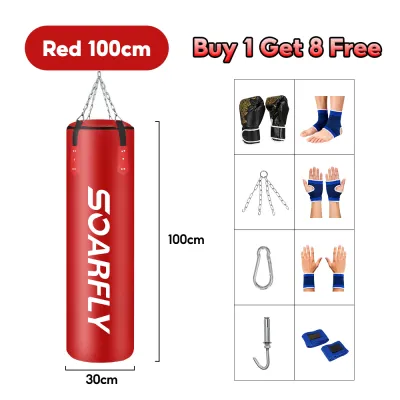

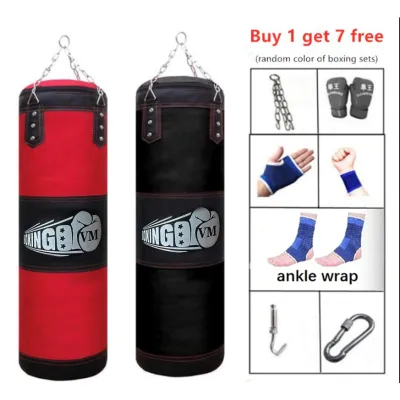
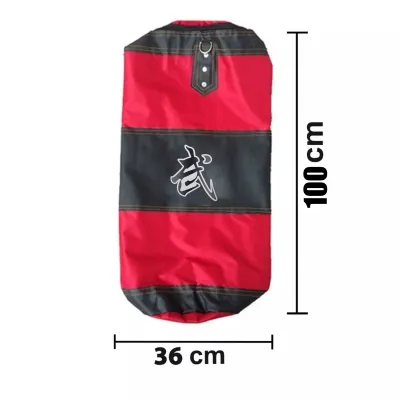
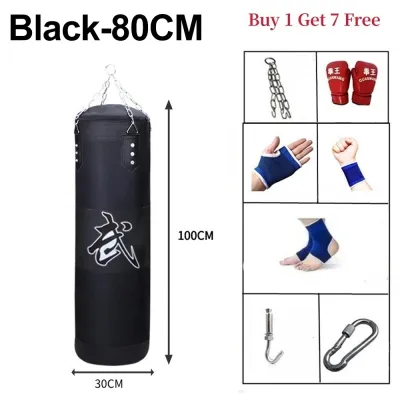
Prices are valid at publication and may change. Please refer to the product page for the latest price.

Freestanding Punching Bags
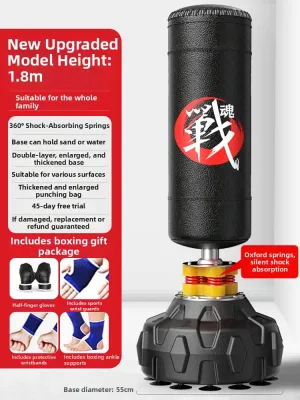
Freestanding punching bags are the go-to option for renters and condo dwellers who cannot make permanent structural modifications. Because they stand on a heavy base filled with water or sand, they require absolutely no ceiling drilling or wall mounting. This makes setup straightforward and keeps your security deposit safe.
However, the primary spatial trade-off lies in the base itself. To prevent the bag from tipping over during high-impact adult training, the base must be wide and heavy, often measuring between 50 to 70 centimeters in diameter. This wide footprint can physically interfere with close-range footwork, preventing you from stepping inside to throw short hooks or uppercuts. It can also block low-kick trajectories if you practice kickboxing or Muay Thai. Before committing, verify the exact base diameter and the total assembled height against your room’s dimensions, ensuring you have enough overhead clearance to avoid hitting light fixtures or ceiling fans during active training.
Hanging Heavy Bags
Hanging heavy bags provide the traditional boxing experience, offering realistic resistance, natural swing, and a clear floor that allows for unrestricted 360-degree footwork. When mounted correctly, they are excellent for building rhythm, timing, and defensive head movement. For small spaces, a hanging bag can actually save floor space if you use a wall-mounted swing arm or a folding bracket, allowing you to fold the bag flat against the wall when your workout is finished.
However, the installation requirements are strict. A standard adult heavy bag weighs between 30 to 50 kilograms, and the dynamic forces generated during a workout can triple that load on your ceiling. You must secure the mount directly into solid concrete, a heavy steel beam, or structural wooden ceiling joists. Mounting a heavy bag to standard gypsum board, drywall, or decorative drop ceilings will result in structural failure and potential injury. Always verify the load-bearing capacity of your ceiling and check if your building association permits heavy drilling before choosing this path.
Sizing a Punching Bag Boxing for Adult Training: Balancing Needs and Space
Sizing a punching bag boxing for adult training requires balancing your body weight and striking power against the physical limits of your room. A bag that is poorly matched to your physical profile will either swing uncontrollably or put excessive stress on your home’s structure.
Bag Weight vs. User Weight
A standard rule of thumb for adult boxing training is that a heavy bag should weigh approximately half of your body weight. For example, an adult weighing 80 kilograms should ideally train on a bag weighing around 40 kilograms. This ratio provides sufficient resistance to absorb high-impact punches without excessive swinging.
In a confined space, selecting the correct weight is critical. If the bag is too light, your strikes will cause it to swing wildly, requiring a massive clearance zone to prevent it from smashing into walls, glass doors, or furniture. Conversely, if you choose a bag that is too heavy for your mount, you risk pulling down the ceiling or damaging the wall brackets. For freestanding models, ensure the base is filled to the manufacturer’s recommended weight capacity—often exceeding 100 kilograms when filled with wet sand—to prevent the entire unit from shifting or sliding across your floor during hard combinations.
Bag Length and Striking Surface
The length of the punching bag dictates what martial arts disciplines you can practice and how much vertical space the setup will occupy. Standard boxing bags typically range from 3 to 4 feet (approximately 90 to 120 centimeters) in length. These are optimized for upper-body strikes, head movement, and high-intensity aerobic boxing workouts. Because they are shorter, they leave plenty of vertical clearance, making them easier to hang in rooms with standard or low ceilings.
If your training includes low kicks, knees, and sweep defenses, you will need a full-length Muay Thai bag, which is typically 5 to 6 feet (150 to 180 centimeters) long. However, hanging a longer bag requires careful vertical measurement. You must calculate the combined height of the ceiling mount, the hanging chains, the swivel, and the bag itself. If your ceiling height is less than 2.6 meters, a full-length hanging bag may drag on the floor, ruining its swing mechanics and damaging the bottom material. Measure the exact vertical clearance from your structural mounting point to the floor before purchasing to ensure the bag hangs at the correct chest-to-head striking level.
Measuring Your Space and Planning a Safe Installation
A successful home boxing setup relies on precise spatial planning. Taking a few minutes to measure your training zone beforehand prevents costly damage to your walls and ensures your workouts remain safe and uninterrupted.
Clearance and Swing Radius for Hanging Bags
When planning for a hanging bag, you must calculate the dynamic swing radius rather than just the static width of the bag. As a rule of thumb, you need a clear safety zone of at least 1.5 to 2 meters in all directions from the hanging point. This clearance prevents the bag from colliding with concrete walls, glass windows, television screens, or nearby furniture when you throw heavy power shots.
Additionally, look upward to check for overhead hazards. Ensure the swinging bag and its metal chains will not come into contact with light fixtures, decorative chandeliers, or ceiling fans, which are common in local residential layouts. Before installing any mounting hardware, use a high-quality stud finder to locate solid structural timber joists, or use expansion bolts designed specifically for solid concrete ceilings. Never attempt to mount a heavy bag directly onto drywall, plasterboard, or decorative wood paneling, as these materials cannot support the dynamic load and will fail under impact.
Floor Space and Base Footprint for Freestanding Bags
Although freestanding bags do not require structural mounting, they still demand a dedicated footprint. Start by measuring the diameter of the base, which typically ranges from 50 to 65 centimeters. However, your measurement cannot stop there; you must also factor in a buffer zone of at least 1 to 1.5 meters around the base to allow for footwork, pivoting, and kicking. If you place the bag too close to a wall, you will find yourself unable to move around it, limiting your training to simple linear punches.
Furthermore, consider the floor surface. In humid tropical climates, placing a heavy, shifting base directly on polished hardwood or delicate ceramic tiles can cause deep scratches or cracks. Place the unit on a heavy-duty, non-slip rubber gym mat. This mat protects your flooring, prevents the base from slowly migrating across the room during intense training, and helps dampen the low-frequency vibrations that travel through the floor to your downstairs neighbors. Finally, verify the total assembled height of the unit to ensure it does not stand too close to overhead ceiling fans or low-hanging light bulbs.
Space-Saving Hardware and Setup Adjustments
If your training space is exceptionally tight, specialized space-saving hardware can help you maximize your layout. For hanging bags, consider investing in a heavy-duty wall mount with a folding bracket. These brackets allow you to swing the heavy bag out into the room for your workout, and then fold it flat against the wall when you are finished, reclaiming valuable floor space for daily living.
Another excellent alternative is the “wrecking ball” or teardrop-style punching bag. These compact, spherical bags are designed specifically for practicing uppercuts, hooks, and head movement. Because they are shorter and lighter than traditional cylindrical heavy bags, they require less overhead clearance and generate less dynamic swing, making them ideal for low-ceiling apartments.
For freestanding setups, look for models with adjustable height collars. These allow you to lower the striking surface when not in use, making the unit less visually imposing in a small living room or bedroom. Regardless of the hardware you choose, always verify that the weight rating of the bracket, swivel, or wall anchor exceeds the fully loaded weight of your punching bag by at least 50% to account for the physical forces of your strikes.
Common Sizing and Installation Mistakes to Avoid
Setting up a home gym in a limited space often leads to a few common, easily avoidable mistakes. First, many buyers overlook the physical size of a freestanding bag’s base, only to realize upon delivery that it blocks major walkways in their home. Second, attempting to mount a hanging heavy bag to a standard ceiling without verifying the underlying structure is a frequent cause of costly ceiling damage and physical injury.
Third, underestimating the dynamic swing radius often results in broken light fixtures or scuffed walls. Finally, purchasing a professional-length Muay Thai bag for a low-ceiling room often results in a bag that rests on the floor, rendering it useless for proper training. Because boxing equipment is heavy and bulky, returning these items can incur high shipping fees. Always double-check the product’s shipping dimensions, fully assembled measurements, and your local retailer’s return policy before finalizing your purchase.
Before starting any high-impact training, verify your physical readiness and ensure you use protective gear such as hand wraps and properly weighted boxing gloves. Equipment cannot replace proper striking technique or professional coaching.
Frequently Asked Questions (FAQ)
Can I hang a heavy bag in a rented condo?
Hanging a heavy bag in a rented condo is generally not recommended unless you have written permission from your landlord and confirmation that the ceiling is solid concrete. Most standard condo leases prohibit drilling deep holes into structural concrete or modifying ceilings. If you drill into post-tension concrete slabs, you risk damaging critical structural cables. For renters, a high-quality freestanding punching bag is the safest, most practical alternative. It provides excellent training resistance without risking your security deposit or violating building association rules.
Is a 3-foot punching bag enough for adult boxing training?
Yes, a 3-foot (approximately 90-centimeter) punching bag is highly effective for adult boxing training, especially when space is limited. Shorter bags are specifically designed to target head and upper-body strikes, making them excellent for practicing jabs, crosses, hooks, and defensive head movement. They are also lighter and require less vertical clearance, which minimizes the stress on your ceiling mount and reduces the dynamic swing radius. While they are not suitable for low kicks or knee strikes, they represent the ideal space-saving compromise for dedicated boxing workouts in small rooms.
Community discussion
Share your experience or ask a question. Comments are reviewed before publication.