
Cheerleading squads in the Philippines face unique challenges when selecting sound amplification gear. Between echoing indoor gymnasiums, sprawling outdoor track ovals, and the intense tropical heat of pep rallies, a standard, bulky megaphone can quickly become a liability. Finding a reliable mini megaphone rechargeable model means balancing physical portability, clear acoustic projection, and robust moisture resistance. To keep your squad’s chants perfectly synchronized with the drumline, you need a compact device that delivers focused directional volume without causing wrist strain during long routines.
Core Megaphone Requirements for Cheerleading Environments
Cheerleading is an incredibly demanding sport that combines high-intensity athletics with constant audience engagement. Unlike a standard promotional event where a speaker stands stationary, a cheer captain or caller is constantly on the move, shifting between stunts, dances, and vocal cues. In this environment, a standard megaphone often fails because it is designed for simple, short-range announcements rather than sustained, high-energy sports use. The sound needs to cut through the roar of a packed school gym or the wide-open space of a sports complex.
Acoustic dynamics vary wildly depending on your venue. In an indoor school gymnasium, sound waves bounce off concrete walls and polished wooden floors, creating a muddy echo. A high-quality mini megaphone must project a tightly focused beam of sound that pierces through this reverberation, allowing the crowd to hear distinct syllables rather than a distorted wall of noise. Conversely, during outdoor field performances or street parades, sound disperses rapidly in all directions. Here, the challenge is projecting the voice far enough to reach the back of the grandstands without the benefit of reflective surfaces.
Products mentioned in this guide

Prices are valid at publication and may change. Please refer to the product page for the latest price.
The physical demands of cheer routines also dictate equipment design. Megaphones are frequently dropped on hard gym floors, tossed onto track fields during transitions, or exposed to heavy sweat from active hands. Standard plastic casings often crack under these conditions, and internal battery compartments can easily break open upon impact. Hand fatigue is another critical factor; holding a heavy, poorly balanced megaphone for a three-minute routine—or worse, a multi-hour half-time show—can lead to wrist strain and hinder a caller’s performance.
Furthermore, the tropical climate of the Philippines introduces severe environmental stressors. High humidity levels and intense heat during outdoor practices or midday pep rallies cause rapid sweat accumulation on hands, which can degrade the grip and seep into the megaphone’s internal electronics. Salt from sweat can corrode exposed metal charging contacts, while high ambient temperatures can cause standard lithium batteries to degrade prematurely if not properly managed. For squad captains and school procurement officers, understanding these operational realities is key to selecting gear that lasts multiple seasons rather than failing halfway through the first semester.
Essential Specifications to Verify Before Purchasing
Selecting the right equipment requires looking past flashy marketing labels and focusing on verifiable technical specifications. When evaluating a mini megaphone rechargeable model, you must check specific performance indicators to ensure it can withstand the rigors of your training schedule.

Wattage and Sound Projection: Wattage is often used by manufacturers as a shorthand for volume, but this can be highly misleading. While a higher wattage rating (such as 15W or 20W) indicates the potential for greater volume, the actual acoustic output depends heavily on the horn’s design and efficiency. A well-engineered, highly directional horn with a narrower bell can project sound much further and clearer at 10W than a poorly designed 20W model with a wide, dispersed spread. For cheerleading, look for a focused horn shape that concentrates sound forward, which maximizes clarity over distance and minimizes the risk of audio feedback when standing near your squad.
Battery Capacity and Chemistry: Since you will be using these devices away from power outlets, battery specifications are critical. Verify that the megaphone uses a lithium-ion (Li-ion) battery, which offers a better power-to-weight ratio and holds a charge longer than older nickel-cadmium alternatives. Look for a capacity rating expressed in milliampere-hours (mAh)—a rating between 1,200 mAh and 2,200 mAh is standard for high-quality mini models. This capacity typically translates to roughly 6 to 10 hours of intermittent talk time. Ensure the device features a modern USB-C charging port. This allows the squad to use standard phone chargers or portable power banks during long competition days, eliminating the need for proprietary charging bricks.
Weight and Ergonomics: To prevent physical fatigue during active routines, the total weight of the megaphone—including the battery—should ideally remain under 600 grams. The handle must be ergonomically shaped to fit comfortably in a variety of hand sizes. Look for models featuring non-slip rubberized grips or textured plastic handles that provide secure traction even when hands are wet with sweat. Additionally, an adjustable wrist strap is an essential safety feature; it prevents the megaphone from flying out of a caller’s hand during high-energy choreography or sudden transitions.
Durability and Moisture Resistance: Because cheerleading takes place both indoors and outdoors, your equipment must offer basic protection against the elements. Check product specifications for an Ingress Protection (IP) rating. While fully waterproof megaphones are rare and often too heavy, an IPX4 rating indicates resistance to splashing water from any direction, which is sufficient to protect against sweat and light drizzle. If an IP rating is not listed, verify that the physical design includes protective features such as sealed charging ports, rubber gaskets around the battery compartment, and a moisture-resistant synthetic cone material rather than paper-based components.
Recommended Megaphone Types by Squad Role and Scenario
A successful cheerleading squad functions as a coordinated team, and different roles require different tools. Rather than purchasing a single type of megaphone for the entire squad, school athletic departments often find success by building a mixed inventory tailored to specific roles and scenarios.
High-Output Handhelds for Captains and Callers
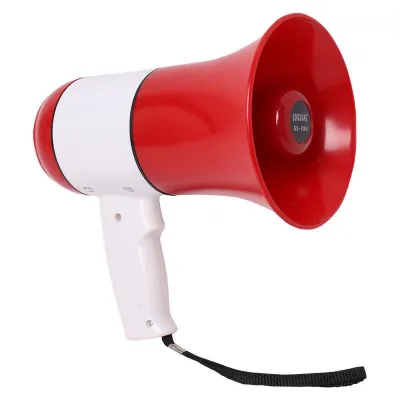
The primary vocal leaders of the squad—typically the captain or co-captains—need maximum sound projection to command attention over loud crowds and lead complex chants. For this role, a high-output handheld mini megaphone is the ideal choice. These models usually feature a slightly larger bell diameter (around 13 to 15 centimeters) and a higher power output of 15W to 20W.
While these units are slightly heavier than ultra-compact models, they offer essential features like built-in voice recording and playback loops. This allows a captain to record a repetitive chant (such as “Go, Fight, Win!”) once and play it on a continuous loop, giving their vocal cords a much-needed rest during long games. When choosing a high-output model, verify that the handle folds down for easier packing in sports bags, and prioritize models with a robust, shock-absorbing rubber rim around the bell to protect against accidental drops on asphalt or concrete tracks.
Ultra-Compact Wearables for Active Squad Members
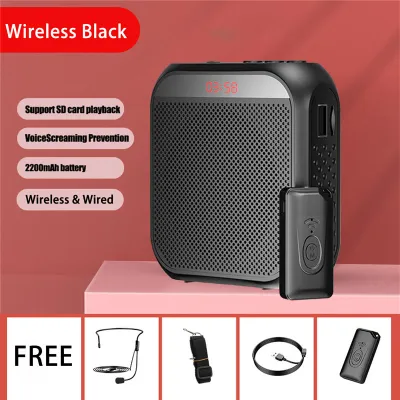
Bases, flyers, and tumblers cannot carry a traditional handheld megaphone while performing stunts, yet they still need to project their voices during transitions or crowd-interaction segments. Ultra-compact wearable megaphones—often referred to as personal voice amplifiers—solve this problem by separating the microphone from the speaker.
These mini devices consist of a small, lightweight speaker unit (weighing under 250 grams) that clips securely to a belt or waistband, paired with a lightweight headset microphone that sits comfortably around the head. This hands-free configuration allows active cheerleaders to execute complex choreography, catch flyers, and perform tumbling passes without restriction. While these wearable models have a lower wattage rating (typically 5W to 10W) and a shorter projection range than handheld horns, they provide excellent localized vocal support, ensuring that the voices of the front-line performers are clearly heard by the judges and the front rows of the audience.
Mid-Size Shoulder-Strap Models for All-Day Tournaments
For long competition days, regional qualifiers, or campus-wide parades that span several hours, carrying a handheld device continuously is impractical. A mid-size megaphone equipped with a detachable shoulder strap offers the perfect middle ground between high volume and physical comfort.
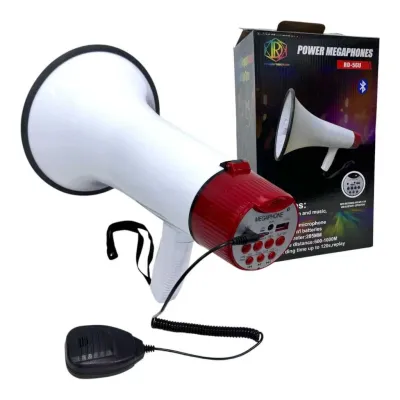
These models often feature a separate, wired microphone handset connected to the main horn body by a coiled cord. This design allows you to sling the heavy horn section over your shoulder or place it on a nearby table while holding only the lightweight microphone piece to speak. This configuration dramatically reduces hand and wrist fatigue during extended events. Additionally, because these units have slightly larger physical dimensions, they often house larger battery cells that provide extended runtimes, making them highly reliable for all-day outdoor tournaments where access to charging outlets is limited.
How to Filter and Verify Mini Megaphone Rechargeable Options Online
When shopping for a mini megaphone rechargeable on popular online marketplaces in the Philippines, you will likely encounter hundreds of listings with wildly varying prices and specifications. Navigating these platforms requires a critical eye to separate genuine high-quality equipment from cheap, unreliable imitations.
Identifying Inflated Claims: Many low-cost listings feature highly exaggerated performance metrics designed to attract unsuspecting buyers. Claims of “1000-meter range” or “150-decibel output” from a palm-sized device are physically impossible and should be treated as red flags. Instead of relying on these marketing numbers, look for listings that provide concrete, verifiable physical specifications. Check the exact weight in grams, the physical dimensions of the horn, and the specific battery type (such as a standard 18650 lithium-ion cell). If a listing fails to provide these basic details, it is best to look elsewhere.
Analyzing User Reviews: User reviews are an invaluable tool, but they must be analyzed carefully. Filter reviews to look for feedback from school sports teams, event coordinators, or physical education teachers. Pay close attention to recurring complaints regarding build quality and performance over time. Common warning signs include reports of high-pitched audio feedback (screeching) even at low volumes, battery cells that lose their capacity after only a few charge cycles, or plastic handles that snap during normal handling. A product with a slightly lower overall rating but detailed, positive feedback from actual sports users is often a safer choice than a product with thousands of generic five-star ratings.
Checking Seller Reliability: For school-funded purchases or team-funded equipment, verifying seller reliability is crucial for accountability. Prioritize official brand stores, authorized distributors, or highly rated local sellers who offer clear warranty terms. A reliable seller should provide at least a seven-day replacement window for manufacturing defects and a clear path for customer service inquiries. Avoid sellers who do not list clear return policies or those who use generic, unbranded product listings with no clear manufacturer contact information.
Comparing Value: When comparing prices, calculate the total cost of ownership rather than just the initial purchase price. A cheaper megaphone that uses a proprietary, non-standard rechargeable battery pack can end up costing more in the long run if the battery fails and cannot be easily replaced. Conversely, a slightly more expensive model that uses standard, widely available rechargeable lithium-ion cells or charges via a universal USB-C cable offers much better long-term value, as replacement parts and charging cables are inexpensive and easy to source locally.
Battery Care and Maintenance in Humid Climates
To maximize the lifespan of your squad’s rechargeable megaphones, establishing a regular maintenance routine is essential. The tropical climate of the Philippines, characterized by high humidity and intense heat, can accelerate the degradation of both electronic components and lithium-ion batteries if proper care is not taken.
Sweat and Moisture Management: After every practice, game, or pep rally, make it a habit to wipe down the megaphone thoroughly. Use a dry, clean microfiber cloth to remove sweat, oil, and dirt from the handle, control buttons, and microphone grille. Sweat contains salt, which is highly corrosive to metal components and can quickly ruin charging ports or battery terminals if left unchecked. Never use harsh chemical cleaners or wet wipes on the device unless specified by the manufacturer’s instructions. If the megaphone is exposed to a sudden rain shower during an outdoor event, dry it immediately and leave the battery compartment open in a well-ventilated, dry room to allow any trapped moisture to evaporate.
Lithium-Ion Battery Health: Proper storage is critical for maintaining the capacity of lithium-ion batteries. Avoid storing megaphones in hot, unventilated spaces, such as inside a locked car trunk, a metal equipment locker, or a school storage room without air conditioning. High heat accelerates the chemical aging of lithium cells, leading to a permanent loss of battery capacity. If your squad is entering the off-season and the megaphones will not be used for several months, do not store them completely dead or fully charged. Instead, charge the batteries to approximately 50% capacity, remove them from the megaphone body if possible, and store them in a cool, dry place. Check the charge level every few months and top them up slightly to prevent the cells from falling into a deep-discharge state, which can permanently damage the battery’s ability to hold a charge.
Charging Safety: Always prioritize safety when charging your equipment. Use only the charging cable provided by the manufacturer or a certified, high-quality third-party cable. Inspect cables regularly for signs of wear, such as fraying or exposed wires, and discard damaged cables immediately. Avoid leaving megaphones charging unattended overnight, especially in high-humidity environments. Charge the devices on flat, non-flammable surfaces away from direct sunlight or heat sources. If the megaphone or the battery pack becomes unusually hot to the touch during charging, disconnect it immediately and consult the manufacturer or a qualified technician before attempting to use it again.
Frequently Asked Questions (FAQ)
How many watts are needed to be heard over a loud crowd?
For typical cheerleading environments, a megaphone rated between 10W and 15W is generally sufficient for indoor gymnasiums and small outdoor pep rallies. However, if you are performing on a large outdoor football field or track oval with significant crowd noise, a model rated at 20W or higher is recommended. Keep in mind that clear vocal enunciation, proper microphone positioning (holding it about 2 to 5 centimeters from your mouth), and aiming the horn directly at the target audience will improve clarity and perceived volume far more than simply increasing the wattage.
Is it safe to use a power bank while the megaphone is in use?
Many modern rechargeable mini megaphones that feature a USB-C charging port support pass-through charging, which allows you to operate the device while it is connected to an external power bank. However, you must verify this capability in your specific product’s user manual before attempting it, as some older or lower-cost models may overheat or suffer circuit damage. If you do use a power bank during a routine, ensure the cable is securely routed and the power bank is safely pocketed or clipped to prevent snagging hazards during active movements.
Community discussion
Share your experience or ask a question. Comments are reviewed before publication.