
Lower body workouts have evolved far beyond heavy barbell racks and bulky gym machines. For anyone looking to isolate the glutes, strengthen the hamstrings, and build lower-body power, incorporating a high-quality resistance band for women is one of the most efficient ways to achieve targeted muscle activation. These compact tools provide continuous tension throughout an exercise, forcing your muscles to work harder during both the lifting and lowering phases of a movement.
Whether you are training in a home setup, adding extra resistance to your gym routine, or looking for a travel-friendly workout solution, choosing the right band is crucial. The market is filled with various materials, lengths, and tension levels, which can make selection overwhelming. Understanding how different bands target specific muscle groups will help you maximize your workout efficiency and avoid common frustrations like slipping, rolling, or premature snapping.
Quick Guide: Matching Band Types to Your Leg and Glute Goals
Selecting the perfect resistance band for women depends heavily on the specific exercises you plan to perform and your current fitness level. Different band designs offer unique benefits, meaning a single band rarely covers every lower-body training need.
Products mentioned in this guide
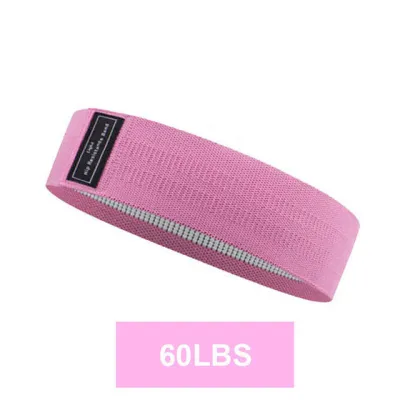
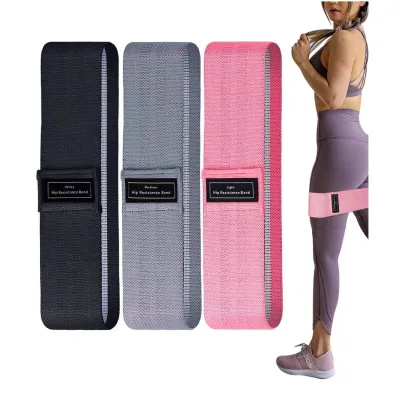
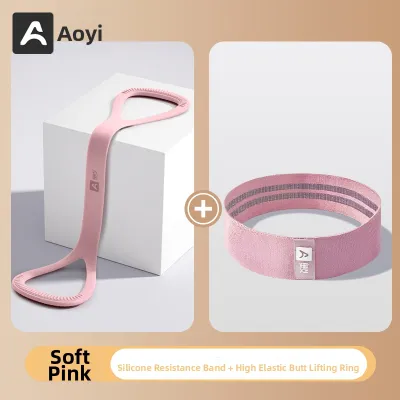

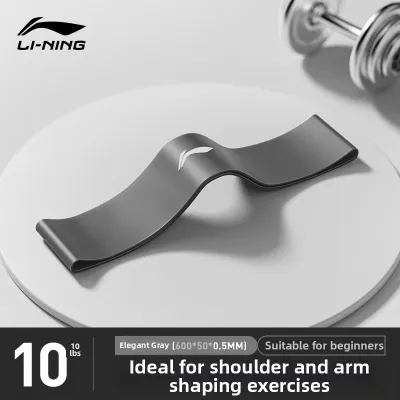
Prices are valid at publication and may change. Please refer to the product page for the latest price.
Fabric loop bands, often referred to as booty bands, are the premier choice for heavy compound glute movements. Their thick, woven material provides high tension and prevents the band from sliding or rolling up your legs during intense exercises like squats, hip thrusts, and lateral walks.
Latex mini loops offer a lighter, more flexible alternative. These are ideal for warm-ups, joint mobility work, and high-repetition burnout sets that target smaller stabilizing muscles, such as the gluteus medius during clamshells or fire hydrants.
Tube resistance bands equipped with ankle straps are designed to mimic cable machine exercises. By anchoring these bands to a door or sturdy post, you can perform isolated, single-leg movements like glute kickbacks, standing leg curls, and hip abductions with a full range of motion.
What to Look for When Buying Resistance Bands for Lower Body Workouts
Investing in fitness gear requires a clear understanding of the key specifications that impact performance, comfort, and durability. When evaluating a resistance band for women, several critical factors should guide your purchasing decision to ensure you get a set that supports progressive overload without causing discomfort.

Material (Fabric vs. Latex/Rubber)
The choice between fabric and latex is the most significant decision you will make. Fabric bands are constructed from a blend of cotton, polyester, and elastic fibers. In warm, humid climates like the Philippines, fabric bands are highly advantageous because they absorb sweat and maintain their grip on your skin or leggings. They do not pinch body hair or roll up into a tight, painful rope.
Latex or rubber bands, on the other hand, offer a smoother, more elastic stretch that is highly versatile. However, in tropical humidity, latex can become sticky, slippery, or prone to binding against bare skin. While latex is excellent for upper-body stretching and rehabilitation exercises, fabric is generally superior for dedicated lower-body workouts.
Resistance Levels and Progression
To build strength and muscle definition in your legs and glutes, you must apply the principle of progressive overload. This means gradually increasing the resistance your muscles must overcome over time. Buying a single resistance band limits your progress, as your muscles will quickly adapt to that specific tension.
Look for sets that offer at least three to five distinct resistance levels, typically labeled from light to extra-heavy. High-quality sets on online marketplaces usually range from ₱400 to ₱1,200. Having multiple levels allows you to use lighter bands for warm-ups and hip activation, medium bands for high-rep isolation work, and heavy or extra-heavy bands for compound lifts like hip thrusts.
Width and Dimensions
The physical dimensions of a loop band directly affect how comfortable and stable it remains during movement. For lower-body exercises, look for bands that are at least 2 to 3 inches (5 to 8 centimeters) wide. Wide bands distribute the tension over a larger surface area on your thighs or calves.
Narrower bands are highly prone to rolling up or sliding down your legs when you perform dynamic movements like lateral band walks or jump squats. A wider band stays flat against your body, allowing you to focus entirely on muscle contraction rather than constantly adjusting your equipment.
Comfort and Skin Sensitivity
Skin comfort is a common concern during intense, sweaty workouts. Cheap latex bands can cause painful chafing, skin pinching, and allergic reactions for those sensitive to natural rubber. If you prefer latex, ensure the product is labeled as hypoallergenic or medical-grade silicone.
For fabric bands, look closely at the interior construction. The best fabric bands feature double-stitched inner grip strips made of non-slip latex or silicone threading. These strips lock the band in place against your leggings or bare skin, preventing friction burns and ensuring a secure fit throughout your entire routine.
Top Resistance Band Styles for Targeting Glutes and Legs
To build a well-rounded lower body, you need to target different muscle groups from various angles. Different band styles excel at different movement patterns, making a diverse collection of bands highly beneficial for your routine.
Fabric Loop Bands (Booty Bands)
Fabric loop bands are specifically engineered for high-tension lower-body training. Because the woven fabric limits how far the band can stretch, these bands naturally provide a much higher level of resistance than their pure latex counterparts.
- Best Exercises: These bands are exceptionally effective for glute bridges, hip thrusts, weighted squats, and lateral monster walks. Placing the band just above your knees during a squat forces your knees outward, which heavily recruits the gluteus medius and minimus.
- Key Advantages: The primary benefit of fabric loop bands is their structural integrity. They feature robust, non-slip inner grips that keep them perfectly in place, even during explosive movements. They do not snap, roll, or lose their shape over time, making them incredibly durable.
- Limitations: Because fabric bands have limited elasticity, they are not suitable for exercises requiring a large range of motion, such as overhead presses or deep hamstring stretches. They also tend to be slightly more expensive, with single premium bands costing between ₱300 and ₱600.
Latex Mini Loop Bands
Latex mini loop bands are thin, highly elastic bands that offer a smooth and consistent resistance profile. They are the classic choice for physical therapy, joint stabilization, and targeted muscle activation.
- Best Exercises: Use these bands for low-impact movements like clamshells, lying fire hydrants, standing hip abductions, and ankle-complex mobility drills. They are also excellent for pre-workout activation to wake up sleeping glutes before you transition to heavy lifting.
- Key Advantages: These bands are incredibly lightweight, highly portable, and cost-effective. A full set of five latex bands can easily fit into a small pocket, making them perfect for outdoor workouts or travel. They offer a very progressive stretch, meaning the resistance increases smoothly the further you pull.
- Limitations: Latex bands are highly prone to rolling up into a tight band when worn on bare skin, which can cause painful pinching. They are also susceptible to tearing if they catch on a shoe tread or sharp object, and they can degrade rapidly if exposed to sweat, body oils, or direct sunlight.
Tube Resistance Bands with Ankle Straps
Tube resistance bands consist of heavy-duty elastic tubes with carabiners on each end, allowing you to attach comfortable padded ankle cuffs. These bands are designed to replicate cable machine exercises found in commercial gyms.
- Best Exercises: This setup is the ultimate tool for isolated leg movements. It allows you to perform standing or kneeling glute kickbacks, standing hip abductions, inner thigh adductions, and standing leg curls with continuous tension.
- Key Advantages: Tube bands with ankle straps allow for a complete, uninhibited range of motion. Because the band is anchored to a fixed point and attached directly to your ankle, there is zero risk of the band slipping off your thigh or shin mid-exercise.
- Limitations: To use these bands safely, you must have access to a secure anchor point, such as a sturdy door frame or a heavy, non-movable post. The metal carabiners, plastic clips, and fabric stitching on the ankle straps are mechanical failure points that require regular safety inspections.
Safety Checks and Setup Tips for Banded Lower Body Exercises
While resistance bands are generally safer than heavy free weights, they still carry a risk of injury if used incorrectly. A snapping band or a failing anchor point can cause painful welts, muscle strains, or facial injuries. Implementing a few simple safety checks before every workout will protect you and keep your equipment in top condition.
Pre-Workout Inspection
Never begin an exercise without thoroughly inspecting your bands. For latex bands, stretch them slightly and look for micro-tears, tiny punctures, discoloration, or areas where the material has become thin or brittle. For fabric bands, check the stitching along the seams and look for frayed elastic fibers poking through the weave. If you detect any signs of wear or structural compromise, discard the band immediately and replace it.
Proper Anchoring Techniques
When using tube bands with a door anchor, safety is paramount. Always place the anchor on the side of the door that pulls closed toward you, rather than the side that swings open. This ensures that the door frame supports the tension of the band, preventing the door from accidentally flying open mid-set.
Additionally, position the anchor close to the hinge side of the door or at the very top or bottom of the frame to minimize stress on the door itself. Ensure the surface you are anchoring to is completely smooth. Sharp wooden corners, metal hinges, or rough concrete pillars can easily slice through latex or fray fabric under tension.
Tension Control
One of the most common mistakes in resistance band training is allowing the band to snap back quickly during the return phase of an exercise. This rapid release of tension can jar your joints and strain your muscles.
To maximize muscle growth and prevent injury, always control both phases of the movement. Take two to three seconds to stretch the band (the concentric phase), pause briefly at the peak of contraction, and take another two to three seconds to slowly return to the starting position (the eccentric phase). Controlling the eccentric phase keeps your muscles under tension longer, which is a key driver of hypertrophy.
Foot Placement and Stability
When performing exercises where the band is placed under your feet, such as banded deadlifts or standing abductions, ensure the band is positioned securely under the middle of your shoe sole. Avoid placing the band near the toe or heel, as it can easily slip off and snap upward.
Wear athletic shoes with flat, high-traction soles to help lock the band in place. If you prefer working out barefoot or in socks, use fabric bands rather than latex, as fabric is less likely to slip off a bare foot and cause a painful impact.
Cleaning and Storage Tips to Extend Band Lifespan
Proper maintenance is essential to preserve the elasticity and hygiene of your fitness bands, especially in hot and humid environments. Sweat, body oils, and environmental moisture can rapidly degrade both fabric and rubber materials if left unchecked.
Washing Fabric Bands
Fabric bands absorb sweat during intense workouts, which can lead to bacterial growth and unpleasant odors over time. To clean them, place the bands inside a mesh laundry bag to prevent them from tangling or stretching in the wash. Machine wash them on a gentle, cold-water cycle using a mild detergent.
Never use bleach, fabric softeners, or harsh chemical stain removers, as these will break down the internal elastic fibers. Once washed, lay the bands flat to air dry in a well-ventilated, shaded area. Avoid using a tumble dryer or exposing them to direct heat, as high temperatures will melt the elastic core and destroy the non-slip grip strips.
Cleaning Latex Bands
Latex bands should never be submerged in water or washed in a machine. Instead, wipe them down thoroughly after every workout using a soft cloth dampened with clean water and a drop of mild, diluted dish soap.
Avoid using rubbing alcohol, disinfectant sprays, or oil-based cleaning products, as these chemicals will cause the latex to dry out, become sticky, and eventually crack. Allow the bands to air dry completely in a cool, shaded spot before putting them away.
Proper Storage
Store your resistance bands in a cool, dry drawer, cabinet, or dedicated gym bag. Keep them far away from direct sunlight, radiators, or hot vehicles, as ultraviolet rays and high heat rapidly accelerate the aging process of both rubber and elastic fibers.
Ensure they are stored away from sharp objects like keys, jewelry, or metal zippers that could puncture them. In humid climates, placing a small silica gel packet inside your storage bag is an excellent way to absorb excess moisture and prevent your latex bands from sticking together or developing mold.
Frequently Asked Questions (FAQ)
Can I build muscle using only resistance bands for legs and glutes?
Yes, you can effectively build muscle using resistance bands, provided you consistently apply the principles of progressive overload and high intensity. Muscle growth requires mechanical tension, which can be achieved through heavy weights or constant band resistance. To stimulate hypertrophy, you must challenge your muscles by using heavier bands as you get stronger, increasing your training volume, or slowing down your repetitions to maximize time under tension. Combining bands with challenging bodyweight variations, such as single-leg Romanian deadlifts or Bulgarian split squats, is an excellent way to maximize your results.
How do I stop fabric resistance bands from rolling up my thighs?
Fabric resistance bands rarely roll, but when they do, it is usually due to incorrect sizing or placement. If a band is too tight for your thighs, it will naturally try to roll toward a narrower part of your leg. Ensure you are using a band size that fits comfortably around your lower thighs with light tension at the start of the movement. Additionally, wearing the bands over high-rise athletic leggings rather than bare, sweaty skin provides a textured surface that helps the inner grip strips lock securely in place.
Are resistance bands safe to use during pregnancy?
Resistance bands are generally considered an exceptionally safe and low-impact tool for maintaining lower-body strength and joint stability during pregnancy. Because they do not rely on gravity in the same way free weights do, they put less pressure on your joints and pelvic floor. However, as your pregnancy progresses, you should avoid exercises that require lying flat on your back (the supine position) or movements that compromise your balance. Always consult your healthcare provider or obstetrician before starting or continuing any resistance training routine during pregnancy to ensure it is safe for your specific situation.
Community discussion
Share your experience or ask a question. Comments are reviewed before publication.