
Choosing the right gear to carry your phone during a run is a balance between security, comfort, and accessibility. A dedicated belt bag for cellphone men provides a high-tension, snug fit that sits flat against your hips or lower back to eliminate vertical bounce. Unlike casual waist bags or bulky armbands, specialized running belts are engineered with lightweight, moisture-wicking materials and low-profile compartments that keep your device secure and dry, even during high-intensity training.
Running with a phone has become a necessity for tracking workouts via GPS, listening to audio, and staying connected in case of emergencies. However, carrying a modern, heavy smartphone requires a carrying solution that works with your body’s natural movement rather than against it. By understanding the key design features and fit adjustments of running belts, you can find a solution that protects your device and allows you to focus entirely on your stride.
Why Casual Bags Fail During Runs and What to Look For
Running involves high-impact, repetitive vertical motion. During a typical run, your body’s center of mass oscillates vertically by several centimeters with every step. A standard casual belt bag, fanny pack, or loose lifestyle pouch lacks the structural tension needed to secure a heavy object. When you place a modern smartphone inside a loose bag, the phone acts as an independent pendulum, multiplying the felt weight and creating a highly distracting bouncing effect that can throw off your running form.
Products mentioned in this guide
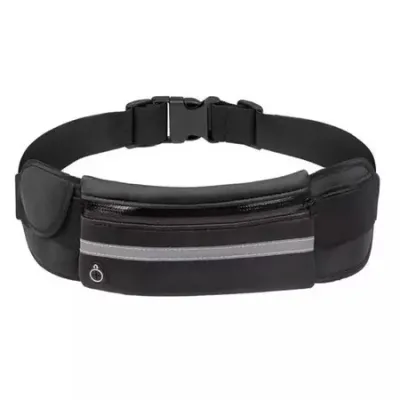
![[COD] WRELS Invisible Professional Running Waist Bag Portable Elastic Marathon Running Phone Sports Lightweight Mobile Phone Bags](https://img.lazcdn.com/g/p/5faad68fbb588b641c9af17d99d00b2c.png_400x400q80.png_.webp)
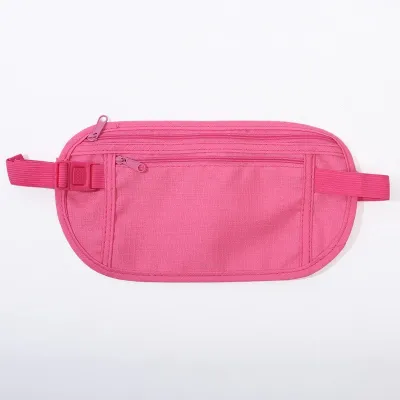
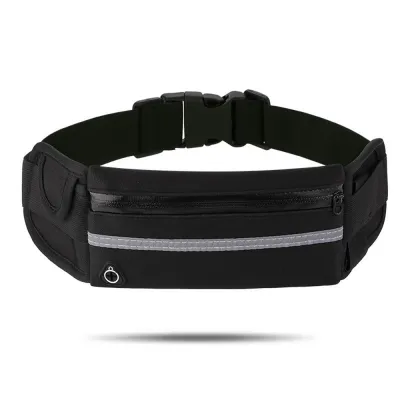
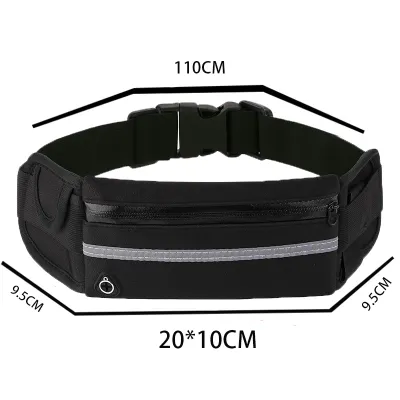
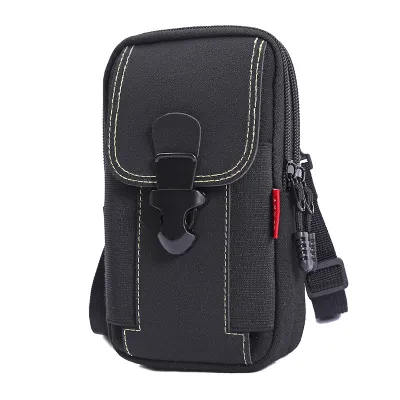
Prices are valid at publication and may change. Please refer to the product page for the latest price.
In tropical climates like the Philippines, high heat and humidity levels exceeding 80% accelerate sweat production within the first few minutes of a workout. Casual bags made from heavy canvas, thick cotton, or non-breathable nylon trap heat against your waist, absorb moisture, and become heavy and waterlogged. This trapped moisture can easily seep through standard zippers and fabrics, exposing your phone’s charging port and internal electronics to corrosive sweat salts.
Friction is another major issue when using non-specialized gear. A loose bag slides across your hips or waist with every stride, creating continuous friction against your skin or running shirt. In humid conditions, wet skin is highly susceptible to painful chafing. A specialized running belt solves this by utilizing high-stretch, moisture-wicking fabrics and seamless or bonded edges that move with your body, keeping the phone locked in place to eliminate friction entirely.
Key Features for a Secure, No-Bounce Fit
Anti-Bounce Design
To prevent vertical movement, a running belt must rely on high-tension elastic bands or compressive tube designs. A wider band distributes the weight of the phone across a larger surface area on your pelvis, minimizing localized movement. Look for belts made from knitted elastic rather than cheap woven elastic, as knitted variations offer a softer feel against the skin while maintaining their recovery shape over hundreds of miles. If you choose a belt with an adjustable strap, ensure it features robust, non-slip tension buckles that will not slowly loosen under the stress of repetitive impact.

Phone Compatibility & Security
Modern smartphones are large, often featuring screens ranging from 6.1 to 6.7 inches or more. The phone compartment of your belt must be flexible enough to accommodate these dimensions, even when the phone is wrapped in a protective, shockproof case. Look for water-resistant linings, such as thermoplastic polyurethane (TPU) coatings, or internal sweat guards to keep moisture away from your device. Zippers should be high-quality, preferably with locking sliders that stay flat and do not jingle or slide open during a sprint.
Comfort & Breathability
Materials like Lycra, spandex, and lightweight polyester mesh are the industry standards for running gear. These fabrics allow air to circulate and dry rapidly, preventing the belt from feeling like a wet band around your waist. Seamless construction or flatlock stitching is crucial to prevent hot spots on your skin. Additionally, the fastening mechanism—whether a plastic buckle, hook-and-loop closure, or a step-in design—should be low-profile and positioned away from your spine or hip bones to prevent bruising over long distances.
Capacity & Extras
While your phone is the primary cargo, you will likely need to carry secondary essentials like keys, cash, an ID, or energy gels. Look for running belts that feature internal dividers or dedicated key clips. These small details prevent your keys from scratching your phone screen and stop loose items from rattling. However, avoid oversized compartments that invite overpacking, as excess weight inevitably leads to bounce and compromises the streamlined fit.
Best Running Belt Bag Designs for Men
To help you choose the right design for your running style, the table below summarizes the three primary running belt categories based on their design type, ideal use case, bounce control, and ease of phone access.
| Design Type | Best For | Bounce Control Level | Mid-Run Phone Access |
|---|---|---|---|
| Minimalist Elastic (Tube Style) | Short to medium runs, hot weather, minimalist setups | Excellent (Maximum compression) | Moderate (Requires sliding out) |
| Structured Zippered Waist Packs | Daily training, quick phone access, varying waist sizes | High (When adjusted tightly) | Easy (Quick zipper pull) |
| Multi-Pocket Hydration Belts | Long-distance runs, trail running, carrying nutrition | Moderate to High (Requires balanced packing) | Easy to Moderate |
Minimalist Elastic Running Belts (Tube Style)
Minimalist elastic running belts, often called tube belts, are designed as a continuous loop of high-stretch fabric that you step into and slide up to your waist. They feature multiple slit openings around the perimeter, allowing you to slide your phone, keys, and cards inside, then flip the belt inward to lock everything securely against your body.
Because they lack plastic buckles, adjustment clips, or hardware, tube belts eliminate pressure points entirely. The uniform compression around your entire waist provides outstanding weight distribution, making this style virtually bounce-free when sized correctly. The fabric blend, typically consisting of roughly 85% polyester and 15% spandex, retains its shape and elasticity over long-term use.
However, sizing is critical with tube belts. If you select a size that is too loose, the belt will bounce; if it is too tight, it can restrict deep diaphragmatic breathing. Additionally, sliding a large phone out of a tight slit mid-run to check a notification or change a playlist can be cumbersome, making this design best for runners who prefer to keep their phone tucked away until their workout is complete.
- Pros: No hardware to dig into skin; superb weight distribution; highly breathable and low-profile.
- Cons: Sizing must be precise; accessing the phone mid-run requires more effort.
- Ideal User: Runners seeking a lightweight, set-it-and-forget-it carrying solution for daily road runs.
- Price Range: Typically ranges from ₱1,200 to ₱2,000 in local specialty running stores.
Structured Zippered Waist Packs
Structured zippered waist packs feature a dedicated, expandable zippered pouch attached to an adjustable elastic strap. The pouch is designed to sit flat against your lower back or hips, expanding only when filled to maintain a low-profile silhouette when carrying just a phone.
These packs offer excellent mid-run accessibility. If you need to take a call, take a photo, or adjust your navigation, you can quickly unzip the pocket, retrieve your phone, and slide it back in with one hand. The adjustable strap allows you to customize the tightness depending on your clothing layers, and a heavy-duty quick-release buckle makes putting the belt on and taking it off simple.
To prevent bounce, these belts must be tightened securely. Because the weight of the phone is concentrated in a single pouch rather than distributed around the entire waist, any slack in the strap can lead to vertical oscillation. Look for models with wide webbing straps (at least 1.5 inches wide) and integrated strap keepers to secure any excess slack.
- Pros: Easy one-handed phone access; highly adjustable strap fits multiple waist sizes; quick-release buckle.
- Cons: Concentrated weight can cause bounce if the strap is loose; buckle can occasionally rub if positioned poorly.
- Ideal User: Runners who frequently access their phone mid-run for navigation, music, or photos.
- Price Range: Generally priced between ₱1,000 and ₱1,800.
Multi-Pocket Hydration & Gear Belts
Multi-pocket hydration and gear belts are heavy-duty options designed for long-distance road runners and trail runners. These wider belts feature structured compartments for a large smartphone, dedicated holsters for small water flasks (typically 150ml to 300ml), and elastic loops for trekking poles or energy gels.
To support the added weight of water and nutrition, these belts utilize wider waistbands that offer mild lumbar support. They often incorporate highly breathable, non-stretch mesh panels combined with strategic elastic sections to keep the load stable without restricting your breathing. The water bottle holsters are typically angled at 45 degrees to keep the center of gravity low and close to your body.
While highly functional, these belts have a bulkier profile and can feel warm in high-humidity environments. They require careful, balanced packing; for example, placing your phone in the center back pocket and balancing water flasks symmetrically on either side is essential to prevent the belt from riding up or swaying laterally during your stride.
- Pros: High carrying capacity for water, nutrition, and gear; excellent lumbar stability; ideal for long trail runs.
- Cons: Bulkier and heavier than minimalist designs; requires balanced packing to prevent shifting.
- Ideal User: Half-marathoners, marathoners, and trail runners who need self-sustained hydration and nutrition.
- Price Range: Premium options typically range from ₱2,000 to ₱3,500.
How to Wear and Adjust Your Belt to Eliminate Bounce
Placement
The most common mistake runners make is wearing their running belt too high on the natural waist, near or above the belly button. This area of the torso is soft and expands significantly when you breathe, which naturally pushes the belt upward and causes it to bounce. Instead, position the belt lower down, resting snugly on the widest part of your hips (the iliac crest). This bony structure provides a solid, non-expanding platform that prevents the belt from sliding up or down during your stride.
If you are using a structured zippered waist pack, positioning the phone pouch in the small of your lower back typically yields the most stable ride. The lower back has less dynamic movement than the stomach or front hips during a running stride, keeping the phone’s mass aligned close to your center of gravity. For tube-style belts, try to distribute your items evenly around the entire loop to maintain balance.
Tightness
Your running belt must be adjusted to a snug, secure fit. A reliable way to test this is the two-finger rule: you should be able to slide two fingers flat under the waistband, but no more. If the belt restricts deep, abdominal breathing, it is too tight and should be loosened slightly. If the belt shifts or slides when you jump in place, it is too loose. Always tuck any excess strap slack into the integrated plastic strap keepers; loose, flapping straps are highly distracting and can cause minor friction burns over long distances.
Phone Orientation
When placing your phone inside a zippered pouch, position it flat and horizontally against your body. Ensure the screen faces inward toward your torso to protect it from external impacts, but verify that the pocket has a moisture-resistant barrier to shield the screen from sweat. Position the phone so its corners do not press directly into your hip bones when your legs extend. If your phone moves inside the pocket, tuck a small microfiber cloth or your ID card behind it to fill the empty space and stop internal shifting.
Frequently Asked Questions (FAQ)
Can I fit a large smartphone in a running belt bag?
Yes, most modern running belts are designed with expandable fabrics or spacious compartments to accommodate large smartphones, including those with 6.7-inch screens. However, you must check the manufacturer’s specified pocket dimensions against your phone’s dimensions, including its protective case. If you use a thick, heavy-duty, or rugged shockproof case, the added bulk may prevent the zipper from closing smoothly or overstretch the elastic, which compromises the belt’s bounce-control properties. For bulky cases, look for expandable zippered waist packs rather than fixed-size tube belts, or consider swapping to a slim, low-profile case specifically for your runs.
How do I clean my running belt after sweaty runs?
Running in humid climates means your belt will quickly accumulate sweat salts, body oils, and bacteria. To preserve the elastic fibers and prevent odors, always consult the manufacturer’s care label first. In general, hand washing is the safest method. Submerge the belt in lukewarm water mixed with a small amount of mild liquid detergent, gently massaging the fabric to break down sweat buildup. Avoid using fabric softeners, as they leave a residue that clogs moisture-wicking pores and degrades elastic fibers over time. Gently squeeze out excess water without wringing or twisting the belt aggressively, and air dry it in a shaded, well-ventilated area away from direct sunlight, which can dry out and damage the elastic.
Community discussion
Share your experience or ask a question. Comments are reviewed before publication.