
Selecting the right whistle is a foundational decision for any football official or coach. On a large, open-air football pitch, your whistle is your primary tool for communication, safety, and game control. The best Spalding whistle model depends on your specific role on the pitch, the competitive level of the match, and the environmental conditions of the venue.
For match referees officiating competitive games, a Spalding pealess whistle is the most reliable choice. Its high-pitched, consistent blast cuts through crowd noise and player shouts without any risk of mechanical failure. For training coaches who run daily drills, a traditional pea whistle offers a distinct, trilling tone that is easy to blow repeatedly at varying volumes. Meanwhile, active coaches managing fast-paced agility drills benefit most from finger-grip or handheld models that keep the hands free for handling balls and equipment.
Quick Guide: Matching Spalding Whistle Designs to Your Football Role
To make an immediate, practical decision, you must analyze your primary duties on the pitch. A match referee has different acoustic and mechanical needs than a training coach. The environment also plays a critical role, as open-air pitches in the Philippines are frequently subjected to sudden tropical downpours, high humidity, and intense heat.
Products mentioned in this guide
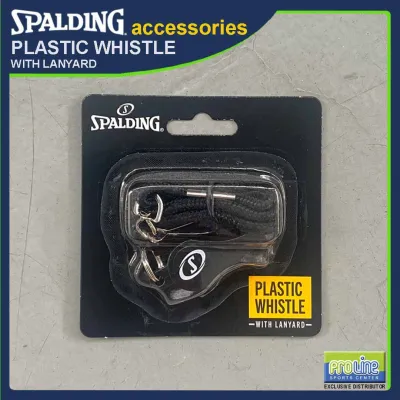
Prices are valid at publication and may change. Please refer to the product page for the latest price.
Match referees require maximum sound penetration to maintain control over a large 105-meter pitch. If you are officiating competitive matches, your signals must be instant and authoritative. A pealess design ensures that even in a torrential downpour, your whistle will sound clearly on the first blow.
Coaches, on the other hand, focus on instruction, repetition, and player engagement. During a long training session, you may need to blow your whistle dozens of times to start and stop drills. A traditional pea whistle is highly efficient for this purpose, requiring less lung effort to produce a clear, recognizable tone. This reduces vocal and physical fatigue over a multi-hour practice session.
Active drill leaders who demonstrate techniques or handle training equipment require a carrying method that does not interfere with their movement. A finger-grip whistle secures directly to your hand, eliminating the distraction of a swinging neck lanyard. This design allows you to transition instantly from throwing a ball to blowing a signal.
Pealess vs. Pea Whistles: Understanding the Sound and Mechanics
Understanding the internal mechanics of your whistle helps you predict how it will perform under pressure. Spalding offers both pealess and traditional pea designs, each utilizing a different method to generate sound waves.

Pealess whistles operate using precisely engineered internal air chambers. When you blow into the mouthpiece, the air is split and accelerated through these chambers, creating a high-velocity, high-frequency sound wave. Because there are no moving parts inside, there is nothing to jam, wear out, or break.
In terms of acoustic profile, pealess models produce a sharp, piercing, and relatively flat tone. This sound is highly directional and excels at cutting through ambient noise, such as strong winds, passing traffic, or cheering spectators. However, pealess whistles require a decisive, strong burst of air to initiate the sound; a weak or hesitant blow will result in an ineffective, airy hiss.
Traditional pea whistles contain a small, spherical ball (the “pea”) inside the main sound chamber. As air flows through the whistle, it forces the pea to spin rapidly, continuously interrupting the air stream. This rapid interruption creates a rhythmic trill or vibrato effect, which is the classic sound most people associate with sports officiating.
This trilling sound is highly distinct and easy for players to identify, even if there are multiple games occurring on adjacent fields. Pea whistles are also highly responsive to subtle changes in breath pressure, allowing coaches to blow soft, short chirps or loud, commanding blasts with ease.
However, the mechanical design of a pea whistle introduces a vulnerability in wet conditions. In the humid, tropical climate of the Philippines, moisture from heavy sweat, saliva, or sudden rain can accumulate inside the chamber. The surface tension of this moisture can cause the internal pea to stick to the chamber wall. When the pea is stuck, the whistle cannot vibrate, resulting in a muffled sound or complete silence.
Recommended Spalding Whistle Categories for Football
To help you choose the correct model, we have categorized the available Spalding whistle designs by their ideal usage scenarios, detailing the specific benefits and limitations of each type.
Spalding Pealess Whistles (Ideal for Match Referees)
For official match referees, reliability is the single most important factor. A missed or delayed whistle during a critical penalty box decision can compromise the integrity of the entire match. Spalding’s pealess models are engineered specifically to eliminate this risk.
- Acoustic Power: The pealess design produces a high-decibel, high-frequency blast that immediately commands attention. This sound is designed to penetrate the helmet of a player or the loud chatter of a crowded sideline, making it perfect for competitive local tournaments.
- Weatherproof Performance: Because there are no moving parts, these whistles are completely unaffected by waterlogging. Whether you are officiating in dry summer heat or a sudden tropical monsoon, the whistle will perform consistently on every blow.
- Hygienic Maintenance: The open, chambered design of a pealess whistle has fewer internal crevices. This makes it much easier to rinse out, clean, and dry, reducing the buildup of bacteria and mold in warm, humid environments.
- Limitations: Pealess whistles require a strong, confident blow to reach their full volume. They also offer less tonal variety, producing a uniform, flat pitch that cannot be easily modulated for different types of foul signals.
Spalding Traditional Pea Whistles (Ideal for Coaches)
Coaches who spend hours on the pitch directing training sessions need a whistle that is easy to blow and highly recognizable to their players.
- Distinctive Trill: The rapid vibration of the internal pea creates a unique, rolling sound. This trill is highly effective for signaling the start and stop of fitness drills, catching the attention of distracted players, or managing large groups across multiple training grids.
- Breath Efficiency: Traditional pea models require very little air pressure to produce a clear sound. This makes them highly comfortable for continuous use throughout a long training session, preventing lightheadedness or fatigue.
- Tonal Control: Coaches can easily vary the intensity of their signals. A gentle puff of air produces a soft warning chirp, while a hard blow delivers a sharp, commanding stop signal, allowing for nuanced communication without speaking.
- Limitations: The internal pea can stick if the whistle becomes waterlogged by heavy rain or excessive saliva. This makes traditional pea models better suited for dry-weather practices, covered sports complexes, or indoor training facilities.
Spalding Finger-Grip and Handheld Models (Ideal for Active Drills)
Active coaches who participate in drills, handle training equipment, or demonstrate footwork need an ergonomic whistle solution that does not restrict their hands.
- Hands-Free Convenience: Finger-grip models feature an adjustable metal or plastic band that slides securely over your fingers. This positions the whistle perfectly on the back of your hand or between your fingers, leaving your palm free to hold footballs, cones, or clipboards.
- Safety on the Pitch: Wearing a traditional neck lanyard while running active drills presents a safety hazard. If a player accidentally collides with you or grabs the lanyard, it can cause neck strain or injury. A finger-grip whistle completely eliminates this risk.
- Instant Accessibility: Because the whistle is mounted directly to your hand, you do not have to search for a dangling lanyard. You can bring the whistle to your mouth instantly, allowing for rapid, split-second signaling during fast-paced tactical drills.
- Limitations: Finger-grip models require you to bring your hand to your face to blow the whistle. If both of your hands are fully occupied carrying heavy training gear, it may be slightly more difficult to access the mouthpiece quickly compared to a whistle resting at chest level on a lanyard.
Essential Features to Verify Before Purchase
Before finalizing your purchase of a Spalding whistle, you should verify several key physical specifications to ensure the model matches your personal comfort and safety requirements.
- Material Durability: Spalding whistles are typically available in high-impact ABS plastic or metal. ABS plastic is highly recommended for football. It is lightweight, impact-resistant, and does not conduct extreme temperatures. On an open, sunny pitch in the Philippines, a metal whistle can become uncomfortably hot to hold or place in your mouth. ABS plastic is also much gentler on your teeth if you need to hold the whistle in your mouth for extended periods.
- Mouthpiece Comfort and Hygiene: Look for models that feature a cushioned mouth grip (CMG) or a soft thermoplastic overmold. This cushioning protects your teeth, provides a secure grip when your hands are wet, and reduces jaw fatigue. Always check the product packaging for material safety disclosures, ensuring the plastic is non-toxic and BPA-free.
- Lanyard Compatibility: If you choose a lanyard-style whistle, verify that the attachment point is robust. The whistle should connect to the lanyard via a secure split ring. Ensure your lanyard features a safety breakaway clasp. This clasp is designed to snap open automatically under tension, preventing neck injuries if the lanyard gets caught on a player or a piece of equipment.
- Color and Visibility: Consider how easy the whistle is to locate. Match referees typically opt for classic black or silver to maintain a professional, traditional appearance that coordinates with their official uniform. Coaches, however, should consider high-visibility colors like bright orange, yellow, or red. A brightly colored whistle is much easier to spot if dropped on green grass or buried at the bottom of a dark equipment bag.
- Price and Authenticity: Genuine Spalding whistles are highly affordable, generally falling into a budget-friendly price band. Basic plastic models typically range from ₱150 to ₱350, while premium pealess models or finger-grip variants range from ₱400 to ₱800 on local online marketplaces and sporting goods stores. Always purchase from authorized retail channels to ensure you receive a durable, authentic product with proper acoustic tuning.
Frequently Asked Questions (FAQ)
How do I clean and maintain a Spalding whistle to prevent bacteria buildup?
Because whistles are exposed to constant saliva, moisture, and outdoor dust, regular cleaning is essential to maintain hygiene and prevent the growth of bacteria or mold, particularly in warm, humid climates.
To clean your whistle safely, follow these steps:
- Rinse: Flush the whistle thoroughly under warm, running tap water after every use to remove saliva and loose debris.
- Soak: Submerge the whistle in a bowl of warm water mixed with a few drops of mild dishwashing soap. Let it soak for 10 to 15 minutes to loosen any stubborn buildup.
- Scrub: Use a small, soft-bristled brush, such as a clean toothbrush, to gently scrub the mouthpiece and the interior of the sound chambers.
- Dry: Shake out all excess water and place the whistle on a clean towel in a well-ventilated area to air dry completely.
Always check the manufacturer’s care instructions before cleaning. Never use boiling water, bleach, or harsh chemical solvents, as these can warp plastic components, degrade synthetic peas, or damage rubber mouth grips.
Why is my Spalding pea whistle not making a sound, and how can I fix it?
If your traditional pea whistle produces a muffled, airy hiss or no sound at all, the internal pea is likely stuck. This is almost always caused by surface tension from trapped saliva, sweat, or rainwater, which glues the pea to the inner chamber wall.
To resolve this issue safely, use the following troubleshooting steps:
- Tap Gently: Tap the whistle gently against the palm of your hand to break the surface tension and dislodge the stuck pea.
- Rinse: If the pea remains stuck, rinse the whistle thoroughly with clean, lukewarm water to dissolve any dried saliva, dirt, or lint that may be holding it in place.
- Clear and Dry: Blow sharply through the whistle while it is wet to free the pea, then shake out the excess water and allow it to dry completely in a well-ventilated area.
Never insert sharp objects like pins, paperclips, or wire into the whistle chamber to pry the pea loose. Doing so can permanently scratch the internal acoustic chambers, deform the pea, or ruin the whistle’s sound quality.
Community discussion
Share your experience or ask a question. Comments are reviewed before publication.