
Squeezing power is a fundamental yet often overlooked aspect of physical fitness. Whether you are an active climber navigating indoor bouldering walls, a powerlifter aiming to secure a heavy deadlift without straps, or an office professional looking to prevent repetitive strain injuries from hours of typing, your hands are your primary point of contact with the world. Developing a strong grip not only enhances athletic performance but also correlates with better overall upper-body strength and long-term joint health.
In the Philippines, the choice of a spring handle grip is highly influenced by local factors, particularly the tropical climate. High relative humidity and year-round heat can cause metal components to rust rapidly and make cheap plastic or low-grade rubber handles slippery and difficult to control. Selecting the right tool requires balancing your immediate strength needs with long-term durability, material quality, and environmental resistance.
How to Choose the Right Spring Handle Grip for Your Goals
Resistance Levels
Finding your ideal starting point is essential to prevent injury and ensure progressive development. If you choose a spring handle grip that is too light, your muscles will not experience the mechanical tension required to trigger adaptation and growth. Conversely, selecting a resistance that is too heavy can lead to poor form, joint strain, and tendonitis.
Products mentioned in this guide
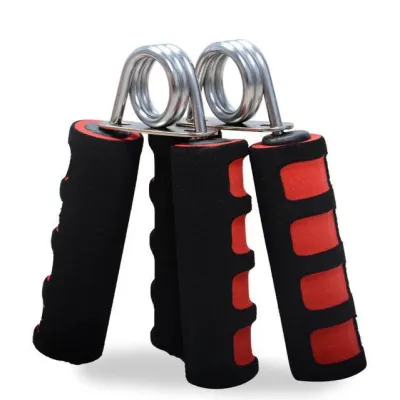
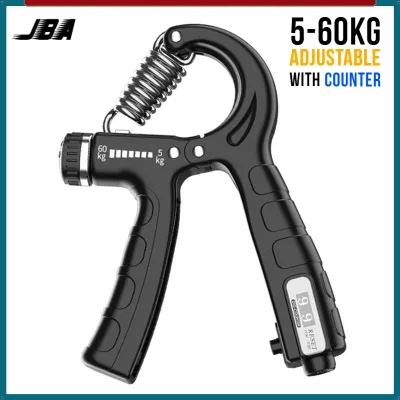
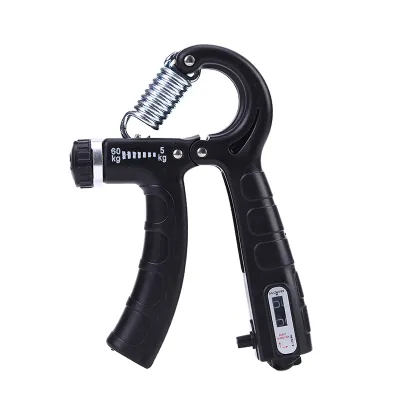
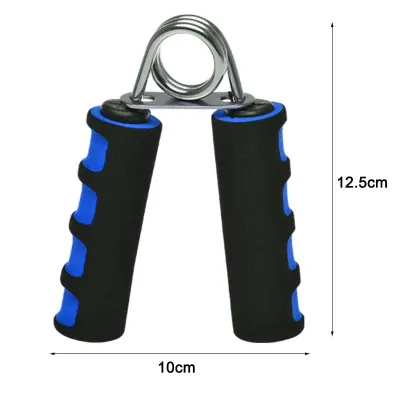
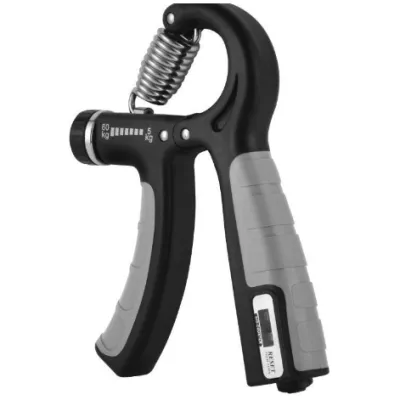
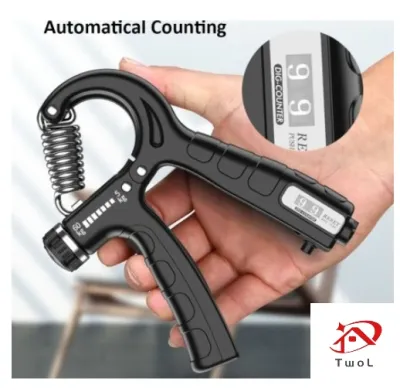
Prices are valid at publication and may change. Please refer to the product page for the latest price.
Beginners should generally look for options that allow them to perform 10 to 15 clean, controlled repetitions. This range helps build tendon strength and neural pathways before transitioning to heavier loads. Advanced lifters focusing on building maximal crushing power should prioritize high-resistance tools where they can only manage 3 to 5 repetitions per set. It is also important to distinguish between training for crushing strength (the ability to close the hand completely) and support strength (the ability to hold onto a heavy object over time), as your choice of resistance and repetition schemes will vary accordingly.
Adjustable vs. Fixed Resistance
The debate between adjustable and fixed-resistance grippers centers on versatility versus raw durability. Adjustable spring handle grips feature a dial, screw, or sliding spring mechanism that alters the leverage, allowing you to change the resistance level on a single device. This design is highly cost-effective and space-saving, making it perfect for progressive overload as your forearms grow stronger.
However, the moving parts and plastic housings common in adjustable models represent potential failure points under heavy, long-term use. Fixed-resistance grippers, on the other hand, are built with a single, solid steel torsion spring and rigid handles. They offer unmatched durability and exact calibration, but you must purchase a new unit each time you outgrow your current resistance level. Serious strength athletes often transition to fixed models once they establish a baseline level of grip power.
Handle Material and Build Quality
The material of the handle directly impacts your control, comfort, and safety during training. In a humid environment, moisture-wicking and slip-resistant properties are critical. Knurled aluminum handles provide an exceptionally secure, textured grip that remains reliable even when your hands are sweaty, though they can be abrasive on unconditioned skin and may require a breaking-in period for your calluses.
High-density rubber or silicone sleeves offer a softer, more comfortable alternative that reduces skin irritation, but they can degrade or become sticky over time when exposed to sweat and high ambient temperatures. If you choose metal handles, prioritizing rust-resistant coatings, chrome plating, or anodized finishes will prevent corrosion and extend the lifespan of your equipment. Always check that the spring itself is securely anchored into the handles to avoid dangerous slippage during a heavy squeeze.
Ergonomics and Hand Size
The physical dimensions of the gripper must match your hand anatomy to ensure safe and effective training. If the handle diameter is too thick or the initial spread is too wide, your fingers will struggle to wrap around the device, placing excessive shear stress on your finger joints and wrist. Standard straight-handle grippers are highly effective for general use, but they require proper hand placement to prevent the metal from digging painfully into your palm.
Contoured handles, which feature molded indentations for each finger, can distribute pressure more evenly but may not align perfectly with every hand size. For those with smaller hands, a gripper with a narrower handle spread allows for a more natural range of motion and prevents the thumb joint from being overextended at the start of the squeeze.
Top Spring Handle Grip Categories for Every Training Level
Best Adjustable Spring Handle Grips for Beginners and Progression
Adjustable spring handle grips are the go-to choice for individuals who are new to grip training, recovering from hand injuries, or looking for a versatile tool for general fitness. These devices typically utilize a dial mechanism at the front of the frame that compresses or decompresses the main spring, altering the resistance across a broad range, such as 10 kg to 60 kg. This flexibility allows you to seamlessly transition from a light warm-up routine to high-intensity working sets using the same tool.

The primary advantage of this category is its adaptability. Beginners can start at the absolute lowest setting to master the mechanics of the crushing motion without risking joint strain, then gradually turn the dial to increase the tension as their forearm muscles adapt. This incremental progression is highly efficient and eliminates the need to buy multiple individual grippers during the initial stages of your fitness journey. It also makes the tool highly shareable among family members with different strength levels.
However, users should be aware of the inherent limitations of adjustable designs. The internal adjustment mechanisms are often housed in plastic frames, which can flex or creak when subjected to high tension. Over months of consistent use, the spring’s calibration may drift slightly, or the adjustment threads may wear down. When browsing local e-commerce platforms, it is wise to read user reviews carefully, paying close attention to feedback regarding the longevity of the adjustment dial and whether the spring retains its tension over time. Look for models that utilize reinforced steel pins at the pivot points to ensure a longer service life.
Best Heavy-Duty Fixed Grips for Advanced Strength
For seasoned athletes, powerlifters, and martial artists, heavy-duty fixed-resistance grippers are the gold standard for developing elite crushing power. These grippers are built to withstand extreme forces, featuring thick, industrial-grade steel torsion springs paired with solid metal handles, usually crafted from aircraft-grade aluminum or heavy steel. Because they lack moving adjustment parts, there are virtually no weak points in the construction, ensuring the gripper remains consistent and functional for years.
The main benefit of a fixed gripper is its uncompromising stability and precise, heavy resistance. Unlike adjustable models, which often top out at moderate tensions, fixed grippers are available in massive resistance ratings, often calibrated in specific increments ranging from 45 kg (100 lbs) to well over 150 kg (350 lbs). This allows advanced trainers to target true maximal strength and structural forearm density through low-rep, high-intensity training. The rigid construction ensures that 100% of your squeezing force is transferred directly into compressing the spring.
The trade-off for this extreme durability is practical convenience and cost. To progress through a structured strength program, you will eventually need to purchase a suite of multiple fixed grippers—one light model for warming up, a medium model for working sets, and a heavy model that you can barely close for single-rep challenges. Additionally, the aggressive metal knurling on these handles can easily tear soft skin, requiring a slow, disciplined approach to build up the necessary hand calluses. Proper hand placement is essential to avoid putting harmful torque on your finger joints. For those training in humid conditions, using gym chalk can help manage sweat and prevent the heavy metal handles from slipping.
Best Ergonomic and Rehab Grips for Endurance and Recovery
Not everyone training their grip is looking to bend steel bars; many individuals require targeted hand conditioning for recovery, endurance, or stress relief. Ergonomic and rehabilitation spring handle grips are specifically engineered with user comfort and joint health as the top priorities. These tools frequently feature anatomically contoured handles, soft silicone sleeves, or thick foam padding designed to cushion the hand and eliminate painful pressure points during use.
The primary application for these grippers is low-resistance, high-repetition training. They are highly favored by physical therapy patients recovering from wrist fractures, tendon surgery, or carpal tunnel syndrome, as well as office workers who spend hours typing and want to alleviate hand stiffness. The gentle, smooth resistance helps stimulate blood flow, lubricate the joints of the hand, and promote active recovery without placing heavy mechanical stress on healing tissues. They are also excellent for warm-ups before climbing or heavy lifting sessions.
While these grippers excel at promoting joint mobility and muscular endurance, they are not designed to build maximal crushing strength or significant forearm mass. The soft foam or silicone covers also present a unique maintenance challenge in tropical climates. These porous materials readily absorb sweat, skin oils, and environmental moisture, which can lead to unpleasant odors and rapid material breakdown if left uncleaned. Users must establish a regular cleaning routine to keep these grippers hygienic and durable. Selecting closed-cell foam or high-grade, non-porous silicone can help mitigate moisture absorption.
Quick Comparison: Which Grip Type Fits Your Routine?
| Grip Type | Primary Best For | Typical Resistance Range | Durability Expectation | Maintenance/Climate Considerations |
|---|---|---|---|---|
| Adjustable | Beginners, warm-ups, and progressive overload | Low to Medium (10 kg – 60 kg) | Moderate (plastic parts may wear over time) | Keep adjustment threads clean; check dial regularly for slippage |
| Heavy-Duty Fixed | Advanced strength, powerlifters, and climbers | Medium to Extreme (45 kg – 150+ kg) | Excellent (solid metal construction) | Wipe down metal handles; apply light oil to spring to prevent rust |
| Ergonomic & Rehab | Recovery, physical therapy, and desk workers | Very Low to Low (5 kg – 20 kg) | Moderate (foam/silicone may degrade) | Wash soft handles regularly to remove sweat and oils; store in dry areas |
Safe Training Practices and Equipment Maintenance
Warm-up and Form
Before attempting to close any spring handle grip, it is vital to prepare the delicate muscles and tendons of your hands and forearms. Begin with simple dynamic movements, such as opening and closing your fists rapidly for 30 seconds, or massaging your palms and forearms to stimulate blood circulation.
When using the gripper, focus on executing a complete range of motion. Place the index finger near the top of the handle and wrap your pinky securely at the bottom to maximize leverage. Squeeze the handles until they make physical contact, hold the contraction for a brief second, and then slowly control the opening phase. Avoid rapid, bouncy repetitions, as these rely on momentum and significantly increase the risk of tendon irritation.
Programming Guidelines
Your training structure should align directly with your fitness goals. If you are training for maximal strength, treat your forearms like any other major muscle group: perform 3 to 5 sets of 5 to 8 repetitions using a heavy gripper that challenges you near failure, resting for 2 to 3 minutes between sets to allow your nervous system to recover.
If your goal is muscular endurance or active recovery, shift to a lighter gripper and perform 3 sets of 15 to 25 repetitions, keeping rest periods under 1 minute to build localized fatigue resistance. Regardless of your goal, consistency is key; however, avoid training your grip immediately before heavy compound lifts like deadlifts or pull-ups, as fatigued hands will compromise your safety and performance on those exercises.
Injury Prevention
The tendons in your wrists and elbows are highly susceptible to overuse injuries, such as medial epicondylitis (golfer’s elbow) or lateral epicondylitis (tennis elbow). Because grip training is highly demanding on these connective tissues, you must monitor your body for warning signs of overtraining.
If you experience sharp, persistent pain in your joints or tendons rather than a typical muscle burn, stop training immediately. Equipment cannot compensate for a lack of rest; allow your body to heal, and consult a healthcare professional if the discomfort persists. Incorporating extensor training—such as expanding your fingers against resistance bands—can help maintain muscular balance and prevent common overuse injuries.
Equipment Care
Operating in a tropical climate like the Philippines means your gym gear is constantly exposed to high humidity and sweat. To prevent your spring handle grip from deteriorating, make it a habit to wipe down the handles and spring with a dry microfiber cloth immediately after every training session.
For metal grippers, applying a single drop of light machine oil or a rust-prevention spray to the spring coil every few months will ensure smooth, squeak-free operation. Store your grippers in a dry, ventilated area rather than leaving them in a damp gym bag, which can accelerate rust and degrade rubber components. If your gripper has foam handles, wash them periodically with mild soap and warm water, allowing them to air dry completely in a shaded, well-ventilated space.
Frequently Asked Questions (FAQ)
How often should I train with a spring handle grip?
Forearm and grip muscles are highly resilient because they are used constantly throughout the day, but they still require structured rest to grow and adapt. For strength building, a frequency of 2 to 3 dedicated sessions per week is ideal, ensuring at least 48 hours of recovery between heavy, high-intensity workouts. Light endurance or rehabilitation exercises can be performed more frequently—up to 4 or 5 times a week—provided you do not experience joint pain, persistent stiffness, or deep muscle fatigue. Always prioritize quality of movement over frequency.
Can spring handle grips help with forearm size and vascularity?
Consistent training with a spring handle grip will build muscle density, endurance, and functional strength in your forearms. However, achieving substantial muscle hypertrophy (size) and prominent vascularity depends on multiple factors beyond crushing movements alone. To maximize forearm size, you must combine grip training with exercises that target wrist flexion and extension, such as wrist curls and reverse curls. Additionally, visible vascularity is heavily influenced by your overall body fat percentage and genetic factors, meaning a balanced diet and comprehensive fitness routine are essential to achieve that specific aesthetic goal.
Community discussion
Share your experience or ask a question. Comments are reviewed before publication.