
Selecting the ideal star baton majorette gear for school competitions in the Philippines requires balancing visual appeal, weight, and safety features to match the performer’s skill level. Whether preparing for high-stakes municipal meet-ups, school intramurals, or vibrant foundation day parades, choosing the right equipment ensures that the squad performs with precision and confidence. The unique star-shaped ends of these batons provide a distinct silhouette that catches the light during spins and tosses, elevating the visual impact of any routine.
To make an informed purchase, coaches, parents, and team captains must evaluate several critical factors. The baton’s weight and length must align with the physical build and technical proficiency of the twirler to prevent injury and execution errors. Furthermore, because these batons undergo rigorous use during daily outdoor practices and long parade routes, the durability of the shaft and the security of the star tips are paramount. This comprehensive guide outlines the essential features, sizing methodologies, skill-level requirements, and local sourcing avenues to help you equip your majorette team for success.
Essential Features of a Competition-Ready Star Baton
Shaft Material and Weight Distribution
The shaft serves as the backbone of the star baton, directly influencing how the instrument behaves in motion. Manufacturers typically construct professional-grade shafts from lightweight aluminum, chrome-plated steel, or specialized reinforced synthetics. Aluminum shafts are highly favored for their agility and ease of handling, making them excellent for rapid hand-to-hand transfers and intricate finger spins. Chrome-plated steel, while heavier, provides superior momentum for high aerial tosses and complex body rolls, though it requires greater wrist strength to control.
Products mentioned in this guide
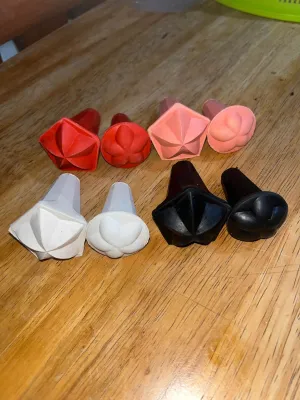

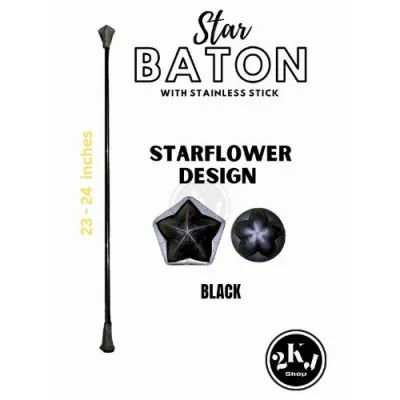
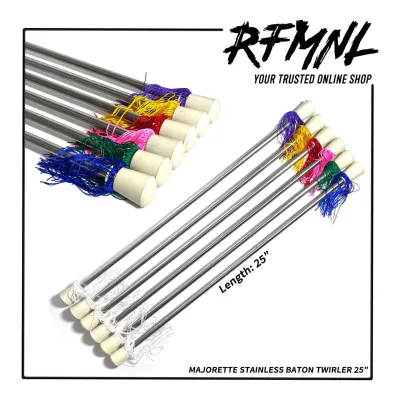
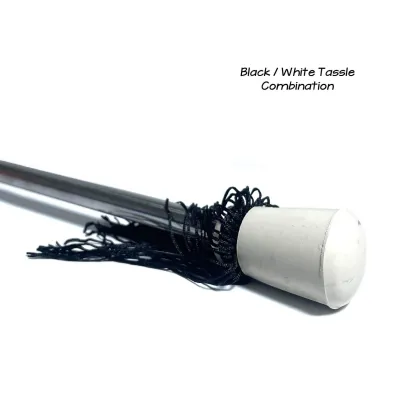
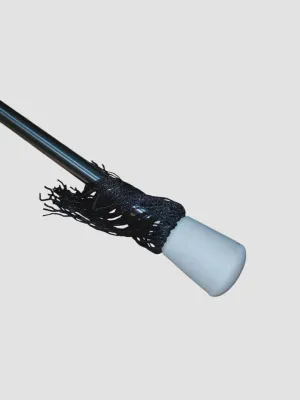
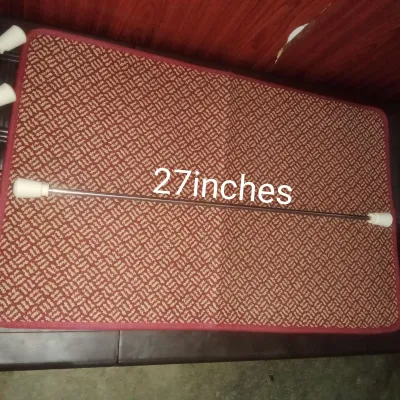
Prices are valid at publication and may change. Please refer to the product page for the latest price.
Weight distribution is the defining factor in how balanced a baton feels during execution. A high-quality baton features a perfectly centered pivot point, ensuring that the weight is distributed symmetrically from the midpoint to both ends. When a performer holds the baton at its center, it should feel neutral and stable without dipping unexpectedly to one side. Poorly balanced batons can wobble mid-spin, causing the performer to lose rhythm or drop the instrument during critical transition sequences.
For outdoor performances, such as foundation day parades along asphalt roads, checking the material grade is essential. The tropical climate of the Philippines introduces high humidity and sweat, which can accelerate rust on low-grade steel. Opting for anodized aluminum or high-quality chrome-plated finishes helps protect the metal from corrosion. Always verify the manufacturer’s material specifications to ensure the shaft can withstand both high-impact drops on hard surfaces and the corrosive effects of moisture.
Star Tip Design and Attachment Security
The star-shaped tips are what distinguish a star baton majorette setup from standard marching batons. These tips are usually molded from durable rubber, synthetic polymers, or hard plastics, often finished with metallic, holographic, or neon coatings to maximize visibility under stadium lights or bright sunlight. The multi-pointed design catches the eye of judges and spectators alike, amplifying the perceived speed and complexity of the twirler’s rotations.
However, the star shape introduces unique physical dynamics and safety challenges. Because the tips have a larger surface area than traditional round rubber balls, they experience greater air resistance during high tosses. More importantly, the impact of a falling baton can put immense stress on the joint where the tip meets the shaft. If a star tip is not securely fastened, it can detach mid-air, turning a high toss into a safety hazard for both the performer and the surrounding audience.
When evaluating star batons, pay close attention to the attachment mechanism. Premium models utilize threaded metal screws that anchor the star tip directly into the core of the shaft, supplemented by heavy-duty industrial adhesives. Molded-on tips are also highly secure, as they are formed directly onto the metal. Avoid budget options that rely solely on friction-fit designs, as these are prone to slipping off after repeated drops. Prior to purchase, perform a stability check by firmly twisting the star tip; if there is any play, wobble, or separation at the seam, the baton is not suitable for competition use.
Matching Star Baton Majorette Equipment to Skill Levels
Beginner and Elementary School Majorettes
For younger performers in elementary school or those newly joining a majorette squad, the primary focus must be on control, safety, and building confidence. Beginners typically lack the wrist strength and muscle memory required to manage heavy, professional-grade steel batons. For these performers, lightweight aluminum shafts with a thinner diameter (such as 5/16-inch) are highly recommended. These dimensions reduce physical strain on developing wrists and hands, allowing students to practice basic spins and marches for longer periods without fatigue.

Durability is another critical consideration for beginner equipment. Novice twirlers will inevitably drop their batons multiple times on hard school grounds, concrete basketball courts, or tiled gym floors. Consequently, the star tips must be made of high-impact, shock-absorbing rubber rather than brittle plastics that can crack or shatter upon impact. Brittle star tips not only ruin the aesthetic of the baton but can also create sharp, jagged edges that pose a cutting hazard to the students.
To assist younger majorettes in maintaining a secure hold, look for batons that feature textured center grips. Some models come with knurled metal sections in the middle of the shaft, while others utilize rubberized or silicone grip tape. These tactile surfaces prevent the baton from slipping out of sweaty hands during outdoor rehearsals under the afternoon sun, helping students focus on mastering their footwork and basic twirling patterns.
Intermediate and High School Performers
As majorettes progress to high school and varsity levels, their routines evolve to include advanced maneuvers such as multi-baton juggling, under-leg passes, and high-altitude tosses. These complex routines require batons that offer greater momentum and aerodynamic efficiency. Intermediate and advanced performers generally prefer standard-weight or slightly heavier batons, often utilizing a 3/8-inch diameter shaft made of tempered steel or high-tensile aluminum. The added weight helps the baton maintain its spin rate and trajectory when thrown high into the air.
Aerodynamics play a crucial role during outdoor performances, where wind conditions can easily blow a lightweight baton off course. Advanced star tips are often engineered with slim profiles or hollowed sections that allow wind to pass through, reducing drag and stabilizing the baton’s flight path during street parades. This design ensures that when a performer executes a high toss, the baton descends predictably, allowing for a clean, confident catch.
Furthermore, advanced routines require a flawless, high-polish shaft finish. Smooth chrome or polished anodized aluminum allows the baton to slide effortlessly through the fingers and palm during rapid hand-to-hand transfers and complex body rolls. Any roughness or imperfections on the shaft can cause friction burns or disrupt the flow of the movement, making a premium, smooth finish essential for competitive success.
How to Measure and Select the Correct Baton Size
To determine the correct baton length for an individual performer, use the standard armpit-to-fingertip measurement method. This hands-on sizing technique is highly reliable and ensures the baton is proportional to the twirler’s arm length:
- Have the majorette stand up straight with their shoulders relaxed and chest forward.
- Instruct them to extend one arm completely straight out to the side, parallel to the floor, with the palm facing upward and fingers fully extended.
- Place a flexible measuring tape at the apex of the armpit (where the arm meets the torso).
- Extend the tape measure along the inner arm all the way to the very tip of the middle finger.
- Note the measurement in inches, as most baton manufacturers list their sizes using this unit.
This measurement represents the maximum ideal length of the star baton, including the star tips. If a baton is too long, the ends will repeatedly strike the performer’s chest, inner arms, or legs during under-arm rolls, wraps, and horizontal spins, leading to painful bruising and disrupted routines. Conversely, a baton that is too short will look visually stunted during performances and will limit the leverage needed to execute advanced spins and tosses properly.
When equipping an entire school squad, coaches must decide between ordering custom individual lengths or purchasing a uniform batch of standard sizes. Ordering custom lengths for each performer ensures optimal safety and technical execution, but it can complicate squad formations if there is a wide disparity in heights. Purchasing a uniform batch of standard sizes (for example, a set of 24-inch or 26-inch batons) provides a highly symmetrical visual line during foundation day formations. However, this approach requires careful choreography adjustments to ensure shorter performers do not struggle with oversized equipment.
Before placing a bulk order, always consult the specific sizing chart provided by the manufacturer or supplier. Because star tips vary in shape and depth, some brands measure their batons from metal end to metal end (excluding the tips), while others measure the total tip-to-tip length. Clarifying this measurement standard with your supplier prevents sizing errors that could leave your squad with ill-fitting gear right before a major competition.
Sourcing and Customizing Star Batons in the Philippines
Finding reliable star batons in the Philippines involves exploring several distinct channels. Local sports equipment suppliers in major urban hubs often carry standard models, while specialized marching band outfitters and uniform makers in provinces known for active brass band cultures (such as Cavite, Bulacan, and Batangas) offer high-quality, competition-grade options. Additionally, online marketplaces and e-commerce platforms provide access to international brands, though buyers must exercise caution regarding shipping times and product quality.
Working with local specialized suppliers offers distinct advantages for school teams. These craftsmen and vendors understand the specific demands of Philippine school events, including the need for durable materials that can survive both the intense heat of dry-season intramurals and the damp conditions of rainy-season parades. Local suppliers are also more likely to offer bulk discounts, flexible payment terms for school budgets, and customized team packages that include matching carrying cases.
Customization is an excellent way to elevate a squad’s visual presentation and foster school pride. Many local suppliers offer options to customize the star tips to match the school’s official colors, such as royal blue, emerald green, or bright yellow. Teams can also request reflective holographic tape wrapping on the shafts to catch the light during evening performances, or have the school’s initials engraved directly onto the metal. Coordinating the baton’s aesthetic with the majorette uniforms creates a polished, professional look that impresses judges and audiences alike.
When sourcing batons, verifying supplier reliability is crucial to avoiding last-minute logistical disasters. Always check production and delivery lead times, especially when ordering before major regional events or the national foundation day season, when demand peaks nationwide. Read customer reviews carefully, paying close attention to feedback regarding the durability of the star-to-shaft bond. Finally, confirm the supplier’s return and replacement policies so you can quickly resolve any issues with defective or transit-damaged items before the competition begins.
Maintenance and Safety Checks Before Intramurals
To keep your star batons in peak, competition-ready condition throughout the school year, establish a strict routine of pre-practice and pre-competition safety inspections. Before every rehearsal, have each performer inspect their baton for any signs of physical damage. Check the metal shaft for deep scratches, cracks, or bends that could compromise its structural integrity. Wiggle the star tips to ensure they are firmly anchored to the shaft; if a tip feels loose or shows signs of cracking, the baton must be set aside immediately.
Cleaning the batons regularly is essential for maintaining their grip and visual appeal. During intense outdoor practices, sweat, sunscreen, dirt, and road dust accumulate on the shaft and tips, making them slippery and dull. Clean the equipment using a soft microfiber cloth dampened with mild soapy water. Avoid using harsh chemical solvents, bleach, or abrasive scrubbing pads, as these can strip away chrome plating, peel off reflective tape, or dull the vibrant paint on the star tips. Once cleaned, dry the batons thoroughly with a clean towel to prevent moisture from trapped sweat from causing rust inside the shaft.
Proper storage is equally important for preserving the life of your equipment. Never allow students to throw their batons loosely into a shared gear trunk or the back of a transport vehicle, as this can easily bend the shafts or chip the star tips. Instead, store the batons in individual padded baton sleeves or a dedicated squad carrying case. These cases protect the delicate star tips from bending or scratching against other gear when traveling to away games, parades, or regional competitions.
Establish a non-negotiable safety rule within your squad: any baton that exhibits a loose star tip, a cracked joint, or a bent shaft must be removed from use immediately. A bent shaft completely alters the baton’s balance, making it unpredictable and dangerous to spin. Attempting to perform high tosses with a compromised baton poses a severe risk of injury to the twirler and spectators. Damaged batons should only be returned to service once they have been repaired by a qualified professional or fitted with manufacturer-approved replacement parts.
Frequently Asked Questions (FAQ)
Can a standard majorette baton be used instead of a star baton?
While standard ball-tip batons are excellent for technical training and traditional routines, star batons are highly preferred for school parades and foundation day events due to their superior visual presence. The star shape alters the baton’s aerodynamics and weight distribution, meaning performers will need a brief adjustment period to adapt to the different spin dynamics and wind resistance before competing.
How far in advance should we order custom star batons for foundation day?
It is highly recommended to place custom or bulk orders at least six to eight weeks in advance of your event. This timeline accounts for manufacturing, custom color matching, quality checks, and shipping transits. Ordering early also allows the squad sufficient time to practice with the exact performance batons, and provides a buffer to order a few extra backup batons in case of unexpected loss or damage during intensive rehearsals.
Community discussion
Share your experience or ask a question. Comments are reviewed before publication.