
Choosing the right swim fins for kids requires balancing their age, physical development, and current swimming ability. The ideal pair should support their natural body alignment, build leg strength without straining developing joints, and fit securely without causing painful blisters. For toddlers and early beginners, ultra-soft, highly buoyant silicone fins are best to build water confidence. Developing swimmers in the six-to-nine age bracket benefit most from short-blade training fins that encourage a rapid, natural kick tempo. Older pre-teens and advanced swimmers can transition to stiffer rubber or specialized training fins to build endurance and refine advanced stroke techniques.
In the tropical climate of the Philippines, where weekend trips to local resorts, beach outings in Batangas or Boracay, and swim lessons in warm water are common, choosing the right pair of swim fins can make a massive difference in your child’s confidence and safety in the water. Properly selected fins serve as excellent training aids, helping young swimmers develop proper muscle memory and technique while enjoying their time in the pool.
Key Selection Criteria for Kids' Swim Fins
Understanding the fundamental differences between adult and youth swim fins is the first step in making a safe purchase. Adult fins are designed for fully developed musculoskeletal systems; they feature stiff, heavy blades that require significant torque to move through the water. If a child wears adult fins, the excessive resistance can place dangerous strain on their immature knee joints, ankles, and hip flexors. Youth-specific fins are engineered with lighter materials, shorter blades, and foot pockets proportioned specifically for the narrower heels and flatter arches of growing feet.
Products mentioned in this guide
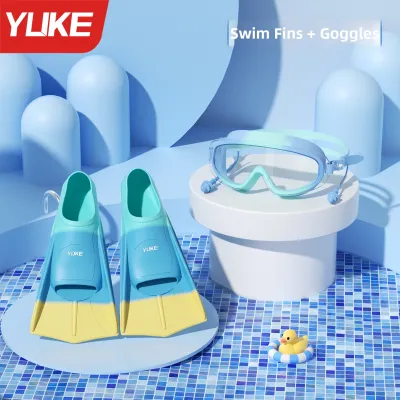
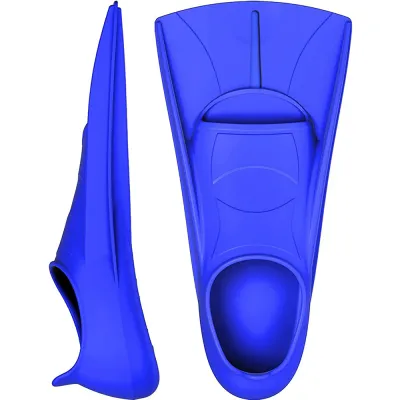
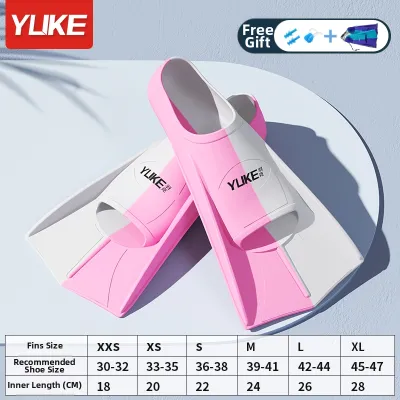
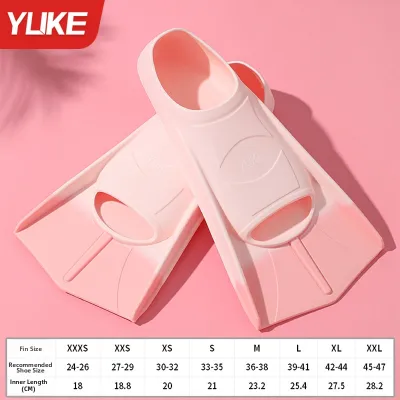
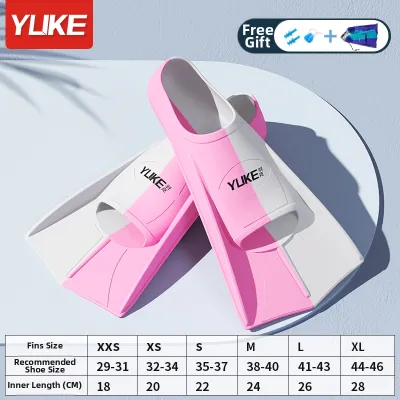
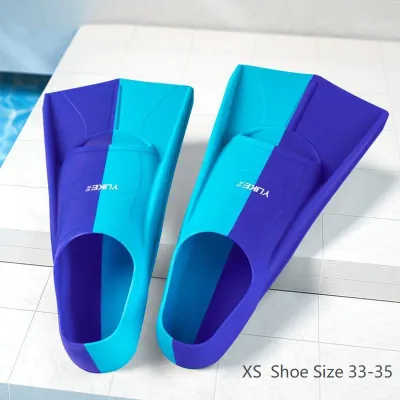
Prices are valid at publication and may change. Please refer to the product page for the latest price.
The length of the fin blade directly dictates the mechanics of the swimmer’s kick. Long-blade fins, which are commonly used for recreational snorkeling or scuba diving, generate high propulsion with slow, wide leg movements. While this feels effortless, it is highly detrimental to a child learning to swim. Long blades encourage children to bend their knees excessively, creating an inefficient “bicycle kick” that ruins their body alignment and halts technical progress. In contrast, short-blade training fins mimic the natural pace of a barefoot kick. They provide just enough resistance to build muscle memory for a fast, compact flutter kick, which keeps the hips high in the water and protects developing joints from repetitive strain.
Parents must choose between full-foot pockets and adjustable open-heel designs, each offering distinct advantages. Full-foot pockets wrap completely around the foot, providing a secure, glove-like fit that maximizes energy transfer from the leg to the blade. This design minimizes friction, making it the preferred choice for structured swim lessons and competitive training. However, because children’s feet grow rapidly, full-foot pockets may only last a single season. Adjustable open-heel fins feature an open back with an adjustable strap, allowing the fin to accommodate multiple shoe sizes as your child grows. While highly economical, open-heel straps can sometimes slip or chafe the Achilles tendon if not adjusted correctly, making them better suited for recreational pool play rather than intense swim training.
The material of the fin determines both its comfort and its performance. High-grade liquid silicone is exceptionally soft, flexible, and hypoallergenic, making it the premier choice for young children with sensitive skin. Silicone fins conform easily to the foot, virtually eliminating the hot spots that lead to blisters. For older, stronger children, natural rubber or advanced thermoplastic elastomers (TPE) provide the necessary structural stiffness. Rubber is denser and heavier than silicone, offering greater resistance to build leg power. However, rubber can degrade quickly when exposed to direct sunlight and chlorine, so choosing high-quality, UV-resistant compounds is essential for longevity in tropical climates.
Best Swim Fin Types by Age and Skill Level
Selecting the right swim fins involves matching the structural features of the gear to your child’s developmental stage and swimming goals. As children grow and progress from basic water familiarization to advanced competitive strokes, their equipment needs change significantly.

Toddlers and Early Beginners (Ages 2–5)
For toddlers and young beginners aged two to five, water familiarization and building confidence are the primary goals. At this stage, children are still developing basic motor skills and coordination. Swim fins should not be used to teach speed or advanced propulsion; instead, they serve as a playful tool to help young children feel secure and buoyant in the water. Lightweight, ultra-short fins made of highly flexible silicone are ideal for this age group.
Buoyancy is a critical feature for early beginners. Toddlers have a naturally denser lower body relative to their lung capacity, which often causes their legs to sink, leading to frustration and fear. Highly buoyant silicone fins help lift the child’s hips and legs to the surface, making it much easier for them to maintain a flat, horizontal position. This artificial lift allows them to focus on blowing bubbles, paddling their arms, and enjoying the water without the constant struggle to stay afloat.
Comfort is paramount to prevent a toddler from rejecting the gear entirely. Look for fins with exceptionally soft, stretchable full-foot pockets or wide, flat silicone heel straps that distribute pressure evenly across chubby toddler feet. Avoid any stiff plastics or rigid rubber that can pinch the skin. Bright, vibrant colors or playful designs can also make the fins more appealing, turning gear preparation into an exciting part of their swim routine.
Young Kids and Developing Swimmers (Ages 6–9)
As children reach school age and begin formal swimming lessons, their training needs transition from basic water comfort to technical development. Swimmers aged six to nine are developing the muscle strength and coordination required for structured strokes like the freestyle and backstroke. For this group, standard short-blade training fins are the most effective tool to refine their kicking technique and build leg endurance.
A short-blade design is essential for this developmental stage because it enforces a natural kick tempo. When children kick too slowly or with too much knee bend, their hips sink, disrupting their entire stroke. Short-blade fins provide a moderate amount of resistance that forces the swimmer to kick rapidly from the hips, keeping their legs straight and their body aligned. This helps them learn how to coordinate their breathing and arm strokes without losing momentum.
At this active stage, a secure and snug fit is critical. A loose fin will wobble, reducing the efficiency of the kick and creating severe friction that leads to painful blisters on the heel or instep. When shopping for this age group, prioritize full-foot pockets that offer a close, secure fit. If your child is between sizes, it is generally safer to choose the smaller, snugger size or use specialized fin socks to fill the gap, rather than buying a larger pair that will slip off during active kicking sets.
Pre-Teens and Intermediate to Advanced Swimmers (Ages 10+)
Pre-teens and advanced young swimmers aged ten and older require specialized gear that matches their increased strength and training intensity. Many children in this category are joining competitive swim teams, participating in school sports, or engaging in advanced water sports. Their swim fins must be durable enough to withstand daily, rigorous training sessions and designed to target specific muscle groups and stroke mechanics.
Medium-blade fins are excellent for older kids who need to build serious cardiovascular endurance and leg power. These longer blades provide greater resistance, forcing the leg muscles to work harder. Because of the increased physical demand, parents and coaches should ensure that young swimmers warm up thoroughly with gentle, barefoot swimming before putting on medium-blade fins to prevent painful calf and arch cramps. If cramping occurs, the swimmer should immediately stop and stretch.
For highly technical training, specialized fin types can be introduced. Split fins, which feature a vertical split down the center of the blade, are designed to reduce joint strain by channeling water more efficiently. They are excellent for long-distance endurance swims where protecting the ankles from fatigue is a priority. Alternatively, monofins—a single blade that secures both feet together—are highly effective for teaching the dolphin kick used in the butterfly stroke. Monofins engage the entire core, lower back, and gluteal muscles, helping advanced swimmers develop a powerful, undulating body motion.
Durability is a major consideration for advanced swimmers who spend hours in chlorinated pools. Fins made from high-grade natural rubber or advanced thermoplastic elastomers (TPE) offer the best combination of structural integrity, spring-back responsiveness, and resistance to chemical degradation. Before purchasing specialized or highly rigid fins, always consult your child’s swim coach. Many competitive programs have specific rules regarding which fin designs are permitted for daily drills and warm-ups.
Quick Comparison of Fin Features by Development Stage
To help you quickly identify the right gear for your child’s current development stage, the table below summarizes the key structural features and primary benefits of youth swim fins. This guide can serve as a handy reference when browsing local sports outlets or online stores.
| Development Stage | Recommended Blade Length | Ideal Material Stiffness | Foot Pocket Type | Primary Training Benefit |
|---|---|---|---|---|
| Toddlers & Beginners (Ages 2–5) | Ultra-short (1–2 inches) | Very soft & flexible | Stretchable full-foot or soft strap | Water confidence & leg buoyancy |
| Young Kids & Developing (Ages 6–9) | Short (2–4 inches) | Medium flexibility | Snug full-foot pocket | Proper kick tempo & body alignment |
| Pre-Teens & Advanced (Ages 10+) | Medium (4–6 inches) or specialty | Medium to stiff | High-performance full-foot | Muscle endurance & stroke technique |
Fitting, Safety, and Pool Rules for Young Swimmers
Ensuring a proper fit and establishing clear safety guidelines are just as important as choosing the right style of swim fin. Even the highest-quality fin can cause discomfort or safety hazards if it is sized incorrectly or used improperly. By following a structured fitting process and enforcing basic water rules, you can ensure your child has a safe, productive, and enjoyable experience in the pool.
To achieve the perfect fit, always measure your child’s feet in centimeters and compare the measurements to the manufacturer’s specific sizing chart, as swim fin sizes rarely align perfectly with standard street shoe sizes. When trying on the fins, use the “wiggle room” rule: your child should be able to wiggle their toes freely, and there should be no painful pressure points on the instep or the back of the heel. A small gap at the heel of a full-foot fin is acceptable, but if the heel slips out easily when the foot is flexed, the fin is too large. Keep in mind that fins are much easier to put on when wet; a fin that feels slightly tight on dry land may slide on perfectly once submerged in water.
It is vital to establish a clear safety boundary: swim fins are training aids and recreational toys, not certified personal flotation devices (PFDs) or life jackets. While some silicone fins float, they do not possess the buoyancy required to keep a child’s head above water if they stop swimming or lose consciousness. Active, within-arm’s-reach adult supervision is mandatory at all times, regardless of your child’s swimming ability or the gear they are wearing. Never rely on fins as a safety net in deep water or open-water environments.
To prevent injuries, set strict usage limits and pool deck rules. Children should not wear swim fins for extended periods without breaks, as the repetitive resistance can fatigue their ankle joints. Furthermore, walking on hard, slippery pool decks or sandy beaches while wearing swim fins is highly dangerous. The extended blades create a severe tripping hazard that can lead to painful falls, sprained ankles, or head injuries. Teach your child to put their fins on at the very edge of the pool or inside the water, and to walk backward carefully if they must move a short distance on land.
Proper maintenance is essential to prolong the lifespan of your child’s swim fins, especially in the hot, humid climate of the Philippines. Exposure to chlorine, saltwater, and intense UV rays can cause rubber and silicone to dry out, crack, and lose their flexibility. After every swim session, thoroughly rinse the fins with clean, fresh tap water to remove all traces of salt and chemicals. Allow them to air-dry completely in a shaded, well-ventilated area. Never leave swim fins baking in the direct tropical sun on a balcony or pool deck, as the extreme heat can warp the blades and ruin their structural performance.
Frequently Asked Questions (FAQ)
Can my child use adult swim fins if they have large feet?
No, children should not use adult swim fins, even if their feet have grown large enough to fit into the foot pocket. Adult fins are designed with much longer, stiffer blades that require significant muscular strength to push through the water. Kicking with adult-sized blades places excessive torque on a child’s developing ankle and knee joints, which can lead to severe joint strain, muscle fatigue, or tendonitis. Always select youth-specific training fins, which are engineered with proportional blade lengths and flexible materials tailored to growing bodies.
Do swim fins help kids learn to float?
While swim fins made of silicone or lightweight rubber do offer a small amount of natural buoyancy that helps lift a child’s legs into a horizontal swimming position, they are not designed to help a child float. They do not provide the upright support or chest-level buoyancy necessary to keep a child’s head safely above the water’s surface. For non-swimmers or when swimming in deep or open water, parents must always use an approved life jacket or personal flotation device (PFD) rather than relying on swim fins.
How often should I replace my child's swim fins?
For active, growing children, swim fins are typically replaced due to foot growth spurts rather than material wear, usually lasting one to two swim seasons. You should inspect the fins regularly for physical signs that they are too small, such as your child’s toes curling tightly against the front of the foot pocket, red pressure marks on their skin after use, or persistent complaints of pinching. Additionally, replace the fins immediately if you notice structural damage, such as deep cracks in the rubber, tearing along the foot pocket seams, or a stretched-out heel strap that no longer holds securely.
Community discussion
Share your experience or ask a question. Comments are reviewed before publication.