
Choosing the right swimming paddle for a child requires balancing technical development with physical safety. Unlike adult training gear designed to build raw power, youth swim paddles are specialized tools meant to refine stroke mechanics, improve water entry, and build a child’s sensory awareness of water resistance. Selecting an inappropriate model can lead to shoulder strain, compromised stroke form, and long-term joint issues. To find the ideal fit, you must evaluate your child’s age, physical maturity, and current swimming proficiency.
By matching the paddle design to your child’s developmental stage, you can help them build a more efficient stroke while protecting their growing body. This guide explains how to select the correct gear, what key design features to look for, and how to implement safe training habits in the pool.
Why Age and Swimming Ability Matter for Kids' Paddles
Children are not simply miniature adults; their skeletal and muscular systems are actively growing. A child’s shoulder joints, rotator cuffs, and growth plates at the proximal humerus are highly flexible but lack the structural density of mature adult joints. Introducing excessive surface area to their stroke before their muscles and joints are ready can cause micro-tears in the tendons or place undue stress on the growth plates. This makes young swimmers highly susceptible to overuse injuries like shoulder impingement and tendinitis.
Products mentioned in this guide
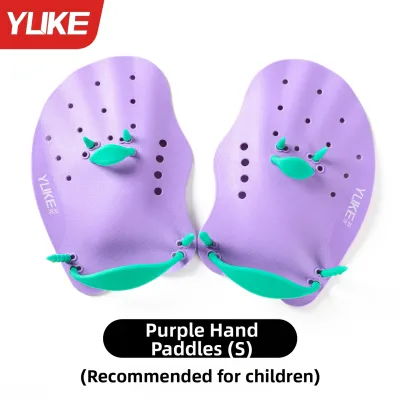
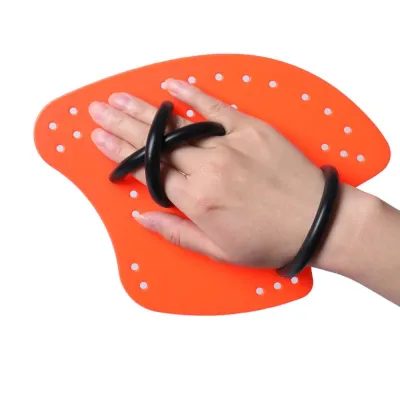
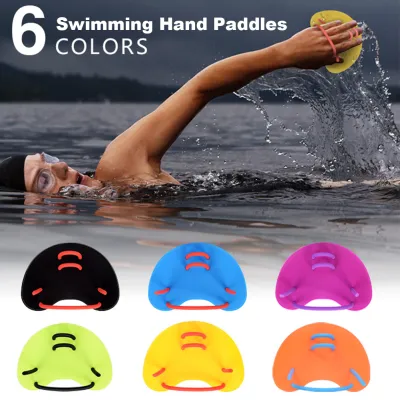
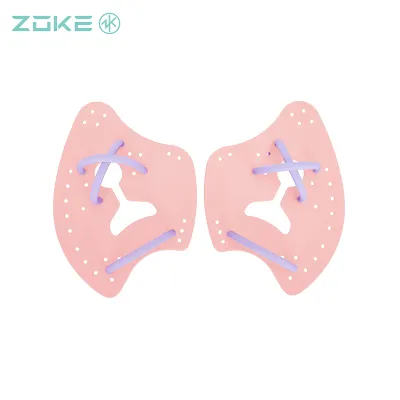
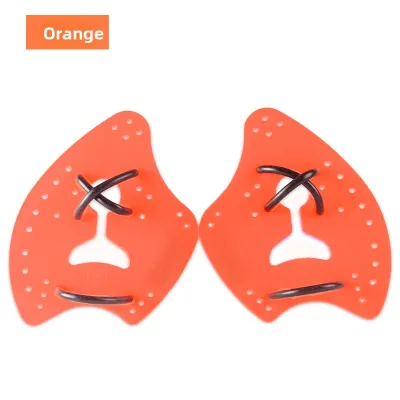
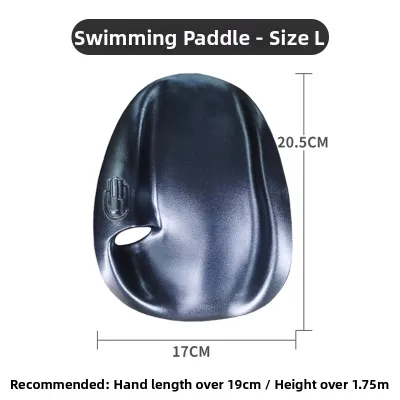
Prices are valid at publication and may change. Please refer to the product page for the latest price.
Using oversized or adult-sized paddles also alters a child’s natural stroke mechanics. When a paddle is too large, the water resistance exceeds the child’s pulling power. To compensate, children often drop their elbows, over-rotate their shoulders, or drag their hands through the water. These compensatory movements quickly turn into bad habits that are difficult to correct later, ultimately slowing down their athletic progression and increasing their injury risk.
For young swimmers, the primary goal of using a swimming paddle is to build muscle memory, improve hand entry, and enhance the “feel” of the water. Training with paddles should focus on identifying the “catch” phase of the stroke and maintaining a high-elbow position, rather than building brute upper-body strength. When used correctly, the added surface area provides immediate tactile feedback, helping the child understand how minor changes in hand angle affect their forward propulsion.
Key Features to Evaluate Before Buying
When shopping for youth swim gear, you should ignore generic marketing claims and focus on observable design elements. Use the following checklist to evaluate any paddle before purchasing:

- Size and Surface Area: The most critical rule of thumb is that the paddle should not extend significantly beyond the child's fingertips or overlap the wrist joint. Ideally, the paddle should be only slightly larger than the child's actual hand span—typically no more than 1 to 1.5 centimeters of clearance around the perimeter. A paddle that is too long will force the wrist to flex unnaturally during the entry and catch phases.
- Strap Configuration: Look for adjustable, multi-point strap systems that feature separate finger and wrist loops. This configuration keeps the paddle securely centered on the hand without requiring the child to grip the plastic tightly, which can cause forearm fatigue. Some modern technique paddles feature only a single finger strap or no straps at all, forcing the swimmer to maintain constant water pressure to keep the paddle in place.
- Shape and Contour: Ergonomic, contoured paddles that mimic the natural curve of a cupped hand are highly recommended for young swimmers. Slight curves and hydrodynamic flow holes help guide proper hand entry and catch phases by allowing a small amount of water to pass through, providing realistic feedback. Completely flat paddles offer no ergonomic guidance and can encourage children to slap the water during hand entry.
- Material and Maintenance: Always check the manufacturer's label to ensure the paddle is made from durable, non-toxic plastics like polypropylene, paired with soft silicone or rubber straps. In the tropical climate of the Philippines, high humidity, intense UV exposure, and pool chemicals can rapidly degrade swim gear. Silicone straps are particularly vulnerable to dry rot and cracking if left wet in a gear bag. To preserve strap elasticity, always rinse the paddles with clean, fresh water after every session and allow them to air-dry completely in the shade.
Recommended Paddle Types by Age and Skill Level
To help you navigate the selection process, youth swimming paddles can be categorized into three distinct developmental brackets. Each bracket serves a specific training purpose and matches the physical capability of the swimmer.
Toddlers and Beginners (Ages 3–5): Focus on Water Feel
For early learners and toddlers, the water is a sensory playground where they build basic confidence and coordination. At this stage, traditional resistance training is entirely unnecessary and potentially harmful. Instead, equipment should focus on play, water familiarity, and gentle sensory feedback.
Key Features for Ages 3–5:
- Finger Paddles: These small, semi-circular paddles cover only the fingers, leaving the palm completely exposed to the water. This design preserves the hand's natural sensory receptors, allowing the child to feel the water flow while gently encouraging them to keep their fingers together.
- Ultra-Light Materials: Look for highly flexible, lightweight plastics or foam-based hand aids that offer minimal resistance.
- Soft, Rounded Edges: Ensure the paddles have rounded, rubberized, or soft edges to prevent accidental scratches to the child's face, eyes, or other children splashing nearby.
At this early stage, the goal is simply to help the child understand basic arm coordination and overcome water resistance gently. The paddles should feel like a fun extension of their hands rather than a heavy training tool.
Young Swimmers (Ages 6–9): Building Stroke Technique
As children transition into formal swim lessons and begin learning structured strokes like freestyle, breaststroke, and backstroke, they can start using technique-focused paddles. This age group benefit greatly from immediate mechanical feedback.
Key Features for Ages 6–9:
- Contoured Technique Paddles: Look for junior-sized paddles that feature an ergonomic curve matching the natural shape of the palm. These help guide the hand into the correct entry angle.
- Dual-Strap Systems: Adjustable wrist and finger straps provide maximum stability, preventing the paddle from shifting laterally during the pull.
- Flow Holes: Built-in apertures or holes reduce the overall drag, making the pull manageable for developing muscles while still highlighting errors in hand placement.
When choosing paddles for this age bracket, parents must strictly follow the manufacturer’s recommended age, hand-span, or weight charts. Do not guess the size based on the child’s height or overall body size, as hand dimensions vary widely among growing children.
Pre-Teens and Advanced (Ages 10–12+): Controlled Resistance
Pre-teens and advanced young swimmers who are joining competitive squads, school swim teams, or intensive training programs can begin incorporating moderate resistance into their workouts. At this stage, paddles are used to build specific endurance and refine competitive stroke efficiency.
Key Features for Ages 10–12+:
- Standard Youth-Sized Paddles: These are slightly larger, firmer paddles that offer a moderate increase in surface area. They can be flat or slightly pitched depending on the stroke being targeted.
- Strap-Free Technique Models: These paddles rely entirely on the swimmer's continuous pressure against the water to stay attached to the hand. If the swimmer drops their elbow or misaligns their hand, the paddle falls off, providing instant feedback.
- Stroke-Specific Designs: Some paddles are engineered specifically for freestyle (with a distinct triangular shape) or breaststroke, helping advanced swimmers fine-tune their specialty events.
These advanced paddles should only be introduced when the swimmer has demonstrated a solid, pain-free baseline stroke and ideally under the direct supervision of a qualified swim coach. Even for a highly capable 12-year-old, you should avoid jumping directly to adult-sized paddles, as the surface area remains too large for their developing joint structures.
Safety Rules and Usage Limits for Young Swimmers
Even with the perfect set of paddles, safety depends entirely on how the equipment is used. Parents and coaches must establish clear boundaries to prevent overtraining and joint fatigue.
First, limit paddle usage to a small fraction of the total swim session. For young swimmers, paddles should never be worn for the entire practice. A safe guideline is to limit paddle use to 10% to 15% of the total workout volume, reserving them strictly for specific technique drills or short focus sets.
Second, always ensure your child completes a thorough, paddle-free warm-up before putting the gear on. A proper warm-up increases blood flow to the rotator cuff muscles and lubricates the shoulder joints with synovial fluid, preparing the body for the added resistance. A typical warm-up should include easy, unstructured swimming and dynamic dry-land shoulder rotations.
Third, establish clear “stop conditions” with your child. Instruct them to remove the paddles immediately if they experience any of the following:
- Physical Pain: Any sharp pain, dull ache, or discomfort in the shoulder, elbow, or wrist.
- Form Breakdown: Visible fatigue that causes their stroke form to deteriorate, such as a dropped elbow, a dragging recovery arm, or excessive body swaying.
- Slipping Straps: If the straps repeatedly slip or require constant adjustment, the size or fit is incorrect, which can force the child to grip the paddle unnaturally.
Finally, remember that training equipment cannot replace proper coaching, physical conditioning, and adequate rest. If you are unsure about your child’s readiness for paddles, consult their swim coach for a professional assessment. If manufacturer care instructions or safety guidelines conflict with any general advice, always prioritize the manufacturer’s specific instructions and the guidance of a certified professional.
Frequently Asked Questions (FAQ)
Can kids use adult swimming paddles if the straps fit their hands?
No, children should not use adult swimming paddles even if the straps can be adjusted to fit their hands. Hand size and strap fit are only part of the equation. Adult paddles are designed with a surface area and hydrodynamic resistance calibrated for adult muscle mass, bone density, and joint stability.
Using these larger paddles places excessive torque on a child’s developing shoulder joints and growth plates. This can quickly lead to severe joint strain, rotator cuff inflammation, and compromised stroke mechanics as the child struggles to pull the excessive water volume. Always select a paddle specifically designated as a junior or youth size that matches your child’s actual hand span.
Should beginners use swimming paddles during every practice?
Beginners should not use swimming paddles during every practice, nor should they use them continuously. In the early stages of learning to swim, foundational skills such as natural body rotation, breathing rhythm, head position, and kicking must be mastered without artificial propulsion aids.
Introducing paddles too early can distract a beginner from learning how to naturally feel and manipulate the water with their bare hands. Paddles should only be introduced as a supplementary training tool for specific technique drills once the child has achieved basic water competency and can maintain a stable, unassisted stroke for multiple laps.
Community discussion
Share your experience or ask a question. Comments are reviewed before publication.