
When helping a child learn to swim in the Philippines, finding the right training gear can make a significant difference in how quickly they develop confidence and proper technique in the water. Swimming paddles can be a highly effective training tool for kids, provided they are sized correctly, introduced at the right developmental stage, and used primarily to build stroke technique rather than raw power. In our tropical climate, where year-round swimming in subdivision pools, condo facilities, and sports clubs is common, choosing the right hand paddles requires careful consideration of safety, material durability, and physical readiness.
Rather than acting as a shortcut to speed, hand paddles serve as sensory feedback mechanisms. When used correctly under the guidance of a parent or coach, they teach young swimmers how to feel the resistance of the water and position their hands for maximum efficiency. However, introducing them too early or choosing a model designed for adults can lead to physical strain and poor habits. Understanding the balance between technique development and physical safety is the first step in selecting the ideal swimming paddles for your child.
Are Swimming Paddles Safe for Kids Learning to Swim?
The safety of swimming paddles for children depends entirely on how they are used, their size, and the child’s existing swimming foundation. When parents first see competitive athletes training with large hand paddles, they often assume these tools are meant to build heavy muscle and increase raw speed. For young learners, however, the primary purpose of swimming paddles is to enhance water feel, improve stroke technique, and build specific muscle memory. They help children understand the concept of catching the water during the pull phase of strokes like freestyle and backstroke.
Products mentioned in this guide
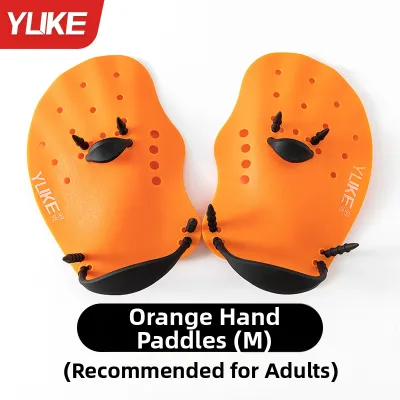
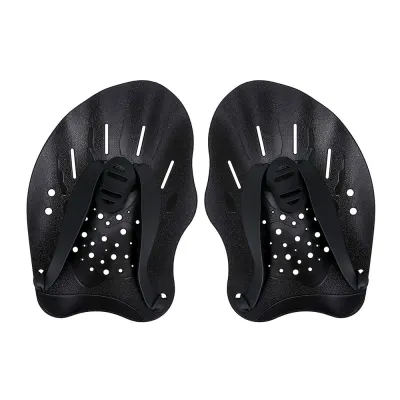
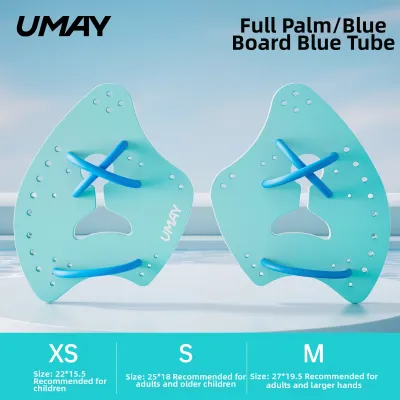
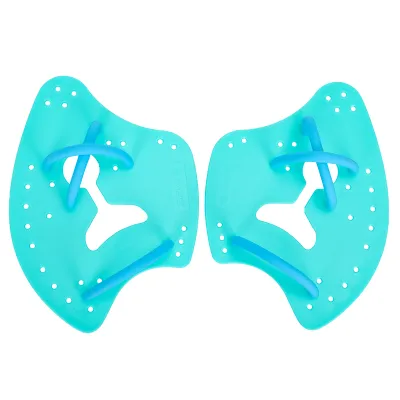
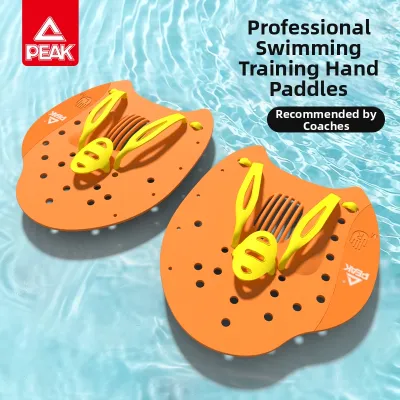
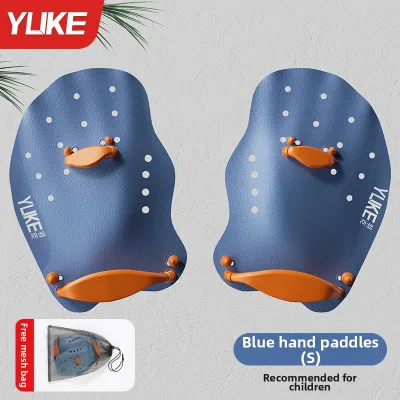
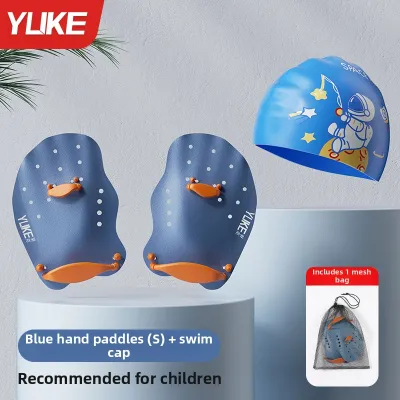
Prices are valid at publication and may change. Please refer to the product page for the latest price.
Despite these benefits, using hand paddles carries inherent safety risks if parents do not select and monitor the gear carefully. The most common risk is shoulder strain, often referred to as swimmer’s shoulder, which is caused by using paddles that are too large or using them with improper technique. Because paddles increase the surface area of the hand, they significantly increase the resistance and torque applied to a child’s developing shoulder joints and rotator cuff muscles. If a child uses paddles that are too large, or if they attempt to swim with them before mastering basic stroke mechanics, the shoulder joint absorbs excessive stress, which can lead to micro-tears, inflammation, and long-term injury.
To keep your child safe, establish the baseline rule that paddles are supplementary tools; bare-hand swimming must remain the foundation of a child’s learn-to-swim program. Young swimmers must first develop natural buoyancy, proper body alignment, and basic kick-and-stroke coordination before adding any resistance gear to their hands. Equipment can never replace physical readiness, proper coaching, or basic water safety skills. If a child cannot swim a clean, continuous lap of the pool with proper breathing and arm recovery using their bare hands, they are not yet ready for hand paddles.
How to Choose the Right Swimming Paddles for Children
Selecting the right swimming paddles for a child requires looking past bright colors and brand logos. Parents must evaluate the physical dimensions, structural design, and materials of the paddles to ensure they match the child’s physical development and skill level. A poorly chosen paddle can ruin a child’s stroke mechanics and cause unnecessary joint fatigue, while a well-designed model will gently guide their hands into the correct paths.

Size and Surface Area The most critical factor when choosing a child’s swimming paddle is its size relative to their hand. As a strict rule, a child’s paddle should only be slightly larger than their actual hand—ideally extending no more than 1 to 1.5 centimeters beyond the tips of their fingers. Many parents mistakenly buy larger paddles, thinking their child will grow into them or that a larger surface area will make them swim faster. In reality, oversized paddles place an immense load on a child’s shoulder joint, forcing them to drop their elbows and slip their hands through the water to relieve the pressure, which defeats the entire purpose of the training tool.
Strap Configuration The way a paddle attaches to the hand dictates how much feedback the swimmer receives and how much stress is placed on their joints. Traditional paddles feature a dual-strap system consisting of a finger strap and a wrist strap. While these keep the paddle securely attached to the hand, they can mask poor technique because the paddle stays in place even if the hand enters the water at an awkward angle. For beginners and technique builders, finger-strap-only designs or strapless agility paddles are highly recommended. These models require the swimmer to maintain constant pressure against the water to keep the paddle on their hand. If the child’s stroke breaks down or their hand entry is incorrect, the paddle simply slips off, providing instant tactile feedback and reducing shoulder stress if the stroke breaks down.
Shape and Flexibility When evaluating materials, look for contoured, slightly flexible paddles rather than rigid, flat plastic boards. The human hand naturally cups slightly when pulling through the water, and a completely flat, stiff paddle forces the hand into an unnatural, rigid position. Contoured paddles mimic the natural curvature of the palm, promoting a more relaxed grip and a more organic water entry. Additionally, paddles made with slightly flexible materials, like thermoplastic rubber or soft polypropylene, will flex slightly under heavy loads, absorbing some of the peak impact forces and protecting young, developing joints from sudden strain.
Edge Design Safety in a busy swimming pool extends beyond the child wearing the gear to the other swimmers sharing the lane. Children learning to swim often have less spatial awareness and can easily bump into lane lines, steps, or other children. Always choose paddles with smooth, rounded, or rubber-rimmed edges. Avoid cheap, low-quality plastic paddles that feature sharp or jagged injection-molded seams along the perimeter. A soft, rubberized edge not only protects other swimmers from accidental scratches during the recovery phase of the stroke but also prevents painful scrapes if the child accidentally strikes the pool wall or steps during a turn.
Recommended Paddle Types for Different Age and Skill Levels
Not all swimming paddles serve the same purpose, and the ideal design changes dramatically as a child grows and refines their swimming technique. Matching the paddle type to your child’s specific developmental stage ensures they receive the right balance of sensory feedback and joint protection.
Toddlers and Absolute Beginners (Ages 3–5)
For children between the ages of three and five, swimming is primarily about water acclimatization, play, and developing basic motor skills. At this developmental stage, traditional rigid training paddles should never be used. Instead, look for mini or toddler specific paddles made from highly flexible, soft materials like silicone or soft foam. These items are designed not to add resistance, but to make water-play more engaging and to help the child feel the resistance of the water against their hands during simple sculling exercises.
When using these soft paddles with toddlers, keep the activities short, playful, and focused on basic sensory awareness. You can guide your child through simple doggy paddle drills or ask them to pretend their hands are fish fins moving back and forth. Under no circumstances should a toddler use any paddle that forces the toddler’s hand into an unnatural, rigid position. The bones and ligaments in a toddler’s hands and wrists are still highly pliable, and forcing them against stiff plastic can disrupt natural physical development.
Older Beginners and Technique Builders (Ages 6–10)
Children between the ages of six and ten who are learning formal strokes—such as freestyle, backstroke, and breaststroke—benefit immensely from junior-sized, contoured paddles. At this stage, the goal is to isolate the high-elbow catch and teach proper hand entry. Look for youth-specific models that feature a single finger strap or a strapless design, which forces the child to maintain correct hand alignment and pressure throughout the entire pull phase.
These technique-focused paddles provide immediate tactile feedback when the hand slips or drops during the pull phase. If the child drops their elbow, lets their wrist collapse, or enters the water thumb-first, the paddle will wobble or slip off. This teaches the child to self-correct their form without the parent or coach constantly needing to shout instructions from the pool deck. When shopping for this age group, always look for models specifically labeled as junior or youth to ensure the surface area matches the child’s strength.
Advanced Junior Swimmers (Ages 11+)
As pre-teens and teenagers transition into competitive swim clubs, varsity teams, or advanced stroke correction classes, their training needs become more specialized. Advanced junior swimmers can begin using specialized technique tools, such as forearm paddles or agility paddles, which target specific stroke mechanics rather than just adding resistance. These designs target specific mechanics, such as preventing wrist-bending or encouraging a clean hand entry without adding excessive surface area resistance.
While older children have stronger muscles and more mature joints, transitioning to slightly larger or more specialized paddles must still be done with caution. Any increase in paddle size or change in design must be strictly supervised by a certified swim coach to monitor shoulder health and stroke integrity. A professional coach can monitor the swimmer’s shoulder health, verify that their stroke integrity does not break down under the added load, and ensure that the paddles are being used for targeted technical drills rather than mindless, high-volume lap swimming.
Safe Usage Guidelines to Protect Your Child's Shoulders
Even with the perfectly sized, high-quality paddle, improper usage can quickly lead to shoulder discomfort or injury. Parents must establish and enforce strict operational boundaries to protect their child’s developing joints and ensure that paddle work remains a safe, productive part of their swimming journey.
Warm-up Protocol A child must never start a swim session with paddles. Cold muscles and stiff joints are highly susceptible to strain when subjected to the increased resistance of hand paddles. Before using any gear, require your child to complete a thorough bare-hand warm-up. This warm-up should consist of at least 10 to 15 minutes of easy, relaxed swimming, combined with gentle arm swings and shoulder mobility exercises on the pool deck. This increases blood flow to the rotator cuff muscles and lubricates the shoulder joints, preparing them for the added workload.
Volume Limits Paddle work should always constitute a small, strictly controlled percentage of the child’s total swimming distance. For young swimmers and technique builders, paddle work should only constitute a small, controlled percentage of the total workout distance to prevent fatigue-induced form breakdown. We recommend keeping paddle use to no more than 10% to 15% of the total distance of their swim session. Using paddles for extended, high-volume lap swimming leads to muscle fatigue. Once the supporting shoulder muscles fatigue, the child’s stroke form will break down, and the stress of the water resistance will transfer directly onto the delicate ligaments and joints of the shoulder.
Stop Conditions As a parent, you must establish clear stop conditions and teach your child to recognize when it is time to take the paddles off immediately. Instruct your child to stop using the paddles and switch back to bare-hand swimming if they experience any of the following:
- Any report of pain, pinching, or dull aching in the shoulders, neck, or upper back.
- Visible dropping of the elbows during the underwater pull phase (a clear sign of fatigue).
- A significant slowing of the stroke rate or an inability to complete the arm recovery phase cleanly.
- Difficulty maintaining a stable body position or gasping for air due to exhaustion.
Professional Oversight While parents can easily monitor basic safety, integrating swimming paddles into a structured training plan is best done under the guidance of a qualified swim instructor or coach. Professional coaches in the Philippines understand how to balance technique drills with physical conditioning. They can observe your child’s stroke in real-time, identify subtle technical flaws that might make paddle use unsafe, and prescribe the exact distance and frequency of paddle work suited to your child’s specific age, strength, and skill level.
Where to Buy and What to Verify in the Philippines
Finding genuine, high-quality swimming paddles for kids in the Philippines requires navigating a mix of physical retail stores and online marketplaces. Because the local market has an abundance of adult-sized products and low-quality generic swimming gear, parents must be diligent to ensure they are purchasing safe, authentic equipment.
Retail Channels For the best selection of reputable swim brands, visit established local sports retailers located in major shopping malls across Metro Manila, Cebu, Davao, and other urban centers. Stores such as Toby’s Sports, Decathlon, and official brand boutique outlets carry dedicated junior swim ranges. If you prefer shopping online, look for official brand flagship stores on major e-commerce platforms. Purchasing from official storefronts ensures you receive authentic products made from non-toxic, durable materials rather than cheap counterfeits that may feature brittle plastics or toxic rubber chemical smells.
Verification Steps When browsing online marketplaces, do not rely solely on product photos, which can be highly misleading. Carefully read the product descriptions to ensure the item is explicitly sized for juniors, and to check user reviews specifically for strap durability and material flexibility. Avoid listings that use generic terms like “one size fits all” or “unisex adult/child,” as these are almost always adult-sized paddles that are far too large for a young learner. In our hot, humid climate, low-quality rubber straps can dry out, crack, and snap quickly when exposed to chlorine and intense tropical sunlight.
In-Store Try-On Whenever possible, bring your child to a physical sports shop to test the strap tightness and verify that the paddle does not extend too far beyond the fingertips or wrist. Have your child place their palm flat against the center of the paddle. Verify that the outer edge of the paddle does not extend more than 1.5 centimeters beyond their fingertips. The straps should be tight enough to keep the paddle flat against the hand without restricting blood circulation or leaving deep, painful red marks on the skin. Your child should be able to move their fingers slightly and flex their wrist without experiencing pinching or sharp pressure from the paddle’s edges.
Frequently Asked Questions (FAQ)
At what age should a child start using swimming paddles?
While soft, foam-based water-play paddles can be introduced to toddlers for sensory games, formal technique paddles are generally introduced when a child has developed basic stroke mechanics and sufficient shoulder strength, typically around ages 6 to 8, under coach supervision. Introducing rigid paddles before a child can swim basic strokes with proper bare-hand form increases the risk of shoulder strain and can lead to bad stroke habits that are difficult to correct later.
Can swimming paddles help a child float better?
No, swimming paddles are not flotation devices and do not provide any meaningful buoyancy. They are made from dense plastics, rubber, or silicone, which do not assist with floating. Their sole purpose is to create water resistance to help refine stroke mechanics, improve water feel, and build proper propulsion techniques. For water safety and flotation, children must always use approved personal flotation devices, such as life jackets or swim vests, under direct adult supervision.
How do I clean and maintain swimming paddles after pool use?
To extend the lifespan of your child’s swimming paddles, rinse them thoroughly with clean, fresh tap water after every pool session. This removes residual chlorine, salt, and pool chemicals that can degrade the plastic and cause the rubber straps to become brittle and snap. After rinsing, wipe them down and allow them to air-dry completely in a shaded, well-ventilated area. Never leave swimming paddles in direct tropical sunlight or inside a hot car trunk, as extreme heat and UV exposure will warp the plastic and accelerate the cracking of the rubber straps.
Community discussion
Share your experience or ask a question. Comments are reviewed before publication.