
Quick Guide: Best Taekwondo Gear for Young Beginners
Starting a martial arts journey is an exciting milestone for young children, but their early training requires a careful balance of safety, engagement, and physical protection. For kids just beginning their practice, the primary goal is to build coordination, balance, and confidence without putting undue stress on their developing joints and bones. Standard adult training equipment is far too heavy and rigid, which is why parents often turn to specialized, lightweight training accessories. These items, frequently searched for as taekwondo toys, are specifically designed to make early practice feel like a game while instilling proper structural habits.
When selecting gear for a young beginner, focus on three essential categories: high-density foam targets, lightweight hand wraps, and agility-building tools. High-density foam targets allow children to practice kicks with minimal risk of bruising, while short, elastic hand wraps protect delicate wrist joints during basic hand strikes. Agility tools, such as colorful stepping targets and lightweight ladders, turn footwork drills into fun challenges.
Before purchasing or using any training gear, always check the product’s safety labels and the manufacturer’s instructions to ensure the item matches your child’s age, weight, and skill level. It is also wise to consult your child’s instructor (Sabomnim) to verify that home practice accessories align with the techniques taught in the dojang. Remember that training accessories are designed to assist development; they cannot replace proper instruction, adult supervision, or sound athletic judgment.
Products mentioned in this guide
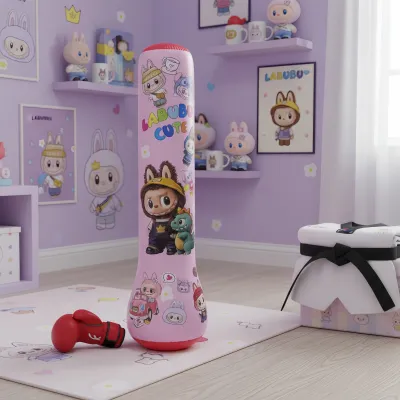
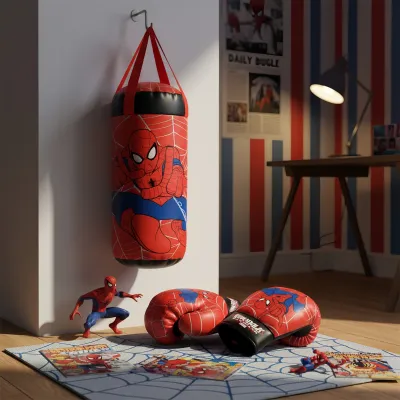
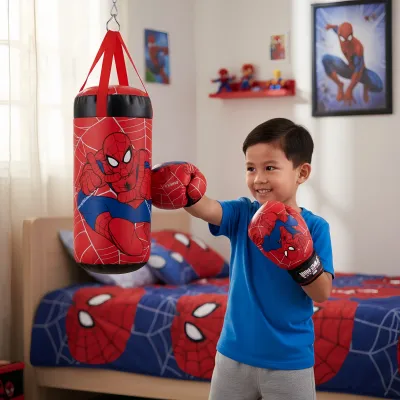
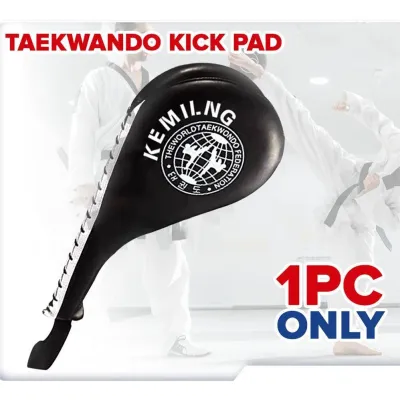
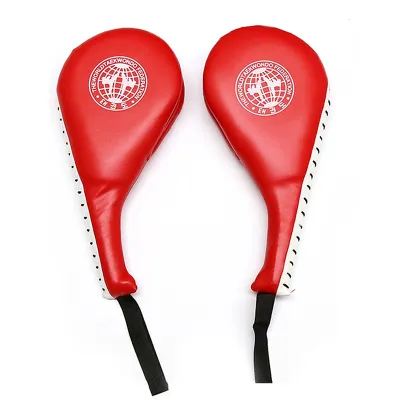
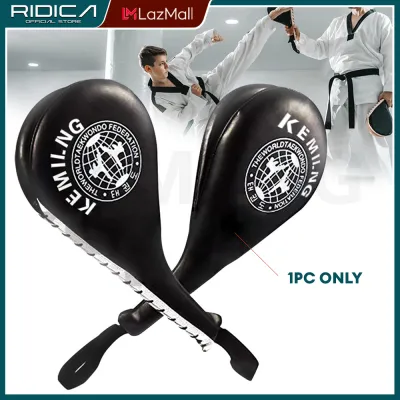
Prices are valid at publication and may change. Please refer to the product page for the latest price.
Why Engaging "Toys" and Fun Accessories Matter for Kids
Young children possess unique developmental needs that differ significantly from older students or adults. Their attention spans are naturally shorter, and their cognitive processing relies heavily on immediate, positive feedback. If early training consists solely of repetitive, dry technical drills on heavy, intimidating gear, children can quickly become discouraged or bored. Introducing visually stimulating, interactive accessories—often designed with the playful elements of taekwondo toys—helps sustain their interest and transforms structured practice into an exciting game.

Brightly colored targets, animal-themed striking pads, and accessories that produce a satisfying “clack” sound upon impact provide instant sensory rewards. This auditory and visual feedback is highly effective for young minds. When a child strikes a target correctly and hears a sharp snap, they instantly understand that their angle and speed were correct. This immediate reinforcement builds confidence much faster than verbal corrections alone, helping children connect physical effort with positive outcomes.
Furthermore, using play-based training tools eases the transition from unstructured play to disciplined martial arts movement. A heavy, dense punching bag can feel intimidating or even painful to a five-year-old. In contrast, a lightweight, handheld foam target invites them to try their best without fear of discomfort. By reducing the intimidation factor, these fun accessories allow children to focus on hand-eye coordination, spatial awareness, and balance, laying a solid athletic foundation before they move on to more rigorous, traditional training equipment.
Essential Taekwondo Training Accessories for Beginners
Equipping your child with the right gear for home and dojo practice requires understanding the specific features that ensure safety and usability. Below are the primary accessories recommended for young beginners, along with the key specifications parents should look for.
Foam Targets and Kicking Pads
Striking targets are the cornerstone of early taekwondo training, but they must be chosen with joint protection in mind. Look for targets constructed from high-density Ethylene-Vinyl Acetate (EVA) foam. This material is highly effective at absorbing the kinetic energy of a kick, dispersing the impact across the pad rather than transferring it back into the child’s foot or ankle. The foam must be resilient enough to prevent “bottoming out”—a situation where the pad compresses completely, allowing the child’s foot to make hard contact with the holder’s hand or arm.
For the parent or sibling holding the target, lightweight designs are equally critical. Holding heavy, professional-grade shields can cause rapid wrist and shoulder strain for adults, which in turn leads to poor holding angles and potential injury for the kicking child. Double-clapper target pads—which feature two flexible leaves that slap together to make a loud sound—are ideal. They are exceptionally light, typically weighing less than 300 grams, and are easy to maneuver.
When evaluating kicking pads, verify that they feature adjustable forearm straps and secure, textured handles to keep the pad stable during impact. Bright, contrasting target zones on the face of the pad are highly beneficial, as they give children a clear visual marker to aim for, which naturally improves accuracy and kicking form. Expect to find high-quality beginner kicking pads in the price range of ₱400 to ₱1,200, depending on the brand and material durability.
Hand Wraps and Lightweight Training Gloves
Protecting a child’s hands and wrists is paramount, even during light target practice. While beginners rarely strike with maximum force, their wrist bones and connective tissues are still developing and highly susceptible to misalignment. Hand wraps provide essential lateral support to the wrist joint and keep the knuckles properly aligned. However, standard adult wraps (which typically measure 180 inches) are far too bulky for children’s small hands, creating a thick mass that prevents them from forming a proper fist.
Instead, opt for short, elasticized hand wraps specifically sized for children, usually measuring between 108 and 120 inches. These wraps should be composed of a breathable cotton-spandex blend, which offers comfortable stretch and support without restricting blood circulation.
For added protection during bag work, pair these wraps with lightweight, open-palm training gloves. Look for gloves that feature at least 1 to 1.5 inches of dense foam padding over the knuckles, a secure hook-and-loop (Velcro) wrist strap that children can fasten independently, and a moisture-wicking inner liner. In the warm, humid climate of the Philippines, sweat accumulation inside gloves can quickly lead to skin irritation, fungal growth, and unpleasant odors. Breathable mesh panels and moisture-wicking materials are absolute necessities to keep hands dry and hygienic during energetic sessions. Quality youth training gloves generally cost between ₱500 and ₱1,500.
Agility and Footwork Tools
Taekwondo is as much about footwork, balance, and positioning as it is about striking. Agility and footwork tools are excellent, low-risk accessories that can be used independently by children to build foundational athletic skills. Agility ladders, small reaction balls, and colorful dome stepping targets serve as fantastic supplementary taekwondo toys that keep kids moving dynamically.
These tools help children master stance transitions—such as moving smoothly from a walking stance (ap seogi) to a front stance (ap kubi)—while maintaining their center of gravity. Improved foot speed and spatial awareness directly translate to better balance when executing kicks, reducing the likelihood of slips or falls during practice.
To integrate these tools into your child’s routine, try this simple, 10-minute home warm-up before any kicking practice:
- Minutes 1–3 (Agility Ladder): Have your child perform simple high-knees or lateral hops through the rungs of an agility ladder laid flat on the floor. This warms up the calves and ankles while sharpening focus.
- Minutes 4–6 (Stepping Targets): Place colorful dome markers on the floor in a zig-zag pattern. Instruct your child to step or hop from one to the next, practicing quick changes of direction and stable, balanced landings.
- Minutes 7–10 (Reaction Ball): Gently bounce a multi-sided reaction ball on the floor. Because of its irregular shape, the ball bounces unpredictably, forcing the child to move their feet quickly and reach out to catch or touch it, which dramatically improves hand-eye coordination.
How to Choose Safe, Age-Appropriate Training Gear
Navigating the wide array of youth martial arts products requires a structured approach. To ensure you are buying gear that supports your child’s physical development safely, consider the following evaluation framework:
- Sizing and Weight Proportionality: Never guess your child's gear size. Always measure their hand circumference, height, and weight, and compare these metrics against the manufacturer's specific sizing charts. Gear that is too heavy or bulky will force the child to alter their natural biomechanics to lift or swing the equipment, leading to poor habits, joint strain, and chronic shoulder or hip discomfort.
- Material Safety and Certification: Young children have sensitive skin, and intense physical activity opens their pores, making them vulnerable to chemical irritants. Look for training gear labeled as non-toxic, lead-free, and BPA-free. High-density EVA foam and premium polyurethane (PU) synthetic leathers are excellent choices because they are chemically stable, durable, and easy to sanitize. Avoid products with strong, chemical plastic odors, as this often indicates the presence of volatile organic compounds or cheap plasticizers that can cause contact dermatitis.
- Adjustability and Longevity: Children grow rapidly, but buying oversized gear to "grow into" is a safety hazard. Instead, look for accessories that offer high adjustability. Gloves with extra-long Velcro straps, kicking shields with multiple handle configurations, and chest guards with adjustable criss-cross back straps allow the equipment to adapt to minor growth spurts while maintaining a snug, safe fit.
- Supervision Requirements: It is vital to categorize your child's gear by the level of adult involvement required. Independent play items, such as agility ladders, balance boards, and soft targets mounted on flexible, weighted bases, are safe for children to use on their own to burn off energy. Conversely, handheld kicking pads, double-clappers, and focus mitts must always be held by an adult or an experienced older sibling. Holding these targets at incorrect heights or angles can cause the kicking child to hyperextend their knee or strain their groin muscles. Always prioritize active supervision during target drills to correct form and ensure a safe training environment.
What to Avoid When Buying Taekwondo Gear for Kids
When shopping for beginner gear, parents often fall into common purchasing traps that can lead to physical discomfort, rapid equipment failure, or even injury. Being aware of these pitfalls will save you money and protect your young martial artist.
First, avoid the temptation to buy adult-sized gear with the expectation that your child will grow into it. While this approach works well for casual clothing, it is highly dangerous for protective equipment. An oversized glove will slip during impact, failing to support the wrist and potentially leading to painful sprains. Oversized shin guards or headgear will slide out of place mid-drill, leaving vulnerable areas exposed to accidental impacts and distracting the child, which increases the overall risk of accidents.
Second, steer clear of overly hard, dense, or rigid striking surfaces. Traditional martial arts equipment, such as heavy canvas punching bags, leather Thai banana bags, or thick, unyielding kick shields, are designed for adult conditioning. A child’s bones, joints, and growth plates are still soft and developing. Striking these dense surfaces can cause micro-trauma to the small bones of the feet and hands, leading to chronic pain and potentially hindering proper bone development. Stick strictly to soft, high-rebound EVA foam targets designed specifically for children.
Finally, avoid cheap, non-breathable synthetic materials, particularly low-grade PVC or thin, unlined plastics. In tropical climates characterized by high heat and humidity, these materials act like vapor barriers. They trap sweat against the skin, creating a hot, friction-heavy environment that quickly causes painful chafing, blisters, and heat rashes. Cheap synthetics also degrade rapidly when exposed to sweat and humidity, cracking and peeling within a few months of use. Investing slightly more in breathable, moisture-wicking, and high-quality PU materials ensures both the safety of your child’s skin and the longevity of the training gear.
Frequently Asked Questions (FAQ)
At what age should kids start using taekwondo training accessories?
Basic, play-based training tools can be introduced to children as early as ages 4 to 5. At this developmental stage, the focus should be entirely on coordination, spatial awareness, and fun. Soft foam targets, colorful stepping markers, and lightweight agility ladders are perfect for this age group, as they feel like games rather than chores.
More structured and protective gear, such as formal hand wraps, training gloves, and handheld kicking pads, is typically introduced around ages 6 to 7. By this age, children have developed the physical strength, attention span, and cognitive ability to follow precise safety instructions, understand proper striking form, and participate in structured partner drills under adult supervision.
Do beginner kids need full sparring gear for home practice?
No, beginner children do not need full sparring gear for home practice. Home training for beginners should focus strictly on flexibility, basic forms (poomsae), coordination, and light, controlled target work using foam pads and agility tools.
Full sparring protective gear—which includes a head protector (hogu for the head), chest guard (hogu), shin guards, forearm guards, groin guards, and mouthguards—is designed specifically for full-contact Olympic-style sparring. This type of training is highly regulated and must only take place in a controlled dojang environment under the direct supervision of a certified instructor. Purchasing full sparring gear for home use is unnecessary and can give children a false sense of invulnerability, leading to unsafe play.
How do I clean and maintain foam targets and hand wraps?
Proper maintenance is essential for hygiene and to prolong the lifespan of your child’s gear, especially in warm, humid climates.
To clean foam targets and kicking pads, wipe the outer surfaces down after every training session using a soft cloth dampened with a mild soap and water solution or a non-abrasive, alcohol-free sanitizing wipe. Never submerge the pads in water, as this can damage the internal foam. Always allow them to air dry completely in a well-ventilated indoor space, away from direct sunlight, which can dry out and crack synthetic leather covers.
For hand wraps, wash them regularly to prevent bacteria and odor buildup. Place the wraps inside a mesh laundry bag to prevent them from tangling around other clothing or the washing machine agitator. Wash them using cold water on a gentle cycle with mild detergent. Avoid fabric softeners, which can degrade the elastic fibers over time. Hang the wraps to air dry completely before rolling them up for the next use.
Community discussion
Share your experience or ask a question. Comments are reviewed before publication.