
Starting your Brazilian Jiu-Jitsu (BJJ) journey requires gear that can withstand intense physical stress while keeping you comfortable during long hours of training. For beginners in the Philippines, choosing your first uniform requires balancing durability, cost, and heat management. The local climate presents unique challenges, as high humidity and tropical heat can quickly turn a heavy, poorly ventilated uniform into an exhausting weight. For most beginners, selecting a tatami gi jiu jitsu uniform like the Tatami Nova Absolute offers the ideal entry point, combining a lightweight weave with a highly accessible price.
While advanced practitioners might seek specialized competition uniforms, a beginner needs a reliable, daily-use option that supports learning the fundamentals without overheating. Tatami Fightwear has established a strong reputation for producing high-quality gear that caters to all experience levels. By understanding the key technical specifications of these uniforms, you can make an informed investment that keeps you cool, mobile, and protected on the mats.
Key Features to Evaluate in Your First Tatami Gi Jiu Jitsu Uniform
Selecting your first grappling uniform requires a basic understanding of how martial arts gear is constructed. The way a gi is woven, its physical weight, and its structural reinforcements all dictate how it will perform in a hot, humid gym environment. Focusing on these core elements will prevent you from purchasing a uniform that hinders your movement or degrades rapidly after a few washes.
Products mentioned in this guide
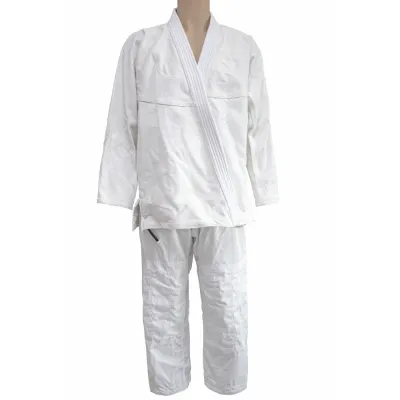
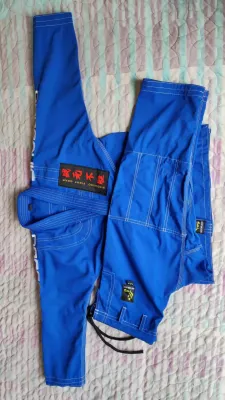

Prices are valid at publication and may change. Please refer to the product page for the latest price.
Weave Types and Their Performance
The weave refers to the specific pattern in which the cotton threads are knitted together to form the jacket. The three most common styles you will encounter are Pearl, Gold, and Ripstop weaves:
- Pearl Weave: This is the industry standard for modern training. It features rows of small, raised pearls of cotton that provide excellent structural strength while remaining relatively thin and breathable. It offers a great balance of durability and weight, making it highly recommended for beginners.
- Gold Weave: A traditional hybrid style that is significantly thicker and softer. While highly durable, gold weave fabrics act like a sponge, absorbing massive amounts of sweat. In tropical climates, this makes the uniform incredibly heavy during sparring and exceptionally slow to dry.
- Ripstop Weave: Woven with a distinct crosshatch pattern using reinforcing threads, ripstop is ultra-lightweight and highly resistant to tearing. While common for pants, entirely ripstop jackets are often restricted in certain academies and competitions due to their thinness.
Fabric Weight (GSM)
Fabric weight is measured in GSM, or grams per square meter. This number tells you how dense and heavy the jacket material is. For training in warm climates, fabric weight is a critical comfort factor:
- Lighter weights (350 to 450 GSM): These are highly preferred for tropical training. They allow superior airflow, help regulate your core temperature, and dry much faster on the clothesline.
- Heavier weights (500 GSM and above): These offer a thick, stiff barrier that makes it harder for opponents to maintain grips, but they trap body heat and sweat, which can accelerate fatigue and dehydration during intense rolling sessions.
Collar and Lapel Construction
The collar of a modern BJJ gi is typically filled with a synthetic material rather than traditional cotton batting. Tatami utilize an EVA foam vulcanized rubber core wrapped in durable canvas or ripstop fabric. This design serves two vital purposes. First, the synthetic foam does not absorb water, preventing sweat from soaking into the collar and harboring bacteria, mold, or mildew—a frequent issue in high-humidity regions. Second, the stiffness of a vulcanized rubber collar helps preserve the shape of the lapel, assisting your defensive grip-fighting and reducing friction burns around your neck.
Competition Compliance
If you plan to test your skills in local tournaments, your uniform must comply with international standards. The International Brazilian Jiu-Jitsu Federation (IBJJF) enforces strict rules regarding uniform colors, fabric types, and fit. Beginners should aim for solid, traditional colors—specifically white, royal blue, or black. The jacket must be made of a woven fabric, and the pants must be made of high-quality cotton or ripstop. Always check the current official IBJJF rulebook or consult your head coach before purchasing a colorful or heavily patched uniform to ensure you will not be disqualified at the bullpen.
Evaluating Common Tatami Gi Series for Beginners
Tatami offers several distinct product lines designed to match different training frequencies, budgets, and body types. Rather than viewing one model as universally superior, beginners should match the characteristics of each series to their personal training environment and physical needs.

The Nova and Nova Absolute Lines (Lightweight & Value-Focused)
The Nova series, particularly the Nova Absolute, is Tatami’s flagship entry-level line. It is engineered specifically to provide high utility at an affordable price point. Featuring a 350 GSM pearl weave jacket paired with 10oz cotton pants, this series is exceptionally lightweight. This thin, breathable construction is highly advantageous for high-frequency training in warm climates, as it prevents the wearer from overheating during intense sparring rounds.
Out of the box, the Nova Absolute is remarkably soft, requiring very little breaking-in compared to heavier, stiffer alternatives. It features a tapered athletic cut that minimizes excess fabric, reducing the grip options available to your training partners. For beginners who want a reliable, daily-use uniform that won’t break the bank—typically sitting in the budget-to-mid price tier—this series is the most logical starting point.
The Estilo Line (Durability & Reinforced Build)
For beginners who prioritize maximum longevity or have a larger, heavier frame, the Estilo line offers a premium, heavy-duty alternative. Traditionally constructed with a 550 GSM pearl weave jacket and 12oz canvas pants, the Estilo is built to withstand years of intense, aggressive pulling and friction. The reinforced stitching along stress points—such as the armpits, side vents, and knees—ensures that the fabric will not rip even under extreme stress.
However, choosing a heavier gi like the Estilo in a tropical climate involves clear trade-offs. The thick fabric traps significantly more heat, which can lead to faster dehydration and fatigue during long training sessions in non-air-conditioned gyms. Additionally, a 550 GSM gi takes considerably longer to air-dry in humid weather, meaning you may need a larger rotation of uniforms if you train multiple times a week. This model is best suited for those who train primarily in climate-controlled environments or those who demand a highly structured, stiff gi that actively makes grip-fighting more difficult for their opponents.
Entry-Level and Budget-Friendly Alternatives
If you are on a strict budget or are still undecided about your long-term commitment to Jiu-Jitsu, Tatami occasionally offers basic entry-level models or older, discontinued stock through authorized local distributors. These budget-friendly options typically simplify the design by reducing aesthetic details, such as complex embroidery or custom inner sublimation prints, focusing purely on utility.
While these alternatives are highly accessible, they may make minor compromises in fabric softness and tailored fit. The cotton used in basic models can feel slightly stiffer initially, requiring several washes with mild detergent to soften up. When exploring these budget options, it is highly recommended to verify current stock, exact model names, and sizing availability directly with authorized local retailers in the Philippines rather than relying on unverified online sellers, as counterfeit martial arts gear is common on unregulated online marketplaces.
Sizing, Shrinkage, and Fit Guidelines
Finding the correct fit is one of the most challenging aspects of buying your first martial arts uniform. A poorly fitting gi can restrict your movement, make you an easy target for grips, or even prevent you from competing.
Understanding the Size Chart
Tatami uses a standard alphanumeric sizing system for adult uniforms, ranging from A0 to A6, along with specialized variations like “L” (Long/Tall) and “S” (Short). For example, an A2L size is designed for someone who has the height of an A3 but the weight and slim build of an A2. When reviewing the size chart, do not rely solely on your height; weight and body composition are equally critical. If you have broader shoulders, a wider chest, or a heavier midsection, you will generally need to size up to ensure full range of motion, even if your height falls into a lower category.
Managing Shrinkage
It is a common misconception that “pre-shrunk” means a gi will not shrink at all. Almost all cotton BJJ uniforms, including Tatami models, will experience minor shrinkage of about 1% to 3% over their first few wash cycles. If you wash your uniform in warm water or accidentally put it in a mechanical clothes dryer, it can shrink by up to 5% to 10%, drastically shortening the sleeves and pants. To maintain the original fit, always wash your uniform in cold water and hang it to dry. If your gi is slightly too large when you first try it on, you can carefully use a warm wash cycle to shrink it to fit, but do so in short, controlled steps to avoid over-shrinking.
The Importance of Fit
A properly fitting gi is not just about looking good on the mats; it directly impacts your training safety and performance. A gi that is too loose or baggy provides your training partners with easy, secure grips, making it much harder for you to escape submissions or pass guards. Conversely, a gi that is too tight will restrict your mobility, preventing you from executing dynamic movements like hip escapes or high guards. Furthermore, if you plan to compete, the sleeves must reach no more than 8 centimeters from your wrist bone when your arms are extended, and the pants must not end more than 15 centimeters above your ankle bone.
Caring for Your Gi in a Humid, Tropical Climate
The high humidity of the Philippines creates an ideal environment for bacteria, mold, and mildew to thrive. Proper maintenance is essential to preserve the fabric’s integrity, prevent embarrassing odors, and avoid skin infections.
Immediate Post-Training Care
The single most important rule of gi care is to never leave your damp, sweat-soaked uniform crumpled inside a closed gym bag after training. Doing so allows odor-causing bacteria to colonize the cotton fibers, leading to a permanent, sour smell that is incredibly difficult to remove. As soon as you get home, take the gi out of your bag and either wash it immediately or hang it up in a well-ventilated area to dry out before washing.
Washing Best Practices
Always wash your Tatami gi inside out to protect the patches, embroidery, and fabric surface from friction damage. Use cold water and a high-quality, mild laundry detergent. Avoid using chlorine bleach under any circumstances, as it chemically breaks down the cotton fibers, drastically reducing the tear strength of your gi. Similarly, skip liquid fabric softeners; these products leave a chemical coating on the fibers that clogs the weave, reducing the fabric’s breathability and trapping sweat and bacteria deep within the threads over time.
Drying Methods
Air-drying is the safest and most effective way to dry your gi. Hang your uniform on a thick, sturdy hanger in a shaded, well-ventilated area with plenty of cross-breeze. While the intense tropical sun might seem like a fast way to dry heavy cotton, direct exposure to harsh midday sunlight should be avoided. The strong ultraviolet (UV) rays can cause the cotton fibers to become stiff, brittle, and prone to tearing, while also rapidly fading colored fabrics.
Storage
Once your gi is completely dry, store it in a cool, dry place. Avoid keeping it in sealed plastic containers or damp cabinets where moisture can easily become trapped, leading to mildew growth. Hanging your clean gi in an open, well-ventilated closet or storing it in a breathable cotton gear bag is the best way to keep it fresh and ready for your next training session.
Frequently Asked Questions (FAQ)
Do I need to buy a pre-shrunk Tatami gi?
Yes, buying a pre-shrunk Tatami gi is highly recommended because it provides a much more predictable fit out of the box. However, you must still expect a small amount of residual shrinkage (typically 1% to 3%) during the first few cold washes. If you are right on the boundary between two sizes, it is generally safer to choose the larger size, as you can carefully shrink it down if needed, whereas a gi that is already too small cannot be expanded.
How many gis should a beginner own for regular training?
If you are training only once or twice a week, a single high-quality gi is usually sufficient, provided you wash and air-dry it immediately after every class. However, if you plan to train three or more times a week, you should invest in at least two gis. Because air-drying a cotton gi in a humid climate can easily take 24 to 36 hours (especially during the rainy season), having a second uniform ensures you always have a clean, completely dry gi ready, while also extending the lifespan of both uniforms by reducing the wear and tear on each.
Are Tatami gis approved for IBJJF competitions?
Most standard Tatami models, including the Nova Absolute and Estilo lines, are designed to comply with IBJJF uniform regulations. However, competition legality depends on more than just the brand. You must ensure that the specific model you choose is in an approved solid color (white, royal blue, or black), does not feature non-compliant patch placements, and fits your body according to the official measurement requirements. Always double-check the latest IBJJF uniform manual before registering for a tournament to ensure your specific gi setup is fully compliant.
Community discussion
Share your experience or ask a question. Comments are reviewed before publication.