
Choosing the right bicycle storage is one of the most impactful decisions you can make for your riding comfort, bike handling, and overall efficiency. The ideal setup depends entirely on your riding environment, the volume of gear you need to carry, and how your specific bicycle handles weight. Bike frame bags keep weight centered for balanced handling on rough trails, panniers offer maximum capacity for daily commutes and long tours but require dedicated racks, and saddlebags provide a streamlined, rack-free option for multi-day trips or minimalist road setups. Finding the perfect balance requires evaluating your gear list against your bicycle’s physical mounting limits.
Understanding the Trade-Offs: Capacity, Handling, and Setup
Bike frame bags sit directly inside the main triangle of your bicycle, utilizing the space between your top tube, down tube, and seat tube. By keeping the heaviest items close to your bike’s center of gravity, they minimize the impact on steering and balance. This centralized placement makes them highly aerodynamic, as they remain completely hidden from the wind behind your front wheel. However, their total carrying capacity is strictly limited by the physical dimensions of your frame triangle, making them unsuitable for bulky items like sleeping bags or laptops.
Panniers hang on the sides of a front or rear cargo rack, offering the largest storage volume of any single bag type. Because they sit low on either side of the wheel, they maintain a low center of gravity, which helps stabilize heavy loads on paved roads. The trade-off is added width, which can make navigating narrow spaces or heavy traffic more challenging. Additionally, panniers require a compatible rack system installed on your frame, which adds permanent weight and complexity to your bicycle.
Products mentioned in this guide
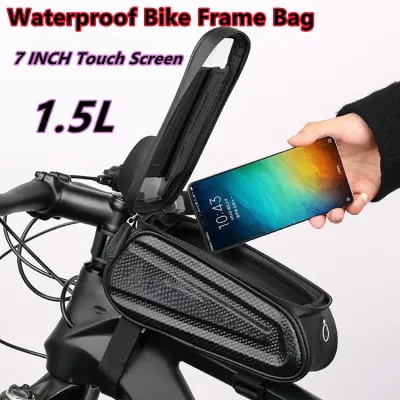
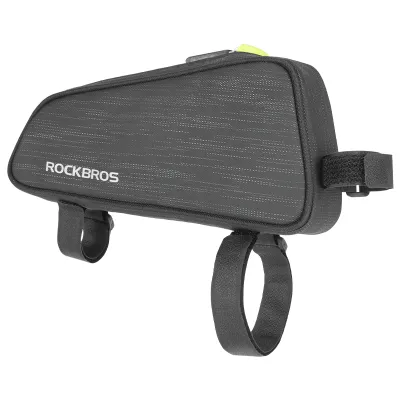
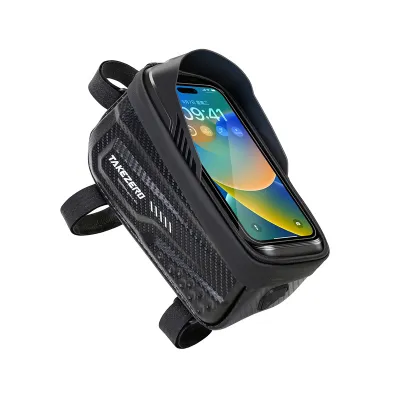
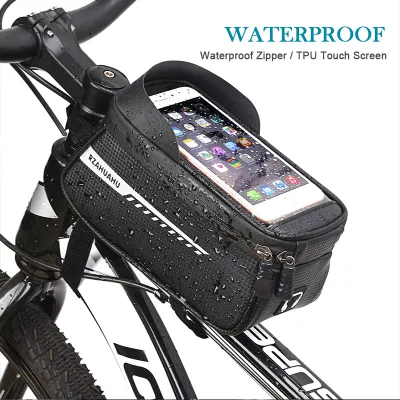
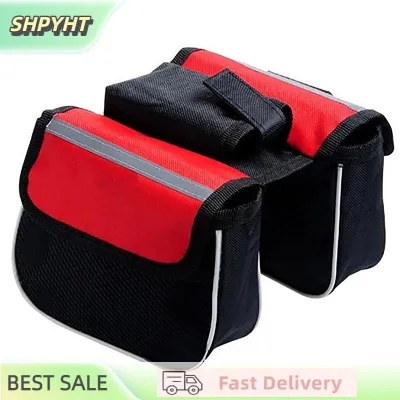
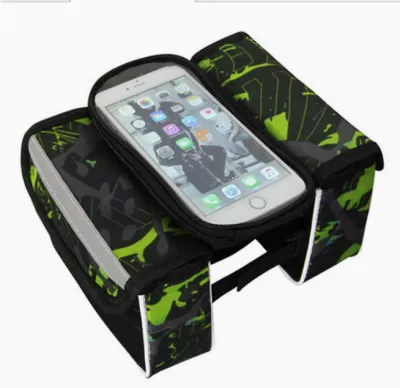
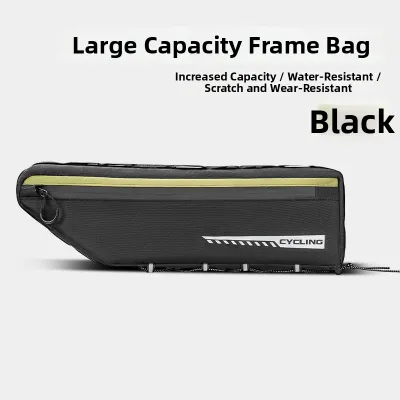
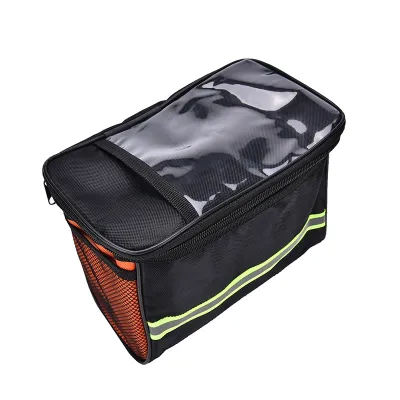
Prices are valid at publication and may change. Please refer to the product page for the latest price.
Saddlebags attach directly to your seat rails and seatpost, extending backward over the rear wheel. They offer a rack-free installation that works on almost any bicycle, making them popular for lightweight setups and bikes without mounting eyelets. The primary drawback is rearward weight placement; because the bag is suspended high behind the rider, it can cause the bike to sway from side to side during out-of-saddle pedaling if the straps are not secured tightly or if the bag is packed unevenly.
Matching the Bag to Your Riding Style and Cargo
For daily commuting and long-distance paved touring, panniers are highly practical. They easily accommodate bulky, structured items like a change of clothes, a laptop, or groceries. The wide opening of a classic pannier allows you to pack and unpack quickly, making it ideal for utility riding where convenience is a priority. If you frequently park your bike to run errands, many panniers feature quick-release clips that allow you to carry them like a shoulder bag.

When your route transitions to gravel roads, singletrack, or technical bikepacking trails, bike frame bags and larger saddlebags become essential. Keeping your gear tucked within the bike’s profile prevents bags from snagging on trailside brush, rocks, or narrow passages. This streamlined configuration also preserves your bike’s agility, allowing you to lift the front wheel over obstacles or navigate steep descents without a heavy rack pulling you off balance.
Minimalist road cyclists and fast-paced riders often benefit most from compact frame bags or small saddlebags. These smaller options hold essential repair kits, spare tubes, and energy bars without adding unnecessary wind resistance or altering the bike’s handling characteristics. They keep your jersey pockets empty while ensuring you have the tools needed to handle a flat tire or minor mechanical issue far from home.
Verifying Bike Compatibility and Mounting Clearance
Before purchasing a bike frame bag, you must measure the interior dimensions of your frame triangle. Check if the bag will block your water bottle cages or interfere with externally routed cables along the top tube. Some frame bags are designed to allow partial access to bottles, while others occupy the entire triangle, requiring you to relocate your hydration setup to the handlebar, fork, or a backpack.
For panniers, verify that your bicycle frame has the necessary eyelets to mount a cargo rack. If your bike uses disc brakes or thru-axles, you may need a specialized rack designed to clear the brake calipers or mount directly to the axle. Additionally, check your heel clearance by measuring the distance from your pedal to the rack; short chainstays can cause your heels to strike the panniers while pedaling, which is a safety hazard.
Saddlebags require a specific amount of exposed seatpost and clearance above the rear tire to prevent the bag from rubbing against the rubber. Measure the distance from your saddle rails to the top of the rear tire when the suspension, if any, is fully compressed. You should also check that your saddle rails are compatible with the bag’s mounting straps, as some carbon rails or proprietary seatposts have non-standard shapes.
Always review the manufacturer’s specifications for maximum weight limits on both the bags and your bike’s mounting points. Overloading a rack or strapping heavy gear to lightweight carbon tubes can lead to structural damage. Ensure you have the correct mounting hardware and torque tools to secure all straps and bolts according to the manufacturer’s instructions.
Final Decision: Which Bike Storage Should You Buy?
Choose bike frame bags if your primary goal is maintaining balanced handling and aerodynamics on narrow, technical trails. They are the ideal choice for off-road adventures where keeping weight centered prevents your bike from feeling sluggish or unstable.
Select panniers if you need maximum storage capacity for daily commuting, grocery runs, or traditional paved touring. Their ease of access and large volume make them the most practical option for carrying heavy, bulky items on well-maintained roads.
Opt for saddlebags if you need moderate carrying capacity for multi-day trips but your bicycle lacks the eyelets required for a traditional rack. They offer a lightweight, highly adaptable solution that fits a wide variety of bike frames.
Before making a final purchase, verify your bike’s physical clearances and mounting options. If you plan to carry a large amount of gear for extended trips, you may need to combine multiple bag types to distribute the weight safely and evenly across your entire frame.
Frequently Asked Questions (FAQ)
Can I combine a bike frame bag with panniers or a saddlebag?
Yes, combining different bag types is an excellent way to increase your total carrying capacity for extended tours. When mixing systems, focus on balancing the weight distribution between the front and rear of your bicycle to maintain stable steering. Be mindful of potential clearance issues, as a very large saddlebag can sometimes interfere with the mounting hardware or top opening of rear panniers.
What should I check to ensure my gear stays dry in heavy rain?
To protect your gear from heavy tropical downpours, check the product specifications for fully waterproof welded seams and roll-top closures rather than standard stitched seams and basic zippers. Water-resistant fabrics can handle light drizzle, but heavy rain will eventually penetrate the stitching. For critical electronics and dry clothes, always use internal dry bags or heavy-duty plastic liners inside your main bags as a reliable backup.
How can I secure my bike bags when parking in public areas?
When parking your bike in public spaces, the most secure option is to use quick-release panniers or saddlebags that you can easily detach and carry with you. For bags that are semi-permanently strapped to the frame, look for models with lockable zipper pulls or run a lightweight cable lock through the mounting straps to deter opportunistic theft. Never leave high-value items like phones, wallets, or expensive tools in unattended bags, regardless of how securely they are attached.

Community discussion
Share your experience or ask a question. Comments are reviewed before publication.