
In Pencak Silat, the traditional martial art of the Malay Archipelago, the uniform is far more than simple athletic wear; it is a symbol of cultural heritage, discipline, and readiness for combat. If you are preparing for an upcoming tournament, selecting a pencak silat uniform black in color is your very first step, but simply purchasing any off-the-shelf set is not enough to guarantee entry to the mat. Official competitions governed by organizations like the International Pencak Silat Federation (PERSILAT) or national bodies such as the Philsilat Sports Association enforce rigid guidelines regarding structural cuts, collar styles, sleeve dimensions, and decorative trims. Understanding these technical specifications is critical to avoiding immediate disqualification during the pre-match equipment check.
Navigating Federation Rulebooks for Black Uniforms
While black is the traditional and most common color for both the top (baju) and pants (celana) of a Pencak Silat uniform, official tournaments mandate strict adherence to the current technical handbook of the governing federation. A uniform that is perfectly acceptable for casual training at your local club may fail to meet the rigorous standards of a sanctioned national or international event. At official events, non-compliance with uniform regulations leads to immediate disqualification at the weigh-in or the mat-side check, leaving no room for error.
Local club sparring sessions often allow relaxed dress codes, where athletes might wear club t-shirts, mismatched pants, or custom colored belts. In contrast, sanctioned tournaments require absolute uniformity to ensure fair play, safety, and a professional aesthetic for spectators and judges. If you are competing in regional meets, collegiate events, or national qualifiers, you must verify which specific rulebook is being enforced, as guidelines can be updated annually.
Products mentioned in this guide
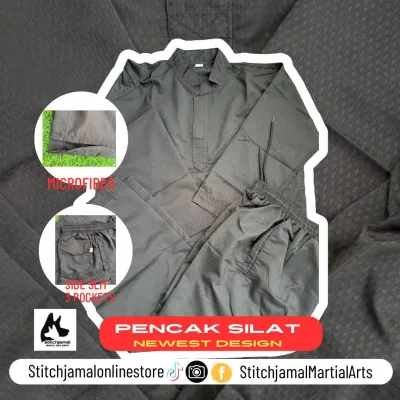
Prices are valid at publication and may change. Please refer to the product page for the latest price.
When sourcing your uniform, pay close attention to the fabric specifications outlined by the tournament organizers. In the warm, humid climate of the Philippines, finding a breathable fabric is essential, but you must ensure the material does not violate rules regarding fabric sheen and weight. Highly reflective synthetic fabrics are often banned because they can distract opponents, interfere with referee visibility, or make it difficult to secure a proper grip during grappling exchanges. Always check the latest edition of your federation’s rulebook to confirm that your uniform’s fabric shade and texture are fully compliant.
Legal Cuts, Collars, and Sleeve Specifications
The uniform top, known as the baju, must follow a precise structural design to be deemed legal for competition. The collar is one of the first areas scrutinized by technical officials during the equipment check. Most compliant uniforms feature a traditional cross-over V-neck or a high, rounded collar that fastens securely. The collar must not be cut too deep, as a plunge that excessively exposes the chest or collarbone is typically illegal, and it must be reinforced with multi-row stitching to withstand intense pulling.

Sleeve length is strictly monitored to ensure athlete safety and prevent hidden advantages during hand-to-hand exchanges. The sleeves must extend to the wrist joint when your arms are relaxed at your sides, with most federations allowing a minor tolerance of no more than 2 to 5 centimeters above the wrist. Sleeves that are too short fail to protect the skin from friction burns, while excessively long or baggy sleeves can be used to trap an opponent’s fingers or hide illegal hand positions. You must never roll up your sleeves during a match, as doing so will result in an immediate warning or penalty from the referee.
The overall fit of the baju must strike a careful balance between athletic mobility and structural safety. It must be loose enough to allow you to execute high kicks, deep stances, and rapid spinning strikes without any physical restriction. However, it cannot be so baggy that it hangs loosely over your mandatory body protector (pelindung dada). An excessively baggy top can obscure the scoring zones on the body protector, making it difficult for judges to award points for clean strikes, and it provides an unfair amount of loose fabric for an opponent to grab.
Before entering a tournament, you should also check the rules regarding hem allowances, side slits, and internal seam reinforcements on the baju. Many federations require specific hem widths to ensure the uniform maintains its shape during movement. Side slits must be cut to a regulated height to prevent the top from riding up excessively, and internal seams must be double-stitched to prevent unraveling under the stress of competitive grappling.
Pant Fit, Length, and Waistband Requirements
The lower half of the uniform, the celana, must match the top in fabric quality, color, and compliance. Pant length is a primary safety concern for tournament organizers. The hem of the pants must reach down to the ankle bone but must not touch the floor when you are standing naturally. Pants that are too short do not provide adequate skin protection against mat burns during sweeps and falls, while pants that are too long present a serious tripping hazard during rapid footwork.
The waistband must secure the pants firmly to your hips to prevent shifting during intense movement. Most official rulebooks mandate a secure fastening system consisting of a wide elastic band combined with an internal drawstring. Relying solely on an elastic waistband is highly risky, as the high-intensity grappling, pulling, and sweeping characteristic of Pencak Silat can easily displace the pants. The drawstring must be tied securely on the inside or tucked away so that no loose cords hang outside the uniform, and the external competition belt (sabuk) must sit firmly over the waistband without slipping.
Fabric durability in the lower garment is absolutely non-negotiable due to the physical demands of the sport. Pencak Silat requires extreme lower-body flexibility for low stances like the horse stance (kuda-kuda) and explosive sweeping techniques (sapuan). To withstand these forces without tearing mid-match, compliant pants must feature a reinforced triangular or diamond-shaped gusset in the crotch area. This panel redistributes tension away from the central seams, so you should always turn your pants inside out before purchasing to verify the presence of a double- or triple-stitched gusset.
Strict Limits on Trims, Piping, and Logos
Many athletes face last-minute disqualification or are forced to change uniforms at the venue due to non-compliant decorative elements. While a touch of personalization is appealing, official tournament uniforms must remain highly standardized. Contrasting piping, such as white, gold, or red lines running down the sleeves or pant legs, is strictly regulated by governing bodies. While some local federations allow a single thin stripe of a specific color to represent a club or region, major international tournaments often require a completely solid black uniform with no contrasting trim whatsoever.
Logo and patch placement is governed by a precise grid system that leaves no room for creative interpretation. Typically, the left chest of the baju is reserved for your national flag or your national federation emblem, such as the Philsilat logo. The right chest may display the logo of the international governing body (PERSILAT) or the specific tournament logo. Sponsor patches, if they are permitted at all, are usually restricted to specific zones on the upper sleeves or the outer thigh of the pants, and they must not exceed strict dimensional limits, which are often capped at 10 centimeters by 10 centimeters.
Custom embroidery, such as your name, your club’s name, or intricate traditional designs across the back of the uniform, is generally prohibited in official Tanding (match) categories. Some artistic Seni (performance) categories allow more ornamental traditional attire, but even then, the designs must conform to regional cultural standards rather than personal preference. Before sewing or ironing on any patch, consult your coach or the event’s technical delegate to avoid ruining a high-quality uniform that may cost between ₱1,500 and ₱4,000 on major online marketplaces.
Competition vs. Training: Can You Use the Same Uniform?
While it is tempting to use a single black uniform for both daily training and official matches, doing so is highly impractical and can compromise your performance. A competition-grade uniform is designed for optimal performance under specific tournament rules, often featuring lightweight yet durable cotton-polyester blends that balance breathability with structural strength. However, the intense daily grind of a training camp in a hot, humid climate takes a heavy toll on these specialized fabrics.
Frequent washing, exposure to heavy sweat, and constant friction against training mats will inevitably cause deep black dye to fade into a dull charcoal or grey. In official competitions, a faded or discolored uniform can be rejected by inspectors who demand a clean, professional appearance on the mat. Furthermore, the constant pulling, stretching, and washing of daily sparring can weaken the reinforced seams and fray the official embroidered logos, rendering the uniform non-compliant when you need it most.
To preserve your investment, it is best to establish a clear separation between your gear. Keep your official, fully compliant competition uniform pristine by reserving it strictly for weigh-ins, official ceremonies, and tournament matches. For daily conditioning, pad work, and heavy sparring, use a more affordable, unbranded black uniform or heavy-duty training pants paired with a club t-shirt. This ensures your competition gear remains sharp, dark black, and structurally sound when you step onto the championship mat.
The Pre-Weigh-In Compliance Checklist
To avoid last-minute panic at the tournament venue, you should perform a thorough uniform inspection at least 24 hours before the official weigh-in and equipment check. Walking through a structured verification process ensures you can address any minor issues before they become match-ending problems. Use this step-by-step checklist to verify your gear is ready for the mat:
- Trim and Piping Check: Cross-reference any colored piping or collar accents with the tournament's technical handbook. If the rules specify a solid black uniform, ensure there are no contrasting threads or borders.
- Patch and Logo Verification: Confirm that all required emblems are sewn securely in their designated zones. Ensure no unauthorized sponsor patches, personal embroidery, or commercial brand logos are visible.
- Sleeve and Pant Length: Put on the uniform, secure the waistband, and tie your belt. Stand relaxed and verify that the sleeves reach your wrists and the pants reach your ankle bones without dragging on the floor.
- Examine Structural Seams: Closely inspect high-stress areas, including the underarms, the crotch gusset, and the knees, looking for loose threads, thinning fabric, or micro-tears that could fail during a match.
- Prepare a Backup Uniform: Always pack a second, fully compliant black uniform in your gear bag. If your primary uniform is damaged, stained, or rejected by a technical official, having an identical, pre-approved backup prevents an automatic walkover disqualification.
Frequently Asked Questions (FAQ)
Can I wear a black uniform if I have not yet achieved a black belt?
Yes, you can wear a black uniform regardless of your current rank. In Pencak Silat, the black uniform is the standard competition attire for all practitioners, from beginners to advanced masters, during official matches. Unlike some martial arts where uniform colors change to reflect your progression, the black color is universal in Silat. Your specific grade, division, or corner assignment is indicated solely by the color and style of your belt (sabuk) or sash, not by the uniform itself.
Are custom-tailored black uniforms allowed in official matches?
Custom-tailored uniforms are generally permitted in official matches, provided they strictly follow the federation’s rules regarding fabric type, cut, sleeve length, collar design, and logo placement. Having a uniform custom-tailored can provide a superior fit, especially for athletes with unique body proportions. However, for major international tournaments, federations often mandate that uniforms must be sourced from a list of officially licensed manufacturers to guarantee material consistency and fair play across all competitors.
Community discussion
Share your experience or ask a question. Comments are reviewed before publication.