
Choosing the right golf putter for men is one of the most personal decisions you will make for your golf bag. The choice between a classic blade and a modern mallet putter depends primarily on your natural putting stroke path—whether it is straight back-and-through or follows an arcing motion—and your preference for tactile feedback versus forgiveness. There is no single best option for every male golfer; the right putter aligns with your mechanical tendencies, visual preferences, and current skill level. On the greens of the Philippines, where humid conditions can affect both the physical greens and your grip pressure, finding a putter that feels natural in your hands is essential for consistent distance control and accuracy.
Identify Your Putting Stroke Path
Before looking at head shapes, you must understand how your hands and shoulders move during a putting stroke. Golfers generally fall into two categories: those with a straight-back, straight-through stroke, and those with an arcing stroke. A straight-back, straight-through stroke relies on a mechanical path where the putter face remains square to the target line throughout the entire motion. In contrast, an arcing stroke naturally opens the putter face on the backswing and closes it on the follow-through, rotating around the body’s spine angle.
To observe your natural path without altering your motion, you can perform a simple drill on a practice green or a flat indoor floor. Lay down a straight alignment stick or a piece of tape on the ground, placing your ball directly next to it. Take your normal stance and make several practice strokes. Watch the path of your putter head relative to the straight line. If the putter head stays directly over the line, you have a straight stroke. If the toe of the putter pulls away from the line on the backswing and curves back inside on the follow-through, your stroke has a natural arc.
Products mentioned in this guide
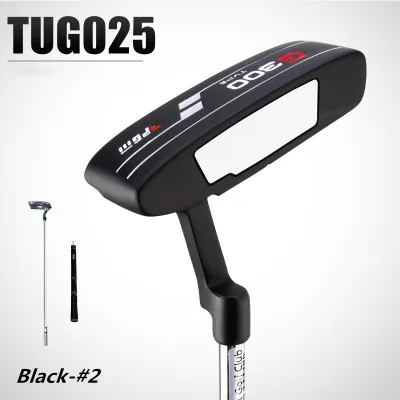
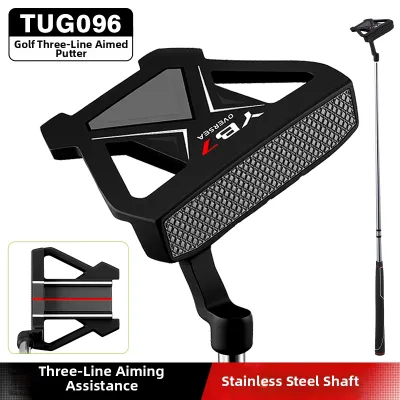
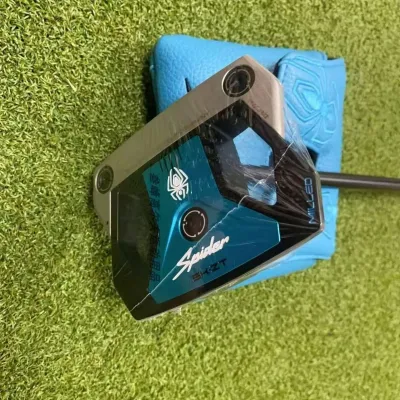
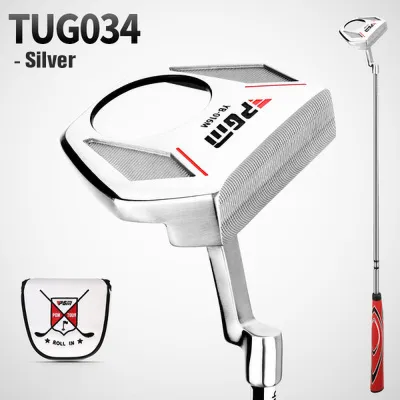
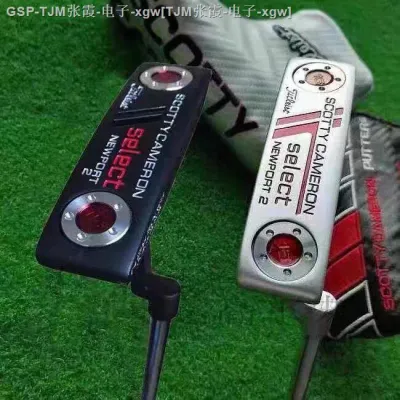
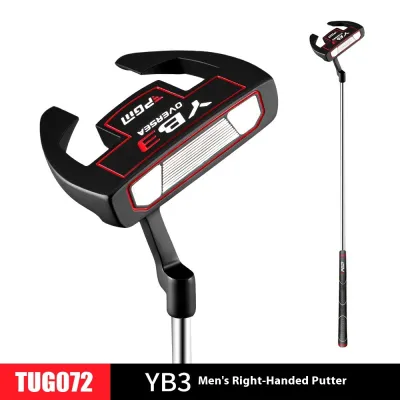
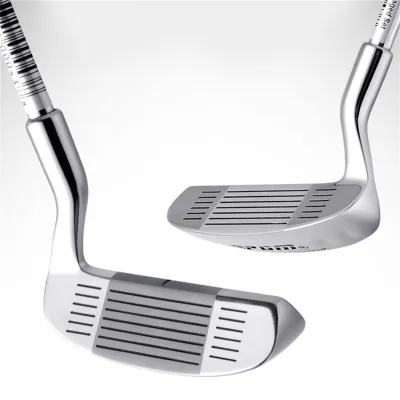
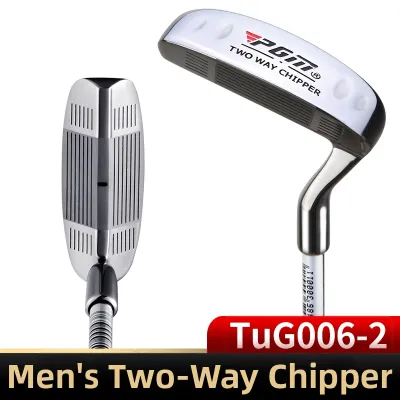
Prices are valid at publication and may change. Please refer to the product page for the latest price.
This physical path dictates whether you need a “face-balanced” putter or one with “toe hang.” You can check this balance by resting the shaft of the putter horizontally on your index finger, finding the balance point. If the face of the putter points directly upward toward the sky, it is face-balanced, which resists twisting and supports a straight stroke. If the toe of the putter points downward at an angle, the club has toe hang, which helps the face rotate open and closed during an arcing stroke.
Blade Putters: Design Traits and Stroke Compatibility
Blade putters represent the traditional aesthetic of golf, characterized by a compact, narrow head shape and clean, minimalist alignment lines. The weight distribution in a blade is typically concentrated directly behind the center of the face, offering a sleek profile at address. This classic design is highly favored by players who rely on precise touch, visual simplicity, and a clean view of the ball.

Because of their physical construction, blade putters almost always feature some degree of toe hang. This weight bias toward the toe allows the clubhead to rotate naturally during an arcing stroke. If you have a strong arc, a blade putter helps you time the release of the clubface, ensuring it returns to a square position at the exact moment of impact. Without this toe hang, an arcing stroke can feel forced, often leading to pushed or pulled putts.
The primary trade-off when choosing a blade is the relationship between feedback and forgiveness. Blade putters offer exceptional tactile feedback; you will feel exactly where the ball made contact on the face, whether it was off the toe, heel, or dead center. However, this high level of feedback comes with lower forgiveness. Off-center strikes with a blade putter often result in a loss of ball speed and distance control, making it a style that generally rewards consistent, centered ball-striking.
Mallet Putters: Forgiveness, Alignment, and Stroke Match
Mallet putters feature a much larger head profile, utilizing advanced geometric shapes to optimize weight distribution. The core design principle of a mallet is a high Moment of Inertia (MOI), which is a physical measurement of a club’s resistance to twisting on off-center hits. By pushing the weight to the extreme outer perimeter of the clubhead, manufacturers create a highly stable platform that maintains ball speed even when you do not strike the ball perfectly in the center.
Many mallet putters are engineered to be face-balanced, making them highly compatible with a straight-back, straight-through putting stroke. Because the face resists rotation, it helps you keep the clubhead square to your target line without requiring active wrist or hand adjustments. This stability is particularly beneficial on slower, grain-heavy Bermuda greens often found in tropical climates like the Philippines, where maintaining a firm, square strike is crucial to keeping the ball on its intended line.
Additionally, the larger surface area of a mallet allows for complex visual alignment aids, such as long lines, triple dots, or high-contrast shapes that frame the ball. These aids make it significantly easier to align your putter face correctly at address. The trade-off is a heavier, bulkier feel. Some golfers find that the larger footprint of a mallet reduces their tactile feel and makes distance control on exceptionally fast greens more challenging to calibrate.
Verifying Specifications for Men's Golf Putters
Selecting the right head style is only half the battle; you must also verify that the physical specifications of the golf putter for men match your body type and setup.
Length and Posture: Standard putter lengths for men typically range from 33 to 35 inches. To verify the correct length, assume your natural putting posture and let your arms hang comfortably. Your eyes should position directly over the ball or slightly inside the target line. If the putter is too long, your eyes will sit too far inside the ball, forcing an upright posture and an artificial arc. If it is too short, you will hunch over, putting unnecessary strain on your lower back and making it difficult to maintain a stable posture in humid, fatiguing weather.
Weight and Balance: The overall weight of the putter head and the counterbalancing in the grip affect your tempo. A heavier putter head can help smooth out a quick, twitchy stroke, while a lighter head offers more control on fast greens. You should test how the putter swings naturally; the weight should allow you to maintain a consistent, pendulum-like tempo without feeling like you have to actively push or pull the club.
Grip Size and Shape: The grip is your only physical connection to the club. In warm, tropical climates, humidity can cause hands to sweat, making grip texture and size critical. Standard grips offer maximum feel but can encourage active wrist movement. Oversized or “super-stroke” style grips help quiet down overactive wrists by distributing pressure evenly across your palms. Verify that the grip size allows you to hold the club securely with light pressure, preventing tension from creeping up into your forearms.
Decision Framework: Choosing Your Putter Style
To finalize your choice, evaluate your putting style against these clear, conditional guidelines:
Choose a Blade if:
- Your putting stroke follows a natural, noticeable arc.
- You prioritize precise tactile feedback and want to feel exactly where you strike the ball on the face.
- You prefer a clean, traditional look at address without large visual distractions.
- You consistently strike the ball in the center of the face and do not require high levels of off-center forgiveness.
Choose a Mallet if:
- Your putting stroke is straight-back and straight-through.
- You struggle with consistent face alignment and want prominent visual aids to help aim.
- You need maximum forgiveness (high MOI) to maintain distance control on off-center strikes.
- You prefer a heavier clubhead that helps stabilize your hands and wrists throughout the stroke.
Verify First if:
- You are unsure of your natural stroke path; consider visiting a local pro shop or using an alignment mirror to check your movement.
- You experience the "yips" or inconsistent wrist breakdown, which may require testing an oversized grip or a counterbalanced shaft.
- You play on varying green speeds, as a heavier mallet may require a different tempo adjustment compared to a lighter blade.
Frequently Asked Questions (FAQ)
Should I get custom-fitted for a blade or mallet putter?
Yes, a professional fitting is highly recommended to optimize your putter specifications to your unique biomechanics. A fitter will verify your exact lie angle, loft, and shaft length based on your posture, height, and arm length. If your putter’s lie angle is incorrect, the toe or heel will sit off the ground at address, causing the ball to start offline even with a perfect stroke. Custom fitting is especially valuable if standard off-the-rack putters force you into an uncomfortable posture or cause inconsistent eye positioning over the ball.
Can I switch from a blade to a mallet putter mid-season?
You can switch, but you should expect an adjustment period to adapt to the new visual profile, weight distribution, and alignment cues. Because mallets are typically heavier and have a higher MOI, your distance control may feel slightly off during your first few rounds. To ensure a smooth transition, spend dedicated time on the practice green focusing on lag putting and short-range alignment before putting the new club into play during a competitive round.
Community discussion
Share your experience or ask a question. Comments are reviewed before publication.