
Choosing between a blade and a mallet golf putter depends on your natural putting stroke path, visual preferences, and how much forgiveness you need on off-center hits. A blade putter suits golfers with an arc-style stroke who prioritize tactile feedback, while a mallet putter offers high stability and alignment aids for those with a straight-back-straight-through stroke. Selecting the right style is not about finding an objectively superior club, but rather matching the design to your natural mechanics to ensure consistent distance control and accuracy on the greens.
In tropical playing environments like the Philippines, golf courses often feature warm-season grasses such as Bermuda. These greens can develop a strong grain that influences both the speed and direction of the ball. To navigate these conditions successfully, your stroke must be highly consistent. Matching your golf putter to your natural physical motion is the most effective way to achieve a smooth, predictable roll, regardless of grass grain or humidity.
Identify Your Natural Putting Stroke Path
Before evaluating putter heads, you must understand how your body naturally moves the club. Golfers generally fall into one of two putting stroke categories: an arc stroke or a straight-back-straight-through stroke.
Products mentioned in this guide

3 Lazada user ratings
🔧Material:v nice!! ⚖️Weight:it's just the right weight 📏Length:as per my. Order it's 33iches The communication with the seller is A+ Just use…Read full reviewShow less
🔧Material:v nice!! ⚖️Weight:it's just the right weight 📏Length:as per my. Order it's 33iches The communication with the seller is A+ Just use the chat message in lazada. Thank you oxygen golf *But sadly.... The face of the putter was not aligned :(
appeared as advertised, feel a little lighter but can't really complain given the price point, awesome product
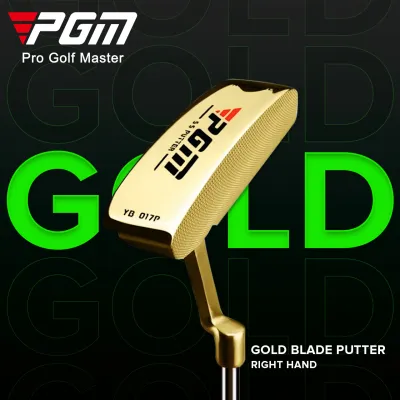
6 Lazada user ratings
Left-handed friendly grip, Medium grip comfort, PGM brand reliability,
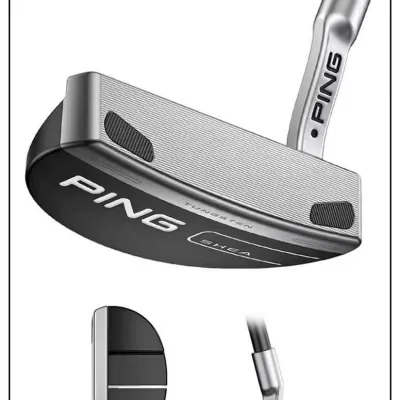
19 Lazada user ratings
🛠️Durability: great 👌Ease of Use: yes ✅Effectiveness: love it It is very beautiful and feels good. Comes with HEAD COVER. I highly recommend
🛠️Durability: looks very durable 👌Ease of Use: Excellent craftsmanship, Great balance and stability, Sleek black and silver design,
Perfect length options available, Low center of gravity for better accuracy, I am extremely pleased with this fine putter.
looks fantastic and feels great. can't wait to get out on the putting surface and give it ago.
Great balance and stability, Easy to align with the target, Sleek black and silver design,
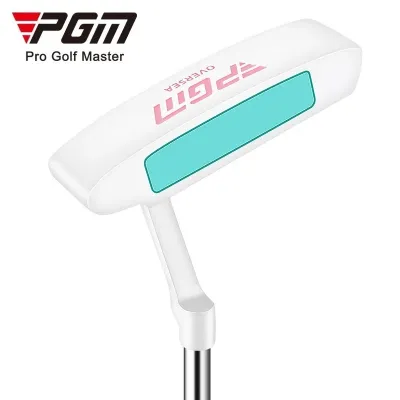
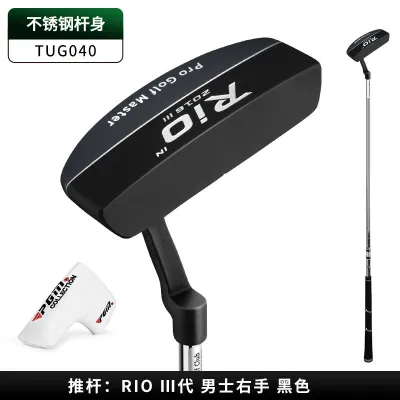
4 Lazada user ratings
The product is of good quality for the price, the delivery is fast and prompt, the packaging is excellent, and the product matches what was …Read full reviewShow less
The product is of good quality for the price, the delivery is fast and prompt, the packaging is excellent, and the product matches what was ordered.
Suitable for golf beginners; looks sturdy.
ask me in 2 weeks.

6 Lazada user ratings
great. theadhyatable length was perfect for my grandchildren christmas party
✅Effectiveness:excelllent
Prices are valid at publication and may change. Please refer to the product page for the latest price.
An arc stroke, also known as an inside-to-inside path, occurs when the putter head travels on a slight curve. As you take the club back, the face naturally opens relative to the target line, and as you swing through, it closes. This motion relies on the natural rotation of your shoulders and arms. In contrast, a straight-back-straight-through stroke keeps the putter face square to the target line throughout the entire path, moving along a straight linear track.
You can easily observe your natural path on a practice green using simple visual markers. Place two parallel alignment sticks on the turf, leaving a gap just slightly wider than your putter head to create a narrow track. Position a ball in the center and take several natural practice strokes. If your putter head repeatedly collides with the sticks on the backswing or follow-through, your stroke naturally wants to arc. If you can easily glide the putter back and forth without touching the sticks, you likely have a straight-back-straight-through path.
Trying to force a straight stroke when your body naturally prefers an arc—or vice versa—creates muscle tension and leads to inconsistent face angles at impact. Forcing an unnatural stroke path is highly inefficient. Instead, identify your comfortable, repeatable motion first, and then select a putter designed to complement that specific movement.
Blade Putters: Design Traits and Ideal Stroke Match
Blade putters represent the classic, traditional design that has dominated golf courses for decades. They feature a slim, compact head profile with a clean aesthetic at address. The weight in a blade putter is typically concentrated closer to the clubface and distributed evenly between the heel and toe, resulting in a lower moment of inertia (MOI) compared to modern mallet designs.

This lower MOI means the clubhead is highly sensitive to where the ball makes contact on the face. While this reduces forgiveness on mis-hits, it provides exceptional tactile and acoustic feedback. When you strike a ball with a blade putter, you receive immediate physical vibration through the shaft and a distinct sound that tells you exactly where contact was made. Golfers who rely heavily on touch, feel, and precise distance control often prefer this feedback, especially when navigating fast or highly contoured greens.
Because of their physical construction, most blade putters feature toe-hang weighting. When you balance the shaft horizontally, the toe of the putter points downward at an angle. This toe-heavy design naturally resists closing too quickly on the backswing and helps the face rotate closed on the downswing. Consequently, blade putters are the ideal match for golfers with a moderate-to-strong arc stroke, as the weight distribution works in harmony with the natural opening and closing of the clubface.
Mallet Putters: Stability Features and Ideal Stroke Match
Mallet putters are characterized by their larger, more expansive head shapes, which extend far behind the clubface. This larger footprint allows manufacturers to push weight away from the face and toward the outer perimeter of the clubhead. This structural design significantly increases the putter’s moment of inertia (MOI), making it highly resistant to twisting on off-center strikes.
The primary benefit of this high-MOI construction is exceptional forgiveness. When you strike a ball off the heel or toe of a mallet putter, the clubhead remains stable, preserving ball speed and keeping the putt on its intended line. This makes mallets highly effective for players who struggle with consistent center-face contact.
Additionally, the larger surface area of a mallet putter provides ample space for advanced alignment aids. Manufacturers utilize long sightlines, contrasting colors, dots, and three-dimensional geometry to help golfers align the clubface perfectly square to the target. This visual assistance improves spatial awareness and setup consistency, which is particularly helpful for players who struggle to aim correctly over the ball.
Most mallet putters are engineered to be face-balanced, meaning the clubface points directly upward when the shaft is balanced horizontally. This design is specifically calibrated to resist face rotation during the swing. If your putting stroke is straight-back-straight-through, a face-balanced mallet will help keep the clubface square to your target line throughout the entire motion, minimizing offline errors.
Core Differences: Forgiveness, Feel, and Alignment
When choosing between these two styles, you must weigh several performance trade-offs. Forgiveness is the most significant differentiator. On off-center strikes, a blade putter will experience slight twisting, causing the ball to lose speed and deviate from the target line. A mallet putter minimizes this energy loss, ensuring that a mis-hit ball still travels close to your intended distance.
The feel and acoustic feedback of the two designs also differ greatly. Blades offer a crisp, sharp click and direct vibration, allowing you to diagnose the quality of your stroke instantly. Mallets tend to produce a softer, more muted sound and feel, which some players find reassuringly consistent, while others feel it masks their contact errors.
Alignment preferences are highly subjective. The extensive visual aids on a mallet putter can build immense confidence for golfers who want a clear, structured track to guide their aim. However, some players find these large shapes distracting and prefer the clean, minimalist look of a blade, which allows them to focus entirely on the ball and their target line without visual clutter.
| Feature | Blade Putters | Mallet Putters |
|---|---|---|
| Head Size | Compact, traditional profile | Large, extended footprint |
| MOI & Forgiveness | Lower; highly sensitive to off-center hits | Higher; resists twisting on mis-hits |
| Typical Stroke Path | Moderate to strong arc | Straight-back-straight-through |
| Alignment Aids | Minimalist (single line or dot) | Extensive (long lines, wings, 3D shapes) |
| Feel & Feedback | Crisp, distinct vibration and sound | Muted, soft, and highly consistent |
Final Decision Framework: Which Putter Should You Choose?
To select the ideal golf putter for your game, apply this condition-based decision matrix to evaluate your stroke, preferences, and playing style.
Choose a blade putter if:
- Your natural putting stroke follows a distinct arc (inside-to-inside).
- You prioritize precise distance control and immediate tactile feedback over forgiveness.
- You prefer a clean, traditional, and minimalist look at address.
- You play on greens where touch and speed control are your primary challenges.
Choose a mallet putter if:
- Your natural putting stroke is straight-back-straight-through.
- You struggle with consistent center-face contact and need help maintaining ball speed on mis-hits.
- You require prominent visual alignment aids to square the clubface to your target.
- You prefer a smooth, stable, and highly controlled stroke tempo.
Verify first if: Before finalizing your choice, check the specific shaft bend, hosel design, and neck type of the putter. These structural elements can alter the balance of the club regardless of the head shape. For example, a mallet putter with a short slant-neck hosel can actually feature significant toe hang, making it suitable for an arc stroke. Conversely, a center-shafted or double-bend blade putter can be face-balanced, making it suitable for a straight stroke. Do not rely solely on head shape; always verify the actual balance of the club.
Finally, test both styles on a real practice green before making a purchase. If possible, consult a professional club fitter. A fitter can analyze your stroke mechanics using launch monitor technology to verify your optimal loft, lie angle, shaft length, and grip size, ensuring your chosen putter is perfectly calibrated to your body and stroke.
Frequently Asked Questions (FAQ)
Can a beginner golfer use a blade putter?
Yes, a beginner can absolutely use a blade putter. While beginners are often advised to use mallet putters for their high forgiveness, your natural stroke path should always dictate your choice. If a beginner has a natural arc stroke, forcing them to use a face-balanced mallet can cause them to fight the club, leading to poor face control. Comfort, natural mechanics, and confidence at address are far more important than general skill-level guidelines.
Does a heavier putter head improve putting consistency?
Not necessarily. A heavier putter head can help smooth out a quick or jerky stroke tempo, and it is often beneficial on slower, high-friction greens where you need more mass to move the ball. However, a head that is too heavy can reduce your feel and distance control on fast, delicate greens. You should check the manufacturer’s weight specifications and test different head weights to find the balance that matches your natural tempo and local green conditions.
How do I check if my putter is face-balanced or has toe hang?
You can perform a simple, safe visual check at home. Hold your putter and balance the shaft horizontally on your index finger, about six to eight inches below the grip, allowing the clubhead to hang freely. If the clubface points directly upward toward the ceiling, the putter is face-balanced. If the toe of the putter points downward toward the floor at an angle, the putter has toe hang, indicating it is designed for an arc stroke.

Community discussion
Share your experience or ask a question. Comments are reviewed before publication.