
When venturing out onto coastal waters, calm bays, or inland lakes, securing your position is essential for fishing, snorkeling, or simply relaxing. For lightweight watercraft like kayaks, stand-up paddle boards (SUPs), and small inflatable boats, a boat anchor weighing between 1.5 lbs and 5.0 lbs (0.7 kg to 2.3 kg) is generally all you need. However, selecting the right anchor is not just about picking a weight off a shelf. You must match the anchor’s design, weight, and rigging to your specific craft, local water conditions, and bottom substrate to ensure safety and reliable holding power.
Decoding Anchor Weight vs. Holding Power
Many beginners assume that a heavier anchor automatically provides better holding power. While this is true for massive ships that rely on dead weight, it is highly impractical for small, human-powered or lightweight recreational craft. Kayaks, SUPs, and inflatables have strict payload capacities and limited deck space. Carrying an oversized, heavy metal anchor not only exhausts the paddler but also compromises the craft’s buoyancy and handling.
Instead, an anchor’s holding power primarily comes from its design. High-quality anchors feature flukes, tines, or scoops engineered to bite directly into the seafloor, riverbed, or lake bottom. Under tension from the boat’s line, these elements dig deeper into the substrate, using the earth itself to hold the vessel in place.
Products mentioned in this guide
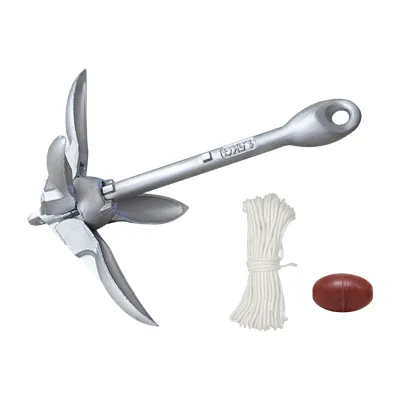
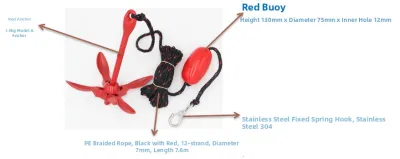
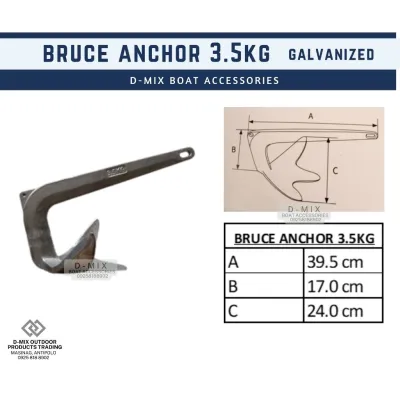
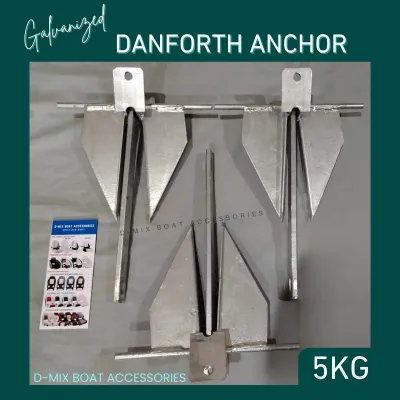
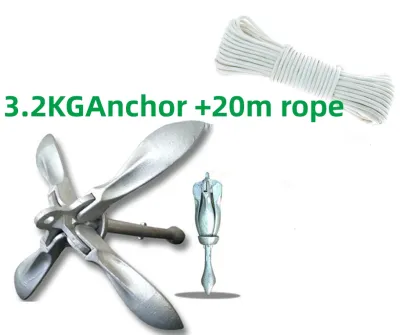
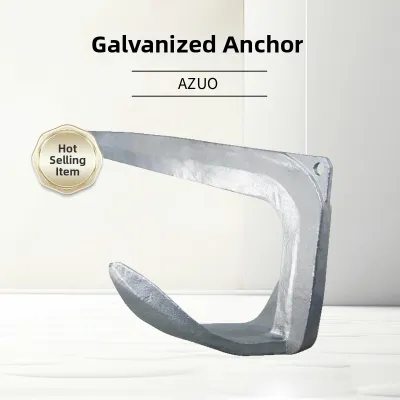
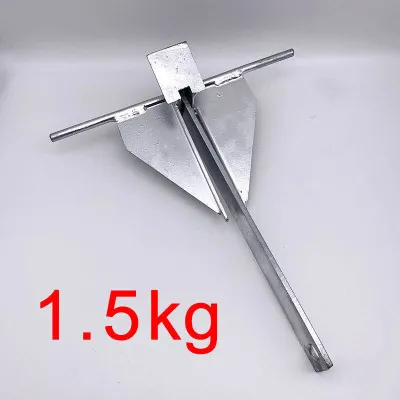
Prices are valid at publication and may change. Please refer to the product page for the latest price.
Furthermore, environmental factors like wind velocity, tidal currents, and bottom composition dictate your holding requirements far more than the physical weight of your craft. For example, a strong afternoon sea breeze (such as the seasonal habagat or amihan winds in coastal regions) pushing against a high-profile kayak will exert far more force than the kayak’s actual weight. Understanding how to leverage mechanical design over raw mass is the key to choosing an efficient anchoring system.
Baseline Anchor Weights by Watercraft Type
To select the ideal setup, start with baseline weight ranges tailored to your specific watercraft. These ranges assume calm to moderate weather and water conditions. If you regularly paddle in areas with strong tidal currents, fast-moving rivers, or high winds, you will need to scale up your anchor size or choose a style with more aggressive holding power. Always check your watercraft manufacturer’s manual to verify maximum weight capacities and approved attachment points before heading out.

Kayaks and Canoes
For most recreational and fishing kayaks, a folding grapnel or small fluke anchor weighing 1.5 lbs to 3.0 lbs (0.7 kg to 1.4 kg) is the standard choice. Because deck space is at a premium on narrow hulls, compact, folding designs are highly recommended. These anchors fold flat when not in use, fitting easily into small hatches or gear crates without snagging fishing lines or paddles. Avoid carrying excessive anchor weight; adding unnecessary mass to the bow or stern negatively impacts your paddling efficiency, tracking, and overall stability, making the kayak sluggish and harder to maneuver.
Stand-Up Paddle Boards (SUPs)
Stand-up paddle boards require lightweight, low-profile anchoring systems, typically ranging from 1.5 lbs to 2.5 lbs (0.7 kg to 1.1 kg). Because an SUP has no gunwales or deep cockpit, any gear carried on deck must be secured tightly. The “windage effect” is highly pronounced on paddle boards because the rider’s standing body acts like a sail, catching even light breezes. When anchored, this lateral force can easily destabilize the board. A secure, low-profile attachment point—such as a heavy-duty leash plug or a dedicated D-ring—is critical to keep the board stable and prevent it from flipping over in sudden gusts.
Inflatable Boats and Dinghies
Inflatable boats, tenders, and dinghies generally require heavier anchors, ranging from 3.0 lbs to 5.0+ lbs (1.4 kg to 2.3+ kg). These craft are wider, heavier, and often carry multiple passengers or small outboard motors, which increases the overall drift force. Additionally, the high, buoyant tubes of an inflatable boat act as a large sail, catching significantly more wind than a low-profile kayak. This higher freeboard, combined with the potential for motorized drift, requires a more robust anchoring system with a slightly heavier baseline weight to ensure the craft remains securely positioned.
Anchor Styles and Bottom Compatibility
The shape of your anchor determines how well it grips the bottom. Matching the anchor style to the local underwater terrain is crucial for reliable performance.
- Folding Grapnel Anchors: These feature four curved tines that fold out to grip rocks, heavy weeds, sunken timber, or rubble. They are incredibly popular for kayaks and SUPs due to their compact storage. However, they perform poorly in clean sand or soft mud where the tines cannot hook onto anything. Additionally, users must exercise caution in marine sanctuaries; dragging grapnel tines can damage fragile coral reefs, so they should only be used in designated sandy or rocky zones.
- Mushroom Anchors: Shaped like an inverted mushroom, these anchors rely on suction and dead weight. They are highly effective in soft mud, fine sand, or silt, where they can sink into the substrate and create a strong vacuum. However, they offer very little holding power in rocky or high-current environments, making them best suited for calm lakes, slow-moving rivers, or quiet estuaries.
- Miniature Fluke/Danforth Anchors: These anchors feature two sharp, flat flukes that pivot to dig deep into sand and mud under tension. They offer an exceptional holding-power-to-weight ratio, meaning a very light fluke anchor can hold a boat in strong currents. The main drawback for small craft is their awkward, wide, and sharp physical profile, which can be difficult to store safely on a kayak or SUP deck without risking punctures or leg scrapes.
The Missing Spec: Anchor Rode Length and Scope Ratio
An anchor is only as good as the line connecting it to your boat. The anchor “rode” (the rope and chain assembly) is a critical specification that many paddlers overlook.
To achieve proper holding power, you must understand “scope”—the ratio of deployed line length to the depth of the water. For small recreational craft, a standard scope ratio of 5:1 to 7:1 is recommended. This means if you are anchoring in 3 meters of water, you should deploy between 15 and 21 meters of line. A scope that is too short pulls upward on the anchor, lifting it out of the bottom; a longer scope pulls horizontally, helping the anchor dig deeper.
For line material, braided nylon is the superior choice. It is highly elastic, allowing it to stretch and absorb the shock of passing waves without jerking the anchor loose. While lightweight paracord is tempting due to its low cost and small size, it lacks elasticity and can easily cut into your hands when pulling up a stuck anchor.
Additionally, adding a short chain leader—about 0.5 to 1 meter of galvanized chain between the anchor and the nylon rope—provides two major benefits. First, it protects the rope from abrasion against sharp volcanic rocks, shells, or debris. Second, the weight of the chain keeps the anchor shank lying flat on the bottom, lowering the angle of pull and significantly improving fluke engagement.
Safe Rigging and Deployment Boundaries
Anchoring a small watercraft carries inherent risks, particularly in moving water. Following proper safety protocols is essential to prevent capsizing, gear loss, or dangerous entanglements.
First and foremost, always attach your anchor line to the bow of your watercraft, never to the side (beam) or the stern. Aligning the bow with the oncoming current or wind allows the craft to slice through waves naturally. Attaching the line to the side creates a pivot point that can easily cause a kayak or SUP to swamp, roll, or flip when hit by a wave or strong current.
To mitigate the risk of a snagged anchor pulling your craft under, always use a quick-release cleat, a carabiner, or a breakaway rigging system. A breakaway system uses a heavy-duty zip-tie to secure the line to the top of the anchor, while the main line is tied to the bottom crown. If the anchor gets stuck under a rock, pulling hard will snap the zip-tie, allowing you to pull the anchor out backward.
Additionally, attach a small, highly visible surface float to your anchor line. This float prevents the line from sinking and tangling in the propeller of motorized inflatables, and it allows you to quickly toss the line overboard in an emergency and return to retrieve the anchor later.
Finally, establish clear safety boundaries. Small craft anchors (which typically cost around ₱500 to ₱1,500 in local marine shops) are designed for fair-weather positioning, fishing, or recreational stops. They are not safety devices meant to hold a lightweight boat in severe storms, heavy tidal surges, or rough open-ocean swells. Equipment cannot replace proper water safety training, local weather monitoring, and sound personal judgment. If conditions deteriorate, pull up the anchor immediately and head for shore.
Community discussion
Share your experience or ask a question. Comments are reviewed before publication.