
Quick Answer: Which Board Should a Beginner Choose?
Choosing between a bodyboard and a surfboard as a beginner in the Philippines depends on how quickly you want to ride waves, your physical conditioning, and your ultimate goals. If your priority is immediate fun, accessibility, and a lower initial budget, a bodyboard is an exceptional choice. Because you ride a bodyboard in a prone (lying down) position, it lowers your center of gravity and eliminates the complex balance required to stand, allowing you to catch and successfully ride waves on your very first day.
Conversely, a surfboard offers a steeper initial learning curve but is the essential choice if your ultimate goal is to stand up, carve across the open face of a wave, and progress in traditional surfing. The right choice is not about which board is objectively better, but which one matches your fitness, budget, transport capabilities, and long-term wave-riding aspirations. Whether you are looking at a bodyboard surfboard comparison to buy your first gear or planning a trip to a local surf town, understanding these differences will ensure you spend more time riding waves and less time struggling in the water.
The Learning Curve: Bodyboard Surfboard Comparison and Riding Styles
To understand the progression of each sport, it is essential to look at how a rider interacts with the water. The physical mechanics of riding a bodyboard and a surfboard differ fundamentally in how balance is maintained, how speed is generated, and how the rider controls the board’s direction. For a beginner, these mechanical differences dictate how quickly you will transition from paddling in the white water to steering on clean, unbroken waves.
Products mentioned in this guide
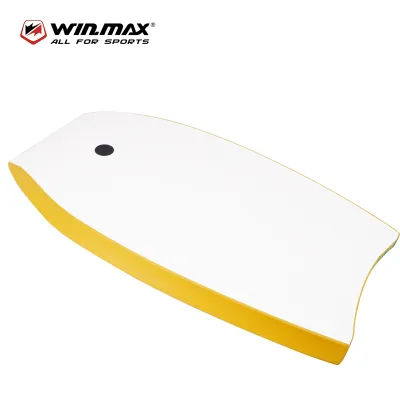
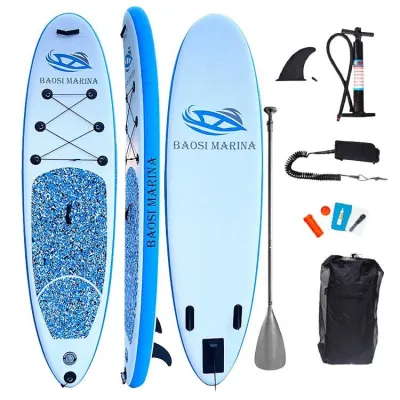
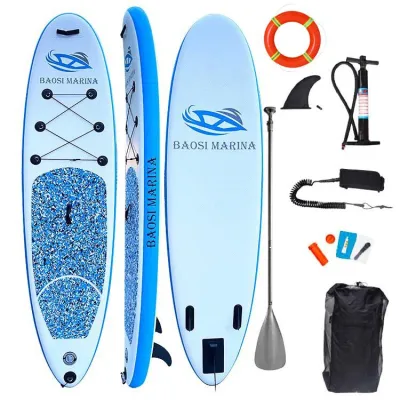
Prices are valid at publication and may change. Please refer to the product page for the latest price.

Bodyboarding: Fast Track to Wave Riding
The primary advantage of bodyboarding is its low entry barrier, which stems directly from the prone riding position. When you lie flat on a bodyboard, your entire torso and hips are in direct contact with the board, creating a broad, stable surface area. This low center of gravity makes it incredibly easy to maintain balance, even when sliding down a steep, turbulent wave face.
To catch a wave on a bodyboard, you position your body so that your hips rest on the tail of the board, keeping your chest elevated to prevent the nose from diving. Propulsion is achieved through a combination of arm paddling and continuous kicking with specialized swim fins. Once the wave catches the board, steering is highly intuitive: you grip the nose of the board with one hand, place your elbow on the opposite rail, and lean your weight in the direction you want to turn. This immediate control allows beginners to execute basic bottom turns and trim along the wave face within their very first session, fostering rapid confidence and an immediate connection to the ocean.
Surfing: The Challenge of the Pop-Up
Surfing introduces a highly technical physical transition known as the pop-up, which represents the first major hurdle for every beginner. Unlike bodyboarding, where you remain in a stable position, surfing requires you to transition from a prone paddling state to a standing stance on a moving, highly unstable surface. This transition must occur in a single, fluid, explosive movement lasting less than two seconds, precisely as the board begins to descend the face of the wave.
The mechanics of the pop-up demand precise coordination, timing, and foot placement. As you feel the wave push the board, you must place your hands flat on the deck beneath your chest, push your upper body upward, and sweep your feet underneath you, landing in a wide, low stance. Your feet must align perfectly along the stringer (the center line of the board); landing too far forward causes the nose to plunge under the water (pearling), while landing too far back stalls the board and drops you out of the wave. Because of this complexity, beginners must expect to spend several sessions wiping out and adjusting their balance before they can consistently stand up and ride a wave to the shore.
Physical Demands and Fitness Requirements
Both sports offer excellent full-body workouts, but they target different muscle groups and require distinct types of physical endurance. Assessing your current fitness level can help you choose the board that will feel most natural and comfortable during your initial hours in the ocean.
Upper Body and Core Strength for Surfing
Surfing is primarily an upper-body sport, especially during the learning phase. Beginners are often surprised to learn that up to 90 percent of a surfing session is spent paddling, with only a fraction of the time spent actually riding waves. Paddling a large, buoyant surfboard requires sustained muscular endurance in the shoulders (deltoids), upper back (latissimus dorsi), and arms (triceps).
In addition to paddling endurance, surfing requires explosive core strength to execute the pop-up. This movement is essentially a high-intensity plyometric push-up that engages the rectus abdominis, obliques, and hip flexors. Once you are standing, the physical demand shifts to the lower body. Maintaining balance on a moving surfboard requires deep engagement of the quadriceps, hamstrings, and calves, along with excellent ankle flexibility to absorb the micro-adjustments of the board as it glides over uneven water.
Full-Body Endurance and Kicking for Bodyboarding
While bodyboarding requires less intense upper-body paddling than surfing, it demands high-intensity lower-body endurance and cardiovascular fitness. Because bodyboards are shorter and have less buoyancy than surfboards, arm paddling alone is rarely sufficient to catch waves. Instead, bodyboarders rely on specialized, stiff swim fins to kick their way into waves and navigate currents.
This continuous kicking action targets the glutes, hamstrings, quadriceps, and calves, making bodyboarding an exceptional lower-body workout. Furthermore, maintaining the correct prone position requires you to keep your chest arched upward off the deck of the board. This constant arching engages the lower back (erector spinae) and core muscles for the duration of your session. If you enjoy swimming and have strong leg endurance, the physical demands of bodyboarding will feel highly familiar and manageable.
Wave Conditions in the Philippines: Matching the Board to the Break
The Philippine archipelago offers an incredible variety of surf breaks, influenced by seasonal monsoons and diverse coastal geology. To maximize your enjoyment and safety, it is crucial to match your chosen board to the specific wave conditions of the break you plan to visit.
Bodyboards and surfboards interact with waves differently due to their shape, buoyancy, and construction materials. Bodyboards, which are typically made of flexible foam cores, excel in steep, hollow, fast-breaking waves and shore breaks. Because they are short and highly maneuverable, they can navigate tight spaces and handle waves that close out (break all at once) in shallow water. In contrast, beginner surfboards—especially longboards and funboards—are highly buoyant and require longer, peeling, slower-rolling waves. These slower-moving waves provide the time and space needed to perform the pop-up and glide smoothly down the line.
When exploring beginner-friendly destinations in the Philippines, the coastal characteristics play a major role:
- La Union (San Juan): Known as the surfing capital of Northern Luzon, San Juan features a forgiving, sandy-bottom beach break. During the surfing season, the consistent, rolling waves are perfect for learning the pop-up on a surfboard, while the shore break closer to the beach offers fun, accessible waves for bodyboarders.
- Siargao: While famous for the heavy, hollow reef breaks of Cloud 9, Siargao offers excellent beginner spots like Jacking Horse or G1. These spots feature gentler, rolling waves over reef and sand bottoms. However, because these are reef breaks, tide levels are critical. Beginners should only surf these spots during high tide to ensure there is sufficient water depth over the sharp reef.
- Baler (Sabang Beach): This expansive sandy beach break in Aurora provides highly consistent waves year-round. The soft sandy bottom makes it an incredibly safe and welcoming environment for both bodyboarders and beginner surfers to practice their skills without the risk of reef scrapes.
Regardless of where you choose to ride, ocean conditions can change rapidly due to wind, tide, and weather. Before entering the water, always check local surf reports using reliable online forecasting tools, spend at least 15 minutes observing the wave patterns and current directions from the shore, and consult local, certified instructors to verify the safety of the break for your skill level.
Cost and Gear Requirements: Budgeting for Your First Ride
Before committing to a purchase, it is important to understand the financial investment and gear logistics associated with each sport. The total cost of ownership goes beyond the board itself, encompassing essential safety accessories, maintenance, and transport considerations.
Essential gear lists:
- Bodyboarding: A bodyboard (PE or PP core for durability, EPS for budget), a high-quality coiled wrist leash, swim fins (essential for propulsion and control), and a rash guard to prevent board rash.
- Surfing: A surfboard (typically an 8ft to 9ft foam longboard or "soft top" for beginners), a straight ankle leash (matching the board's length), surf wax (formulated for tropical water temperatures above 26°C, such as "warm" or "tropical" wax), and a rash guard.
When budgeting for your first setup, there is a clear distinction in initial costs. A complete beginner bodyboarding package—including a decent EPS or PE board, swim fins, and a leash—typically ranges from ₱3,000 to ₱8,000. This makes bodyboarding a highly accessible entry point. On the other hand, an entry-level foam surfboard, leash, and wax represent a higher initial investment, generally ranging from ₱12,000 to ₱25,000.
Logistics and transport also differ significantly. A bodyboard is compact and lightweight, easily fitting into the back seat of a car, onto a motorcycle rack, or carried on public transport like tricycles and buses. It requires minimal storage space at home. A surfboard, however, requires careful planning. Transporting an 8-foot or 9-foot longboard requires specialized roof racks or a large vehicle. If you plan to travel domestically via commercial flights to destinations like Siargao, you must factor in substantial oversized baggage fees. Storage also requires a dedicated, dry space protected from direct sunlight and high tropical humidity, which can cause the foam and fiberglass to delaminate over time.
To find the best deals, check reputable local surf shops in major surf hubs or established online sports retailers. Many shops offer complete beginner packages or high-quality rental options, allowing you to test different equipment before making a financial commitment.
Safety, Ocean Awareness, and Knowing Your Limits
Water sports carry inherent risks, and equipment can never replace proper training, physical preparation, and sound judgment. Before you head out into the water with either a bodyboard or a surfboard, establishing solid ocean safety habits is vital.
First and foremost, you must be a competent swimmer who is comfortable in deep water and turbulent waves. Understanding how to identify and react to rip currents is a critical survival skill. Rip currents are powerful, narrow channels of fast-moving water that flow from the shore back out to sea. If you find yourself caught in a rip current, do not attempt to swim directly back to shore against the flow. Instead, remain calm, conserve your energy, and swim parallel to the shoreline until you escape the pull of the current, then make your way back to the beach.
Using a high-quality leash is non-negotiable for both sports. Your leash is your primary lifeline, ensuring your board remains close to you as a flotation device if you wipe out. Furthermore, a loose surfboard or bodyboard can quickly become a dangerous projectile in the water, posing a severe risk of injury to other swimmers and surfers in the immediate area.
When starting out, always stick to designated beginner zones, typically characterized by sandy bottoms and gentle white water. Avoid crowded lineups where experienced surfers are riding, and respect local lineup etiquette to prevent collisions. Be highly attentive to your physical limits; the combination of paddling, kicking, intense tropical sun, and warm water can lead to rapid dehydration, muscle cramps, and fatigue. Always head back to shore before you feel completely exhausted.
Finally, both sports carry specific physical risks that require careful management. For bodyboarders, riding waves close to the shore (shore breaks) can be highly dangerous. Diving headfirst into shallow water or executing maneuvers without checking the depth can lead to severe spinal and neck injuries if you strike the sandy bottom. Always perform a thorough depth check of the area, ride waves with your head up, and protect your head with your arms during a wipeout. For surfers, the primary risk involves being struck by your own heavy board or fins during a fall. Always fall flat on the water (the “starfish” position) rather than diving deep, and cover your head with your hands when surfacing.
Decision Framework: How to Make Your Final Choice
To help you finalize your decision, use this structured framework to align your personal preferences, budget, and fitness with the right board type.
Choose a Bodyboard if:
- Immediate Success is Your Priority: You want to catch and ride waves on your very first day without the frustration of repeated wipeouts.
- You are on a Budget: You want to keep your initial gear investment under ₱10,000.
- You Have Limited Space: You need a compact board that is easy to store in a small room and transport on a motorcycle or public transport.
- You Enjoy Swimming: You are comfortable wearing swim fins and using your leg muscles for continuous propulsion.
- You Frequently Visit Shore Breaks: Your local beach has fast, steep waves that break close to the sand.
Choose a Surfboard if:
- Your Goal is to Stand Up: You are fully committed to the classic surfing experience of standing, carving, and riding across the wave face.
- You Have Patience for a Steep Learning Curve: You are willing to dedicate multiple sessions to mastering the technical pop-up.
- You Have Strong Upper-Body Fitness: You possess or are willing to build the shoulder and core strength required for sustained paddling.
- You Have the Budget and Transport: You can accommodate a larger financial investment (₱12,000 to ₱25,000) and have a reliable way to transport an 8-foot or 9-foot board.
- You Visit Peeling Breaks: You have easy access to gentle, slow-rolling reef or beach breaks that provide long rides.
Verify First if:
- You Are Unsure of Your Commitment: Do not buy gear immediately. Renting both a bodyboard and a foam surfboard at a local surf school in La Union, Baler, or Siargao is the most practical way to test your physical preferences. Taking a single guided lesson for each sport will give you firsthand experience of the differing physical demands, helping you make an informed, confident purchase when you are ready.
Community discussion
Share your experience or ask a question. Comments are reviewed before publication.