
Starting your tennis journey requires more than just enthusiasm; it demands the right gear to help you develop proper technique while protecting your body from strain. A complete tennis training equipment set for beginners should ideally include a lightweight, forgiving racket, pressureless practice tennis balls, court-specific shoes, and essential accessories like overgrips and a protective bag. While pre-assembled bundles on online marketplaces offer an easy entry point, many of these packages compromise on the quality of critical components. Understanding how to evaluate each item ensures you invest in gear that supports your progress on the court rather than hindering it.
In tropical climates like the Philippines, where high humidity and heat can rapidly degrade sports equipment, making informed choices about materials and construction is even more critical. Sweat can quickly ruin a low-quality grip, and intense heat can affect string tension and ball bounce. By learning what to look for in a starter kit, you can make a smart purchase that keeps you playing safely and comfortably from your very first rally.
Essential Components of a Beginner Tennis Training Set
To build a solid foundation in tennis, you need a carefully selected toolkit. The most critical component is the racket, which acts as an extension of your arm. For beginners, the racket must be forgiving enough to handle off-center hits while remaining light enough to swing repeatedly without causing shoulder fatigue.
Products mentioned in this guide
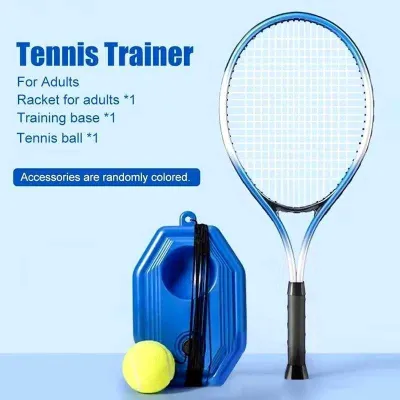
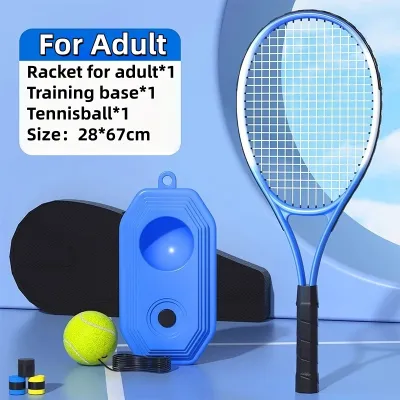
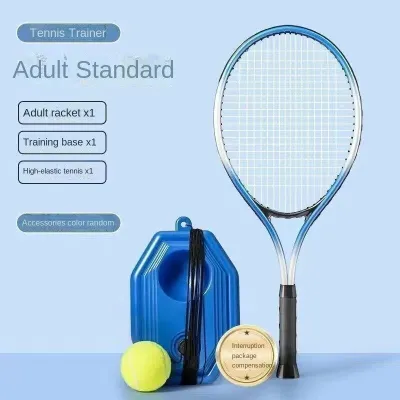
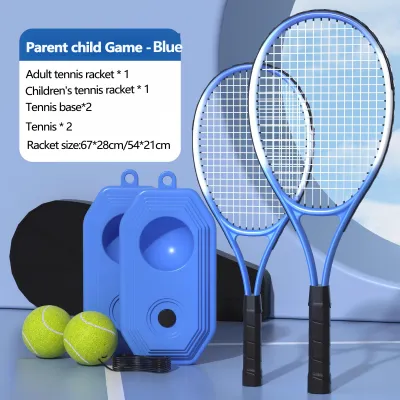
Prices are valid at publication and may change. Please refer to the product page for the latest price.
Alongside the racket, the type of tennis balls you use plays a major role in your training. Standard match balls are pressurized, offering excellent bounce and speed, but they lose their pressure quickly, especially in hot, humid conditions. For consistent practice, beginners should look for pressureless tennis balls. These balls rely on a thicker rubber shell rather than internal air pressure for their bounce, making them highly durable and ideal for ball machines or repetitive hitting drills.
Footwear is another non-negotiable element of your training set. Running shoes or general trainers are designed for forward motion and lack the lateral stability required for the quick, side-to-side movements of tennis. Proper court shoes feature reinforced sidewalls to prevent ankle rolls and durable outsoles designed to grip the court surface without leaving scuff marks.
Supporting accessories complete the training set and enhance your overall playing experience. Overgrips are thin, wrap-around bands applied over the racket’s handle to absorb sweat and provide a secure, non-slip surface. In warm climates, a high-traction overgrip is essential for maintaining control of your racket during long practice sessions.
Vibration dampeners are small rubber inserts placed between the strings near the throat of the racket. While they do not reduce the shock traveling up your arm, they mute the high-pitched ping sound upon impact, which many players find helpful for focus and comfort.
Finally, a dedicated tennis bag is necessary to protect your gear from environmental elements. High humidity and direct sunlight can warp racket frames and degrade string tension. A bag with thermal lining or dedicated compartments helps shield your equipment from temperature fluctuations and keeps your balls, shoes, and accessories organized.
When evaluating pre-packaged training sets, be aware that manufacturers often bundle a decent racket with low-grade accessories to keep the price low. Always inspect the material specifications of the included bag, grips, and balls. If the bundled accessories feel flimsy or lack clear material labels, it is often wiser to purchase these items separately to ensure they last.
How to Choose the Right Beginner Tennis Racket
Selecting your first tennis racket is a balancing act between power, control, and physical comfort. As a beginner, your swing technique is still developing, meaning you need a frame that assists you in generating depth on your shots while minimizing the physical toll on your joints.

The first specification to examine is the head size of the racket. Racket head sizes are measured in square inches, with beginner frames typically falling into the oversized category, ranging from 105 to 115 square inches. A larger head size provides a wider hitting area, commonly referred to as the sweet spot. This extra surface area offers more forgiveness on off-center hits and naturally generates more power, helping you clear the net even when your timing is slightly off.
Racket weight and balance are equally critical factors. Beginner rackets are generally lightweight, typically weighing between 255 and 280 grams unstrung. A lighter frame is easier to maneuver, allowing you to react quickly and swing with proper form without straining your wrist or elbow. However, very light rackets can feel unstable when hitting heavier balls. To counter this, many beginner rackets are designed with a head-heavy balance, placing more weight in the hoop to provide stability and power during contact.
Finding the correct grip size is essential for both control and injury prevention. If a grip is too small, you will have to squeeze the handle excessively to keep the racket from twisting, which can lead to wrist strain and tennis elbow. Conversely, a grip that is too large restricts wrist snap and limits your ability to manipulate the racket angle.
To measure your grip size at home, you can use the index finger test. Hold the racket in your dominant hand using a standard Eastern grip (as if shaking hands with the handle). Slide the index finger of your other hand into the space between your ring finger and the palm of your hand holding the racket. If there is not enough room for your index finger, the grip is too small; if there is a large gap, the grip is too large.
The material of the racket frame determines its durability and vibration-dampening capabilities. Entry-level rackets are often made of aluminum, which is inexpensive and lightweight but transmits a high level of shock to the arm upon impact. For a better playing experience and joint protection, look for rackets made of graphite or graphite composite materials. These materials absorb vibrations much more effectively, offering a smoother feel and better structural integrity over time.
Pre-Packaged Sets vs. Building Your Own Custom Kit
When starting out, you will face a choice between purchasing a pre-packaged tennis training equipment set or assembling your gear piece by piece. Both approaches have distinct advantages and drawbacks depending on your budget, commitment level, and physical requirements.
Pre-packaged sets are highly convenient and generally offer excellent initial value. They typically include a pre-strung racket, a carrying cover or bag, and a few practice balls, allowing you to head straight to the court. For casual players who want to try the sport without a significant financial commitment, these bundles provide a low-barrier entry point.
However, pre-packaged sets often involve compromises. The included racket may feature a basic aluminum frame with low-quality nylon strings that lose tension rapidly. Additionally, bundled sets rarely include court shoes, which are the most critical safety item for your feet. If a set does include footwear or apparel, finding the exact fit can be difficult, as sizing options in bundles are often limited.
Building a custom kit allows you to tailor every piece of equipment to your specific physical needs and playing style. You can select a high-quality graphite racket with the exact grip size you need, pair it with supportive court shoes that match your foot shape, and choose durable pressureless balls for practice. This approach ensures that every item in your kit is built to last and actively supports your development.
The primary trade-off of a custom build is the higher initial cost and the time required to research and purchase each item. However, investing in quality gear from the start often saves money in the long run, as you will not need to replace worn-out or uncomfortable components after a few weeks of play.
If you decide to evaluate a pre-packaged boxed set, look closely at the product specifications. Check if the racket is pre-strung with a reputable string type and verify that the frame material is composite or graphite. For any bundled shoes, inspect the outsole pattern to ensure it features a herringbone or modified tread design suitable for court traction, and verify that the sole is labeled as non-marking to comply with local court regulations.
Purchase Checklist and Budgeting in the Philippines
When budgeting for your tennis gear in the Philippines, it is practical to allocate your funds where they impact your safety and performance the most. Prioritizing your spending ensures you get the highest quality core items while keeping secondary accessories affordable.
A sensible budget allocation places the majority of your funds toward a quality graphite racket and supportive court shoes. Expect to allocate around ₱3,000 to ₱6,000 for a reliable beginner racket from an established sports brand, and approximately ₱2,500 to ₱5,000 for dedicated court shoes. Secondary accessories like overgrips, vibration dampeners, and a basic carrying bag can be sourced affordably, often costing less than ₱1,000 combined.
When purchasing from online sports shops or local retailers, sizing verification is crucial. Because return policies can vary, always refer to the manufacturer’s specific size charts for both shoes and racket grips. Measure your feet in centimeters and compare them to the brand’s sizing guide, keeping in mind that feet tend to swell slightly in hot, tropical weather, so a little extra toe room is beneficial.
Before finalizing your purchase, establish clear stop conditions that should prompt you to abandon a bundled set or a specific product. Avoid any racket that does not specify its frame material, as these are almost always low-grade aluminum models that transmit harsh vibrations. Similarly, do not purchase court shoes unless they explicitly feature non-marking outsoles, as many local tennis clubs and public courts in the Philippines strictly prohibit marking soles to protect their playing surfaces.
Finally, check the string tension specifications listed on the racket frame or product description. A beginner racket should ideally be strung within the manufacturer’s recommended tension range, usually between 50 and 60 pounds. If a bundled racket lacks basic tension specifications or feels completely loose to the touch, it is best to look for an alternative option or plan to have it re-strung at a local pro shop.
Frequently Asked Questions (FAQ)
Do beginners really need specialized tennis shoes?
Yes, specialized tennis shoes are essential for safety and performance on the court. Unlike running shoes, which are designed for forward motion and have thick, cushioned heels that can cause ankle rolls during lateral movements, tennis shoes feature low-profile soles and reinforced sidewalls. This design provides the lateral stability needed for quick side-to-side stops and directional changes. Additionally, court shoes are built with durable, non-marking rubber outsoles that offer the correct balance of grip and slide on hard court surfaces, protecting both your joints and the court itself from damage.
How do I know if a bundled racket is strung correctly?
You can assess a pre-strung racket through a few simple visual and tactile checks. Press your thumb firmly into the center of the string bed; the strings should feel firm and offer noticeable resistance rather than sagging or shifting easily. Visually inspect the strings to ensure they are straight, evenly spaced, and free of any fraying or deep notches. If the strings move out of alignment after a few light taps against your palm, or if they feel excessively loose, the tension may have degraded. In such cases, taking the racket to a local sports shop for professional restringing will greatly improve your control and comfort.
Community discussion
Share your experience or ask a question. Comments are reviewed before publication.