
Starting your tennis journey from the comfort of your home is an excellent way to build muscle memory, improve hand-eye coordination, and master basic footwork before stepping onto a formal court. To practice effectively without a partner or a dedicated court, you need a carefully selected combination of a beginner-friendly racket, appropriate training balls, and a reliable rebound training system. Rather than purchasing pre-packaged, low-quality bundles that wear out quickly under regular use, assembling these components individually allows you to match the gear to your physical needs, available space, and local environmental conditions.
By focusing on quality-checked, individual components, you can ensure your home setup remains durable, safe, and highly effective for daily drills. This guide will walk you through selecting the right gear, setting up a safe practice space, and establishing a training routine that fits your home environment.
Core Components of a Beginner Home Tennis Training Kit
A complete home tennis training kit relies on three core pillars: the racket, the ball, and the rebound mechanism. Each component plays a distinct role in your skill development. The racket serves as your primary interface, helping you develop clean swing mechanics and wrist stability. The ball dictates the pace of your practice, while the rebound base or net acts as your virtual playing partner, returning the ball at a consistent speed and angle so you can practice continuous strokes.
Products mentioned in this guide
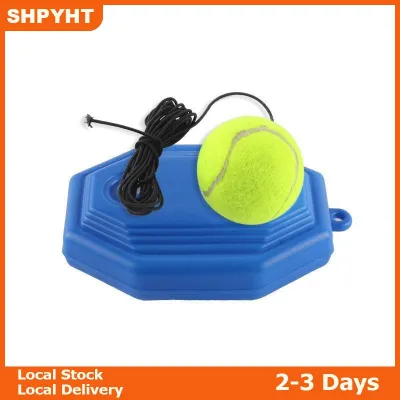
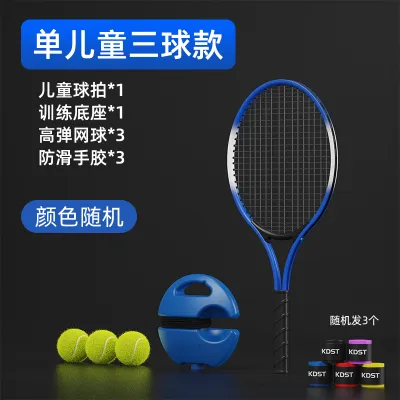
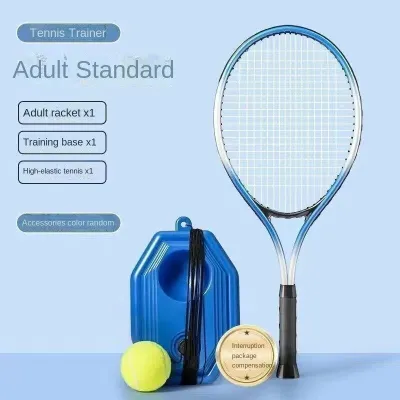
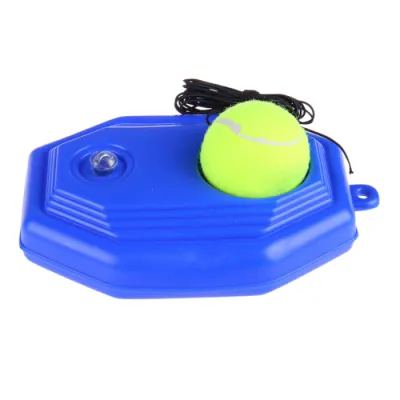
Prices are valid at publication and may change. Please refer to the product page for the latest price.
While it is tempting to purchase cheap, all-in-one beginner bundles from online marketplaces, these packages often compromise on durability and safety. Many pre-packaged kits include fragile aluminum rackets that bend easily upon mishits, low-grade elastic cords that snap after a few sessions, and lightweight plastic bases that slide across the ground. Assembling your kit from individual, quality-checked components ensures that each piece of gear is built to withstand repetitive impact and matches your specific physical requirements.
To round out your starter kit, you should also include a few basic accessories that significantly improve comfort and safety. A sweat-wicking overgrip is essential, especially in hot and humid tropical climates, to prevent the racket from slipping out of your hand during intense drills. A vibration dampener inserted into the lower strings of your racket will absorb harsh frame vibrations, protecting your wrist and elbow from repetitive strain. Finally, a simple ball hopper or a sturdy storage basket keeps your practice area organized, preventing loose balls from becoming dangerous tripping hazards on your driveway or patio.
Choosing the Right Racket for Home Practice
Selecting the right racket is the most critical decision for a beginner, as the wrong specifications can lead to poor swing habits and physical discomfort. When practicing at home, you are often hitting more balls per minute than you would in a standard match, making racket weight and balance highly important. Beginners should look for a lightweight racket, typically weighing between 270 and 290 grams unstrung. A lightweight, head-light, or evenly balanced racket is easier to maneuver, allowing you to focus on developing a smooth, full swing without straining your shoulder or wrist.

Head size is another key specification to check on the manufacturer’s label. For beginners, an oversized head—ranging from 105 to 115 square inches—is highly recommended. The larger surface area provides a generous sweet spot, which maximizes forgiveness on off-center hits. This extra forgiveness is incredibly helpful during solo home practice, where you must react quickly to rebound balls and may not always achieve perfect positioning.
Using an incorrect grip size can cause you to squeeze the handle too tightly, which limits your wrist movement and can lead to tennis elbow. To find your correct grip size at home, use the index finger test: hold the racket in your dominant hand using a standard Eastern grip (where your palm rests on the same plane as the string face). Slide the index finger of your non-dominant hand into the gap between your ring finger and palm. If there is not enough room for your finger, the grip is too small; if there is excess space around your finger, the grip is too large. Most adult beginners find their ideal fit in a grip size 2 (4 1/4 inches) or size 3 (4 3/8 inches).
Before purchasing, check the product specifications and labels for the frame material. Avoid pure aluminum frames, which are highly prone to warping and transmit high levels of shock directly to your arm. Instead, look for graphite-composite or full-graphite frames. These materials offer superior durability, better shock absorption, and a more consistent feel, ensuring your racket remains a reliable training tool as your skills progress.
Selecting Balls and Rebound Training Accessories
The type of tennis ball you use at home directly affects the speed, bounce, and safety of your practice sessions. Standard pressurized tennis balls, while excellent for court play, lose their bounce quickly when stored or subjected to repetitive impacts against hard home surfaces. For home training, pressureless tennis balls are the superior choice. These balls rely on a thick, durable rubber core rather than internal gas pressure to bounce, meaning they maintain their bounce height indefinitely and withstand rough concrete surfaces much better.
If you are practicing in a highly restricted space, such as a covered garage or a small backyard, standard balls may travel too quickly. In these scenarios, consider low-compression transition balls, such as green-dot or orange-dot balls. These balls are designed to travel at a slower speed and bounce lower than standard balls, giving you more time to prepare your strokes and reducing the risk of the ball flying over property fences.
When evaluating a rebound training base—which typically consists of a weighted anchor and an elastic cord attached to a ball—pay close attention to the base weight and cord quality. Look for a hollow plastic base that can be filled with water or, preferably, dry sand to ensure it remains firmly anchored to the ground during hard hits. Check the product specifications for the elastic cord; a high-quality cord should feature a durable nylon protective sleeve to prevent the inner rubber from fraying or snapping when dragged across rough concrete or asphalt.
If you plan to set up your training kit outdoors, such as in an open driveway or backyard, check the product labels for weather and UV resistance. Intense tropical sun and high humidity can rapidly degrade standard plastics and rubber cords. Opt for rebound systems made from UV-stabilized plastics and rust-resistant metal connectors to ensure your gear survives the elements. Additionally, look for rebound nets that feature adjustable tension straps, which allow you to tighten or loosen the net to control the speed and trajectory of the returned ball.
Space, Surface, and Safety Requirements for Home Training
Before assembling your gear, you must carefully measure and verify that your designated practice area meets basic safety and clearance requirements. To swing your racket freely without hitting walls, posts, or overhead structures, you need a clear radius of at least 3 meters around your body. For the ball’s trajectory, especially when using an elastic rebound trainer, you require a clear, linear path of at least 5 to 6 meters in front of you. This distance allows the elastic cord to stretch and return the ball safely without colliding with parked cars, windows, or nearby obstacles.
| Feature | Minimum Requirement | Recommended Surface/Condition |
|---|---|---|
| Swing Clearance | 3-meter radius | Clear of walls, posts, and low ceilings |
| Ball Trajectory Path | 5 to 6 meters linear length | Free of vehicles, windows, and fragile items |
| Practice Surface | Flat, dry, and non-slip | Smooth concrete, asphalt, or short outdoor turf |
| Noise Mitigation | Respectful distance from shared walls | Practice during daytime hours to respect neighbors |
The surface you practice on plays a major role in preventing joint strain and equipment damage. Avoid practicing on uneven dirt, loose gravel, or wet outdoor tiles, as these surfaces present severe slipping hazards and can lead to ankle sprains during lateral movements. A flat, dry concrete driveway, carport, or asphalt surface is ideal. Ensure the area is swept clean of loose leaves, sand, or moss, which can easily cause you to lose your footing during quick directional changes.
Noise and property boundaries are also important considerations when training in residential neighborhoods or subdivisions. The repetitive thumping of a tennis ball against a rebound net or concrete floor can be disruptive to neighbors. Position your training setup away from shared walls or bedroom windows, and limit your practice sessions to reasonable daytime hours. If you are practicing near a property line, consider installing a temporary mesh barrier or net to prevent stray balls from entering neighboring yards.
Always prioritize safety and be ready to stop your practice if conditions change. If the ground becomes wet from a sudden tropical shower, stop training immediately, as wet concrete becomes incredibly slick. Furthermore, if you find yourself constantly shortening your swing or holding back your power to avoid hitting nearby objects, your space is too restricted. Practicing with a restricted swing builds poor muscle memory and can cause muscle strain; in this case, relocate your setup to a wider, safer outdoor area.
Building Your Starter Kit: A Step-by-Step Checklist
Your home tennis training kit should be tailored to your specific environment. If you are practicing in a small, covered carport or an indoor garage with a low ceiling, prioritize a compact rebound base with a shorter elastic cord and use low-compression orange-dot balls to keep the ball flight controlled. If you have a spacious, open driveway or a large backyard, you can opt for a full-sized rebound net, standard pressureless balls, and a longer elastic cord to simulate realistic court distances.
When planning your budget, allocate your funds in Philippine Pesos (₱) to prioritize the components that directly impact your safety and long-term skill development. Allocate approximately ₱1,500 to ₱3,000 for a high-quality, graphite-composite racket, as a cheap, poorly balanced racket can cause physical discomfort. Spend around ₱800 to ₱1,500 on a sturdy, fillable rebound trainer or a basic rebound net. The remaining ₱500 to ₱1,000 should be spent on durable pressureless balls, sweat-wicking overgrips, and a vibration dampener.
When purchasing your gear from online sports retailers, take the time to verify seller ratings and product reviews. Look for official brand stores or highly rated local distributors to avoid counterfeit products. Carefully read the return policies and warranty terms, especially for rebound systems, to ensure you can easily replace the unit if the elastic cord or plastic base arrives with manufacturing defects.
Before finalizing your purchase, use this step-by-step checklist to ensure all selected components are compatible with your space and physical needs:
- [ ] Racket Check: Verified the frame material is graphite-composite or full graphite (not pure aluminum) and selected a lightweight frame (270 to 290 grams).
- [ ] Grip Check: Measured your hand and selected the correct grip size (typically size 2 or 3 for adult beginners) to prevent wrist strain.
- [ ] Ball Check: Selected durable pressureless balls or low-compression transition balls suitable for hard home surfaces.
- [ ] Rebound System Check: Confirmed the rebound base can be filled with sand or water and features a sleeved elastic cord for durability.
- [ ] Space Check: Measured your practice area to ensure a 3-meter swing radius and a 5-to-6-meter clear path for the ball.
- [ ] Accessory Check: Included a sweat-wicking overgrip to manage hand sweat in humid conditions and a vibration dampener to protect your elbow.
Frequently Asked Questions (FAQ)
Can I use a squash or badminton racket for home tennis practice?
No, you should never use a squash or badminton racket for tennis practice. Squash and badminton rackets are designed for much lighter objects, such as lightweight squash balls and shuttlecocks. A standard tennis ball weighs between 56 and 59 grams, which is far too heavy for these delicate frames. Attempting to hit a tennis ball with a badminton or squash racket will likely warp or snap the frame, break the strings, and transmit severe shock directly to your wrist and elbow, greatly increasing your risk of injury. Always use a properly specified tennis racket for all tennis drills.
How often should I replace the tennis balls in my home training kit?
You should replace your training balls when you observe a significant loss of bounce, structural softening, or when the outer felt becomes heavily worn and bald. While pressureless tennis balls do not lose their internal pressure over time, their rubber cores will eventually soften after thousands of impacts, and rough concrete or asphalt driveways will rapidly abrade the outer felt. For solo home practice on hard outdoor surfaces, a set of high-quality pressureless balls typically lasts between two to four months of regular use before the felt wear begins to affect the ball’s flight and rebound consistency.
Do I need special shoes for practicing tennis at home?
Yes, wearing appropriate footwear is highly recommended, especially if you are practicing on concrete driveways or outdoor carports. Standard running shoes are designed primarily for forward motion and lack the lateral reinforcement needed for the quick side-to-side movements of tennis, which can lead to ankle rolls. Look for tennis-specific court shoes that offer robust lateral support, a durable outsole designed to withstand concrete abrasion, and non-marking rubber. If you are practicing indoors on smooth garage floors, ensure your outsoles provide excellent grip to prevent slipping on dust or smooth concrete finishes.
Community discussion
Share your experience or ask a question. Comments are reviewed before publication.