
When buying four-wheel roller skates—commonly known as quad skates—for children, the primary focus must always be on safety, stability, and physical development. Unlike adult skates, children’s skates must accommodate rapid physical growth while providing enough structural support to protect developing joints. The ideal pair of skates should offer a secure and adjustable fit, robust ankle support, high-quality wheels suited for your local skating environment, and a reliable stopping mechanism. By focusing on these core features, you can ensure your child enjoys a safe, comfortable, and confidence-building introduction to roller skating.
Getting the Right Size and Fit for Safe Control
Finding the correct size is the most critical step in choosing quad skates. Many parents make the mistake of buying skates that are one or two sizes too large, hoping the child will grow into them. However, oversized skates allow the foot to slide around inside the boot, which severely compromises balance, increases the risk of ankle sprains, and causes painful friction blisters. Conversely, skates that are too tight will pinch the toes, restrict blood circulation, and quickly discourage your child from skating altogether.
To determine the correct size, do not rely on your child’s current everyday shoe size, as skate sizing often differs significantly from standard footwear brands. Instead, measure your child’s feet manually. Have your child stand barefoot on a blank sheet of paper with their heel flat against a wall. Trace the outline of both feet with a pencil held vertically, then measure the distance from the heel to the tip of the longest toe in millimeters. Use the larger of the two measurements and compare it directly to the manufacturer’s specific size chart.
Products mentioned in this guide
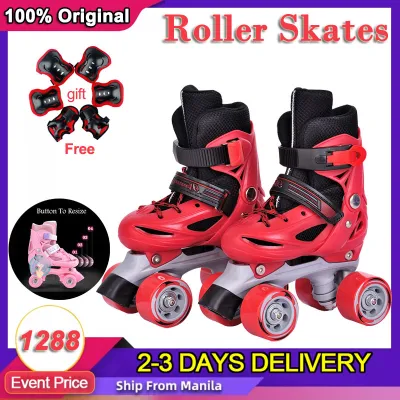
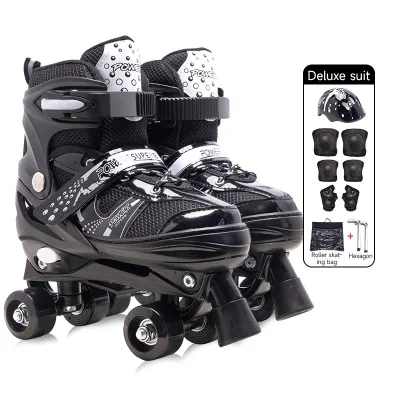
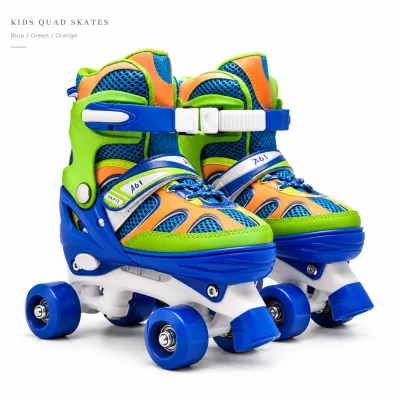
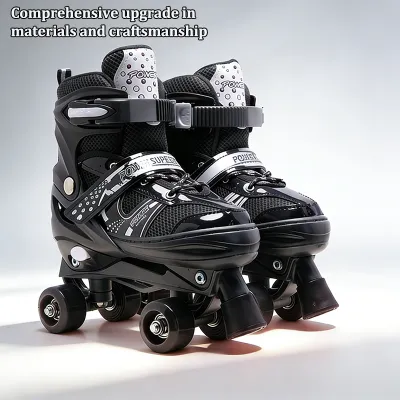
Prices are valid at publication and may change. Please refer to the product page for the latest price.
When trying on skates, look for a snug fit where the heel remains firmly locked in place. Have your child wear the exact socks they plan to use while skating—ideally thick, moisture-wicking athletic socks that cushion the foot and absorb sweat in warm, humid climates. With the skate fully laced and buckled, your child should be able to wiggle their toes slightly, but their heel should not lift or slip when they bend their knees or mimic a skating stride.
If you are purchasing online, pay close attention to the retailer’s return and exchange policies. Since you cannot perform an in-store trial, you will need the flexibility to swap the skates if the initial fit is incorrect. When the skates arrive, have your child test them indoors on a clean, carpeted surface first. Check for immediate signs of a poor fit, such as your child complaining of pinching, their toes curling under pressure, or visible red marks on their skin after just a few minutes of wear.
Choosing Boot Design and Ankle Support
The structural design of the skate boot plays a fundamental role in protecting your child’s ankles and feet. Children’s bones and joints are still developing, meaning they require external support to maintain proper alignment while balancing on wheels. You will generally choose between two primary boot styles: hard-shell boots and soft boots.

Hard-shell boots feature a rigid plastic outer casing paired with a removable, padded inner liner. This design offers maximum lateral ankle support, preventing the ankles from rolling inward or outward during movement. Hard-shell boots are highly durable, resisting scuffs and impacts from falls on concrete surfaces, making them excellent for beginners who are still finding their balance. The rigid structure also helps distribute weight evenly across the frame, reducing foot fatigue during longer skating sessions.
Soft boots, on the other hand, are constructed from lightweight, breathable fabrics and synthetic leather, resembling a high-top sneaker. While they are often lighter and more comfortable out of the box, they offer significantly less ankle support than hard-shell models. Soft boots are generally better suited for older children who have already developed strong ankle stability and basic skating techniques, or for casual, low-impact skating on smooth indoor surfaces.
Regardless of the boot style, the closure system must provide a secure, adjustable lockdown. Look for skates that utilize a triple-closure system: traditional laces, a mid-foot hook-and-loop strap, and a micro-adjustable top buckle. The laces allow you to customize the tightness across the top of the foot, the strap keeps the heel locked back into the pocket, and the top buckle provides rigid support around the lower shin. Avoid skates that rely solely on basic laces, as children often struggle to tie them tightly enough to prevent ankle wobble.
Finally, evaluate the cuff height and internal padding. The cuff should extend well above the ankle joint to provide structural stability. The padding inside the boot should be thick and contoured to cushion the ankle bones against pressure points. However, the boot must still allow for a natural forward flex at the ankle, enabling your child to bend their knees and lower their center of gravity, which is essential for maintaining balance.
Selecting Wheels and Stopping Mechanisms for the Surface
The performance and safety of quad skates depend heavily on the wheels and stopping mechanisms, which must match the environment where your child will skate. Whether they are practicing on a smooth indoor rink, a concrete barangay court, or a paved neighborhood driveway, the wheel specifications will dictate how much grip and shock absorption they experience.
Wheel hardness is measured on the Durometer A scale. Softer wheels, typically rated between 78A and 85A, are ideal for outdoor skating. These wheels are made of a resilient polyurethane that compresses slightly over rough surfaces, absorbing vibrations from pebbles, cracks, and uneven pavement. This shock absorption prevents the skates from jarring your child’s legs and helps maintain traction on dusty or slightly damp outdoor surfaces. Harder wheels, rated 90A and above, are designed for smooth indoor rink floors. They offer less rolling resistance and slide more easily, but they will transmit every bump and vibration if used outdoors, making them difficult and uncomfortable for beginners on rough concrete.
Wheel size also affects stability and speed. For children, smaller wheels (typically between 54mm and 58mm in diameter) are highly recommended. Smaller wheels keep the child’s center of gravity closer to the ground, which significantly improves balance and makes it easier to control the skates. Larger wheels roll faster and roll over obstacles more easily, but they require more leg strength and coordination to control, making them less suitable for young beginners.
The stopping mechanism, or toe stop, is a non-negotiable safety feature on quad skates. Ensure the skates are equipped with a durable, non-marking rubber toe stop located at the front of the boot. Avoid cheap plastic toe stops, which offer virtually no grip on smooth surfaces and wear down rapidly on concrete. A high-quality rubber toe stop allows your child to drag their foot to slow down or press down firmly to come to a complete stop without slipping.
While reviewing wheel specifications, you will often see bearing ratings, such as the ABEC scale. While higher ratings indicate greater manufacturing precision and less rotational friction, they are not a primary concern for young beginners. A highly precise, fast-spinning bearing can actually make skates too fast and difficult for a novice to control. Focus instead on ensuring the wheels spin smoothly without wobbling and that the bearings are sealed to protect against dust, moisture, and debris.
Evaluating Adjustable Skates for Growing Feet
Because children’s feet grow rapidly, buying fixed-size skates can quickly become an expensive endeavor. Adjustable roller skates offer a practical solution, allowing the skate boot to expand across several sizes to accommodate growing feet over multiple seasons. Understanding how these mechanisms work and their inherent trade-offs will help you decide if they are the right choice for your family.
Most adjustable skates utilize a push-button mechanism located near the heel or mid-foot of the frame. By pressing the button and pulling the toe cap forward, you can lengthen the boot to lock into one of several pre-set sizes, typically spanning three to four standard shoe sizes. This adjustability means a single pair of skates can last a child for two to three years, providing excellent long-term value.
However, adjustable skates do come with specific trade-offs. The expanding mechanism requires a multi-piece outer shell and a sliding frame, which adds weight compared to a streamlined, fixed-size skate. This extra weight can make the skates slightly more tiring for very young or petite children to lift and maneuver. Additionally, the sliding chassis can introduce a small amount of structural flex, which may slightly reduce power transfer and precision control for advanced skaters.
When evaluating adjustable models, inspect the locking security of the adjustment mechanism. The button or lever must lock firmly into place with a distinct click, and there should be absolutely no play or sliding movement in the boot once locked. Furthermore, check how the inner liner adapts to the changes. High-quality adjustable skates feature an elasticated or expanding inner liner that stretches smoothly as the outer shell is lengthened, preventing uncomfortable gaps or bunching that could cause pressure points on your child’s toes.
Mandatory Safety Gear and Pre-Ride Inspections
No matter how high-quality or stable your child’s skates are, they cannot replace the protection provided by proper safety gear. Roller skating involves a natural learning curve that includes frequent falls. Equipping your child with the correct protective equipment is non-negotiable and must be established as a strict rule before they ever step onto the wheels.
The essential safety gear package consists of a properly fitting helmet, wrist guards, knee pads, and elbow pads. The helmet should be specifically rated for multi-impact sports like skateboarding or roller skating, sitting low on the forehead and securing with a snug chin strap. Wrist guards are particularly crucial for quad skaters, as the natural instinct when falling forward is to catch oneself with open hands; wrist guards absorb the impact and prevent hyperextension or fractures. Knee and elbow pads should feature hard plastic caps to slide along the ground, dispersing the force of a fall.
Before every single skating session, perform a quick pre-ride inspection of the equipment. Check that all axle nuts securing the wheels to the frame are tight, but not so tight that they prevent the wheels from spinning freely. Give each wheel a quick spin to ensure it rotates smoothly without wobbling or grinding noises. Inspect the toe stops to confirm they are securely fastened and have not worn down to the metal mounting bolt. Finally, verify that all buckles, straps, and laces are intact and functioning correctly.
Teach your child basic safety rules from day one. This includes learning how to fall safely by bending their knees, lowering their center of gravity, and falling forward onto their knee and elbow pads rather than backward onto their tailbone. Establish a clear rule that they must immediately stop skating and inform you if they hear any unusual clicking noises, feel a wheel wobbling, or experience any sudden discomfort or structural shifting in the skates.
Finalizing Your Purchase and Verifying Retailer Policies
When you are ready to make a purchase, where you buy is just as important as what you buy. To ensure you receive a genuine, safe, and durable product, prioritize specialized sports retailers, official brand stores, or authorized distributors over unverified third-party sellers on general online marketplaces. Specialized retailers are more likely to stock skates that meet international safety standards and offer reliable customer support.
Before finalizing your checkout, carefully review the manufacturer’s official specifications on the product packaging or website. Pay close attention to the recommended weight limits and age ranges. Some lightweight toy skates are only rated for very young children and can bend or break under the weight of an older, heavier child. Ensuring your child falls well within the recommended limits guarantees the structural integrity of the frame and wheels.
Additionally, double-check the retailer’s return, exchange, and warranty policies. Because proper fit is so critical to safety, you must have a clear path to exchange the skates if they do not fit perfectly during the initial indoor trial. A reputable retailer will offer a straightforward return window and provide a clear warranty against manufacturing defects, giving you peace of mind that your investment is protected.
Frequently Asked Questions (FAQ)
At what age can kids start using 4-wheel roller skates?
Readiness for roller skating depends more on a child’s individual physical development, balance, and coordination than a strict chronological age. Most children develop the necessary gross motor skills, core strength, and ability to follow basic safety instructions between the ages of three and five. If you have any concerns regarding your child’s joint development, muscle tone, or balance, it is highly recommended to consult a pediatrician or a physical therapist before introducing them to roller skating.
Should I buy adjustable or fixed-size quad skates for my child?
The choice between adjustable and fixed-size skates depends on your child’s growth rate and how seriously they intend to skate. Adjustable skates are highly recommended for casual, recreational skaters and rapidly growing children, as they offer excellent value by expanding across multiple sizes. However, if your child is taking formal skating lessons, participating in competitive sports, or requires maximum stability and precise control, a fixed-size skate is the better choice, as its solid, non-adjustable chassis provides superior power transfer and structural rigidity.
Community discussion
Share your experience or ask a question. Comments are reviewed before publication.