
Yes, you can use a 7-speed rear derailleur with an 8-speed cassette and an 8-speed shifter. In bicycle mechanics, the rear derailleur is a relatively simple component that does not determine the distance between shifts. Instead, the shifter controls the indexing by pulling a specific amount of cable with each click, while the derailleur simply translates that cable movement into lateral motion across the cassette. Because many 7-speed and 8-speed drivetrains share the same mechanical geometry and spacing standards, this combination is a highly viable option for riders looking to upgrade their gear range without purchasing an entirely new derailleur.
However, achieving a smooth and reliable setup requires more than just bolting the parts together. You must ensure that the shifter and derailleur share a compatible cable pull ratio, that the derailleur has the physical capacity to reach the largest cog on your new cassette, and that the limit screws are properly adjusted to prevent mechanical damage. Understanding these mechanical relationships will help you successfully complete this upgrade while avoiding common shifting issues and safety hazards.
How Drivetrain Indexing Actually Works
To understand why a 7-speed derailleur can operate across an 8-speed cassette, you must first understand the relationship between the shifter, the cable, and the derailleur itself. In an indexed shifting system, each click of the shifter pulls or releases a precise length of inner cable. This movement is known as the shifter’s cable pull. The rear derailleur then takes this cable movement and multiplies it by a specific factor, known as the derailleur’s actuation ratio or cable pull ratio. The resulting lateral movement of the derailleur cage positions the chain directly beneath the corresponding cog on the cassette.
Products mentioned in this guide
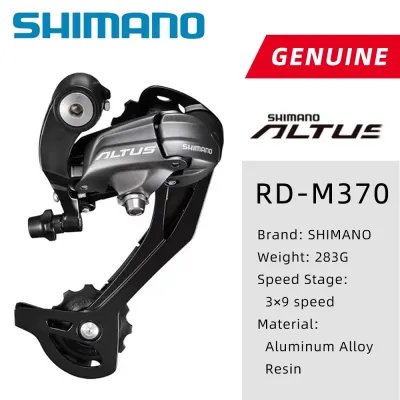
1,174 Lazada user ratings
Smooth and precise shifting., Improves your riding experience., Compatible with 7, 8, and 9-speed bikes., Perfect for mountain biking., Dura…Read full reviewShow less
Smooth and precise shifting., Improves your riding experience., Compatible with 7, 8, and 9-speed bikes., Perfect for mountain biking., Durable and reliable performance., Provides smooth and efficient gear changes., thanks thanks thanks thanks thanks thanks thanks thanks 👍
Enhances the overall performance of your bike., Great value for the price., Perfect for mountain biking., Perfect for mountain biking., Dura…Read full reviewShow less
Enhances the overall performance of your bike., Great value for the price., Perfect for mountain biking., Perfect for mountain biking., Durable and reliable performance., Easy to install and adjust.,
🔨Durability:good 🔌Compatibility:great 🛠️Ease of Installation:neinProvides smooth and efficient gear changes., Easy to install and adjust., Du…Read full reviewShow less
🔨Durability:good 🔌Compatibility:great 🛠️Ease of Installation:neinProvides smooth and efficient gear changes., Easy to install and adjust., Durable and reliable performance.
expectations not so high. shempre mura. I just wish this will work and last longer sa MT bike k. thanks
Enhances the overall performance of your bike., Provides smooth and efficient gear changes.,
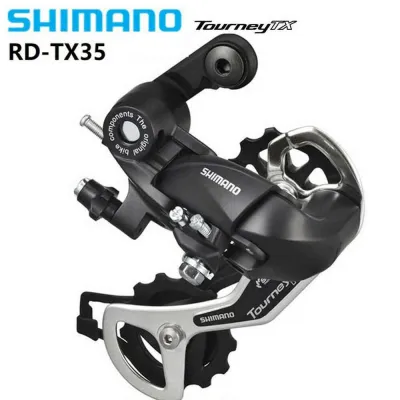
382 Lazada user ratings
Durable and reliable derailleur, Easy and precise adjustment, natuwa UNG partner,,ngustuhan nya
Sturdy metal construction, Sleek and stylish black color, Quiet operation for a peaceful ride,
Easy and precise adjustment, Durable and reliable derailleur, Smooth shifting experience,
Sturdy metal construction, Easy and precise adjustment, ang gnda po and legit po thank u
Perfect replacement for my old derailleur, Smooth shifting experience, ...............
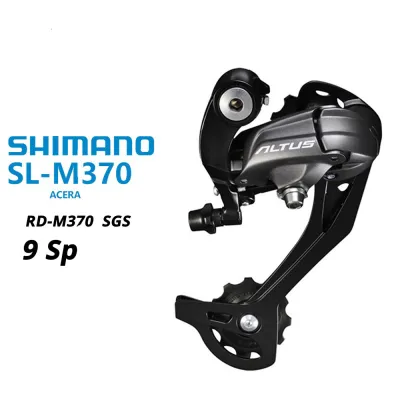
516 Lazada user ratings
Quality:Compatible with 6, 7, and 8-speed bikes, Appearance:Easy installation process, Performance:Smooth and precise shifting, Provides smo…Read full reviewShow less
Quality:Compatible with 6, 7, and 8-speed bikes, Appearance:Easy installation process, Performance:Smooth and precise shifting, Provides smooth and efficient gear changes, Perfect for mountain biking adventures,
Provides smooth and efficient gear changes, Durable aluminum alloy construction, Perfect for mountain biking adventures,
Provides smooth and efficient gear changes, Improved transmission efficiency, Reliable and trustworthy brand,
Wala na nga lang eh in the morning and then my friends will go to your place in the evening and then
Hindi Ako Ang umorder nito Asawa ko,.. kaya Hindi ko alam Yan.. Ang alam ko para sa bike nya..
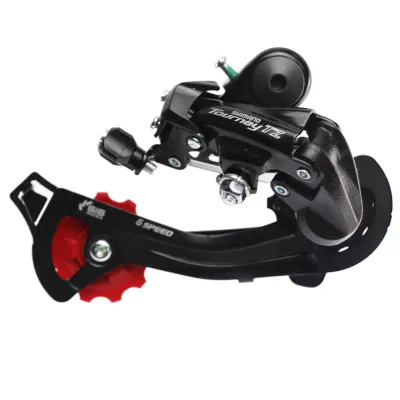
194 Lazada user ratings
Shimano tz tourney NASA picture kaya Ako umorder kaso binigay sa akin Shimano tz lang kaya scam to
🔌Compatibility:hi there , 8 speed po order ko ang narecieve ko ay 7 speed p
🔨Durability:good 🔌Compatibility:good 🛠️Ease of Installation:easy
Easy to install and adjust., Smooth shifting performance.,
good items thank you 👍👍👍naikabit kuna..
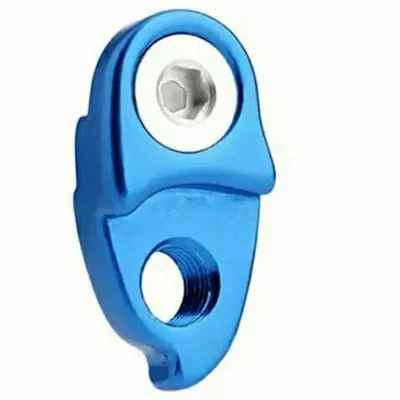
29 Lazada user ratings
dumating na po Yung order ko maraming salamat po seller at Lazada sa uulitin po 💙💙💙💙💙💙💙💙
Enhances overall bike performance, Perfect for mountain biking adventures,
good quality items recommend to all
Great value for the price,
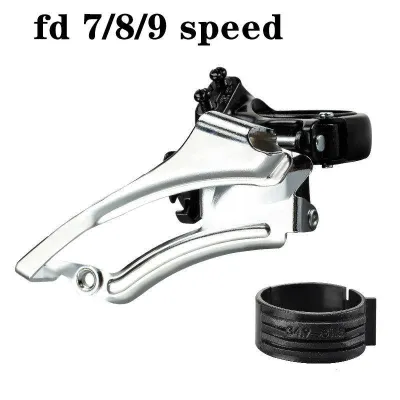
22 Lazada user ratings
Ideal for mountain and road cycling, Smooth shifting performance, Easy installation on extended tail hook frames, Easy installation on exten…Read full reviewShow less
Ideal for mountain and road cycling, Smooth shifting performance, Easy installation on extended tail hook frames, Easy installation on extended tail hook frames, Suitable for road and MTB bikes, Supports up to 11-speed shifting,
Supports up to 11-speed shifting, Good compatibility with multiple speeds, Smooth shifting performance, Ideal for mountain and road cycling,
Good compatibility with multiple speeds, Suitable for road and MTB bikes, Easy installation on extended tail hook frames,
Suitable for road and MTB bikes, Good compatibility with multiple speeds, Supports up to 11-speed shifting,
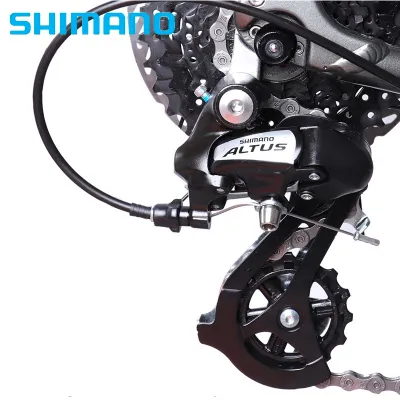
10 Lazada user ratings
Compatible with 7/8 speed SIS systems, Reliable and accurate shifting, Quiet operation with low noise,
🔨Durability:ayos! 👍👍👍
Prices are valid at publication and may change. Please refer to the product page for the latest price.
Because the derailleur does not have any internal clicks or indexing mechanisms, it simply moves as far as the shifter commands it to move. If you pair an 8-speed shifter with an 8-speed cassette, the shifter will pull the exact amount of cable required to move the chain across the 8-speed cog spacing. As long as the 7-speed derailleur shares the same actuation ratio as the 8-speed shifter, it will move the correct distance with every click. Fortunately, major manufacturers like Shimano historically designed their 7-speed, 8-speed, and many 9-speed mountain and road derailleurs to use the exact same 1.7:1 actuation ratio, making them highly interchangeable.
This interchangeability is primarily a feature of indexed shifting systems, where the mechanical precision is built entirely into the handlebar controls. If you are using a friction shifting system, where the shifter lever moves smoothly without distinct clicks, compatibility is even simpler. In a friction setup, the rider manually adjusts the lever position until the chain runs quietly on the desired cog. While friction shifting is highly forgiving of mixed components, most modern riders prefer the convenience of indexed shifting, which requires precise mechanical alignment between the shifter’s cable pull and the derailleur’s physical movement.
Essential Compatibility Checks Before Upgrading
Before purchasing any new parts or beginning the installation process, you must perform several essential compatibility checks to ensure your existing 7-speed derailleur can handle the new 8-speed setup. The first and most critical check is the cable pull ratio match. You must verify that your 8-speed shifter and your 7-speed derailleur are made by the same manufacturer or are designed to use the same pull ratio standard. For example, mixing a SRAM shifter with a Shimano derailleur generally will not work because SRAM often uses a 1:1 actuation ratio, whereas Shimano typically uses a 1.7:1 ratio. Mixing these brands will result in erratic shifting that cannot be tuned.

The second check involves the physical dimensions of your new 8-speed cassette, specifically the maximum cog size. Many older 7-speed derailleurs were designed during an era when the largest rear cog rarely exceeded 28 or 30 teeth. If you plan to install a modern 8-speed cassette with a 32-tooth or 34-tooth low gear for easier climbing, you must verify that your derailleur’s upper pulley wheel can clear the largest cog. If the derailleur cage is too short or the B-tension screw cannot push the derailleur far enough down, the pulley wheel will grind against the cassette, causing severe noise and rapid wear.
Third, you must calculate the total drivetrain capacity required by your gear combination. Drivetrain capacity is a mathematical formula that determines how much slack chain the derailleur cage must be able to wrap up when shifting between different gear combinations. To find this, subtract the teeth of your smallest chainring from your largest chainring, then subtract the teeth of your smallest rear cog from your largest rear cog, and add those two numbers together. You must verify that this total capacity does not exceed the rated capacity of your existing 7-speed derailleur, which is determined by the length of its cage.
Finally, you must consider chain and cage width compatibility. An 8-speed cassette fits into roughly the same space on a bicycle frame as a 7-speed cassette, which means the individual cogs on an 8-speed cassette are spaced closer together. To accommodate this narrower spacing, you must use a narrower 8-speed chain. You must inspect your 7-speed derailleur to ensure that its pulley wheels and guide cage can guide the narrower 8-speed chain smoothly without allowing the chain to slip or become wedged between the pulley and the cage plates.
How to Install and Adjust the Mixed Drivetrain
Once you have verified compatibility, you can proceed with the installation and adjustment of your mixed drivetrain. Start by mounting your bicycle securely in a repair stand so the rear wheel can spin freely. Remove the old 7-speed cassette and install the new 8-speed cassette on the rear wheel hub. Note that some older 7-speed specific freehub bodies are physically shorter than standard 8-speed freehubs; if this is the case, you may need a compatible wheel upgrade or a specific cassette modification to fit the 8-speed cassette onto your wheel. Mount your new 8-speed shifter on the handlebars and run a high-quality, low-friction shift cable through fresh housing to ensure smooth operation.
The next step is the most critical safety procedure: setting the limit screws on the rear derailleur. The limit screws prevent the derailleur from moving too far outward or inward, which could cause the chain to fall off the cassette. With the shift cable disconnected, turn the pedals and adjust the High (H) limit screw until the upper pulley wheel aligns perfectly with the smallest cog on the cassette. Next, carefully push the derailleur body inward by hand while turning the pedals, and adjust the Low (L) limit screw until the upper pulley wheel aligns perfectly with the largest cog. This prevents the derailleur from shifting the chain past the largest cog and into the spinning spokes of your rear wheel.
After setting the limits, you can connect the shift cable and begin adjusting the cable tension. Shift your handlebar shifter to the highest gear position (which corresponds to the smallest cog) and pull the inner cable taut before tightening the cable anchor bolt on the derailleur. Turn the pedals and shift up one click. If the chain hesitates or fails to jump to the second cog, turn the barrel adjuster on the shifter or derailleur counterclockwise to increase cable tension. If the chain jumps past the second cog, turn the barrel adjuster clockwise to decrease tension. Continue adjusting in small increments until the chain shifts cleanly up and down the entire cassette.
Before taking the bicycle out for a ride, perform a thorough safety and testing protocol on the repair stand. Shift through every gear combination slowly, listening for any unusual rubbing, clicking, or hesitation. Pay close attention to the chain’s behavior when shifting into the largest and smallest cogs to ensure the limit screws are doing their job. Once the shifting is quiet and precise on the stand, conduct a test ride in a flat, traffic-free area. Apply moderate pedaling force to ensure the chain does not skip or slip under load, and make any final minor adjustments using the barrel adjuster as needed.
When to Stop and Consult a Professional Mechanic
While mixing drivetrain components is a common DIY project, there are clear boundaries where you should stop and seek the assistance of a professional bicycle mechanic. If you experience persistent skipping, ghost shifting, or an inability to align the gears across the middle of the cassette despite adjusting the cable tension, do not continue riding. This behavior often indicates a bent derailleur hanger, worn cable housing, or an underlying compatibility issue that requires specialized alignment tools to diagnose and correct.
The most severe safety risk during this upgrade is a chain drop into the rear wheel spokes. If your Low limit screw is improperly adjusted or if the derailleur cage is bent, the chain can easily get caught between the largest cog and the spokes. Under pedaling load, this can instantly lock the rear wheel, leading to a sudden loss of control, severe physical injury, and catastrophic damage to your frame, wheel, and derailleur. If you cannot get the Low limit screw to reliably stop the derailleur’s inward travel, do not attempt to ride the bicycle.
Additionally, if you discover that your existing rear wheel hub cannot physically accommodate the wider 8-speed cassette, or if the derailleur cage constantly rubs against the chain due to wear, it is time to consult a professional. A qualified mechanic can help you determine whether a minor adjustment can save the setup or if it is safer to transition to a dedicated 8-speed rear derailleur. Investing in compatible, dedicated components is always preferable to riding a bicycle with compromised shifting reliability.
Frequently Asked Questions (FAQ)
Can I use a 7-speed chain on an 8-speed cassette?
No, you should not use a 7-speed chain on an 8-speed cassette. A 7-speed chain is physically wider than an 8-speed chain because the spacing between the cogs on a 7-speed cassette is wider. If you attempt to run a wider 7-speed chain on the narrower cog spacing of an 8-speed cassette, the chain will rub against the adjacent, larger cogs. This rubbing causes constant noise, hesitant shifting, and rapid wear on both the chain and the cassette teeth. To ensure smooth and quiet operation, always match your chain to the speed rating of your cassette, meaning you should install a dedicated 8-speed chain with your new 8-speed cassette.
Will a 7-speed derailleur work with a 9-speed shifter?
While a 7-speed derailleur can often work with an 8-speed shifter due to shared actuation ratios, pairing it with a 9-speed shifter is much more challenging and less reliable. As drivetrains move to 9 speeds and beyond, the spacing between cogs becomes significantly narrower, requiring much more precise cable pull ratios. Many manufacturers altered their actuation ratios for 9-speed and 10-speed systems, particularly in mountain bike groupsets, to improve shifting precision. While some older road components may allow this mix, it generally results in poor indexing, frequent gear skipping, and a highly frustrating tuning process. For a 9-speed system, it is highly recommended to use a dedicated 9-speed shifter, derailleur, and cassette designed to work together.
Community discussion
Share your experience or ask a question. Comments are reviewed before publication.