
Generic black nylon rope purchased from general hardware stores or local markets is not safe to use for rock climbing. While nylon is the primary material used in modern climbing ropes, utility ropes sold for general hardware, agricultural, or marine use are engineered to entirely different standards. Climbing requires specialized life-safety equipment designed to absorb the violent dynamic impact of a fall, protect the climber’s body from severe deceleration injuries, and withstand intense friction against sharp rock edges. Using an uncertified utility rope for climbing, even for short climbs or top-roping, carries an extremely high risk of catastrophic gear failure and fatal falls.
In tropical climbing environments, such as the humid limestone crags found across the Philippines, gear is subjected to intense heat, moisture, and sharp rock textures. These local environmental factors accelerate the wear on any textile, making the structural integrity of your rope even more critical. This guide breaks down the essential design differences between hardware utility ropes and certified climbing ropes, explains how to verify safety labels, and outlines how to safely transition to proper climbing gear.
Hardware Rope vs. Climbing Rope: Key Design Differences
To understand why generic black nylon rope is unsuitable for climbing, it is necessary to examine how ropes are constructed and how they behave under tension. The most critical distinction lies in whether a rope is static or dynamic. Most utility ropes found in hardware stores are static, meaning they are designed to stretch as little as possible under load. While low stretch is ideal for securing cargo, hauling objects, or tying down tarps, it is highly dangerous for climbing. When a climber falls, they generate a massive amount of kinetic energy; a dynamic climbing rope is engineered to stretch significantly, acting like a shock absorber to cushion the fall and minimize the impact force transmitted to the climber’s body and the anchor system.
Products mentioned in this guide
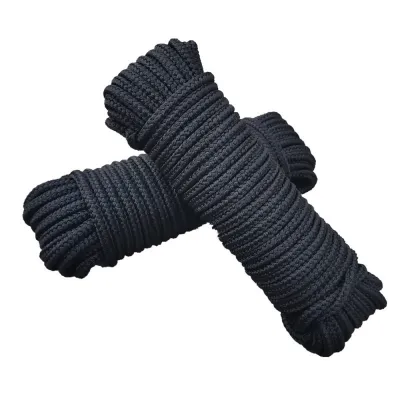
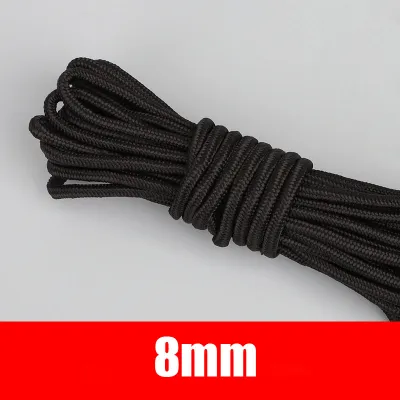
Prices are valid at publication and may change. Please refer to the product page for the latest price.
Another fundamental difference is the structural design of the rope. Certified climbing ropes utilize a specialized construction known as kernmantle. This design features a highly twisted, load-bearing inner core (the “kern”) protected by a tightly woven outer sheath (the “mantle”). The core provides the tensile strength and dynamic elasticity, while the sheath protects the core from dirt, moisture, and abrasion. In contrast, generic hardware ropes are often simple braided or twisted ropes. Without a protective sheath, the load-bearing fibers of a twisted rope are directly exposed to the rock, making them highly vulnerable to cutting, fraying, and rapid failure when rubbed against sharp edges.
Furthermore, the ratings printed on hardware ropes can be highly misleading to those unfamiliar with rigging physics. A spool of black nylon utility rope might list a high static breaking strength, leading some to assume it can support a human weight. However, static breaking strength only measures how much weight a rope can hold while hanging completely still. It does not account for the dynamic impact force of a falling body, which can easily exceed the safe working limits of uncertified utility ropes. Climbing ropes are specifically rated and tested to withstand multiple severe dynamic falls without breaking.
How to Verify if Your Black Nylon Rope is Climbing-Certified
Before you ever tie into a rope, you must verify its safety credentials through a systematic inspection of its labels and documentation. Certified climbing ropes are classified as Personal Protective Equipment (PPE) and must undergo rigorous testing to meet international safety standards. The most widely recognized standards are established by the UIAA (International Climbing and Mountaineering Federation) and the European Committee for Standardization (CE).

To verify if your rope is safe for climbing, start by inspecting the ends of the rope. Certified climbing ropes feature durable, heat-shrunk labels at both ends that display the manufacturer’s name, the specific model, the rope type (such as single, half, or twin), and the CE or UIAA certification codes. If you purchased the rope from a bulk spool at a hardware store and it lacks these sealed end labels, it is not a climbing rope.
Next, examine the original packaging and the manufacturer’s user manual. A certified dynamic climbing rope will explicitly state compliance with the EN 892 standard. This documentation will provide precise specifications, including the maximum impact force, the number of UIAA falls the rope can sustain during standardized testing, the static elongation, and the dynamic elongation. If the packaging only lists general terms like “utility rope,” “all-purpose cord,” or “marine nylon,” or if it lacks a detailed technical manual, it must never be used for climbing.
The absolute rule of thumb for outdoor safety is simple: if the rope lacks clear, traceable climbing certifications and a documented manufacturing history, do not use it for any life-safety application. It is never worth risking your life on an unbranded, uncertified piece of cordage simply to save on gear costs.
Safety Risks of Using Uncertified Rope on the Wall
Using an uncertified black nylon rope on a climbing wall or outdoor crag introduces several severe physical risks. The primary danger is the extreme impact force a climber experiences during a fall on a static or semi-static utility rope. Because the rope does not stretch to absorb the energy, the fall is stopped instantly and violently. This sudden deceleration can cause severe internal injuries, spinal trauma, or broken bones, even if the rope itself does not break. Additionally, this high impact force is transferred directly to your climbing harness, carabiners, and anchors, significantly increasing the likelihood that your protection will rip out of the rock face.
Abrasion vulnerability is another immediate threat when using generic ropes. Outdoor rock faces, particularly sharp limestone or abrasive sandstone, act like sandpaper on textile fibers. Certified climbing ropes have highly engineered sheaths designed to slide smoothly over rock and metal carabiners while resisting cuts. Generic nylon ropes often have loose weaves or lack a sheath entirely, allowing sharp rock crystals to penetrate the core or slice through the outer fibers under tension. A single slip over a sharp edge can cut an uncertified utility rope instantly.
Environmental degradation is a silent threat that is difficult to detect visually. Generic utility ropes are rarely treated with high-quality UV inhibitors or water-repellent coatings. In tropical climates with high humidity and intense sunlight, untreated nylon degrades rapidly. UV radiation breaks down the synthetic polymers, causing the rope to become stiff, brittle, and significantly weaker over time. Moisture absorption also reduces the strength of untreated nylon and increases its weight, making it highly unpredictable when used outdoors.
It is vital to remember that proper, certified equipment is merely the baseline requirement for outdoor safety. Having the correct gear can never replace comprehensive climbing instruction, hands-on training, and sound personal judgment. Before heading to any crag, ensure you have the skills to assess risks, inspect your gear, and recognize when environmental conditions or physical fatigue require you to stop climbing.
Repurposing Generic Rope and Upgrading to Climbing Gear
If you have already purchased a generic black nylon rope and realized it is unsafe for climbing, you do not need to throw it away. There are many practical, non-life-safety applications for utility rope in an outdoor setting. You can use it to haul heavy gear bags up to the base of a cliff, secure tarps and rainflies at your campsite, tie down equipment in the back of a vehicle, or create clotheslines to dry wet gear.
However, you must regularly inspect even your utility ropes and know when to retire them. Look for signs of severe wear, such as deep fraying, core exposure, stiffness, discoloration from sun exposure, or soft spots along the length of the rope. If the rope has been exposed to harsh chemicals, such as gasoline, battery acid, or strong solvents, it should be discarded immediately, as these substances chemically destroy nylon fibers without leaving obvious visual marks.
When you are ready to upgrade to proper climbing gear, visit a specialized outdoor retailer that carries certified climbing brands. When selecting a dedicated climbing rope, consider the key specifications that match your climbing style. For general sport climbing and top-roping, look for a single dynamic rope with a diameter between 9.5mm and 10.1mm, which offers a good balance of durability and ease of handling through belay devices. For tropical or wet environments, look for a rope with a “dry treatment,” which coats the fibers to resist water absorption and dirt, extending the lifespan of your investment. Plan your gear budget in ₱ to prioritize a high-quality, certified rope as the foundation of your safety system.
Frequently Asked Questions (FAQ)
Can I use generic nylon rope for top-rope anchoring or rappelling?
No, generic nylon rope is not safe for top-rope anchoring or rappelling. While anchoring and rappelling are static activities that do not involve the high dynamic falls of lead climbing, they still require certified equipment with known tensile strength and high abrasion resistance. Anchors must be built using certified static ropes (meeting EN 1891 standards) or climbing-specific tubular webbing. Rappelling generates significant friction and heat as the rope passes through a descender; uncertified utility ropes can quickly glaze, melt, or fail under this thermal stress. Always use UIAA or CE-marked gear for any life-safety rigging.
Does the black color of the nylon rope indicate anything about its strength?
No, the black color of a nylon rope does not indicate its strength, quality, or safety rating. Color is simply a cosmetic dye added to the nylon fibers during the manufacturing process. In the climbing world, manufacturers use bright colors, patterns, or bi-color weaves to help climbers identify the middle of the rope or distinguish between different ropes in a system. The safety and strength of a rope are determined entirely by its internal core construction, sheath weave, and compliance with certified safety standards, not by its color.
Community discussion
Share your experience or ask a question. Comments are reviewed before publication.