
When you are suspended on a limestone cliff in the Philippines, your safety relies on a system of specialized gear where the carabiner lock serves as a critical link. Unlike non-locking carabiners, which use simple spring-loaded gates for quick rope clipping, a locking carabiner features a mechanical sleeve that secures the gate in a closed position. This mechanism prevents accidental gate openings caused by rope movement, rock contact, or equipment rubbing. Whether you are belaying a partner, setting up a multi-point anchor, or clipping into a personal tether, choosing the right locking mechanism is a fundamental safety skill. However, even the most advanced lock cannot replace proper training, regular inspection, and sound climbing judgment.
Locking carabiners are mandatory in any scenario where an open gate could lead to a catastrophic system failure. These critical tasks include connecting a belay device to your harness, securing your master point on an anchor, and attaching yourself to a personal anchor system (PAS). While non-locking carabiners are suitable for quickdraws where rope movement is predictable, locking gates provide the redundant security required for high-risk connections. Understanding how these locks operate under different environmental conditions is key to managing your risks on the rock.
Screw-Lock Carabiners: The Manual Standard
The screw-lock carabiner is the traditional benchmark of climbing safety, utilizing a threaded sleeve that you must manually spin along the gate to lock or unlock it. To secure this type of carabiner, you close the gate and thread the barrel upward until it firmly covers the gate opening, preventing it from swinging inward. This simple, mechanical design has made the screw-lock a staple in climbing kits worldwide for decades.
Products mentioned in this guide
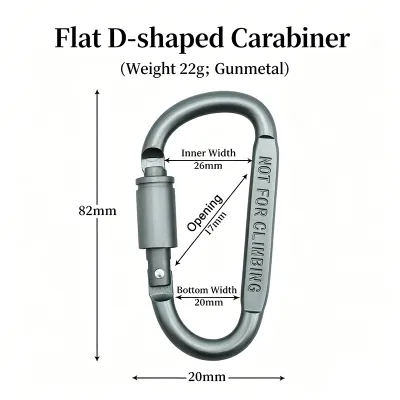
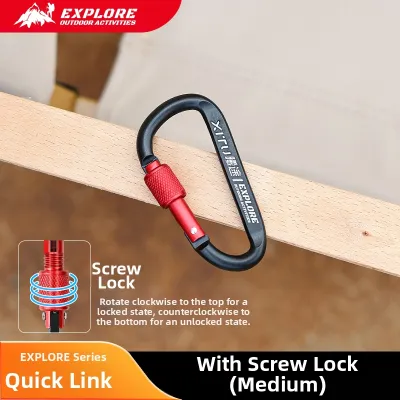
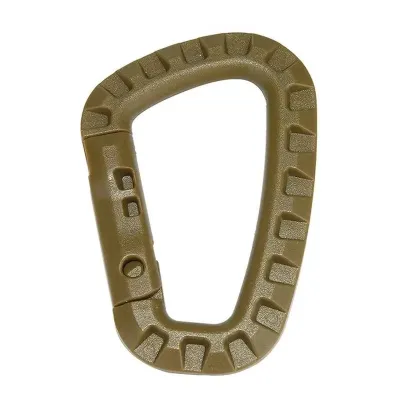
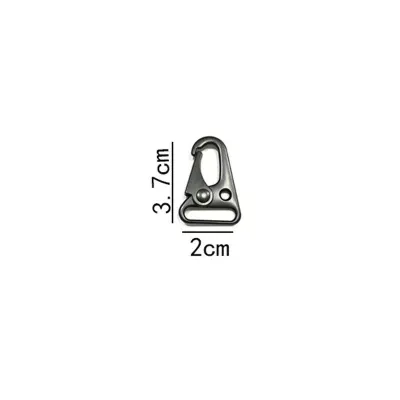
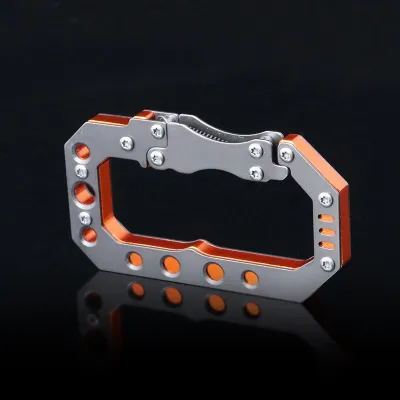
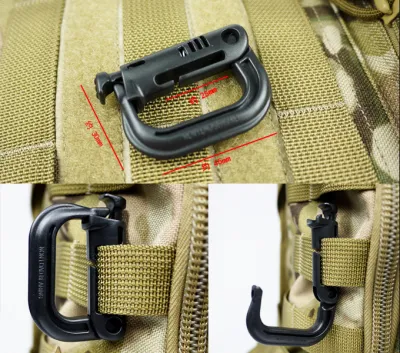
Prices are valid at publication and may change. Please refer to the product page for the latest price.
One of the primary advantages of a screw-lock is its mechanical simplicity. Because it does not rely on complex internal springs to rotate the sleeve, it is highly resistant to jamming from dirt, sand, or mud—common elements when climbing in tropical environments or dusty crags. It is also exceptionally easy to operate when wearing gloves or when your hands are cold and wet. Furthermore, a manual screw-lock allows you to leave the gate unlocked when repeatedly rigging gear, saving time during complex setups.
However, the manual nature of the screw-lock is also its greatest vulnerability. It relies entirely on human memory; if you forget to spin the sleeve, the carabiner remains unlocked and vulnerable to accidental opening. Additionally, constant rope movement or rubbing against the rock can cause “vibration loosening,” where the sleeve slowly backs off over time. To mitigate this risk, climbers often follow the rule of locking the gate downward so that gravity helps keep the sleeve in place if it vibrates loose.
Screw-locks are ideal for building static anchors and rigging multi-point systems where you are actively managing the gear and can easily inspect the lock status. They are also excellent for rigging rappels where you want to visually confirm that every link in the system is fully closed and locked before committing your weight to the rope.
Choosing an Automatic Carabiner Lock: Auto-Lock and Twist-Lock Options
Automatic locking carabiners utilize spring-loaded sleeves that automatically rotate and lock the moment the gate snaps shut. These mechanisms are designed to eliminate human error by ensuring the gate is never left unlocked. However, they come in different configurations that balance speed of use against security.

Standard Auto-Lock (Push-to-Close)
Standard auto-lock carabiners, often referred to as two-step locks, require you to perform a single motion—typically twisting the sleeve a quarter-turn—before you can push the gate open. Once you release the gate, the internal spring snaps the gate shut and automatically spins the sleeve back into the locked position.
This automatic action provides immediate peace of mind, making it virtually impossible to forget to lock the gate. It is highly efficient for fast-paced climbing scenarios where you are frequently clipping and unclipping. The downside is that the internal spring mechanism is sensitive to environmental debris. Fine volcanic dust, sand, or salty sea air can clog the spring, causing the sleeve to stick in the unlocked position. They can also be challenging to open one-handed, requiring practice to master the twist-and-push motion smoothly.
Before relying on a standard auto-lock, you must physically verify that the sleeve has fully rotated. Always perform a quick visual check or a manual squeeze test to ensure the gate is completely closed and the sleeve has snapped back into its home position.
Twist-Lock (Twist-and-Pull)
For enhanced security, three-step twist-lock carabiners require three distinct actions to open: lifting or sliding the sleeve upward, twisting it, and then pushing the gate open. This multi-step process makes it incredibly difficult for the gate to open accidentally, even under complex rope routing or heavy friction.
This high level of security makes twist-locks exceptionally resistant to rope rub or accidental opening from contact with branches or rock edges. They are highly favored in high-consequence rigging situations where a gate opening would be disastrous. However, this safety comes with a steeper learning curve. Operating a three-step lock one-handed can be frustrating, especially when your forearm muscles are fatigued (or “pumped”) near the end of a long pitch.
Because of the dexterity required, it is crucial to practice operating these carabiners on the ground. Familiarize yourself with the specific sliding and twisting motion of your gear before attempting to use it on an exposed, high-stress section of a climb.
Matching the Carabiner Lock to Your Climbing Task
Selecting the right locking carabiner depends heavily on the specific task you are performing and how often you will need to open and close the gate during your climb. Matching the mechanism to the scenario improves both safety and efficiency on the rock.
For belaying, automatic locking carabiners are highly recommended. Because belaying involves continuous movement and rope friction, an auto-lock ensures that the critical connection between your belay device and harness loop remains locked, even if the carabiner shifts or rotates during use. Many modern belay-specific carabiners also feature internal wire gates to prevent cross-loading, keeping the lock aligned along its strongest vertical axis.
When building anchors or setting up top-rope systems, manual screw-locks are generally preferred. These scenarios often involve managing multiple ropes, slings, and master points simultaneously. Screw-locks allow you to keep gates open while adjusting knots or positioning slings, locking them only when the entire system is finalized. This prevents the annoyance of having to repeatedly open an auto-locking gate every time you adjust a piece of protection.
For personal anchor systems (PAS) or tethers, auto-locks or three-step twist-locks are the ideal choice. When you reach a belay ledge and clip into the anchor, you want a secure, “set and forget” connection. An automatic lock ensures that you are instantly safe the moment you clip in, removing any risk of distraction causing you to leave yourself unanchored.
| Lock Type | Best Use Case | Key Limitation |
|---|---|---|
| Screw-Lock | Anchor building, rigging multi-point systems, cold/dirty environments | Requires manual locking; vulnerable to vibration loosening |
| Auto-Lock (2-Way) | Belaying, quick transitions, general utility tasks | Can jam if exposed to fine grit, sand, or heavy salt air |
| Twist-Lock (3-Way) | Personal Anchor Systems (PAS), high-friction rigging | Complex to open one-handed; requires physical practice |
Essential Maintenance and Safety Checks
To ensure your locking carabiners perform reliably, they require regular maintenance and strict safety inspections. This is especially true in tropical climbing destinations where high humidity, salt spray, and rain can accelerate wear and corrosion on metal components.
Always clean your carabiners after climbing in dusty or coastal environments. Wash them in warm water with a mild, pH-neutral soap to dissolve salt deposits, sweat, and grit. Avoid using harsh industrial degreasers or solvents, as these can strip away the manufacturer’s protective coatings. If the gate action or locking sleeve feels sticky after washing, apply a small drop of dry, wax-based or PTFE-based lubricant specifically designed for outdoor gear directly to the hinge and spring areas. Wipe away any excess lubricant immediately, as wet oils will attract dirt and make the mechanism jam more quickly.
Before every climbing session, perform a thorough visual and tactile inspection of your gear. Check that the gate snaps shut instantly when released from any angle. For screw-locks, ensure the sleeve threads smoothly along the entire length of the gate without catching or binding. For automatic locks, verify that the sleeve snaps back fully into the locked position without needing manual assistance.
Establish strict stop conditions for your equipment. If a locking sleeve is cross-threaded, if the gate fails to close completely, or if the internal spring tension feels weak, stop using the carabiner immediately. Do not attempt to force a malfunctioning lock or repair a broken spring yourself. Retire the gear permanently and consult the manufacturer’s retirement guidelines to ensure your climbing setup remains completely safe.
Community discussion
Share your experience or ask a question. Comments are reviewed before publication.