
Deciding between a carbon crankset and an aluminum crankset for your mountain bike comes down to balancing weight savings against trail durability and your budget. For most riders tackling rugged trails, aluminum cranksets offer a highly pragmatic, cost-effective, and durable solution that withstands harsh rock strikes. Conversely, a carbon crankset serves as an excellent upgrade if you prioritize weight reduction and high stiffness, provided you are comfortable with a higher initial investment and the unique structural risks associated with composite materials.
Weight, Stiffness, and Power Transfer on the Trails
Carbon fiber allows manufacturers to mold complex, hollow shapes that shed significant weight compared to solid or even forged hollow aluminum. However, you should always verify the actual claimed weights on the manufacturer’s official specification sheets. Different forging techniques for aluminum (like hollow forging) and varying carbon layup qualities mean that a high-end aluminum crankset can sometimes weigh nearly the same as an entry-level carbon model.
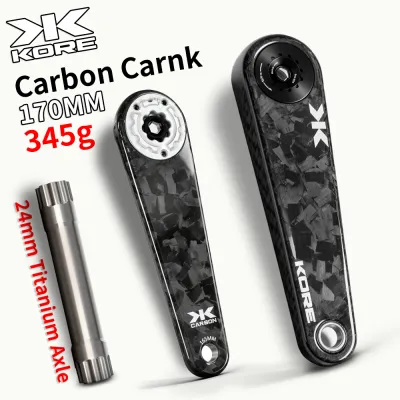
Stiffness is another critical factor, directly influencing how efficiently your pedaling force translates into forward motion. While carbon is inherently stiff at a molecular level, the actual trail performance depends heavily on the overall system design. The spindle diameter—commonly 24mm or 30mm—and the specific crank arm profile often influence pedaling efficiency just as much as the base material itself.
Products mentioned in this guide
1 Lazada user ratings
🔨Durability:good 🔌Compatibility:good 🛠️Ease of Installation:good
Prices are valid at publication and may change. Please refer to the product page for the latest price.
For instance, a 30mm aluminum spindle paired with robust aluminum arms can deliver a remarkably stiff platform that rivals many carbon setups. When climbing steep, muddy fire roads or accelerating out of tight singletrack corners, a stiffer interface minimizes flex under load. You must evaluate the entire crankset assembly, including the bottom bracket interface, rather than assuming carbon automatically guarantees a stiffer ride.
Durability and Impact Resistance for Mountain Biking
Mountain biking in tropical environments presents unique challenges, from slick clay to sharp volcanic rocks and deep river crossings. How your crankset handles these trail hazards is a matter of safety. Aluminum and carbon fiber behave very differently under sudden, high-force impacts like pedal strikes against hidden boulders.

Aluminum is highly resilient and tends to deform rather than shatter. Under severe impact, an aluminum crank arm will typically dent or bend. This ductile failure mode is predictable and often allows you to ride back to the trailhead, even if the arm is slightly misaligned.
Carbon fiber, on the other hand, does not bend. When subjected to forces beyond its structural limits, carbon may crack, splinter, or suffer hidden internal delamination. A sharp rock strike can compromise the resin matrix without showing obvious external damage, leaving a weakened structure that could fail unexpectedly during a subsequent high-load effort.
To mitigate these risks, establish a regular visual and tactile inspection routine. After any crash, heavy pedal strike, or rough descent, clean off the mud and run your fingers along the crank arms. Look for hairline cracks, paint chipping, or soft spots in the composite structure.
Using protective accessories is highly recommended, especially for carbon options. Many premium carbon cranksets come with factory-installed protective tape or molded plastic crank boots that shield the vulnerable tips from direct rock strikes. If your chosen model does not include them, planning for aftermarket crank boots is a wise investment to preserve the integrity of the composite fibers.
You must observe a strict stop-riding condition to prevent catastrophic failure on the trail. If your carbon crankset sustains a deep gouge, exposes raw, fuzzy carbon fibers, or produces an audible cracking sound during use, stop riding immediately. Do not attempt to ride back; instead, walk your bike out and consult the manufacturer or a qualified bike mechanic to assess the damage.
Price-to-Performance Ratio and Budget Considerations
The financial investment required for these materials varies widely in the local market. Entry-level aluminum cranksets are highly accessible, often starting around ₱3,000 to ₱6,000, making them an easy choice for budget-conscious riders or those building a reliable daily trail bike. In contrast, premium carbon cranksets typically command a significant premium, often ranging from ₱15,000 to well over ₱30,000.
Beyond the initial purchase price, you must consider long-term value and maintenance costs. Chainrings wear out over time, especially when riding in wet, gritty tropical conditions that accelerate drivetrain wear. Check if the crankset uses a proprietary direct-mount standard or a common bolt circle diameter (BCD), as proprietary replacement chainrings can add unexpected costs down the road.
Spindle interfaces and bottom bracket compatibility also play a role in long-term maintenance. Aluminum spindles are highly durable, while some carbon cranksets utilize integrated spindles that require precise installation to avoid premature bearing wear. Additionally, review the manufacturer’s warranty coverage; some brands offer crash replacement policies for carbon components, which can offset the financial risk of a sudden impact.
Evaluate whether the marginal weight reduction—typically between 100 to 200 grams—justifies the steep price premium. For competitive cross-country racers where every gram counts on long climbs, the investment in carbon is often justified. For recreational trail riders, however, that budget might be more effectively spent on high-grip tires, suspension tuning, or professional skills coaching.
Decision Framework: Matching the Crankset to Your Riding Style
To finalize your decision, align your choice with your primary riding style, local trail conditions, and personal priorities.
Choose aluminum if you focus on aggressive enduro, downhill, or technical trail riding where rock strikes are a frequent reality. Aluminum is also the ideal choice if you are working within a strict budget, prefer a low-maintenance setup, or value the predictable, visible failure modes of metal components.
Choose a carbon crankset if you primarily ride cross-country, marathon, or light trail disciplines where minimizing rotational and overall bike weight is paramount. This option is best suited for riders who are willing to invest in protective accessories, perform regular inspections, and pay a premium for a highly responsive, stiff pedaling platform.
Before making any purchase, you must verify three critical compatibility specifications to ensure a proper fit. First, measure your frame’s bottom bracket shell width and type (e.g., threaded BSA or press-fit). Second, confirm the spindle diameter compatibility with your existing or planned bottom bracket. Finally, verify the required chainline (such as Boost or Super Boost spacing) to maintain precise shifting performance and adequate tire clearance.
Frequently Asked Questions (FAQ)
Do carbon cranksets require special torque settings?
Yes, carbon cranksets require strict adherence to specific torque settings to prevent structural damage. Because carbon fiber is vulnerable to crushing forces, over-tightening the crank bolts or pedal threads can pinch and crack the composite structure. Always use a calibrated torque wrench and follow the exact Newton-meter (Nm) values specified in the manufacturer’s installation manual. Applying a high-quality carbon assembly paste on non-threaded mating surfaces can also help prevent slipping without requiring excessive torque.
Can I mix a carbon crankset with an aluminum bottom bracket?
Yes, you can safely pair a carbon crankset with an aluminum bottom bracket. Compatibility is determined entirely by the spindle diameter of the crankset and the bearing inner diameter of the bottom bracket, rather than the materials of the components themselves. For example, a carbon crankset with a 24mm spindle will work reliably with an aluminum bottom bracket designed for 24mm spindles, provided the bottom bracket matches your frame’s shell standard. Always ensure the bearings are properly greased to prevent creaking, which can be amplified by hollow carbon crank arms.
Community discussion
Share your experience or ask a question. Comments are reviewed before publication.