
Quick Answer: Carbon Fiber vs. Aluminum and Steel
Selecting the right scuba cylinder shapes your comfort, safety, and overall experience underwater. Carbon fiber dive tanks—more accurately described as carbon fiber composite cylinders—represent a significant technological shift from traditional metal cylinders. By wrapping a lightweight metal or polymer liner in high-tensile carbon fiber, these tanks achieve a remarkable balance of high working pressures and exceptionally low dry weight.
However, choosing this advanced material involves a clear trade-off: you gain substantial weight savings on land and increased gas capacity, but you must navigate positive buoyancy shifts underwater, handle the tank with greater care, and accept a much higher upfront financial investment compared to standard aluminum or steel. The ideal tank material is not a single universal choice; it depends on your physical strength, your typical diving environment, and your specific buoyancy requirements.
What Is a Carbon Fiber Dive Tank?
To understand why carbon fiber is highly regarded in specialized fields, it helps to look at how these cylinders are manufactured. Unlike a standard aluminum or steel tank, which is forged from a single piece of metal, a carbon fiber dive tank uses a multi-layered composite construction. At its core sits a thin-walled inner liner, typically made of aluminum or a specialized polymer. This liner is responsible for holding the breathing gas and ensuring a gas-tight seal, but it lacks the structural strength to withstand high pressures on its own.
Products mentioned in this guide
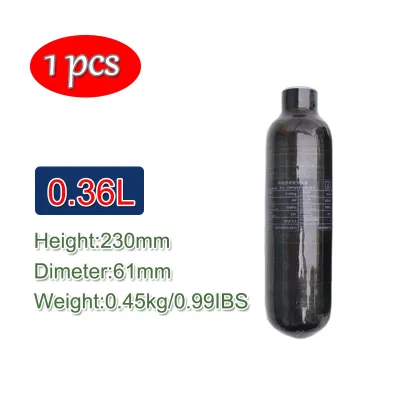
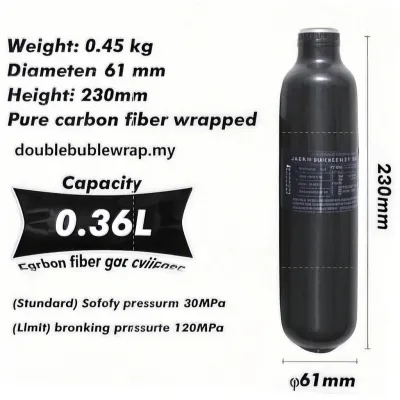
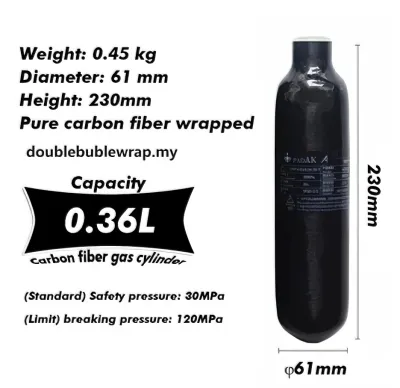
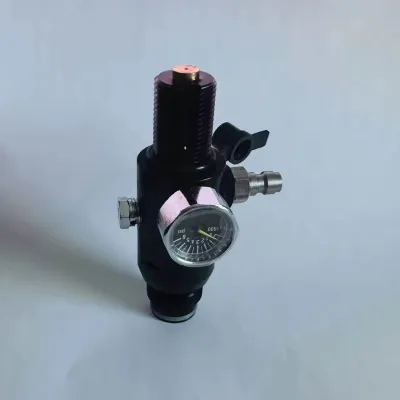
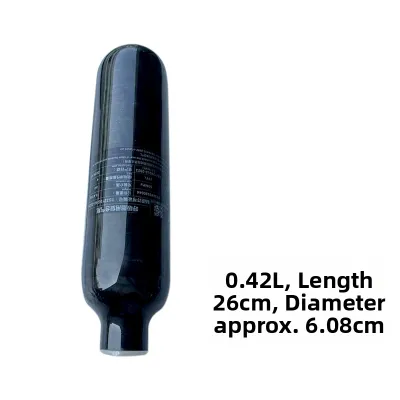
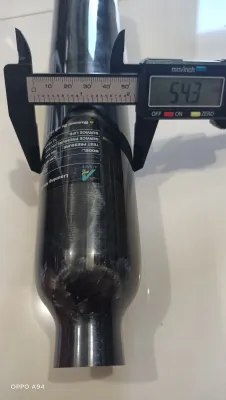
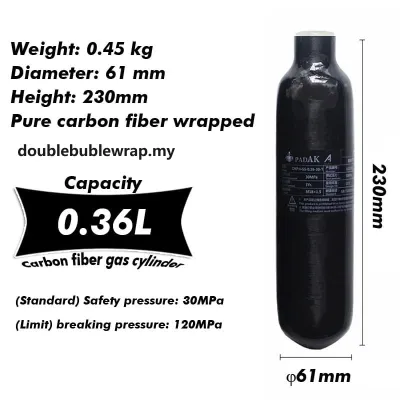
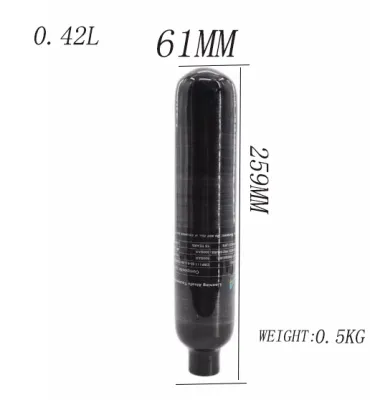
Prices are valid at publication and may change. Please refer to the product page for the latest price.

To provide that strength, the liner is tightly wrapped in thousands of continuous carbon fiber strands impregnated with a high-strength epoxy resin. This outer structural wrap provides incredible tensile strength, allowing the cylinder to contain gases at much higher pressures than traditional metal tanks without requiring thick, heavy walls. It is important to clarify that the carbon fiber itself does not come into contact with your breathing air; it serves purely as an external structural reinforcement. Because designs vary among manufacturers, you should always consult the manufacturer’s specification sheet and the cylinder’s permanent labels to verify the exact liner material, wrap design, and the engineering standards to which it was built.
Material Showdown: Weight, Buoyancy, and Durability
Choosing between carbon fiber, aluminum, and steel requires evaluating how each material behaves in the real world. Your choice affects how much weight you carry on your back, how you balance your trim in the water, and how much maintenance you must perform after a day in the ocean.
Weight, Buoyancy, and Handling
The most immediate difference you will notice when picking up a carbon fiber tank is its dry weight. On land, a composite cylinder is significantly lighter than an aluminum or steel tank of equivalent physical volume. This reduction in dry weight makes a noticeable difference during long walks to gear-up areas, shore entries, or surface swims, helping to reduce physical fatigue before you even descend.
However, this lightweight advantage on land introduces a distinct challenge underwater. Because the tank has less physical mass for its size, it is much more buoyant than a metal tank. As you breathe down your gas supply, a carbon fiber tank becomes increasingly positive, which can pull your upper body upward and disrupt your horizontal trim. To compensate for this positive buoyancy, you must add weight to your weight belt or integrated BCD pockets. This means that while you carry less weight in the tank itself, you may end up carrying more lead weight overall to remain properly balanced at your safety stop. You should always consult the manufacturer’s exact specification sheets to compare the dry weight and buoyancy characteristics of different models rather than relying on broad assumptions.
Pressure Capacity and Dive Time
Carbon fiber composite construction allows for exceptionally high working pressures, often reaching 300 bar (approximately 4,350 psi) or more. In comparison, standard aluminum tanks typically top out at 200 to 207 bar (3,000 psi), and steel cylinders generally operate between 200 and 232 bar (3,000 to 3,400 psi).
This higher pressure capacity means you can store a larger volume of breathing gas within a physically smaller and lighter cylinder. For divers looking to extend their bottom time or carry a more compact setup without sacrificing gas volume, this is a major benefit. However, this high-pressure capability is only useful if your entire gear configuration can support it. Before attempting to use a high-pressure carbon fiber cylinder, you must verify that your regulator’s first stage, pressure gauge, and all connected low-pressure and high-pressure hoses are explicitly rated for the tank’s maximum working pressure.
Durability in Tropical and Saltwater Environments
Diving in tropical, humid, and high-salinity environments puts extreme stress on dive gear. Traditional steel tanks are highly susceptible to internal and external rust if their protective paint is chipped or scratched, requiring diligent upkeep to prevent structural failure. Aluminum cylinders form a self-protecting oxide layer that resists corrosion well, though they are still vulnerable to galvanic corrosion around the valve threads.
Carbon fiber composites are entirely immune to rust and corrosion, making them highly appealing for tropical saltwater environments. However, they possess a different vulnerability: the epoxy-resin matrix wrapping the cylinder is softer than solid metal. It is susceptible to deep cuts, gouges, UV degradation from prolonged sun exposure, and structural damage from sharp impacts. A deep scratch that cuts into the structural carbon fiber strands can permanently compromise the tank’s integrity. To protect your investment, you must commit to thorough freshwater rinses after every dive to remove salt crystals and perform a careful visual inspection of the outer wrap before and after every excursion.
Upfront Cost and Local Availability
Acquiring a carbon fiber dive tank requires a substantial financial commitment. In the Philippine market, these composite cylinders command a premium price, often costing several times more than a standard aluminum 80-cubic-foot tank. This high upfront cost in Philippine Pesos (PHP) must be weighed against your actual frequency of use.
Beyond the purchase price, you must consider local infrastructure support. Not all local dive shops or resorts possess compressors capable of filling cylinders to 300 bar; many standard operations are set up to fill only to 200 or 230 bar, which would prevent you from utilizing the carbon fiber tank’s full capacity. Additionally, finding authorized hydrostatic testing facilities equipped to inspect and recertify composite cylinders can be difficult outside of major metropolitan hubs. You should always verify that your local dive shops can provide high-pressure fills and that certified testing facilities are accessible to you before making a purchase.
How to Choose the Right Tank for Your Diving Style
Understanding the technical differences helps you match a tank’s characteristics to your specific style of diving, physical needs, and typical dive locations.
- Shore diving and long surface swims: If your diving consists primarily of walking across rocky beaches, navigating sandy entries, or performing long surface swims to reach a reef, the reduced dry weight of a carbon fiber tank is highly beneficial. It minimizes the strain on your back, knees, and shoulders while walking geared-up, preserving your energy for the dive itself.
- Boat diving and technical setups: For boat diving where gear is set up on a stable deck and entry involves a simple giant stride, the dry weight of the tank is less of a concern. In this scenario, steel tanks are often preferred. Steel’s negative buoyancy helps you maintain a stable, horizontal trim underwater and offsets the inherent lift of exposure suits, reducing the amount of lead weight you need to wear. Technical divers also tend to favor steel for double-tank configurations due to its predictable buoyancy profile.
- Travel and tropical diving: If you frequently travel by air to various dive destinations, bringing a personal carbon fiber tank might seem attractive due to strict airline baggage weight limits. However, traveling with high-pressure cylinders involves strict airline and transport security regulations, often requiring you to remove the valve entirely for inspection. For most recreational divers traveling to tropical resorts, relying on local rental tanks’which are almost universally standard aluminum’is far more practical and less costly.
- Skill level: Your current experience level should play a major role in your decision. Beginners are still developing their buoyancy control and learning how to manage their trim. The shifting buoyancy of a composite tank as gas is consumed can make mastering these skills more difficult. Standard aluminum cylinders offer a highly predictable, gradual buoyancy shift that is easier for developing divers to manage. It is highly recommended to master your buoyancy and weight distribution using standard rental equipment before investing in specialized composite gear that alters your diving physics.
Safety, Inspection, and Care for Composite Cylinders
Because dive cylinders are high-pressure vessels, safety must always be your primary concern. Advanced composite materials require strict adherence to maintenance protocols and professional oversight to ensure safe operation.
You must strictly follow the local regulatory schedules for hydrostatic testing and visual inspections. In many jurisdictions, composite cylinders require more frequent inspections or have different testing protocols than solid metal tanks. Always check the stamped test dates on your cylinder and consult with your local maritime or dive safety authorities to determine the exact legal testing intervals required in your area.
Proper daily handling is critical to preserving the integrity of a carbon fiber tank. You must avoid dropping the cylinder, protect it from sharp impacts against boat gunwales or rocks, and store it in a cool, dry place away from direct, prolonged UV exposure and harsh household chemicals. Remember that owning advanced equipment does not replace comprehensive buoyancy control training, disciplined gas management, and standard emergency procedures.
Always establish a strict stop condition for your gear: if you observe any deep gouges that expose the fiber layers, evidence of delamination (where the outer wrap separates from the inner liner), chemical discoloration, or if the tank has been subjected to a severe impact, you must cease using the cylinder immediately. Do not attempt to repair or fill the tank; instead, take it directly to a certified dive technician for a professional evaluation.
Frequently Asked Questions (FAQ)
Do carbon fiber dive tanks have a strict expiration date?
Yes, carbon fiber composite cylinders have a strict, non-negotiable service life. Unlike steel or aluminum tanks, which can theoretically last for decades if they pass regular hydrostatic and visual inspections, composite tanks are typically rated for a maximum lifespan (often 15 years from the date of manufacture). This expiration date is determined by the degradation characteristics of the resin and carbon fiber under repeated pressure cycles. You must check the manufacturer’s label or user manual for the specific lifespan limit of your cylinder and consult local regulations regarding the decommissioning of expired composite tanks.
Can I use my current regulator with a high-pressure carbon fiber tank?
You can only use your current regulator if its first stage and connected components are explicitly rated for the high working pressure of your carbon fiber tank. Many standard recreational regulators are designed for pressures up to 232 bar (approx. 3,400 psi) and cannot safely handle the 300 bar (approx. 4,350 psi) pressures typical of carbon fiber cylinders. Using an underrated regulator on a high-pressure tank is a severe safety hazard that can lead to catastrophic equipment failure. Always verify the maximum pressure rating in your regulator’s user manual or consult a certified dive technician before connecting your gear.
Community discussion
Share your experience or ask a question. Comments are reviewed before publication.