
A 20kg kettlebell represents a major milestone in any strength training journey. Often weighing around 44 pounds, this specific size bridges the gap between basic conditioning and serious power development. However, standing in front of your options, you will quickly notice a stark divide: classic cast iron kettlebells and standardized steel competition kettlebells. Choosing the right one is not just a matter of aesthetics; it directly impacts your lifting mechanics, hand health, and overall workout safety.
Your decision should align with your primary training style, physical hand size, and budget. While both styles can build an exceptionally strong posterior chain, they are engineered for entirely different movement patterns. Understanding these structural differences prevents premature grip fatigue, skin tears, and the frustration of owning a piece of equipment that does not fit your hands or your fitness goals.
Key Differences Between Cast Iron and Competition Kettlebells
To make an informed choice, you must first understand how these two types of kettlebells are manufactured and how their physical dimensions differ. Cast iron kettlebells are cast from a single pour of molten iron. This means that as the weight of the bell increases, the physical size of the entire implement grows. A 20kg cast iron kettlebell is moderately sized, featuring a compact body and a wide, curved handle that naturally accommodates a two-handed grip.
Products mentioned in this guide
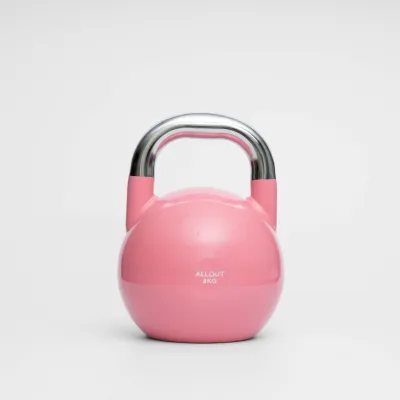
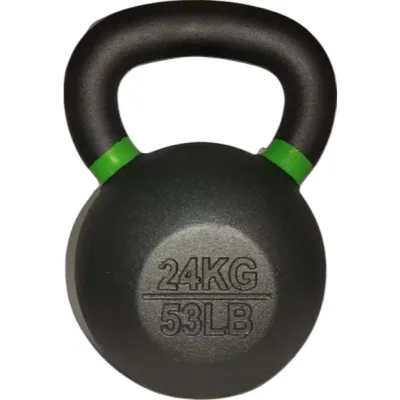
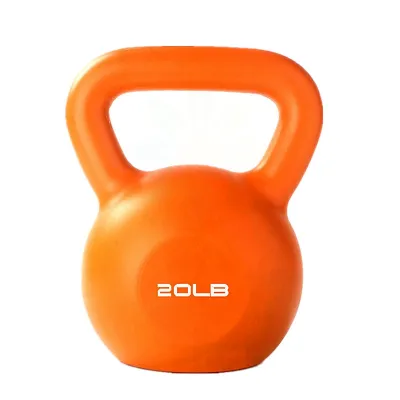
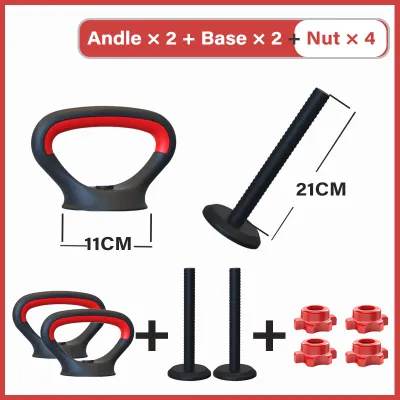
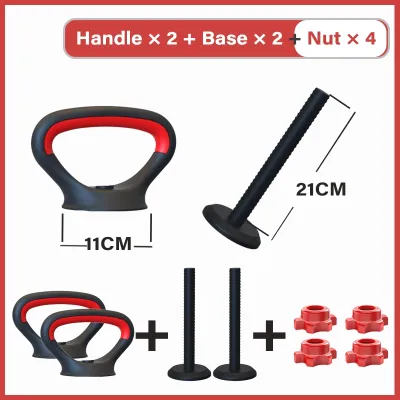
Prices are valid at publication and may change. Please refer to the product page for the latest price.
In contrast, competition kettlebells are constructed from steel and adhere to strict international standards. Regardless of whether the bell weighs 8kg or 32kg, its external dimensions remain identical. The manufacturer achieves the specific 20kg weight by adjusting the size of an internal hollow cavity within the steel shell. This standardization ensures that the bell always contacts your forearm at the exact same spot, allowing you to perfect your technique without adjusting to a changing physical size as you progress.
Handle geometry is another critical point of divergence. Cast iron handles are typically wider and curved, sloping gently down toward the bell. This design provides ample room for both hands during two-handed exercises. The handle diameter of a 20kg cast iron bell is often thicker, ranging from 35mm to 38mm, which heavily taxes your grip strength. Competition handles are smaller, squarer, and feature a uniform diameter of 33mm to 35mm. This narrower, straight handle is designed specifically for one-handed insertion, keeping the hand locked in place and preventing lateral sliding.
Finally, the surface finish dictates how the bell feels in your hand and how well it holds chalk. Cast iron kettlebells are usually finished with a powder coat, matte paint, or enamel. A high-quality powder coat offers a textured, slightly porous surface that provides excellent grip security and holds chalk exceptionally well. Competition kettlebells feature a bare, polished steel handle paired with a painted steel body. The bare steel handle is designed to minimize friction as the bell rotates in your hand during high-repetition movements, relying on a fine layer of chalk rather than a textured coating to manage sweat.
How Training Style Dictates Your Kettlebell Choice
Your preferred training methodology is the single most important factor when choosing between these two designs. If your workouts are rooted in Hardstyle training—which emphasizes maximum tension, explosive power, and ballistic movements—the cast iron kettlebell is the traditional and highly practical choice. Hardstyle routines rely heavily on two-handed swings, goblet squats, strict overhead presses, and Turkish get-ups. The wide handle of the cast iron bell allows you to comfortably place both hands on the horn, ensuring a secure grip and proper shoulder alignment during heavy swings.

If you are drawn to Kettlebell Sport (Girevoy Sport) or fluid, high-repetition flows, the competition kettlebell is virtually mandatory. Kettlebell Sport focuses on endurance and efficiency over long, uninterrupted sets of snatches, cleans, and jerks. The standardized size of the competition bell means your wrist alignment, forearm contact point, and trajectory remain completely consistent. Furthermore, the square handle design prevents your hand from sliding side-to-side, which is crucial for maintaining a stable overhead lockout and avoiding shoulder strain during exhausting sets.
Hand care and callus management are directly tied to these training styles. During dynamic movements like the snatch, the kettlebell must rotate smoothly within your palm. The textured surface of a powder-coated cast iron bell can act like sandpaper against your skin during high-repetition sets, leading to painful blisters and torn calluses if your technique is not flawless. The smooth, bare steel handle of a competition bell is designed to slide with minimal friction, making it far gentler on your hands during high-volume training, provided you manage moisture with chalk.
Durability, Maintenance, and Longevity
Both cast iron and steel competition kettlebells are incredibly durable, but they require different levels of care to survive the elements, especially in humid tropical environments. In regions with high humidity, moisture and sweat will quickly cause exposed metal to oxidize and rust. Cast iron kettlebells with a high-quality powder coat are highly resistant to rust, but any deep chips in the coating from dropping the bell on concrete or banging it against other weights will expose the raw iron underneath. These exposed spots must be cleaned and sealed to prevent rust from spreading.
Competition kettlebells require more active maintenance due to their bare steel handles. Because the handle lacks a protective paint or powder coat, it is highly susceptible to rusting from sweat and atmospheric moisture. To preserve the smooth finish, you must wipe down the handle with a dry towel after every workout. Periodically buffing the handle with fine steel wool and applying a light coat of mineral oil or a dedicated rust-prevention spray will keep the steel smooth and rust-free.
Storage conditions also play a vital role in longevity. Avoid storing either type of kettlebell directly on damp concrete floors or in unventilated outdoor spaces. Keeping your 20kg kettlebell on a rubber mat or a sturdy wooden shelf in a dry, indoor area will significantly extend its lifespan and keep the grip surface in optimal condition.
Budget and Value Considerations
Your budget and long-term fitness plans should guide your financial investment. Cast iron kettlebells are generally much simpler to manufacture, making them the more budget-friendly option. For a 20kg weight, a cast iron bell offers an excellent cost-per-kilogram ratio, allowing you to acquire a heavy, versatile training tool without a massive financial outlay. This makes it the ideal choice for general fitness enthusiasts, home gym beginners, or anyone looking to add a single heavy weight to their existing routine.
Competition kettlebells command a premium price, often costing significantly more in Philippine Pesos (₱) than cast iron bells of the same weight. This price difference is due to the precise engineering required to manufacture a hollow steel shell, balance the internal weight distribution, and meet standardized dimensional tolerances. While the initial investment is higher, a competition bell offers unmatched value if you plan to progress to heavier weights using the same technical mechanics.
When evaluating value, consider your progression. If you only plan to use a 20kg kettlebell for supplemental conditioning, swings, and squats, a budget-friendly cast iron bell will easily last a lifetime. However, if you are committed to mastering technical lifts and plan to eventually move up to 24kg or 28kg, investing in a competition bell early on ensures your technique and muscle memory remain perfectly consistent as you transition to heavier weights.
Decision Matrix: Which 20kg Kettlebell Fits You Best?
To finalize your decision, evaluate your training goals, hand size, and budget against the specific characteristics of each kettlebell type.
Choose Cast Iron if…
- Your workouts consist primarily of two-handed swings, goblet squats, and general strength training.
- You prefer a thicker handle that challenges and builds your grip strength.
- You are working with a tighter budget and want the most cost-effective 20kg option.
- You train in a humid environment and want a low-maintenance, rust-resistant powder-coated finish.
Choose Competition if…
- You are training for Kettlebell Sport or perform high-repetition snatches, cleans, and jerks.
- You want to build consistent muscle memory with a standardized bell size across different weights.
- You prefer a smoother, bare steel handle that slides easily in your hand with minimal friction.
- You primarily perform one-handed exercises and do not need space for a two-handed grip.
Verify First if…
- Measure your hand width across the knuckles. If your hands are exceptionally wide, a competition handle (which is narrower) might feel cramped during certain transitions, and a cast iron handle may offer better comfort.
- Check the manufacturer's specifications for handle diameter and window clearance, as these can vary slightly between brands.
| Feature | Cast Iron Kettlebell | Competition Kettlebell |
|---|---|---|
| Material | Solid Cast Iron | Steel Shell with Internal Cavity |
| Dimensions | Increases with weight | Standardized (uniform size) |
| Handle Shape | Curved, wider window | Square, narrower window |
| Handle Finish | Powder coat, paint, or matte | Bare, polished steel |
| Best For | Two-handed swings, general fitness | One-handed snatches, sport training |
| Maintenance | Low (wipe down powder coat) | Moderate (prevent rust on bare steel) |
| Price Range | Budget-friendly (₱) | Premium investment (₱₱) |
Frequently Asked Questions (FAQ)
Can I use a competition kettlebell for standard swings and squats?
Yes, you can use a competition kettlebell for standard swings and squats, but there are some ergonomic trade-offs. Because the handle of a competition bell is narrower and designed for one-handed use, fitting both hands on the handle for a standard two-handed swing can be difficult or uncomfortable, especially if you have larger hands. For goblet squats, the larger, uniform size of the 20kg competition bell can feel bulky against your chest compared to the more compact profile of a 20kg cast iron bell. However, for one-handed swings and single-arm front squats, the competition bell performs exceptionally well.
Does the uniform size of competition kettlebells matter for a single 20kg bell?
Even if you only own a single 20kg kettlebell, the uniform size of a competition bell offers significant benefits for technical training. It ensures that the contact point where the bell rests against your forearm remains identical to any other competition bell you might use in the future, whether lighter or heavier. This consistency helps you develop precise muscle memory and proper technique for complex movements like the snatch and clean. If you plan to expand your collection later, staying within the competition standard means you will not have to adjust your wrist alignment or forearm positioning as you change weights.
How do I measure my hand to ensure the handle thickness is comfortable?
To check if a kettlebell handle will fit your grip comfortably, measure the width of your hand across your four knuckles (excluding the thumb) using a flexible tape measure or ruler. Most competition kettlebells have a handle width of about 120mm to 130mm, which is plenty of room for a single hand but tight for two. Next, check the handle diameter: cast iron 20kg bells often have a grip diameter of 35mm to 38mm, while competition bells are typically 33mm to 35mm. If you have smaller hands or struggle with grip fatigue, a thinner competition handle or a lighter cast iron bell with a thinner grip may be easier to control safely.
Community discussion
Share your experience or ask a question. Comments are reviewed before publication.