
Gathering live bait along the shoreline is a foundational step for any successful shore fishing excursion. In coastal areas, having a reliable supply of fresh baitfish can make the difference between a productive day on the water and going home empty-handed. When deciding between a cast net and a throw trap, there is no single option that is universally more effective in every scenario. The most effective tool depends entirely on your target baitfish species, the physical structure of the shoreline, your physical skill level, and local fisheries regulations. This guide breaks down the operational differences, environmental suitability, and decision criteria to help you choose the right fishing net for your next outing.
Understanding Cast Nets and Throw Traps
Cast nets are circular nets with weighted outer edges designed to be thrown by hand so they open fully in the air before landing on the water’s surface. As the net sinks, the weights pull the outer edge down, trapping any fish underneath. When the handline is pulled, the brail lines draw the bottom of the net together, forming a pocket that secures the catch. This active design requires the angler to spot fish or cast blindly into promising areas to intercept moving schools.
Throw traps, often called bait traps, are rigid or semi-rigid structures made of wire mesh or netting stretched over a metal frame. They feature one or more funnel-shaped entry points that allow baitfish to swim inside easily but make escape difficult. These traps rely on bait placed inside to attract fish over time, operating passively while you focus on other tasks.
Products mentioned in this guide
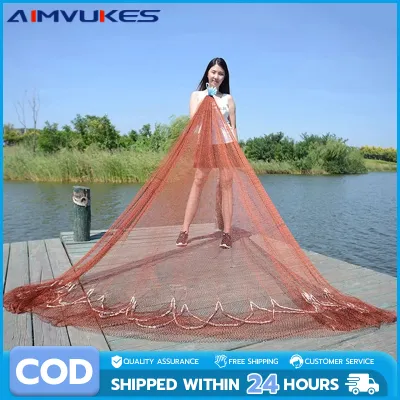
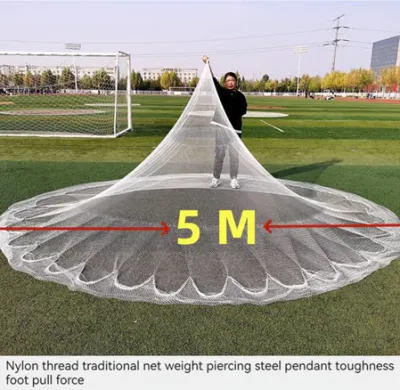
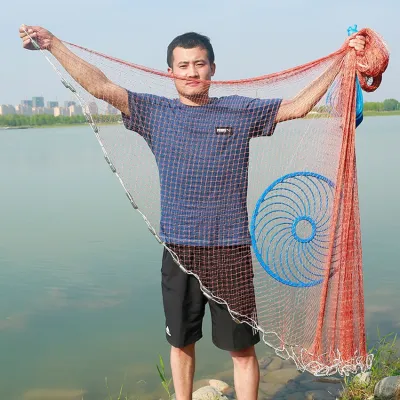
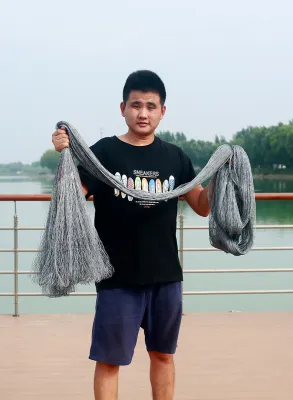
Prices are valid at publication and may change. Please refer to the product page for the latest price.
Before purchasing either option, verify the specifications on the product label. For cast nets, check the radius (typically ranging from 4 to 8 feet for shore use), the mesh size, and the weight per radius foot. For throw traps, verify the overall frame dimensions, the size of the entry funnels, and the mesh spacing to ensure they match your target bait size.
Catch Efficiency and Baitfish Behavior
Cast nets excel when targeting active, schooling baitfish that swim near the surface or in mid-water columns, such as sardines, anchovies, or small mullets. These species are highly mobile and rarely stay in one place long enough to enter a stationary trap. A well-aimed cast net allows you to actively pursue these schools as they move along the shoreline, capturing dozens of baitfish in a single throw.

Throw traps are far more effective for bottom-dwelling, structure-oriented, or highly localized species like small gobies, shrimp, or crabs. These creatures naturally seek out shelter and are highly attracted to scent trails. By placing a baited trap near their hiding spots, you can catch baitfish that would otherwise be impossible to target with an active net.
Selecting the correct mesh size is critical for maximizing catch efficiency and protecting local fish populations. If the mesh is too large, small baitfish will slip through or become stuck by their gills in the netting, which injures or kills them and makes them useless as live bait. If the mesh is too small, the net will sink too slowly in the water, allowing fast-swimming baitfish to escape underneath before the net reaches the bottom.
Shore Fishing Conditions and Environment
Water depth plays a major role in determining which gear to use. Cast nets require a minimum depth to allow the net to sink and close properly, but if the water is too deep, the net may drift or close before reaching the bottom where the fish are. Conversely, throw traps can be deployed in extremely shallow water, such as tidal pools, mangrove roots, or shallow estuaries, as long as there is enough water to submerge the entry funnels.
Underwater obstacles are the primary enemy of cast nets. Rocky shorelines, coral rubble, submerged tree branches, and debris can easily snag the delicate monofilament or nylon mesh of a cast net, leading to severe tears or complete loss of the gear. Throw traps are designed to sit stationary on the bottom and are typically constructed from durable wire or heavy-duty netting, making them much safer to use around heavy structure where cast nets cannot go.
Environmental factors like water currents, wave action, and wind also dictate your choice. Strong winds can catch a thrown cast net mid-air, causing it to collapse into a useless clump rather than opening into a wide circle. Heavy surf and strong currents can sweep a cast net away before it sinks. Throw traps are less affected by wind, but strong currents can roll a light trap along the bottom; verifying that your trap has sufficient weight or securing it with an anchor line is essential in moving water.
Skill Level, Setup, and Maintenance
Operating a cast net requires a significant amount of physical coordination, balance, and practice. Throwing a net so that it opens into a wide circle requires a specific technique involving the hands, arms, and sometimes the teeth or shoulders. Anglers must spend hours practicing on dry land before attempting to throw a net while wading in surf or standing on slippery rocks.
Throw traps require almost no physical skill to operate. The setup process involves securing a bait holder inside the trap, tying a strong retrieval rope to the frame, and tossing or lowering the trap into the water. This makes throw traps an excellent option for beginners, young anglers, or those who prefer a more relaxed, passive approach to gathering bait while they set up their primary fishing rods.
Proper maintenance is vital to extend the lifespan of both types of fishing nets, especially in hot, humid tropical climates. After every saltwater outing, thoroughly rinse your net or trap with clean fresh water to remove salt crystals, sand, and organic slime. Hang the gear to dry completely in a shaded, well-ventilated area; direct tropical sunlight can degrade monofilament netting and weaken the fibers over time. Once dry, store the gear loosely in a cool, dry place to prevent mold, mildew, and tangles.
Legal Restrictions and Safety Boundaries
Before heading to the shoreline, it is crucial to verify local fisheries regulations in the Philippines. Municipal waters often have strict ordinances governing the use of active fishing nets like cast nets, including minimum mesh size limits designed to protect juvenile fish. Some areas may ban cast nets entirely while allowing stationary traps, or vice versa. Always check with the local Bureau of Fisheries and Aquatic Resources (BFAR) or municipal agricultural offices to ensure your gear is compliant.
Be aware of restricted zones along the coast. Marine protected areas (MPAs), fish sanctuaries, private resort shorelines, and designated swimming zones are typically off-limits for any form of bait gathering. Deploying nets or traps in these areas can result in heavy fines and confiscation of your gear.
Safety should always be your top priority when operating near the water. When wading to throw a cast net, wear protective footwear with non-slip soles to navigate slippery rocks, sharp shells, and sea urchins safely. Never tie the handline of a cast net around your waist or neck; always use the wrist strap with a quick-release slipknot so you can detach yourself instantly if the net snags a heavy underwater object or if you are pulled by a sudden wave. Keep a safe distance from other anglers, swimmers, and boat traffic to avoid accidental entanglement.
Decision Framework: Choosing Your Shore Fishing Net
To make the right choice for your next shore fishing trip, evaluate your specific conditions using a simple decision framework. Choose a cast net if you are targeting active, fast-moving surface schools in open, sandy-bottom waters, and if you have the physical mobility and patience to master the throwing technique. This active method provides immediate results, allowing you to gather a large volume of bait quickly when a school passes by.
Choose a throw trap if you are fishing around heavy underwater structures like rocks, coral, or mangrove roots, or if you prefer a low-effort, passive method that works while you focus on other tasks. Throw traps are also a highly suitable choice when targeting bottom-dwelling species that are easily lured by scent.
If you are unsure about the local underwater terrain, water depth, or specific municipal mesh size regulations, always verify these factors beforehand. Taking the time to check local rules and scout your fishing location will protect both your gear and the marine environment, ensuring a successful and sustainable outing.
Frequently Asked Questions (FAQ)
What mesh size is best for catching small baitfish?
To determine the most suitable mesh size, measure the average body depth (not length) of your target baitfish species. For very small baitfish like anchovies, a mesh size of 1/4 inch (about 6.3 mm) is typically recommended to prevent them from escaping or getting gilled. For slightly larger baitfish like sardines or small mullets, a 3/8-inch (about 9.5 mm) or 1/2-inch (about 12.7 mm) mesh is more suitable. Always check the manufacturer’s specifications on the product packaging and verify that your chosen mesh size complies with local municipal fisheries regulations to avoid catching non-target juvenile fish.
Can I use both a cast net and a throw trap on the same trip?
Yes, combining both methods is a highly effective tactic for shore anglers. You can deploy a baited throw trap near rocky structures or mangrove roots to passively collect bottom-dwelling baitfish and crustaceans while you actively scout the sandy flats with a cast net for passing schools of sardines. When using both, consider the transport weight and bulk of your gear; collapsible throw traps are ideal for easy carrying alongside a cast net. Ensure you have a secure, aerated bait bucket on the shoreline to keep both types of bait alive and healthy throughout your fishing session.

Community discussion
Share your experience or ask a question. Comments are reviewed before publication.