
Choosing a basketball net is more than just finding a mesh to hang from a rim. The right net acts as a crucial component of your court setup, affecting everything from the satisfying acoustic feedback of a successful shot to the overall safety and longevity of your hoop. In tropical environments where intense heat, high humidity, and sudden downpours are common, selecting the wrong material can lead to rapid degradation, rusted chains, or frayed fibers within months. By matching your net material to your specific court environment, usage frequency, and the age of your players, you can ensure a durable setup that delivers consistent performance and remains safe for everyone on the court.
When shopping for a replacement net, you will generally choose between three primary materials: chain, nylon, and polyester. Each material has distinct physical properties, environmental tolerances, and price points, typically ranging from ₱200 for basic synthetic options to ₱1,500 or more for heavy-duty or specialized outdoor nets. Understanding how these materials perform under daily play and exposure to the elements is the first step in making an informed purchase that fits your budget and playing style.
Compare the Core Materials: Chain, Nylon, and Polyester Nets
To choose the right net, you must first understand the structural and tactile differences between the three primary material categories. Galvanized metal chain nets offer a stark contrast to synthetic fiber nets in both appearance and physical behavior. Chain nets are constructed from interlocking metal links, providing a heavy, rigid structure that does not stretch or sway easily. In contrast, nylon and polyester nets consist of woven synthetic fibers that offer high flexibility, a soft texture, and a classic look that mimics professional arena setups.
Products mentioned in this guide
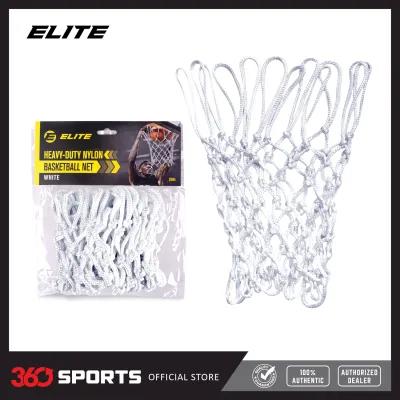
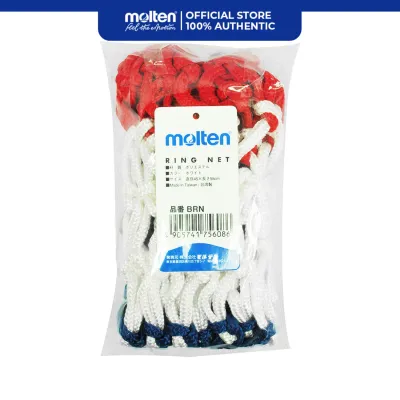
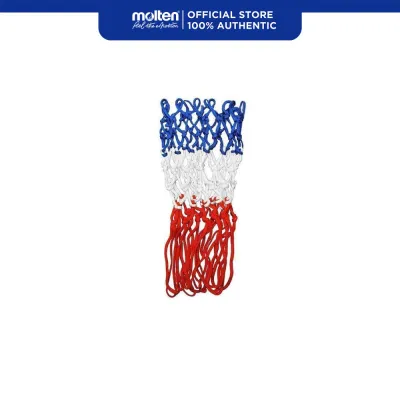
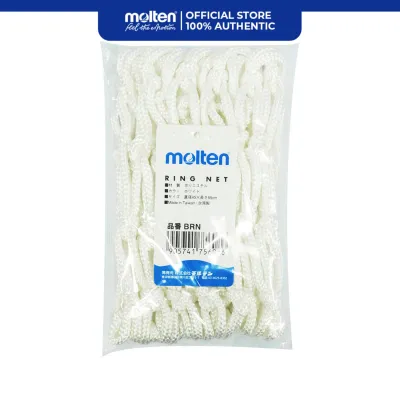
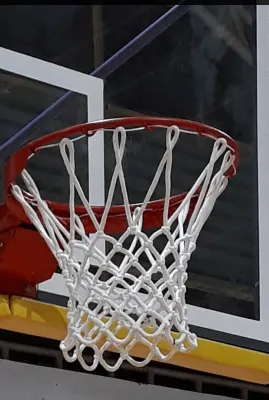
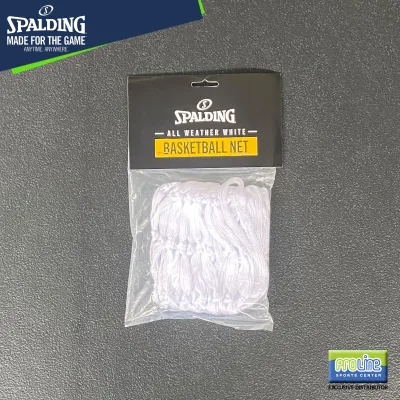
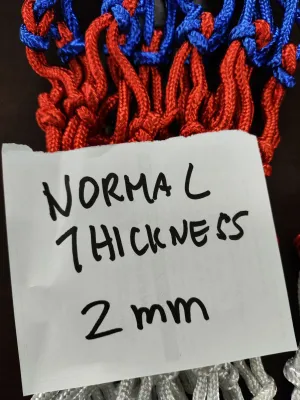
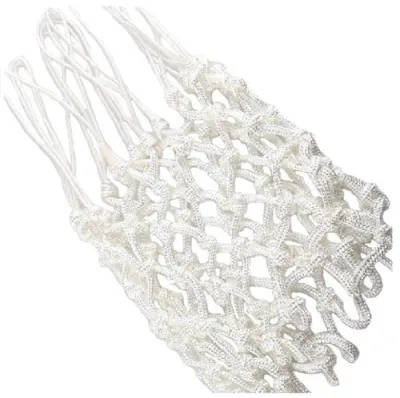
Prices are valid at publication and may change. Please refer to the product page for the latest price.
The acoustic feedback of a successful shot—often referred to as the “swish”—varies dramatically across these materials. A chain net produces a loud, metallic clinking sound as the ball passes through, which many streetball players find highly satisfying and audible even on noisy outdoor courts. Nylon nets produce the traditional, soft whispering sound, while polyester nets, which are slightly stiffer than nylon, often deliver a crisper, louder snap. This acoustic feedback is not just aesthetic; it provides immediate sensory confirmation to players during practice.
Weight and attachment structures also differ significantly between metal and synthetic options. Chain nets are substantially heavier, requiring sturdy rim hooks to support their weight without sagging or pulling the rim downward. They typically attach using S-hooks or direct loops designed to fit standard rim configurations. Synthetic nets are lightweight and rely on a series of loops—usually 12 standard loops—that slip over the rim’s welded hooks. The thickness of synthetic nets is often measured by thread count or weight (such as 120 grams to 180 grams), with heavier weights indicating thicker, more durable cords.
Match the Net Type to Your Court Environment
The local climate is one of the most influential factors in determining how long your basketball net will last. In tropical regions like the Philippines, outdoor courts are subjected to intense ultraviolet (UV) radiation, high humidity, and torrential monsoon rains. These conditions can quickly degrade low-quality materials, leading to brittle fibers or structural failure. Understanding how each material interacts with these environmental stressors is essential for preventing premature wear.

Outdoor courts exposed to constant rain and humidity present a high risk of moisture-related damage. Standard nylon is naturally hydrophilic, meaning it absorbs water easily. When a nylon net remains wet for extended periods, the fibers can weaken, stretch out of shape, and become breeding grounds for mold and mildew. Polyester, on the other hand, is highly hydrophobic. It resists water absorption, dries quickly after heavy downpours, and maintains its structural integrity far better than untreated nylon in humid environments.
For completely unsheltered outdoor courts, metal chain nets offer excellent resistance to UV degradation, as sunlight does not weaken steel the way it does synthetic polymers. However, moisture poses a severe threat in the form of rust. If you choose a chain net for an outdoor court, it must feature a high-quality galvanized or zinc-plated coating to prevent corrosion. In coastal areas where salt air accelerates rusting, even galvanized chains can eventually corrode, making regular inspection necessary.
Indoor courts and climate-controlled gymnasiums present a completely different set of environmental factors. Without the threat of UV rays or rain, synthetic nets like nylon thrive indoors, often lasting for years without significant degradation. However, indoor nets are still subject to dust accumulation and friction from constant use. In these controlled environments, premium nylon is often the preferred choice because it retains its flexibility and classic appearance without the risk of moisture-induced rot.
Align the Net with Usage Frequency and Player Demographics
Before finalizing your purchase, consider who will be using the court and how often they will be playing. A public barangay court that sees near-constant daily use requires a very different setup than a private backyard hoop used occasionally on weekends. Matching the net’s durability to the volume of traffic ensures you do not spend time and money on frequent replacements.
High-traffic public courts demand maximum durability. On these courts, thin synthetic nets can wear through or tear within weeks due to the sheer volume of shots and aggressive play. Heavy-duty polyester nets or thick, multi-ply nylon nets are designed to withstand this constant friction. While chain nets are incredibly durable and popular for public parks, they should only be installed on rims designed to handle their weight and the physical strain of outdoor streetball.
Player safety is a paramount consideration, particularly when younger players or children use the facility. Chain nets present a distinct safety hazard: their open metal links can easily snag fingers, especially during layup drills, rebound attempts, or when players attempt to dunk. If players frequently jump high enough to reach the rim, synthetic nets are a much safer choice. Nylon and polyester nets flex and yield under pressure, minimizing the risk of severe finger injuries or cuts from rough metal surfaces.
Aggressive play styles, such as dunking or hanging on the rim, also dictate your material choice. Hanging on a chain net can bend the rim hooks or damage the net itself, while also posing a risk of the chain snapping under sudden tension. For courts where dunking is common, look for synthetic nets featuring reinforced loops and heavy-duty construction. These nets are designed to absorb the sudden impact of a dunk and return to their original shape without tearing away from the rim.
Quick Selection Guide by Court Setup
To simplify your decision, use this conditional guide to match your specific court configuration with the most suitable net type and key product specifications.
- Covered Outdoor Courts & Subdivision Hoops: For courts that have a roof but are still exposed to ambient humidity and heat, a heavy-duty polyester net is highly recommended. It offers the classic look and safety of a synthetic net while resisting the moisture and mildew common in humid climates.
- Exposed Public Parks & Streetball Courts: If the hoop is completely unsheltered and experiences heavy, unsupervised daily use, a galvanized steel chain net provides the longest lifespan, provided players are mature enough to avoid finger-snag risks. Alternatively, an ultra-thick, UV-treated polyester net (150 grams or heavier) offers excellent weather resistance and safety.
- Indoor Gyms & School Facilities: For indoor, climate-controlled environments, a premium nylon net with a high thread count is the standard choice. It delivers the traditional professional appearance, excellent flexibility, and the classic soft swish sound.
- Private Residential Driveways: For family hoops where children play, safety is the priority. Opt for a medium-to-heavyweight nylon or polyester net. These materials are gentle on hands and provide a quiet play experience that will not disturb neighbors during early morning or late-night shooting sessions.
When browsing online marketplaces or local sporting goods stores, always verify the product labels for specific quality indicators. Look for terms like “UV-stabilized,” “weatherproof,” or “anti-whip technology.” Anti-whip nets feature stiffened upper loops that prevent the net from flipping up over the rim during high-velocity shots, ensuring uninterrupted play. For chain nets, verify that the packaging explicitly states “galvanized” or “zinc-plated” to ensure protection against rust.
Inspect, Install, and Maintain Your Basketball Net
Proper installation and routine maintenance are essential for maximizing the lifespan of your basketball net and ensuring safe playing conditions. Before attempting to install a new net, perform a thorough pre-installation check of your rim. Inspect the welded metal hooks on the underside of the rim for any sharp edges, rust buildup, or bent sections. Sharp metal burrs can quickly slice through synthetic fibers, causing a brand-new net to fray and fail prematurely.
When installing a synthetic net, begin by aligning the 12 loops with the corresponding hooks on the rim. Gently pull each loop over its hook, ensuring the material sits securely in the curve of the metal. Avoid using sharp tools like screwdrivers to force the loops into place, as this can puncture or weaken the fibers. For chain nets, use heavy-duty pliers to securely close any open S-hooks, ensuring there are no sharp metal points exposed that could cut a player’s hand or snag a passing ball.
Routine maintenance helps extend the life of synthetic nets, especially in dusty or humid environments. Periodically wash synthetic nets with mild soapy water to remove accumulated dirt, sweat, and salt residue, then allow them to air dry completely. For outdoor chain nets, conduct regular visual inspections for signs of rust. If you spot surface corrosion, clean the affected area with a wire brush and apply a rust-inhibiting spray to prevent the damage from spreading.
Knowing when to replace your net is crucial for maintaining court safety and gameplay quality. You should replace your basketball net immediately if you observe any of the following stop conditions:
- More than two torn or completely severed loops at the rim attachment points.
- Significant fraying or thinning of the synthetic cords, particularly around the middle section where the ball exits.
- Deep, structural rust on a chain net that leaves rough edges or weakens the metal links.
- A synthetic net that has become stiff, brittle, and easily breaks when pulled.
Frequently Asked Questions (FAQ)
Do all basketball nets fit standard rims?
Yes, almost all standard basketball nets are designed to fit regulation rims. A standard regulation basketball rim has an inside diameter of 18 inches and features 12 evenly spaced attachment hooks on its underside. Consequently, standard replacement nets—whether made of chain, nylon, or polyester—are manufactured with 12 loops to match this configuration. Before purchasing, always check the product specifications to confirm it is a 12-loop net, as some non-standard or youth-sized recreational rims may use 8 or 10 loops.
How do you stop a chain net from whipping or tangling?
Chain nets can sometimes whip upward and become tangled in the rim hooks after a hard shot, disrupting the flow of the game. This mechanical issue is typically caused by incorrect loop spacing, bent rim hooks, or a lack of tension at the bottom of the net. To prevent this, ensure that all S-hooks are tightly closed and that the net is hung evenly around the entire circumference of the rim. If tangling persists, inspect the rim hooks to ensure they are not bent outward, which allows the chain links to slide up and catch during play.

Community discussion
Share your experience or ask a question. Comments are reviewed before publication.