
Finding the right 4-wheeled e-bike for adults in the Philippines requires balancing stability, utility, and local road regulations. Unlike traditional two-wheeled electric bicycles or three-wheeled e-trikes, four-wheeled electric vehicles—often referred to as electric quadricycles or heavy-duty mobility scooters—offer unmatched balance and cargo capacity. They are becoming a common sight in subdivisions, barangay roads, and urban neighborhoods, serving as reliable transport for daily errands, school runs, and assisted mobility.
To make an informed purchase, you must look beyond aesthetic designs and focus on structural integrity, battery chemistry, motor power, and local dealership support. Because the market is filled with various imported models under different local brand names, understanding how to evaluate specifications is the key to finding a vehicle that will withstand tropical weather, rough road conditions, and daily use.
Assessing If a 4-Wheeled E-Bike Fits Your Needs
Four-wheeled e-bikes are designed primarily for stability and ease of use. The four-wheel configuration distributes weight evenly across a wider footprint, which virtually eliminates the risk of tipping over at low speeds or when coming to a complete stop. This makes them an excellent choice for elderly riders, individuals with balance concerns, or anyone who feels insecure on a two-wheeled vehicle.
Products mentioned in this guide
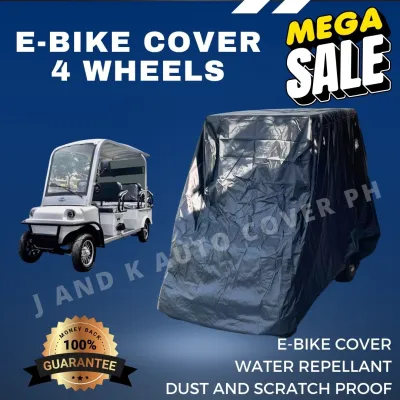
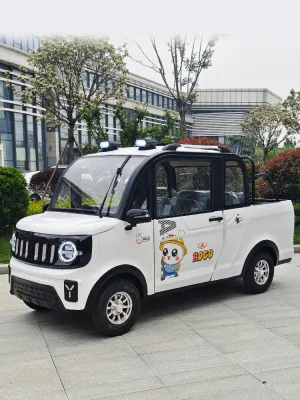
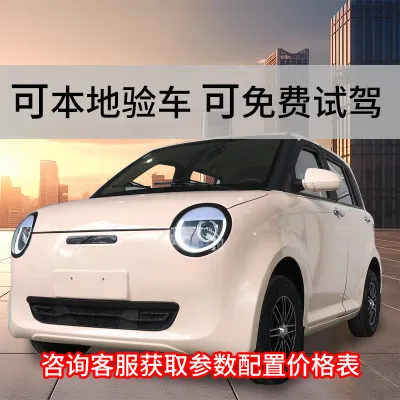
Prices are valid at publication and may change. Please refer to the product page for the latest price.
In terms of utility, these vehicles excel at carrying cargo and passengers. Many models feature extended chassis designs that accommodate front and rear baskets, under-seat storage, or even multiple passenger benches. This makes them highly practical for hauling groceries from the local wet market or picking up children from school without the physical strain of pedaling.
However, the physical footprint of a four-wheeled e-bike is significantly wider and heavier than a standard bicycle. It requires more storage space in your garage or driveway and cannot easily squeeze through tight traffic lanes or narrow alleys. If your daily route involves navigating highly congested, narrow streets, a three-wheeled or two-wheeled alternative might offer better agility.
Terrain is another crucial factor to consider before buying. Four-wheeled e-bikes are ideal for flat, paved surfaces such as subdivision roads, village streets, and designated bike lanes. If your neighborhood has steep inclines, unpaved gravel paths, or frequent potholes, you will need to select a model with higher ground clearance and a more robust suspension system to ensure a comfortable and safe ride.
Critical Specifications to Compare Across Models
The motor’s wattage determines the vehicle’s acceleration, climbing ability, and load capacity. For flat neighborhood roads, a 500-watt motor is generally sufficient for single riders. However, if you plan to carry passengers or climb moderate inclines, look for models equipped with an 800-watt or 1000-watt differential motor to ensure the vehicle does not struggle or overheat under heavy loads.

Most four-wheeled e-bikes in the local market utilize either Sealed Lead-Acid (SLA) or Lithium-Ion batteries. Lead-acid batteries are highly affordable and widely available, making them the standard choice for budget-conscious buyers, though they are heavy and typically need replacement after one to two years. Lithium-ion batteries require a higher upfront investment but are significantly lighter, charge faster, and offer a much longer lifespan of three to five years.
Battery capacity is measured in volts (V) and ampere-hours (Ah). A common configuration is 48V or 60V with 20Ah, which generally provides an estimated range of 30 to 50 kilometers on a single charge, depending on passenger weight, terrain, and speed. Always verify these estimates by checking the battery specifications directly rather than relying solely on promotional brochures.
Given the heavier weight of a four-wheeled vehicle, a reliable braking system is non-negotiable. Look for models that feature front and rear drum brakes, or ideally, hydraulic disc brakes for superior stopping power on wet roads. A dual suspension system with front telescopic forks and rear shock absorbers will help cushion the ride against uneven asphalt and potholes.
Matching Configurations to Your Primary Riding Scenario
If your primary goal is running quick errands, look for an open-air utility quadricycle with a heavy-duty front basket and a spacious rear cargo deck. These models often feature a simple, rugged frame designed for utility. Ensure the vehicle has a low step-through frame, making it easy to mount and dismount repeatedly during multiple stops.
For those using the e-bike to transport family members, prioritize models with tandem seating configurations. These vehicles typically feature a comfortable driver’s seat and an extended rear bench that can accommodate one or two passengers. Safety features such as passenger handrails, seatbelts, and a sturdy canopy or roof to protect against the tropical sun and sudden rain showers are essential for this scenario.
If the vehicle is intended for an elderly relative or someone with limited mobility, focus on specialized four-wheeled mobility scooters. These models prioritize comfort and safety over speed, featuring fully adjustable captain’s chairs with armrests, automatic electromagnetic braking systems that stop the vehicle when the throttle is released, and speed limiters to prevent accidental acceleration.
Regardless of the scenario, always check the maximum weight capacity specified by the manufacturer. Exceeding this limit compromises the vehicle’s braking efficiency, strains the motor, and drains the battery much faster. Ensuring a safety margin of at least 20 kilograms above your typical load will prolong the lifespan of the vehicle.
Navigating Purchasing Channels and Verifying Warranties
It is highly recommended to purchase from physical showrooms or authorized local dealerships rather than ordering blindly online. Visiting a physical store allows you to conduct a thorough test ride, assess the build quality, and check if the seating ergonomics suit your body size. It also gives you a direct point of contact for future maintenance.
Before finalizing your purchase, request a written warranty agreement. A reputable dealer should offer a warranty of at least six months to one year on critical components, including the motor, controller, and battery. Be cautious of sellers offering vague verbal warranties or those who exclude the battery from the warranty coverage, as batteries are the most expensive component to replace.
Ask the dealer directly about the availability of replacement parts such as tires, inner tubes, brake pads, and controllers. Because many four-wheeled e-bikes are imported, finding compatible parts can be challenging if the dealer does not maintain a local inventory. Choosing a brand with an established local presence and active service centers ensures you won’t be left with an unusable vehicle due to a minor broken part.
Be realistic about pricing. Prices for entry-level open-air models typically range from ₱25,000 to ₱45,000, while fully enclosed cabin models can exceed ₱100,000. Extremely low prices from unverified online sellers often indicate sub-standard battery cells or a lack of after-sales support, which can lead to higher costs in the long run.
Routine Safety Checks and Battery Maintenance
Establish a habit of performing quick safety checks before every ride. Verify that the tires are inflated to the manufacturer’s recommended pressure, as under-inflated tires reduce battery range and compromise handling. Test the brakes, headlights, turn signals, and horn to ensure they are fully functional, especially if you plan to ride during early morning or evening hours.
To maximize the lifespan of your battery, avoid charging it immediately after a long ride when the battery cells are still hot. Allow the battery to cool down for at least 30 minutes in a shaded, well-ventilated area before plugging it in. Never leave the battery charging unattended overnight or for more than the recommended charging time, as overcharging can lead to swelling and permanent capacity loss.
While most e-bikes are designed to handle light rain, they are not completely waterproof. Avoid using high-pressure water washers when cleaning your vehicle, as water can penetrate the electrical seals of the motor, controller, and battery compartment. Instead, use a damp cloth to wipe down the frame and plastic panels, and store the e-bike under a waterproof cover or inside a garage to protect it from direct sunlight and heavy tropical downpours.
Frequently Asked Questions (FAQ)
Do I need a driver's license to ride a 4-wheeled e-bike?
Under current Land Transportation Office (LTO) guidelines in the Philippines, the requirement for a driver’s license and vehicle registration depends on the classification, maximum speed, and motor power of the electric vehicle. Light electric vehicles with a maximum speed of 25 kilometers per hour or lower generally do not require a driver’s license or registration, but their usage is typically restricted to private roads, subdivisions, barangay roads, and designated bike lanes. Faster or more powerful electric quadricycles may require registration and a valid driver’s license. Always consult the latest LTO administrative orders or your local government unit (LGU) ordinances, as local rules can vary significantly across different cities and municipalities.
Can 4-wheeled e-bikes handle heavy rain and flooded streets?
While most 4-wheeled e-bikes are built to withstand light rain and splashes, they are not designed to navigate flooded streets. Submerging the wheel hub motor, battery compartment, or controller in water can cause immediate electrical short circuits, permanent component damage, and safety hazards. If you encounter a flooded road where the water level reaches the height of the wheel hubs or the floorboard, do not attempt to ride through it. Always seek an alternative route or wait for the water to recede, and store your e-bike in a dry, elevated area during heavy typhoons.
How long does the battery typically last before needing replacement?
The lifespan of your e-bike battery depends heavily on its chemistry and how well it is maintained. Standard Sealed Lead-Acid (SLA) batteries typically last between 300 to 500 charge cycles, which translates to roughly one to two years of regular daily use before you notice a significant drop in range. Lithium-Ion batteries offer a much longer lifespan, typically lasting between 800 to 1,500 charge cycles, or approximately three to five years. To get the most out of either battery type, avoid letting the charge drop to zero percent, charge the vehicle in a cool environment, and use only the manufacturer-approved charger.
Community discussion
Share your experience or ask a question. Comments are reviewed before publication.