
Finding the right walkpad treadmill foldable model for a compact condominium in the Philippines requires balancing your physical stride with the realities of limited floor space. To maintain a functional living area, you must select a machine that matches your height, fits your storage spaces, and operates quietly enough to respect your neighbors.
A successful home gym setup in a high-rise studio or one-bedroom unit depends on precise measurements and a clear understanding of how equipment dimensions impact safety. By choosing a model with the appropriate footprint, folding mechanism, and noise-reduction features, you can maintain an active lifestyle without cluttering your home.
Assessing Your Condo Space: Clearances and Delivery Pathways
Before purchasing a walkpad treadmill foldable model, you must measure your physical space. It is not just about where the machine sits when folded, but where it operates. Failing to account for operational clearance can turn your new fitness equipment into a serious safety hazard.
Products mentioned in this guide
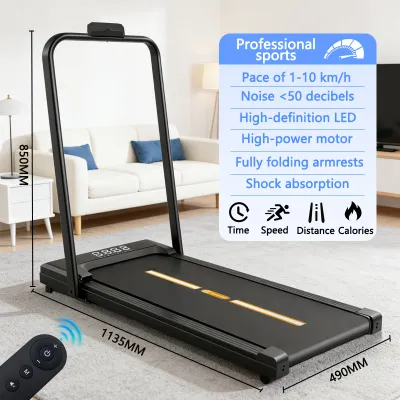
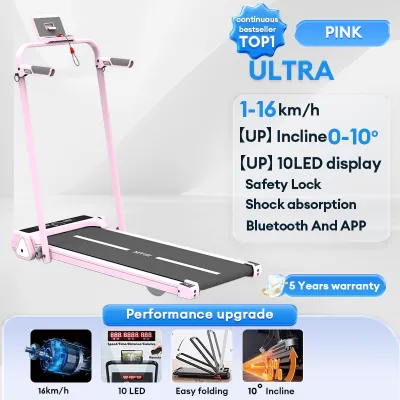
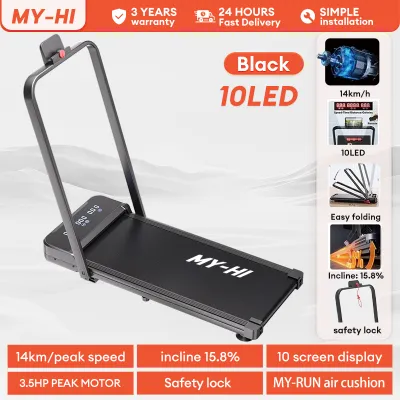
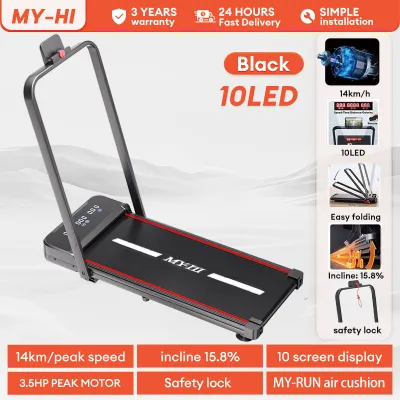
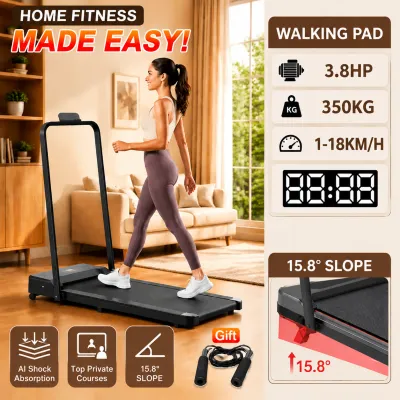
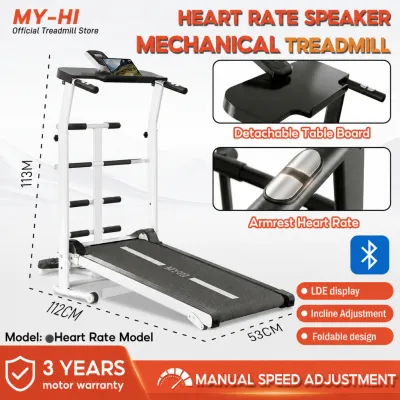
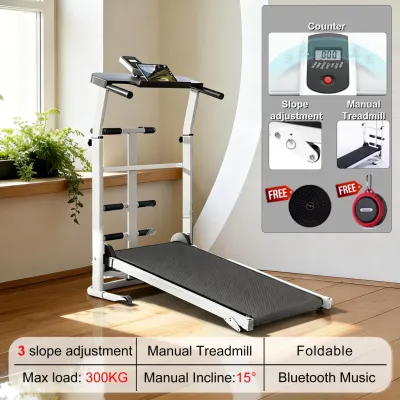
Prices are valid at publication and may change. Please refer to the product page for the latest price.
Safety clearances are non-negotiable for any treadmill setup. Manufacturers generally recommend leaving at least 0.5 meters of clear space on both sides of the treadmill and 1 to 1.5 meters of completely open space directly behind the deck. In a compact Philippine studio, this clearance prevents accidental falls against sharp furniture corners, glass balcony doors, or concrete walls if you lose your balance or trip during a workout.
Do not forget the delivery pathway. Many condo dwellers purchase fitness equipment only to find the shipping box cannot clear the elevator doors or the tight turns in the hallway. Measure your condo building’s elevator height and width, your front door clearance, and any narrow corridors inside your unit. Ensure the boxed dimensions of your chosen walkpad can navigate these tight spaces during delivery.
Ceiling height is another crucial factor, especially if you plan to stand the walkpad vertically. Standard Philippine condo ceilings range from 2.4 to 2.7 meters. If you choose an upright-folding model, verify that its folded length is comfortably lower than your ceiling height, allowing enough clearance to lift and lock the machine safely without hitting light fixtures or sprinkler heads.
Decoding Walkpad Dimensions: Footprint vs. Running Surface
Overall Footprint vs. Belt Size
When researching a walkpad treadmill foldable design, you will encounter two distinct sets of measurements: the overall machine dimensions and the belt (or running surface) dimensions. The overall footprint dictates how much floor space the machine covers when unfolded.

The belt size, however, is the actual moving surface where your feet land. A common mistake is assuming a compact machine has plenty of room to walk. To make a walkpad smaller and easier to store, manufacturers often reduce the width and length of the belt.
This creates a direct trade-off between space savings and physical comfort. A machine with an ultra-compact footprint might fit perfectly in a tight corner, but its narrow belt may force you to walk in a highly restricted, unnatural line, increasing the risk of stepping off the moving belt.
Deck Length and Width for Your Stride
Your height and natural stride length should dictate your minimum belt dimensions. As a general rule, a walking belt width of 40 cm is the standard minimum for comfortable walking. If you are taller or have a wider stance, look for a deck width of 42 to 45 cm to avoid clipping the side rails.
For deck length, a 100 cm to 110 cm belt is usually sufficient for casual walking at speeds under 6 km/h. However, if you plan to transition to a fast power walk or a light jog, your stride naturally lengthens.
Jogging or running requires a longer and wider deck—typically at least 120 cm in length and 45 cm in width. Using a short walking deck for running is a safety hazard; your trailing foot can easily slip off the back of the roller, leading to sudden falls. Always check the manufacturer’s specific speed ratings and recommended user heights before attempting to jog on a compact walkpad.
Evaluating Folding Mechanisms for Tight Layouts
180-Degree Flat Fold vs. Upright Fold
Foldable walkpads generally fall into two design categories: flat-folding models and upright-standing models. Understanding how these mechanisms operate helps you match the machine to your condo’s layout.
A 180-degree flat-folding model typically features a console or handlebar that folds down completely flush with the deck. Some advanced models even allow the deck itself to fold in half. These designs are ideal if you have open space under your bed or sofa, as the folded height is often under 15 cm, allowing you to slide the machine completely out of sight.
An upright-folding model is designed to stand vertically against a wall or inside a utility closet. This setup is highly efficient for condos without under-furniture clearance. However, vertical storage requires careful attention to the machine’s center of gravity; ensure the model features secure locking pins or a stable base stand to prevent it from tipping over, especially if you live in an earthquake-prone region or have pets and children.
Built-in Wheels and Low-Profile Storage
A foldable walkpad is only practical if you can move it easily. Look closely at the transport wheel configuration in the manufacturer’s specifications. Most models feature two small wheels at the front base, allowing you to tilt the machine and roll it like a suitcase.
Check the quality and material of these wheels. Hard plastic wheels can scratch delicate laminate, engineered wood, or vinyl plank flooring common in modern Philippine condos. Soft rubber or polyurethane-coated wheels are much safer for indoor floors.
Additionally, measure your available storage gaps before purchasing. If you plan to slide the walkpad under a sofa, measure the clearance from the floor to the lowest frame member of the couch. Compare this with the machine’s folded thickness (often listed as “folded height” or “profile” in spec sheets) to guarantee a hassle-free fit.
Condo-Friendly Features: Noise, Consoles, and Mobility
Living in a high-rise condominium means sharing walls and floors with neighbors. Motor noise and deck vibration are primary considerations when selecting fitness equipment. Look for walkpads equipped with brushless DC motors, which typically operate much more quietly than traditional brushed motors.
Vibration transfer is often a bigger issue than airborne noise. Every step you take sends impact energy through the floor, which can sound like a drum to the neighbor living directly below you. To mitigate this, check user reviews for deck cushioning systems and always plan to use a dedicated shock-absorbing mat.
The console design also impacts both usability and spatial aesthetics. Models with fixed, bulky upright consoles provide excellent hand support and clear displays, but they take up significant visual and physical space. Conversely, remote-controlled or app-compatible walkpads eliminate the bulky console entirely, using a sleek LED strip on the motor cover to display stats, which keeps the unit low-profile and easy to stow.
Finally, weigh the trade-offs of machine weight. A heavier walkpad (typically 25 to 35 kg) offers greater stability and higher user weight capacity, preventing the deck from shifting or flexing during use. However, a lighter machine (under 22 kg) is significantly easier to fold and roll away daily, though it may have a lower maximum weight capacity and feel less stable underfoot. Always verify the manufacturer’s maximum weight limit to ensure it safely supports your body weight.
Common Sizing and Placement Mistakes to Avoid
Setting up a home gym in a limited footprint requires careful planning to avoid safety hazards. One of the most common mistakes is placing a walkpad directly on bare laminate or hardwood floors. Without a protective barrier, the machine’s vibrations can cause it to “creep” across the floor during use, leaving deep scratches and scuffs on your flooring.
Another critical error is blocking essential pathways. In a small condo, it is tempting to set up the walkpad wherever it fits, but you must ensure it does not block balcony doors, main exit paths, or HVAC ventilation grilles. Blocking ventilation can cause your condo’s air conditioning to work inefficiently, while obstructing exit paths violates basic fire safety guidelines.
Power management is also a frequent oversight. Walkpads draw significant electrical current during operation. You should position the machine close enough to a wall outlet so that the power cord lies flat along the floor without stretching. Avoid using standard household extension cords or multi-plug adapters, as they can overheat and present a serious fire hazard; if an extension cord is absolutely necessary, consult the manufacturer’s manual for the required wire gauge and safety parameters.
Frequently Asked Questions (FAQ)
Can I use a foldable walkpad on a condo balcony?
It is highly discouraged to use or store an indoor foldable walkpad on a condo balcony. Most walkpads are not weatherproof and lack a high IP (Ingress Protection) rating against moisture and dust. Exposure to the high humidity, salt air, sudden rain showers, and intense direct sunlight common in the Philippines can rapidly degrade the electronic console, rust the internal frame, and warp the walking belt. Always check the manufacturer’s warranty terms, as outdoor or balcony use typically voids the coverage.
Do I need a mat under my walkpad on laminate flooring?
Yes, placing a high-density equipment mat under your walkpad is highly recommended, especially on laminate or engineered wood flooring. The mat serves three critical purposes: it prevents the machine’s heavy rollers and leveling feet from leaving permanent indentations, significantly reduces the transfer of step-impact noise to your downstairs neighbors, and provides traction to keep the walkpad from sliding or creeping across the slick floor during your workout.
Community discussion
Share your experience or ask a question. Comments are reviewed before publication.