
Condo living offers a streamlined, convenient lifestyle, but setting up high-performance home gym equipment within a limited layout requires careful planning. A heavy-duty gym bike provides the robust stability needed for intense cardiovascular workouts, yet its substantial build can easily overwhelm a compact living room or bedroom. Balancing a high weight capacity with a manageable physical footprint is essential to ensure your workouts remain safe, comfortable, and non-disruptive to your household and neighbors. To find the suitable fitness equipment for your space, you must carefully evaluate several core dimensions: the rated weight limit, the physical footprint, the required operational clearance, and the overall impact on your flooring and building acoustics.
Calculating the Minimum Weight Capacity for Safe Workouts
When selecting a heavy-duty gym bike, the manufacturer’s rated weight capacity is the primary indicator of structural safety and durability. However, you should not simply match your static body weight to the bike’s limit. During high-intensity workouts, such as standing sprints or rapid climbing simulations, you exert dynamic forces that far exceed your static weight.
To account for these dynamic forces, apply a safety buffer when calculating your required capacity. A reliable guideline is to choose a bike with a rated weight capacity that is at least 20% to 30% higher than your actual body weight. For example, if you weigh 90 kilograms, look for a machine rated for at least 110 to 120 kilograms to ensure the frame, pedals, and crank arms can handle the intense downward pressure of your workouts without flexing or wearing out prematurely.
Products mentioned in this guide
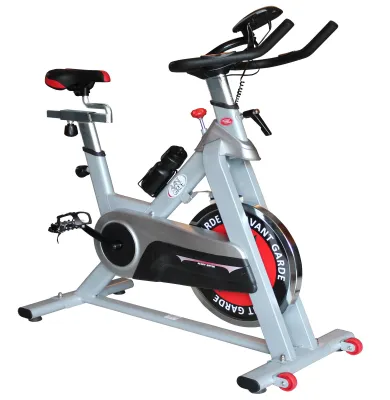
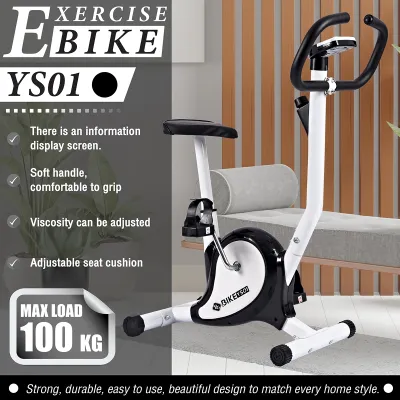
Prices are valid at publication and may change. Please refer to the product page for the latest price.
To verify a bike’s heavy-duty claims, look closely at the frame construction materials and manufacturing specifications. High-quality heavy-duty bikes typically feature frames constructed from thick-gauge, commercial-grade steel. Check the product specifications for indicators like powder-coated finishes, which protect the steel from sweat-induced corrosion—a particularly important consideration in humid tropical climates. Additionally, look for certifications from recognized testing bodies, such as ISO or EN standards, which verify that the frame has undergone rigorous stress testing.
There is also a direct relationship between the physical weight of the bike itself and its rated weight capacity. Heavier bikes, often weighing between 40 and 60 kilograms, naturally offer a more stable base of support. A lightweight frame that claims an exceptionally high weight capacity should be approached with caution, as it may lack the structural mass required to prevent rocking or tipping during vigorous exercise.
Evaluating the Footprint and Required Clearance
While weight capacity ensures safety, the physical footprint of the bike determines how well it integrates into your condo. The physical footprint refers to the actual length and width of the bike’s base stabilizers resting on the floor. Most heavy-duty indoor cycles have a relatively compact footprint, typically measuring around 120 centimeters in length and 50 to 60 centimeters in width, but this base measurement is only part of the spatial equation.

You must also account for operational clearance, which is the open space required around the bike for safe mounting, dismounting, and natural body movement during exercise. Standard safety guidelines recommend maintaining at least 50 to 60 centimeters of clear, unobstructed space on all sides of the machine. This prevents your elbows, knees, or shoulders from striking nearby walls, furniture, or glass balcony doors during high-energy rides.
Ceiling height is another critical factor that is often overlooked in condo gym setups. If you plan to perform out-of-saddle climbing exercises, your body will rise significantly higher than it does during seated pedaling. To verify clearance, measure your ceiling height and compare it to your own height plus the height of the bike’s pedals at their lowest and highest positions, keeping in mind any low-hanging light fixtures, ceiling fans, or dropped air conditioning ducts.
Finally, consider the logistics of getting the heavy equipment into your unit. Before making a purchase, measure the dimensions of your building’s passenger elevator doors, the width of your hallways, and the clearance of your unit’s entryway. Heavy-duty gym bikes are shipped in large, bulky boxes that can weigh over 50 kilograms, making them difficult to maneuver around tight corners or up narrow stairwells without prior planning.
Protecting Condo Floors and Minimizing Vibration
Operating heavy fitness equipment in a multi-story condominium requires careful consideration of noise and vibration transmission. The repetitive, high-speed motion of pedaling can create structural vibrations that travel through concrete floors, potentially disturbing neighbors living directly below you.
To minimize this issue, pay close attention to the bike’s drive and resistance systems. Magnetic resistance systems paired with belt-drive mechanisms are highly recommended for condo environments. Unlike friction resistance systems that use felt pads, magnetic systems operate almost silently and produce virtually no vibration. Furthermore, belt drives are significantly quieter than traditional chain drives and do not require regular lubrication, which prevents grease splatters on your floors and reduces maintenance in humid environments.
Using a high-density equipment mat is essential for protecting your condo’s flooring and dampening sound. Heavy-duty bikes concentrate their substantial weight onto four small leveling feet, which can easily dent, scratch, or discolor hardwood, laminate, or vinyl tile floors. A thick, specialized rubber or high-density PVC mat distributes this concentrated weight across a larger surface area while absorbing low-frequency vibrations before they can penetrate the floor slab.
Before finalizing your setup, it is also wise to review your condominium corporation’s house rules or tenant guidelines. Some properties have specific regulations regarding the use of heavy exercise equipment in residential units, designated quiet hours, or floor load limits. Proactively checking these rules can help you avoid potential disputes or costly fines from the property management office.
Verifying Dimensions and Building Logistics Before Purchase
To avoid the hassle of returning a massive piece of fitness equipment, create a comprehensive pre-purchase checklist. Compare the manufacturer’s exact product dimensions, shipping weight, and assembly requirements against your measured space and building logistics.
Because heavy-duty bikes are constructed from dense steel, they are incredibly heavy and often arrive partially assembled in a single, large crate. Determine whether you will need assistance to move the package into your unit and whether the retailer offers professional delivery and assembly services. Opting for professional installation ensures that the heavy frame is aligned correctly, the leveling feet are properly adjusted, and all safety bolts are torqued to specification, reducing the risk of mechanical failure or injury.
Lastly, carefully review the manufacturer’s warranty and the retailer’s return policy. A comprehensive warranty that covers the frame for several years and moving parts for at least one year is a strong indicator of a manufacturer’s confidence in their product’s durability. Be sure to check the terms of return shipping as well; returning an item that weighs 50 kilograms or more can be extremely difficult and may incur substantial shipping fees, sometimes costing several thousand ₱, if the product does not fit your space.
Frequently Asked Questions (FAQ)
Can I use a heavy-duty gym bike on a raised or wooden condo floor?
Yes, you can safely use a heavy-duty gym bike on most condo floors, but you must take steps to protect the surface and distribute the weight. Always place a high-density, shock-absorbing rubber mat beneath the bike to prevent the leveling feet from denting or scratching wood or laminate finishes. If you have concerns about the structural floor load capacity, consult your building’s property management office for specific weight limits, and consider placing the bike near a load-bearing wall or structural column where the floor is most stable.
Are folding heavy-duty bikes a good compromise for small condos?
While folding exercise bikes are highly convenient for saving space, they are generally not a suitable compromise if you require a true heavy-duty machine. The folding hinge and lightweight frame design introduce structural flex, which significantly reduces the bike’s maximum weight capacity and overall stability during intense workouts. For high-intensity training or heavier user weights, a compact, fixed-frame bike with transport wheels is a much safer, more durable, and more stable choice than a folding model.
Community discussion
Share your experience or ask a question. Comments are reviewed before publication.