
Finding the space to practice your groundstrokes can be a challenge when you live in a compact urban apartment, a townhouse, or a home with a limited yard. Fortunately, a home tennis training set offers a practical way to keep your reflexes sharp and refine your swing mechanics without stepping onto a full-sized court. By selecting the right equipment and understanding how to configure your environment, you can safely practice your forehands and backhands right at home.
To make this setup work, you must match the training gear to your specific spatial limits, floor surfaces, and surrounding environment. Whether you are dealing with a tight balcony, a shared carport, or a small living room, choosing the correct training set requires looking beyond the product packaging to evaluate how the equipment functions in active motion.
Assessing Your Available Space for Tennis Training
Before purchasing any training equipment, you must measure your active swing radius rather than just the static footprint of the gear. Stand in the center of your intended practice area, hold your tennis racket, and extend your arm fully. Slowly rotate in a complete circle and swing through your typical forehand and backhand motions to ensure your racket tip clears all walls, furniture, light fixtures, and windows.
Products mentioned in this guide
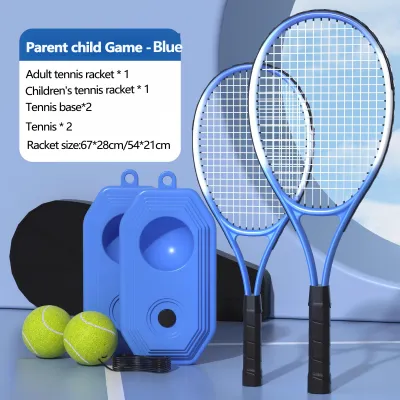
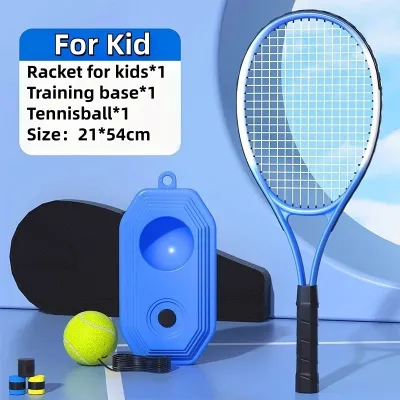
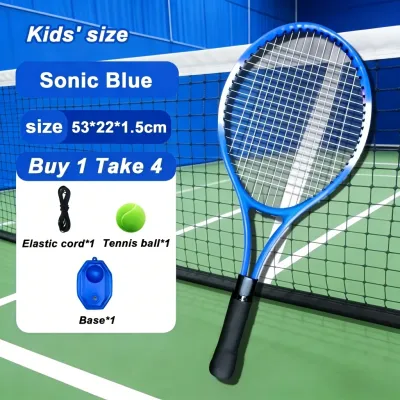
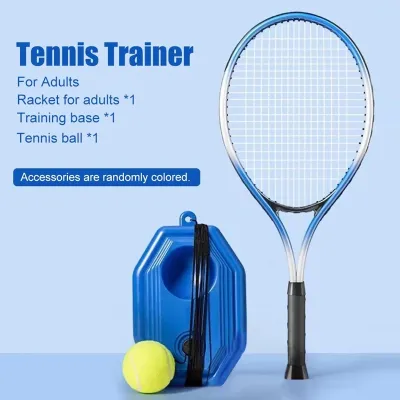
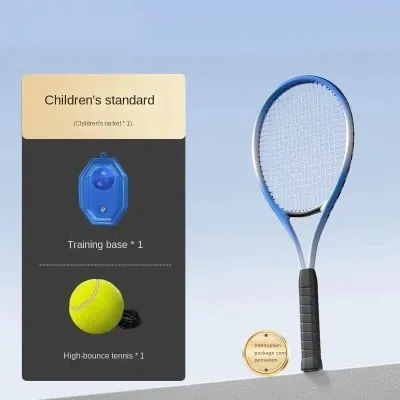
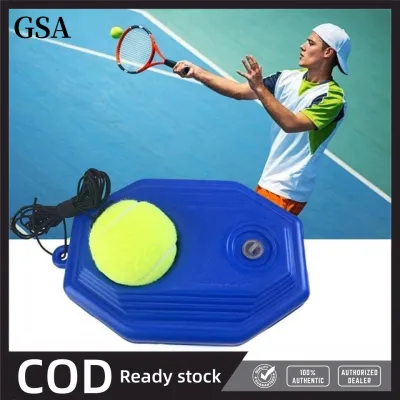
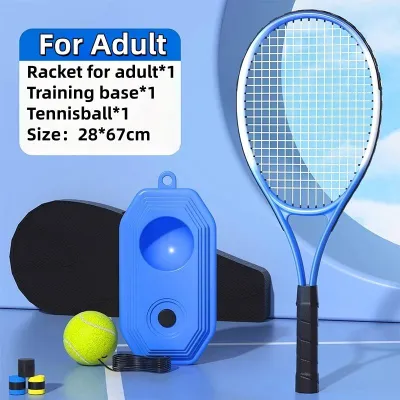
Prices are valid at publication and may change. Please refer to the product page for the latest price.
Ceiling height is a critical and often overlooked constraint for indoor training in apartments and condominiums. Standard residential ceilings may not accommodate the high follow-through of a topspin groundstroke or the upward reach of a serve progression. Always verify that you have at least several feet of clearance above your maximum racket reach to prevent structural damage to your home or impact damage to your racket frame.
Next, calculate the maximum ball rebound or cord extension distance required by the training set. A tethered ball trainer relies on an elastic cord that stretches significantly when struck with force. You must ensure that the maximum stretch distance of the cord, combined with your racket length, does not send the ball into glass sliding doors, television screens, or nearby household items.
Finally, consider where the equipment will live when you are not practicing. In small living spaces, gear that cannot be easily disassembled or folded flat quickly becomes an inconvenient obstacle. Look for designs that can slide under a bed, fit inside a standard closet, or tuck neatly into a corner of a balcony between your training sessions.
Types of Home Tennis Training Sets for Limited Spaces
Several categories of space-saving tennis trainers exist, each operating differently within tight physical boundaries. Tethered ball trainers, which feature a weighted base connected to a tennis ball via an elastic cord, are highly popular for small spaces. They require virtually no setup space and allow you to hit continuous strokes as the ball snaps back to your position, making them excellent for carports or small patios.

Compact rebound nets offer a different training dynamic by returning the ball off a tensioned mesh screen. These nets require a slightly longer, narrow space, such as a compact yard or a long driveway, because you need enough distance for the ball to travel to the net and bounce back to your racket. They provide a more realistic ball flight than tethered systems but demand a larger operational footprint.
Portable ball machines are another option, delivering consistent feeds to help you practice specific stroke mechanics. While highly effective, even compact ball machines require a relatively wide area to allow the ball to bounce naturally before you strike it. They also require access to a power outlet or a reliable battery charge, and they take up more storage space than manual training aids.
Wall-mounted or suction-cup training aids eliminate the floor footprint entirely by attaching directly to a vertical surface. These systems often feature a ball suspended on a flexible arm or a short cord, allowing you to practice timing and contact points. However, their usability depends heavily on having a solid concrete or brick wall that can withstand repeated vibrations without transferring excessive noise to adjacent rooms.
Key Features to Look for in Compact Tennis Trainers
When evaluating different home tennis training sets, look for models that feature adjustable cord lengths. Being able to shorten the elastic line allows you to restrict the ball’s travel distance, making it much easier to customize the training set to the exact dimensions of a small balcony or a tight indoor room.
Base stability is another crucial feature to examine. Many compact trainers utilize hollow plastic bases that you can fill with water or sand to provide temporary weight. In tropical climates, water is highly convenient to use, but sand provides greater density and weight, preventing the base from sliding across smooth tiled floors during high-velocity hits.
For easy daily storage, prioritize training sets equipped with quick-fold frames or telescopic poles. Equipment that requires complex tool assembly for every session will likely end up unused. A frame that clicks together in seconds or folds flat against a wall ensures that you can transition your living room from a training zone back to a shared family space with minimal effort.
Noise reduction is a vital consideration if you live in a multi-unit residential building. The repetitive sound of a tennis ball striking a tight rebound net or a hard wall can easily disturb your neighbors. Look for training sets that utilize low-compression balls, foam practice balls, or noise-dampening net materials to keep your practice sessions quiet and neighbor-friendly.
Setup and Safety Considerations for Indoor and Outdoor Use
To protect your home and your equipment, always place a thick, non-slip rubber mat under weighted bases or rebounder frames when training indoors. This mat serves a dual purpose: it prevents the heavy base from scratching delicate wooden or tiled floors, and it helps absorb the impact vibrations, reducing the noise transmitted through the floorboards.
If you are practicing outdoors in a compact yard or driveway, you must secure your equipment against sudden wind gusts without relying on permanent ground anchors. Utilizing temporary sandbags or heavy rubber weights placed over the frame legs keeps the setup stable during use while allowing you to pack everything away when tropical rain showers arrive.
Managing trip hazards is essential when training in high-traffic household areas. Elastic cords, net support bars, and weighted bases can easily cause falls if left unattended. Establish a clear boundary during your practice sessions, keep family members and pets out of the swing zone, and always wind up and store cords immediately after you finish training.
Before installing any wall-mounted or suction-cup training gear, verify the load-bearing capacity and surface integrity of the wall. Avoid mounting equipment on thin drywall partitions, as the repeated impact can cause cracking or structural failure. Solid concrete walls, common in many modern condominiums, are much better suited to absorbing these forces safely.
Common Mistakes When Buying Tennis Gear for Small Spaces
One of the most common errors is confusing a training set’s collapsed storage footprint with its active operational footprint. A rebound net might fold down into a slim carrying bag, but once fully assembled, it may require several meters of clear depth to use safely. Always check the fully assembled dimensions and the required clearance zones before making a purchase.
Another frequent oversight is ignoring the space behind your body during the backswing. Players often focus entirely on the space in front of them where the ball travels, forgetting that a proper tennis stroke requires winding the racket back. If you stand too close to a rear wall or furniture, your racket frame can strike these obstacles during your preparation phase.
Choosing a heavy, non-collapsible training base can also create long-term storage headaches. While a solid, heavy metal base offers excellent stability, it is incredibly difficult to move around a small apartment. If the base cannot be emptied of water or sand, it quickly becomes a permanent obstacle in your living space that is difficult to hide away.
Finally, do not overlook the acoustic impact of your training sessions. The constant, rhythmic sound of a tennis ball bouncing off a racket or a rebound board can carry through walls and floors. Selecting standard, high-pressure tennis balls for indoor apartment use often leads to noise complaints, making low-compression or foam alternatives a much smarter choice for shared residential buildings.
Frequently Asked Questions (FAQ)
Can I use a tennis rebounder in a standard apartment living room?
Using a traditional tennis rebounder net in a standard apartment living room is generally difficult due to the depth required for the ball to bounce and return safely. Most rebound nets require several meters of clear space in front of the net to allow for a natural swing and ball flight. Additionally, standard ceiling heights often limit your ability to complete a full follow-through without hitting light fixtures.
If your indoor space is limited, a tethered ball trainer is usually a much more viable alternative. Because the ball is attached to an elastic cord, you can control the rebound path more predictably, and the overall footprint required for the swing is significantly smaller than that of a rebound net.
How do I secure a tennis training base without drilling into the floor?
To secure a tennis training base without causing permanent damage to your floors, utilize a fillable base design. These bases feature hollow compartments that you can fill with water or sand to create substantial weight. Sand is highly recommended for indoor use as it is denser than water, providing more stability within the same volume.
To prevent the base from sliding on smooth indoor surfaces like tiles or polished wood, place a high-friction, non-slip rubber mat underneath the unit. This mat increases grip, protects your flooring from scratches, and helps dampen the sound of vibrations during active play. Avoid using strong adhesives or double-sided tapes, as these can leave stubborn residues or peel away floor finishes.
Community discussion
Share your experience or ask a question. Comments are reviewed before publication.