
Starting to learn how to swim in the Philippines often means spending hours in local community pools or resort lanes, where the tropical heat makes water activities highly appealing. For a beginner, a kickboard is not just a toy; it is a foundational training tool that helps isolate your leg movements, build confidence in deep water, and establish a proper horizontal body position. Choosing the right kick board for swimming involves evaluating three primary factors: size, material, and ergonomic comfort. The ideal board should provide enough buoyancy to support your torso without forcing your shoulders into an unnatural, strained position. By understanding how different designs interact with your body weight and swimming style, you can select a tool that accelerates your learning curve and keeps you comfortable during long training sessions.
Why the Right Kickboard Matters for Beginners
Before using any training aid in the water, it is vital to remember that a kickboard is designed solely for technique practice and is not a life-saving flotation device. It cannot replace proper swimming instruction, water safety training, or active supervision. If you are still building basic water comfort, always practice in shallow lanes where you can easily stand up, and stop immediately if you feel fatigued or experience muscle cramps.
A kickboard serves as a temporary support system that allows you to focus entirely on your lower body mechanics without worrying about staying afloat or breathing. When you hold a board, it elevates your upper body, which naturally helps lift your hips and legs closer to the surface of the water. This elevated position is crucial for developing an efficient flutter kick, as a low-riding lower body creates immense drag and slows down your progress. However, the board must strike a delicate balance; it needs to offer sufficient buoyancy to keep you stable, but not so much hydrodynamic resistance that pushing it through the water becomes an exhausting chore.
Products mentioned in this guide
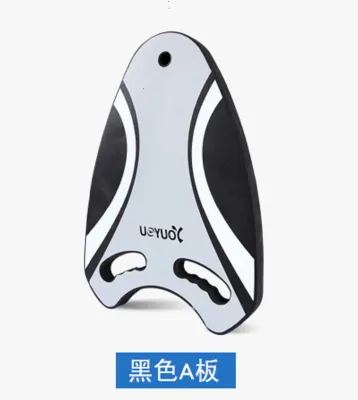
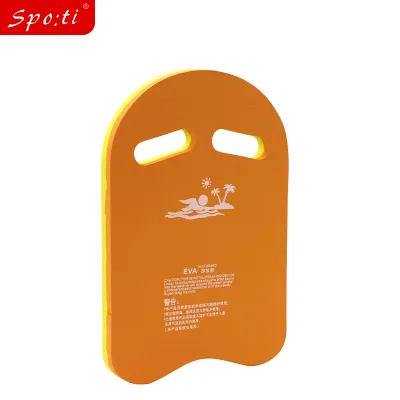
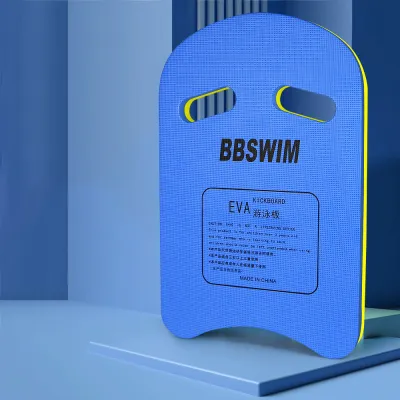
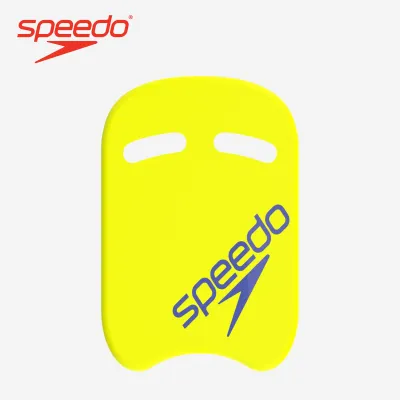
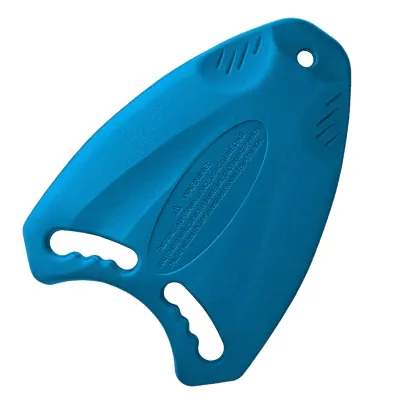
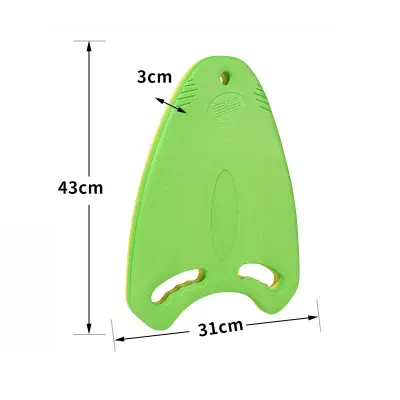
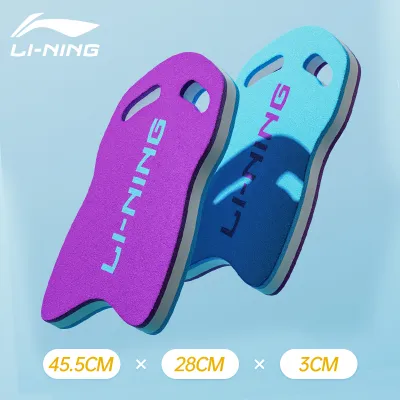
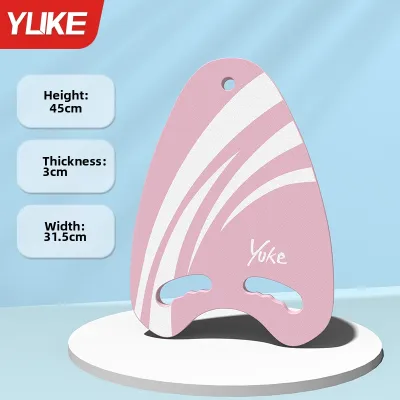
Prices are valid at publication and may change. Please refer to the product page for the latest price.
Using an improperly sized or poorly designed kickboard can quickly lead to physical discomfort and poor swimming habits. If a board is too large or highly buoyant for your frame, it can force your chest too high out of the water, causing your lower back to arch excessively. This misalignment often results in lower back pain, neck tension from constantly looking forward, and shoulder strain as you struggle to keep the board flat. Conversely, a board that is too small will sink under your weight, offering little support and forcing you to kick harder just to keep your head above water, which defeats the purpose of isolating your leg technique.
As you progress in your swimming journey, your relationship with the kickboard will naturally evolve. In the beginning, you will likely rely heavily on the board for flotation and stability as you get used to the sensation of kicking. Over time, as your core strength and kick efficiency improve, you will transition to using the board lightly, relying on it more for steering and minor technique refinement rather than basic survival. Choosing a versatile first board ensures that it remains a useful training partner throughout this entire learning curve.
Core Selection Criteria for Your First Kickboard
Before browsing local sports shops or online marketplaces, it is essential to understand the physical attributes that define a high-quality kickboard. You should evaluate three main pillars: the board’s volume and buoyancy, its material composition, and its ergonomic shape. Each of these factors directly influences how the board behaves in the water and how comfortable it feels in your hands. Rather than choosing a board based solely on color or price, you must check the manufacturer’s specifications against your own body weight and the specific types of drills you plan to perform.

Size, Thickness, and Buoyancy
The buoyancy of a kickboard is directly determined by its physical volume, which is a product of its length, width, and thickness. When you rest your arms on the board, it must displace enough water to support a portion of your body weight, keeping your hips aligned with the water’s surface. If you are a larger or heavier adult, you will naturally require a board with greater volume to achieve the same level of lift that a smaller swimmer would get from a compact board.
For this reason, beginners generally benefit from thicker, higher-volume boards that offer maximum buoyancy. A thicker board provides a stable, reassuring platform that allows you to focus on the rhythm of your kick without feeling like the board is constantly dipping below the surface. Advanced swimmers often prefer thinner, less buoyant boards because they have already developed the core strength to keep their hips high, using the board only for minor balance adjustments. As a beginner, prioritizing a board with generous thickness will give you the confidence needed to practice your drills effectively.
When shopping, always look for manufacturer weight limits and dimensional specifications on the product label or description. A standard adult kickboard typically measures around 35 to 45 centimeters in length and 28 to 30 centimeters in width, with a thickness of about 3 to 4 centimeters. If you fall outside average weight ranges, or if you are purchasing a board for a child, adjusting these dimensions is crucial. Checking these specifications beforehand ensures you do not end up with a board that is either too small to support you or too wide to hold comfortably.
Material Composition and Water Resistance
The material of your kickboard determines how long it will last, how much water it will absorb, and how easy it is to grip when wet. The industry standard for high-quality training boards is closed-cell Ethylene-Vinyl Acetate (EVA) foam. This material is highly durable, lightweight, and naturally resistant to water absorption. Because the cells within the foam are sealed, the board will not waterlog over time, ensuring that it maintains its original buoyancy and does not become heavy or moldy after repeated use.
In contrast, cheaper boards made from open-cell foam or low-grade expanded polystyrene (styrofoam) tend to absorb water quickly, making them heavy, fragile, and prone to crumbling. Furthermore, the surface texture of the board plays a critical role in your comfort. A good EVA foam board usually features a slightly textured or matte finish that provides a secure grip even when covered in soapy pool water or sweat. Smooth, glossy finishes can become incredibly slippery, causing your hands to slide off during vigorous kicking sets and disrupting your focus.
Living in a tropical climate like the Philippines means your swimming gear will face intense sun exposure and high humidity, alongside standard pool chemicals like chlorine. Chlorine and ultraviolet (UV) rays can slowly degrade foam materials, causing them to become brittle, fade, or crack. To protect your investment, look for boards that specify UV resistance, and always commit to basic care practices. Rinsing your board with clean, fresh tap water after every swim and storing it out of direct sunlight will significantly extend its lifespan.
Shape, Contours, and Ergonomic Comfort
The physical silhouette of a kickboard has a major impact on how your arms, shoulders, and wrists feel during a workout. Traditional kickboards are simple rectangles with rounded corners. While these classic designs are highly buoyant and functional, they can sometimes feel rigid and awkward to hold for extended periods, especially if you have pre-existing shoulder tightness.
To address this, many modern boards feature contoured or ergonomic designs. These boards often include molded hand grips, side grooves, or cutouts that allow you to place your hands in a natural, relaxed position. Integrated handles or thumb pegs help reduce wrist and forearm strain by allowing you to hold the board securely without squeezing it tightly. This ergonomic support is highly beneficial for beginners who may still be building up their grip and upper body endurance.
Additionally, the shape of the board’s nose and edges affects how it moves through the water. A board with a tapered or arrow-shaped front cuts through the water more smoothly, reducing hydrodynamic drag and making steering easier. Rounded, smooth edges also prevent chafing against your inner arms as you rest your forearms on the board. When evaluating shapes, look for a design that allows your shoulders to remain relaxed and wide, rather than pinched inward.
Matching Kickboard Styles to Specific Drills
As you begin your training, you will perform various exercises designed to build your leg strength and water stamina. Matching the style of your kickboard to these specific drills will make your practice sessions much more productive. For basic flutter kick isolation, water familiarity, and general flotation, a standard rectangular or gently curved board is highly effective. These boards provide a large, stable surface area where you can rest your entire forearms, allowing you to keep your head above water comfortably while you focus on your leg movement.
If you plan to transition into more dynamic exercises, such as combined arm and leg drills or side-kicking, a contoured or multi-purpose board is a better fit. These boards accommodate multiple hand placements; you can hold them by the top, sides, or bottom corners depending on the drill. For instance, holding the bottom of the board allows you to keep your head down in the water to practice your breathing technique, while holding the top keeps your head elevated for continuous kicking.
As a beginner, it is wise to avoid highly specialized or advanced training boards, such as narrow alignment kickboards or triangular “kick-buoy” hybrids. These advanced boards are designed for competitive swimmers who already possess exceptional core stability and precise body alignment. They offer very little buoyancy and can easily roll or sink if your body position is slightly off, which can lead to frustration and poor form for someone who is still learning the basics.
You should also pay close attention to how the width of the board affects your shoulder alignment. When holding a kickboard, your hands should ideally be spaced roughly shoulder-width apart. If a board is too narrow, it forces your hands close together, which can pinch your shoulders and increase the risk of joint impingement during repetitive kicking sets. Conversely, a board that is too wide will force your arms outward, making it difficult to maintain a straight, efficient line in the water.
Building Your Shortlist and Purchasing Safely
When you are ready to buy your first kickboard, having a practical evaluation checklist will help you make a smart, safe purchase. If you are shopping in person at a local sports retailer in the Philippines, start by physically inspecting the board. Press your fingers into the foam; it should feel firm and resilient, springing back immediately without leaving a permanent dent. Check the edges of the board to ensure they are smoothly sealed and free of rough seams that could chafe your skin. Run your hands over the surface to verify that the texture feels grippy rather than slick.
If you prefer the convenience of shopping on online marketplaces, you must rely on detailed product descriptions and user feedback. Look for listings that provide exact dimensions, weight, and material specifications, specifically confirming the use of closed-cell EVA foam. Read through customer reviews to see how the board performs in real-world conditions, paying close attention to comments about whether the board absorbs water, warps in the heat, or slips out of wet hands.
Because everyone’s body structure and joint flexibility are unique, a board that works perfectly for one swimmer might cause shoulder or neck discomfort for another. For this reason, it is highly recommended to verify the seller’s return or exchange policy before finalizing your purchase. This protection allows you to test the board’s buoyancy and comfort during your initial pool sessions and swap it if it causes any unexpected joint strain. Whether you are looking at a budget-friendly option or a premium model, having a clear return path is a valuable safety net.
Finally, resist the temptation to buy a bundle of complex training gear right away. As a beginner, your primary goal is to build comfort and basic technique in the water. Starting with a single, versatile, high-quality kickboard is the most practical and cost-effective approach. Once you have established a strong, consistent kick and feel completely at ease in the pool, you can gradually expand your gear collection to include other specialized tools.
Frequently Asked Questions (FAQ)
Can I use a kickboard for upper body pull drills?
Some standard-sized kickboards can be clamped between your thighs to serve as a makeshift pull buoy, allowing you to keep your legs still while focusing entirely on your arm strokes. However, this dual-use approach has significant limitations. Because kickboards have a large surface area and high buoyancy, holding one between your legs can create substantial water resistance and make it difficult to maintain a natural body alignment. If you want to focus seriously on upper body strength, it is generally better to use a dedicated pull buoy, which is specifically shaped to fit comfortably between your thighs without disrupting your stroke.
How do I clean and store my kickboard to make it last?
To prevent your kickboard from degrading, always rinse it thoroughly with clean, fresh water after every pool session. This simple step removes residual chlorine, salt, and pool chemicals that can slowly break down the foam fibers. After rinsing, let the board air dry completely in a shaded, well-ventilated area. Avoid leaving your kickboard in direct, intense sunlight, such as on a hot pool deck or inside a parked car, as extreme heat and UV rays can cause the foam to warp, crack, or lose its buoyancy. Additionally, store the board flat or upright without stacking heavy items on top of it to prevent permanent warping.
Community discussion
Share your experience or ask a question. Comments are reviewed before publication.