
Selecting the right Pilates ring or infinity hoop depends on matching key specifications—specifically diameter, core material, resistance curve, and grip ergonomics—to your body dimensions and fitness goals. While both tools aim to build deep core strength and muscle tone, choosing the wrong size or tension can compromise your form and strain your joints. Finding the right balance ensures your workouts remain safe, comfortable, and highly effective.
An infinity hoop or a traditional Magic Circle acts as an external resistance source, highlighting alignment errors while challenging your stabilizing muscles. If you are working out in a humid tropical climate like the Philippines, secondary factors like sweat-resistant grip materials and moisture-tolerant construction also become vital to your daily routine. By understanding how these specifications translate to physical movement, you can make an informed decision that supports your long-term fitness journey.
Standard Pilates Ring vs. Infinity Hoop: Understanding the Structural Differences
To choose the right equipment, you must first distinguish between the classic circular Pilates ring and the modern figure-8 infinity hoop. The traditional Pilates ring, often called the Magic Circle, features a continuous circular band with dual padded handles positioned on opposite sides. This design is engineered for both internal compression (squeezing inward) and external extension (pressing outward), making it highly versatile for full-body alignment, chest expansions, and multi-joint movements.
Products mentioned in this guide
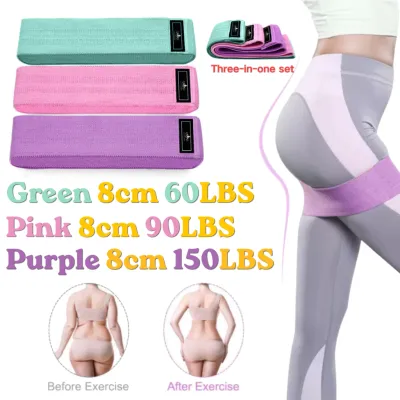
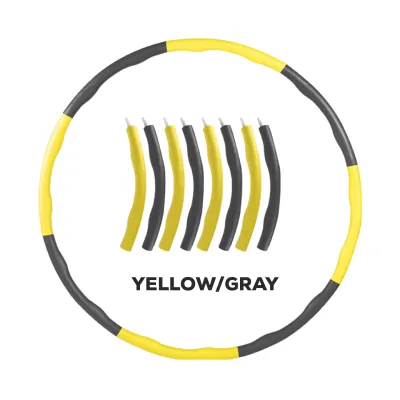
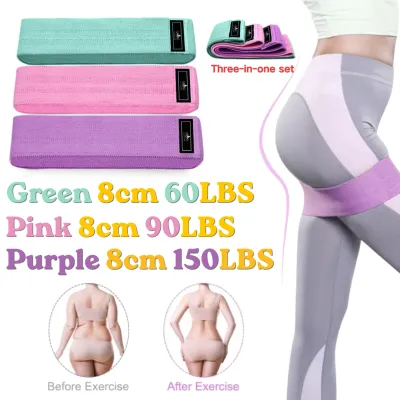
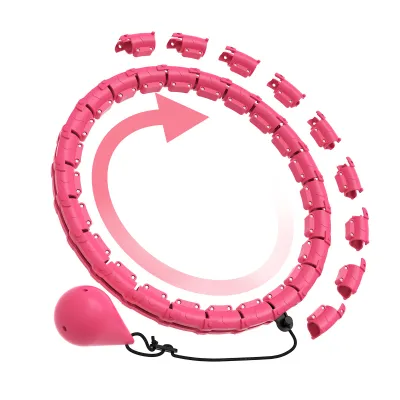

Prices are valid at publication and may change. Please refer to the product page for the latest price.
In contrast, the infinity hoop utilizes a figure-8 shape that naturally separates the resistance into two distinct loops. This specialized structure excels at targeted isolation exercises, particularly for the inner thighs, glutes, and upper arms. Because the center of the figure-8 is fused, it provides a more immediate, concentrated resistance curve over a shorter range of movement.
While both tools leverage spring-like tension to challenge your muscles, their physical shapes dictate how you interact with them. Standard rings are best suited for classic, flowing Pilates sequences that require a wider range of motion and varied grip placements. Meanwhile, the compact, dual-loop design of the infinity hoop is ideal for high-repetition, small-range-of-motion isolation work where keeping the tool securely in place is your primary concern.
Diameter and Dimensions: Matching the Equipment to Your Range of Motion
The physical size of your Pilates equipment directly influences your joint alignment and exercise mechanics. Traditional Pilates rings typically come in a standard diameter of 14 to 15 inches. This specific measurement is designed to match the average shoulder and hip width of most adult users, allowing you to perform adduction (squeezing) and abduction (pulling) exercises without forcing your joints into unnatural angles.

For an infinity hoop, the critical dimensions involve the width of the individual loops and the overall span of the figure-8. The distance between the two circular compartments determines your starting stance and how far you can stretch the material before reaching its elastic limit. If the loops are too close together, you may find your limbs squeezed too tightly at the start of an exercise, which can cause discomfort in your hips or shoulders.
To ensure a proper fit, take a moment to measure your shoulder width and the distance between your knees when seated comfortably. If you have a smaller frame or narrower joints, a 12-inch traditional ring or a compact infinity hoop will keep your limbs properly aligned. Conversely, taller individuals or those with broader shoulders will benefit from a 15-inch ring to prevent their arms or legs from collapsing inward during overhead presses or seated thigh squeezes.
Choosing an incorrect size carries clear biomechanical consequences. A diameter that is too small for your frame limits your range of motion, preventing you from fully extending your muscles. On the other hand, a ring that is too large reduces the effective tension at the peak of your contraction, making it difficult to maintain the consistent resistance necessary to stimulate muscle growth and improve stability.
Material and Resistance: Decoding Tension and Durability
The internal core material of your resistance tool determines how much force is required to compress it and how long the equipment will last. Traditional Pilates rings generally utilize a fiberglass core, which is highly valued for its consistent, firm resistance and structural durability. Fiberglass maintains its shape over thousands of compressions, offering a steady tension curve that requires a strong, controlled effort to squeeze.
Alternatively, many modern infinity hoops are constructed from thermoplastic elastomer (TPE) or natural rubber. These materials deliver a more forgiving, progressive resistance that starts soft and becomes significantly firmer as the material is compressed. TPE and rubber provide a comfortable, cushioned squeeze, making them excellent choices for beginners or individuals recovering from minor joint injuries.
When selecting your material, match the resistance profile to your current physical strength and joint condition:
- Fiberglass Cores: Best for intermediate to advanced users who require heavy, unyielding resistance to challenge larger muscle groups like the chest and outer thighs.
- TPE and Rubber Cores: Ideal for beginners, seniors, or anyone focusing on gentle rehabilitation, as the softer start reduces sudden joint loading.
Regardless of the material you choose, environmental factors play a major role in long-term durability. In the warm, humid climate of the Philippines, rubber and lower-grade TPE are susceptible to environmental degradation. High humidity and exposure to direct sunlight can cause these materials to become sticky, brittle, or prone to cracking over time. To maximize the lifespan of your equipment, always wipe down the surface after a sweaty session and store it in a cool, dry indoor space away from direct sunlight.
Grip Design and Ergonomics: Ensuring Stability and Comfort
A secure grip is essential for maintaining control and targeting the correct muscle groups during isometric exercises. On a standard Pilates ring, look for dual padded handles made of high-density EVA foam. These pads should be securely attached to both the inside and outside of the ring, allowing you to transition smoothly between pressing inward and pulling outward. High-density foam is crucial because it resists flattening under heavy pressure and absorbs sweat without becoming slippery.
For an infinity hoop, which often lacks protruding handles, ergonomic design relies on the surface texture of the loops. Premium hoops feature molded finger grooves, textured non-slip ridges, or integrated rubberized grips along the outer edges. These features are particularly important during leg exercises, where the hoop must stay anchored against your thighs or calves without sliding out of place.
The biomechanical impact of a poor grip goes beyond simple annoyance. If your hands or thighs begin to slip, your nervous system instinctively triggers secondary stabilizing muscles—such as your neck, wrists, or lower back—to compensate and keep the tool in place. This compensation pattern not only reduces the workload on your targeted muscles but also increases the risk of joint strain or muscle pulls. Prioritizing deep, non-slip textures ensures your body remains perfectly aligned throughout your workout.
Weight, Portability, and Structural Integrity Checks
If you plan to take your workout routine on the go, the weight and packability of your equipment are key considerations. Fiberglass Pilates rings are structurally robust but slightly heavier, usually weighing between 300 to 500 grams, and their rigid shape means they must be packed flat. In contrast, TPE or rubber infinity hoops are ultra-lightweight, often weighing under 200 grams, and their flexible nature allows them to be packed into tight spaces, making them highly portable for travel or outdoor workouts.
Before every exercise session, perform a quick safety inspection to prevent sudden equipment failure:
- Check the Seams: For molded TPE or rubber infinity hoops, inspect the fused center joint and outer edges for tiny micro-tears or discoloration, which indicate material fatigue.
- Verify Padding Adhesion: For traditional rings, gently pull on the padded handles to ensure the adhesive has not degraded due to moisture or humidity.
- Inspect the Core: Flex the ring gently to check for any unusual creaking sounds or asymmetrical bending, which can signal a fractured internal fiberglass core.
Frequently Asked Questions (FAQ)
Can I use an infinity hoop for the same exercises as a standard Pilates ring?
There is some functional overlap, particularly for seated inner thigh squeezes and basic upper-arm compression exercises. However, the infinity hoop cannot fully replace a standard Pilates ring. Because the infinity hoop lacks a wide diameter and dual-sided protruding handles, it cannot accommodate movements that require a wide grip, such as chest expansions, standing leg alignments, or overhead stretching sequences.
How do I know if the resistance level is too high for my joints?
You can identify excessive resistance by watching for clear physical warning signs. If you experience sharp joint pain rather than a dull muscle burn, find your limbs shaking uncontrollably, or feel forced to hold your breath to complete a compression, the tension is too high. If these signs occur, stop immediately and transition to a more forgiving TPE material or a ring with a lower resistance rating to protect your joints from injury.
Community discussion
Share your experience or ask a question. Comments are reviewed before publication.