
To choose the right chest bag phone holder for running, prioritize a multi-point harness system that centers weight on your sternum, a dedicated compartment matching your phone’s exact dimensions (including its protective case), and highly breathable 3D mesh fabrics designed to prevent chafing in hot, humid climates. Unlike casual fashion slings, a dedicated running chest bag must act as an extension of your body, keeping your device completely stable while allowing unrestricted breathing and movement.
Selecting the correct gear requires evaluating how a bag handles weight distribution, structural stability, and moisture protection. By focusing on these technical details, you can find a carrying solution that enhances your training rather than distracting from it.
The Advantage of Chest Bags for Running: Center of Gravity and Access
Carrying a smartphone during a run presents a unique biomechanical challenge. Modern devices are relatively heavy, often weighing between 150 and 250 grams. When this weight is placed far from your body’s center of gravity, it creates rotational torque and uneven forces that your muscles must constantly counteract. A chest bag addresses this by positioning the phone directly over your sternum, which is the most stable part of your upper torso.
Products mentioned in this guide
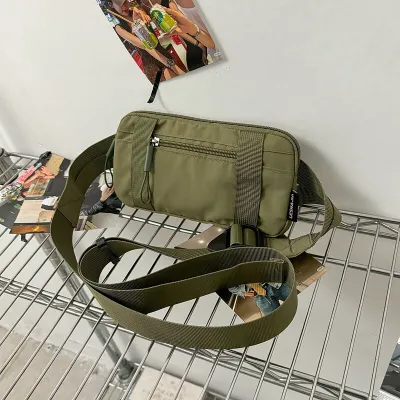
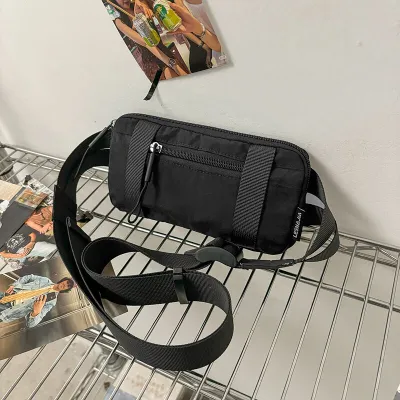
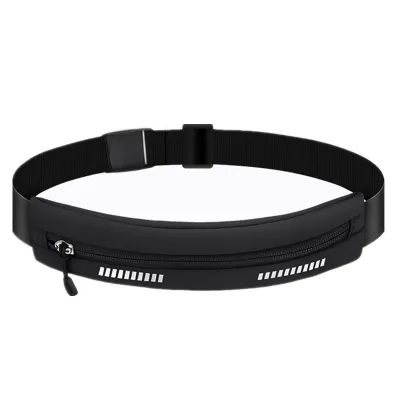
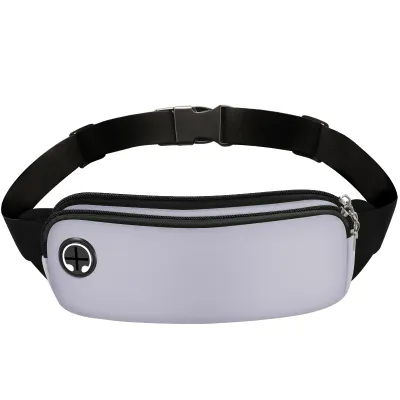

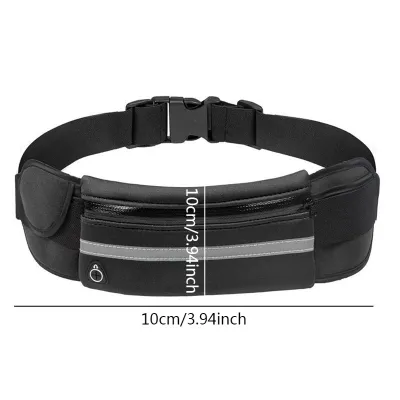
Prices are valid at publication and may change. Please refer to the product page for the latest price.
Traditional carrying methods often introduce movement imbalances that can lead to discomfort or injury over long distances. Armbands, for example, place asymmetrical weight on one side of your body. This uneven load can alter your arm swing, cause shoulder fatigue, and lead to friction chafing against your inner arm. Waist packs, while popular, frequently bounce up and down against the hips or ride up toward the stomach, which can restrict your natural hip flexion and stride length.
By contrast, a chest-mounted holder keeps the load centered and secure. This positioning minimizes vertical and lateral movement, allowing you to maintain a symmetrical running posture. Your shoulders, core, and hips can move naturally without compensating for a shifting weight.
In addition to biomechanical efficiency, chest bags offer unmatched accessibility. When using your phone for GPS navigation, pacing apps, or emergency communication, you do not have to stop, fumble with a waist belt, or strain your neck to look at an armband. The phone sits directly within your field of view and reach, allowing you to quickly check your metrics or change a playlist without breaking your running stride.
Bounce Prevention: Harness Designs and Contoured Fit
The primary source of frustration when running with a phone is bounce. Every foot strike sends an impact force through your body, which translates into vertical movement for any loose gear. To eliminate this movement, a chest bag must utilize a highly structured harness design rather than a simple strap.

When evaluating designs, contrast a dual-strap harness or vest-style system with a single-shoulder sling bag. Single-shoulder slings are designed for casual walking; during high-impact running, they inevitably slide, rotate around your torso, and distribute weight unevenly across your neck and shoulder. A dual-strap harness, resembling a minimalist running vest, distributes the weight symmetrically across both shoulders and the upper back, anchoring the bag firmly to your chest.
Another critical element is the shape of the back panel. Look for a contoured back panel that matches the natural anatomy of your chest and rib cage. A flat, rigid panel will only contact your body at a few pressure points, causing the bag to pivot and rock as you move. A flexible, anatomically shaped panel conforms to your chest, distributing pressure evenly and preventing the bag from shifting laterally during sudden changes in direction.
Finally, check for integrated compression straps and adjustable tensioners. These components allow you to pull the load inward, locking the bag flush against your body. High-quality running chest bags feature elasticated or static side straps that can be tightened on the fly. This adjustability ensures that as your body moves up and down, the bag moves in perfect synchronization with your torso rather than lagging behind and creating a secondary impact against your chest.
Evaluating the Phone Compartment: Security, Sizing, and Weather Resistance
The core purpose of your chest bag is to protect your phone. This means the phone compartment must be evaluated for structural security, ease of access, and protection from external elements.
Device Compatibility and Sizing
Never rely on generic product descriptions that claim to “fit most smartphones.” Instead, obtain the exact internal dimensions of the phone compartment from the manufacturer’s specifications and compare them to your phone’s measurements.
Remember to account for the extra bulk of your protective phone case. Rugged, shockproof cases can add up to 10 millimeters of width and thickness, which can turn a supposedly compatible compartment into an unusable pocket.
A proper fit strikes a balance between security and accessibility. The compartment should be snug enough to prevent the phone from sliding or tilting internally, which can cause annoying clicking sounds and throw off balance. However, it should not be so tight that you have to struggle to pull the phone out, especially when your hands are wet with sweat or rain.
Closure Mechanisms
The way the compartment opens and closes determines both security and ease of use during a run. Consider the trade-offs of the most common closure types:
- Zippers: High-quality, self-locking zippers offer the highest level of security, ensuring your phone cannot slide out even during steep trail descents. Look for zippers with pull tabs or cords that are easy to grip with sweaty hands. Ensure the zipper has a "zipper garage" (a small fabric hood) at the end to prevent the metal tab from jingling with every step.
- Magnetic Snaps and Hook-and-Loop: These systems allow for incredibly fast, one-handed access to your phone. However, you must verify that the magnets are strong enough to withstand high-impact bouncing. Hook-and-loop fasteners (velcro) must be high-density to prevent accidental opening, and they should be checked regularly for lint buildup which can reduce their holding power.
Weather and Sweat Resistance
Running outdoors exposes your electronics to two primary moisture sources: environmental rain and personal perspiration. Sweat is highly corrosive and can easily damage the charging ports and internal circuitry of a phone over time.
When shopping, check product labels for water-resistant materials such as TPU-coated nylon, ripstop polyester, or neoprene. Understand the difference between water-resistant and fully waterproof designs. Most running chest bags are water-resistant, meaning they can handle light drizzle and heavy sweat, but are not designed to be submerged in water.
Crucially, verify that the bag features a dedicated moisture barrier between the phone compartment and your body. This barrier—often a thin layer of polyurethane or waterproof laminate—prevents your body heat and sweat from soaking through the back panel and condensing inside the phone compartment.
Strap Stability and Comfort: Adjustability and Chafe Prevention
A bag that bounces less can still cause discomfort if the straps are poorly designed. To ensure long-distance comfort, you must examine the adjustability, breathability, and edge construction of the harness system.
Adjustability and Fit
No two runners have the same body shape, chest width, or torso length. A high-quality running chest bag must feature a multi-point adjustment system to accommodate these differences. Look for adjustable shoulder straps, side tension straps, and a sternum strap.
The sternum strap plays a vital role in stability. It connects the two shoulder straps across your chest, preventing them from sliding outward toward your shoulders or rubbing against your armpits during your arm swing. Look for a sternum strap that can be adjusted both horizontally (for tightness) and vertically (to position it comfortably above or below the bust line).
Breathability and Moisture Management
Running in warm or humid climates requires gear that assists with heat dissipation. Because a chest bag covers a significant portion of your torso, it can easily trap body heat and cause localized overheating.
Prioritize bags that utilize open-cell mesh, 3D spacer mesh, or perforated foam on the back panel and the undersides of the straps. These materials create a physical gap between the bag and your skin, allowing air to circulate and facilitating sweat evaporation.
Avoid bags with thick, solid neoprene or dense foam padding. While these materials may feel soft to the touch in a store, they act as heavy insulators when you run, leading to excessive sweat buildup and discomfort within minutes of starting your workout.
Anti-Slip and Chafe Prevention
Continuous friction over thousands of strides can quickly turn a minor rub into a painful chafe mark. To prevent this, look for specific construction details on the straps and back panel:
- Silicone Grip Strips: Some bags feature thin silicone waves or patterns on the inner lining. These strips grip your running shirt, preventing the bag from sliding or rotating as you run.
- Seamless or Bound Edges: Inspect the edges of the straps. They should be wrapped in soft, non-abrasive piping or feature seamless, heat-bonded construction. Avoid stiff nylon webbing edges that can cut into your neck or collarbones.
- Flatlock Stitching: Any internal seams should be flat to minimize raised pressure points against your body.
Before heading out on a long run, always perform a short test run around your block. If you feel any pinching, rubbing, or pressure points, adjust the strap tension or realign the harness before continuing.
Value-Add Features: Audio Routing, Visibility, and Minimalist Storage
While stability and security are the most important factors, several secondary design features can significantly improve your daily running experience.
Audio Routing: If you prefer wired headphones, look for a chest bag with a dedicated rubberized cable port. This allows you to zip the compartment completely shut while routing the headphone cable cleanly up to your ears. If you use wireless earbuds, ensure the phone compartment does not contain heavy metallic shielding that could interfere with your Bluetooth connection. Some bags also feature a clear, touch-compatible TPU window on the front, allowing you to operate your phone’s screen without removing it from the bag.
Visibility: Safety is a primary concern, especially if you train in the early morning or late evening to avoid midday heat. Look for chest bags equipped with highly reflective trims, reflective logos, or piping. Because a chest bag covers your chest and back, having reflective elements on both sides of the harness ensures you remain visible to motorists, motorcyclists, and cyclists from multiple angles.
Minimalist Storage: A great running chest bag should remain lightweight and low-profile. However, having a few small secondary pockets is incredibly convenient. Look for dedicated slots to hold a house key, a car key fob, or a small amount of emergency cash (such as a ₱100 or ₱500 bill). Some bags also include small elastic loops or mesh pockets on the straps to hold energy gels. Avoid overloading these secondary pockets; carrying heavy items like multi-tools or loose coins will disrupt the bag’s balance and cause it to sag or bounce.
Matching Features to Your Running Environment and Climate
To find the perfect chest bag, match its features to the specific environments where you run most often.
Urban and Road Running: If you primarily run on paved streets, sidewalks, or in municipal parks, prioritize safety and ease of use. Look for a lightweight, low-profile chest bag with extensive reflective elements to ensure visibility near traffic. Quick-access closures are ideal here, allowing you to easily pause your tracking app at traffic lights.
Trail and Long-Distance Running: Trail running involves erratic lateral movements, steep climbs, and varied terrain. For this environment, prioritize maximum strap stability and durable materials. Look for a robust, multi-point harness system that prevents the bag from shifting when you jump over obstacles. Choose abrasion-resistant fabrics like ripstop nylon to withstand contact with branches or rocks, and opt for a slightly larger capacity to carry basic trail safety gear or hydration flasks.
High-Humidity and Tropical Climates: Running in hot, humid conditions puts a premium on ventilation and sweat protection. Prioritize bags made with ultra-lightweight 3D spacer mesh to maximize airflow across your chest. Ensure the phone compartment features a reliable moisture barrier to protect your device from heavy sweat. If you run in areas prone to sudden tropical downpours, consider keeping a small, lightweight plastic zip bag inside the compartment as an extra layer of waterproof protection for your phone.
Frequently Asked Questions (FAQ)
Can I use a regular everyday chest bag for running?
No, everyday casual chest bags or fashion slings are not designed for the high-impact motion of running. They typically feature a single-shoulder strap that allows the bag to swing, bounce, and slide across your body, which can throw off your balance and cause severe chafing. Casual bags also lack the highly breathable mesh backings and moisture-wicking materials found in running-specific gear, leading to heat retention and excessive sweat buildup against your chest.
How tight should a running chest bag be to prevent bouncing?
A running chest bag should be snug enough to move as one with your torso, with no independent vertical or horizontal movement when you jog in place. However, it should not be so tight that it constricts your chest or limits your ability to take deep breaths. To find the correct tension, put the bag on, take a deep breath to fully expand your lungs, and adjust the straps so they are firm but comfortable. Always simulate running arm swings to ensure the straps do not rub against your inner arms.
Will a chest bag restrict my breathing during intense runs?
A properly designed running chest bag will not restrict your breathing. High-quality running harnesses are designed to sit high on your upper chest and sternum, keeping the straps anchored on your shoulders and upper rib cage. This placement leaves your diaphragm and lower ribs completely free to expand as you breathe deeply during high-intensity intervals or steep climbs. If you experience breathing restriction, try loosening the lower side tensioners while keeping the upper shoulder straps secure.
Community discussion
Share your experience or ask a question. Comments are reviewed before publication.