
Traveling to Siargao with your own surfboards requires balancing airline baggage rules, local island transportation, and intense tropical weather. The ideal surfboard bag for a Siargao trip is a dedicated 10mm padded travel bag featuring a heat-reflective bottom, heavy-duty non-corrosive zippers, and multiple secure grab handles. While a thin board sock is fine for daily beach trips, it will not protect your board in an airplane cargo hold. Conversely, a massive, rigid multi-board coffin bag that survives the flight can become an absolute nightmare to transport on a local motorcycle or tricycle once you land.
Choosing the right bag means finding the sweet spot between structural protection and real-world portability. By selecting a bag designed for both air travel and local island transit, you can ensure your boards arrive intact at Sayak Airport and transition smoothly to the breaks of General Luna, Tuason, and Cloud 9. This guide breaks down the essential factors to consider when selecting and packing your bag for a successful Siargao surf trip.
Checking Airline Surfboard Policies for Siargao Flights
Surfboards are classified as special or oversized baggage by almost all commercial airlines, meaning they are subject to strict handling rules, size limitations, and additional fees. When flying to Siargao’s Sayak Airport (IAO), you will most likely board a smaller turboprop aircraft, such as an ATR 72 or a Dash 8, operated by domestic carriers like Cebu Pacific, Philippine Airlines, or Sunlight Air. Because these aircraft have significantly smaller cargo holds than larger commercial jets, space is highly competitive, and airlines may limit the number of oversized bags allowed on each flight.
Products mentioned in this guide
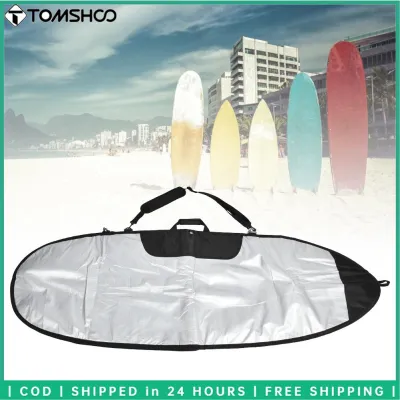
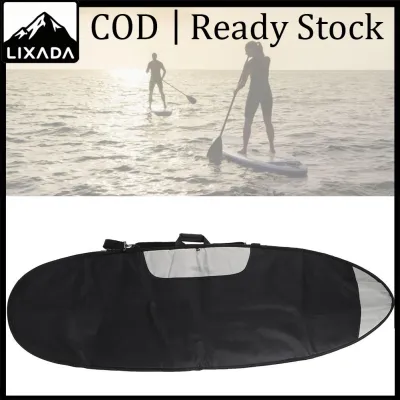
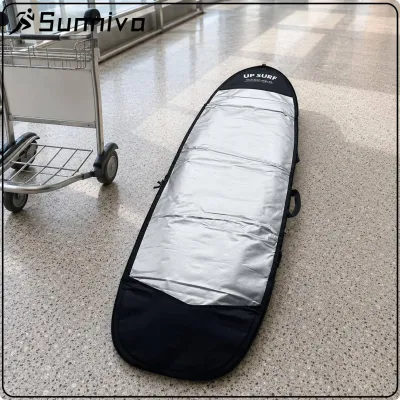
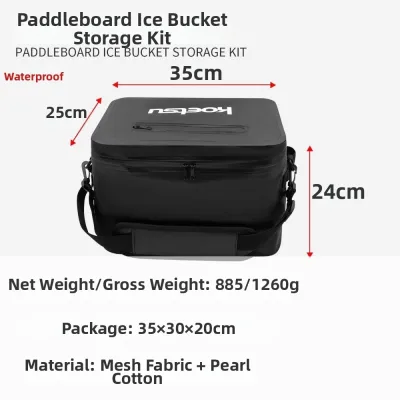
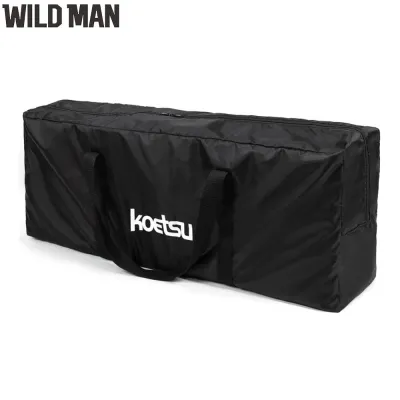
![[fedya]Inflatable Paddleboard Travel Backpack Bag Paddle Board Carrying Bag Surfboard Paddle Board Accessories](https://img.lazcdn.com/g/p/d36190024ef3cc0605f6991b879fb2be.jpg_400x400q80.jpg_.webp)
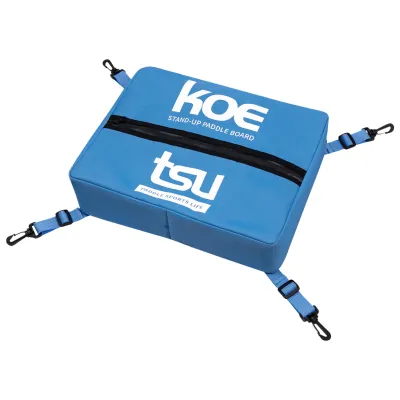
Prices are valid at publication and may change. Please refer to the product page for the latest price.
Before purchasing your flight or your surfboard bag, you must verify the specific sports equipment policies of your chosen carrier. Some airlines require you to pre-book your surfboard allowance as a specific baggage add-on during the ticket purchase process, while others charge a flat handling fee at the check-in counter. Be aware that failing to declare your surfboard in advance can result in steep fees at the airport or, in some cases, a refusal to transport the board due to cargo space limitations.
Accurately measuring your packed surfboard bag is critical to avoiding unexpected issues at the departure gate. Do not rely solely on the manufacturer’s stated dimensions of your surfboard; instead, measure the outer dimensions of the bag once it is fully packed with your board, padding, and accessories. Ensure you account for extra length added by nose and tail protection. Most domestic carriers enforce a maximum length limit—often around 9 feet (approximately 274 cm) for turboprop flights—and exceeding this limit can lead to automatic denied boarding for your gear.
Because airline baggage regulations, weight allowances, and oversized fees are subject to frequent changes, always confirm the current policies directly with the airline’s official website or customer service hotline before your trip. Keep in mind that a policy that applied during your last trip may have been updated. Securing written confirmation of your surfboard booking can provide peace of mind and serve as helpful documentation at the check-in desk.
Selecting a Bag Style for Island Transport and Habal-Habal Rides
Once you clear customs and step out of Sayak Airport, you must transport your gear to your accommodation, which is typically located in General Luna or surrounding areas. The primary modes of transport on the island are tricycles and habal-habal (motorcycle taxis modified with side racks). While a massive, heavy-duty multi-board coffin bag offers maximum protection during air transit, its bulk and weight make it incredibly difficult and potentially dangerous to secure onto a motorcycle or inside a compact tricycle sidecar.

For most travelers, a standard single or double surfboard travel bag with 10mm of foam padding offers the best balance of protection and portability. These bags are rigid enough to cushion your board against airport baggage handlers but remain flexible enough to be strapped securely to a motorcycle rack or angled inside a tricycle. If you plan to bring multiple boards, a slim double-board bag is generally much easier to manage on local roads than a thick, rectangular multi-board coffin bag.
When evaluating bags for island transit, look for models equipped with heavy-duty, reinforced external grab handles on both the nose, tail, and center. These handles are essential for lifting, positioning, and securing the bag onto local transport. Additionally, ensure the bag has dedicated external loop points or D-rings that allow you to run heavy-duty tie-down straps directly through the bag’s structure, preventing it from sliding or catching the wind while riding down bumpy coastal roads.
Your bag will inevitably face rough handling, gravel, and abrasive surfaces during your stay in Siargao. To prevent premature wear, prioritize bags constructed with reinforced rubber nose and tail caps, as well as high-denier, abrasion-resistant exterior fabrics like 600D polyester or ripstop nylon. A durable exterior prevents the bag from tearing when it is dragged across gravel roads, rested against concrete walls, or stacked under other luggage on boat transfers to outer reef breaks.
Prioritizing Heat and Moisture Protection for Tropical Conditions
Siargao’s tropical climate presents unique environmental challenges for surfboards and their protective bags. High ambient temperatures, intense solar radiation, and extreme humidity can quickly damage your equipment if your bag is not built to handle the heat. Leaving a surfboard inside a dark, non-reflective bag under the tropical sun can cause the interior temperature to skyrocket, leading to delamination of the fiberglass layers or melting your wax into a messy pool.
To safeguard your board from thermal damage, choose a bag that features a highly reflective outer layer, particularly on the bottom panel. Many high-quality travel bags utilize a silver tarpee or alloy-coated reflective material designed to bounce solar radiation away from the bag. When resting your bag on the beach, on top of a car, or on a boat deck, always keep the reflective side facing upward to minimize heat absorption.
Humidity is another persistent issue in the Philippines. Packing a damp board or leaving salt moisture trapped inside a sealed bag creates a breeding ground for mold, mildew, and unpleasant odors. To combat this, look for surfboard bags equipped with built-in ventilation systems, such as breathable mesh panels, rubber air vents, or vapor-permeable fabrics. These features allow moisture to evaporate and keep the interior environment dry, protecting both your board’s finish and your accessories.
Sudden tropical downpours are common in Siargao, and you may also find yourself taking boat transfers to surf spots like Stimpy’s or Rock Island. Your bag must be water-resistant or waterproof to protect your gear from heavy rain and saltwater spray. Look for bags treated with water-repellent coatings and constructed with sealed or taped seams. This prevents water from seeping through the fabric and soaking your board, spare clothes, or towels packed inside.
Finally, salt air is highly corrosive to metal hardware. Standard metal zippers will rust, seize, and break within a few days of exposure to Siargao’s coastal environment. It is critical to select a bag equipped with marine-grade, heavy-duty plastic zippers (such as YKK molded plastic sliders) and corrosion-proof hardware. Regularly rinsing the zippers with fresh water after beach trips will further extend the lifespan of your bag and prevent you from being locked out of your gear.
Packing Your Board to Survive Flights and Bumpy Island Roads
Even the best surfboard bag requires proper packing techniques to ensure your board survives both airport baggage carousels and rough, unpaved island roads. Before you begin packing, remove your fins entirely. Leaving fins attached during transit is a leading cause of punctured bags and broken fin boxes. Place the fins, fin keys, and spare screws in a secure internal pocket of your bag or carry them in your hand luggage to prevent them from scraping against the board.
To protect the rails—the most vulnerable parts of any surfboard—apply a base layer of padding before placing the board in the travel bag. You can slide your board into a lightweight surfboard sock for an extra layer of scratch protection, or wrap the rails with foam pipe insulation sliced down the middle and taped in place. This simple step provides a highly effective buffer against side impacts during baggage handling and transit on bumpy roads.
Utilize your soft travel gear to fill any dead space inside the surfboard bag. Packing items like beach towels, rash guards, boardshorts, and ponchos around the nose, tail, and rails of your board serves a dual purpose: it saves space in your primary luggage while providing excellent customized cushioning. Ensure these soft items are distributed evenly so the board does not shift around inside the bag during flight turbulence or sudden stops on a motorcycle.
For maximum protection, consider adding extra padding to the extremely sensitive nose and tail blocks of your board. You can fashion custom guards out of thick bubble wrap or recycled cardboard inserts and tape them securely over the ends. As a final precaution, place a highly visible card containing your full name, contact number, email address, and flight itinerary inside the bag. In the event that your external luggage tags are torn off during transit, airline staff will still be able to identify and route your bag to Siargao.
Frequently Asked Questions (FAQ)
Can I bring multiple surfboards in one bag to Siargao?
Yes, you can bring multiple surfboards in a single multi-board travel bag, which is a convenient way to consolidate your gear. However, you must carefully monitor the total weight of the packed bag, as domestic airlines flying to Siargao enforce strict weight limits for sports equipment. Exceeding these limits can result in expensive overweight baggage fees at the airport. Always verify the maximum weight threshold with your airline before packing more than one board.
Do I need a padlock for my surfboard bag when flying?
Using a padlock is highly recommended to secure your gear during air travel. If your surfboard bag features lockable zipper pulls, secure them with a TSA-approved luggage lock to deter opportunistic theft while still allowing airport security personnel to inspect the contents if necessary. If your bag does not have lockable zippers, you can loop a small zip tie or a carabiner through the double zipper pulls as a basic, tamper-evident alternative.
How do I clean and store my surfboard bag after a trip to Siargao?
To prolong the life of your surfboard bag, thoroughly clean it after returning from your trip. Empty all pockets, shake out any trapped sand, and rinse both the interior and exterior with fresh water to remove corrosive salt residue. Once rinsed, leave the bag fully unzipped and propped open in a shaded, well-ventilated outdoor area until it is completely dry. Never store a damp bag, as this leads to mold growth and zipper corrosion.
Community discussion
Share your experience or ask a question. Comments are reviewed before publication.