
Choosing the right tennis training tools set depends on aligning the equipment with your current physical capabilities, technical skill level, and specific development goals. In tropical climates like the Philippines, where outdoor courts are often exposed to intense heat, high humidity, and sudden downpours, your choice must also account for material durability and environmental resilience. By focusing on tools that address your immediate mechanical needs—whether that is footwork agility, stroke consistency, or serve accuracy—you can maximize your solo practice sessions and see tangible improvements when you step back into a live match.
Equipment alone cannot replace professional coaching or active court time, but the right tools serve as excellent accelerators for muscle memory. To get the most out of your investment, you must evaluate how each component fits into your routine, how well it withstands local weather conditions, and whether a pre-packaged bundle or a customized selection of individual tools better suits your developmental path.
Identify Your Current Skill Level and Training Needs
Before browsing available training sets, you must honestly assess your current playing ability. Beginners should focus on foundational mechanics, hand-eye coordination, and basic ball contact. If you are new to the sport, you likely struggle with timing and consistent racket-face alignment. Your training tools should prioritize simple, repetitive feedback mechanisms that help you establish a clean, reliable swing path without the pressure of a fast-moving opponent.
Products mentioned in this guide
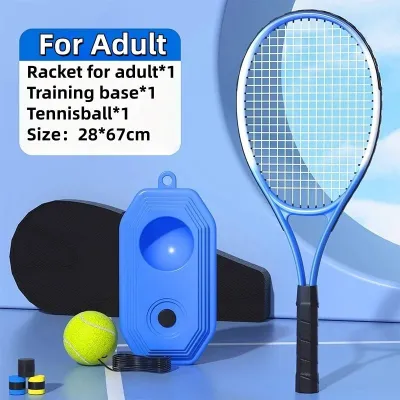
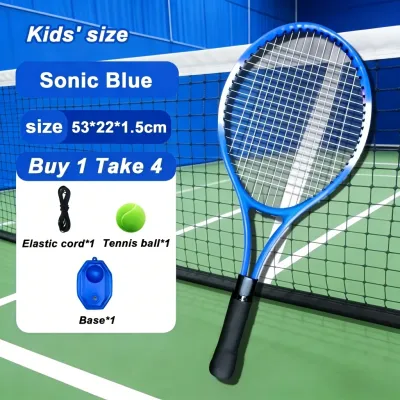
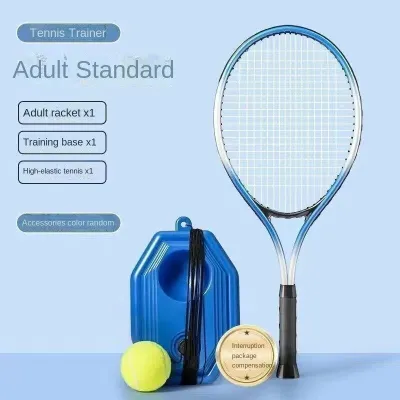
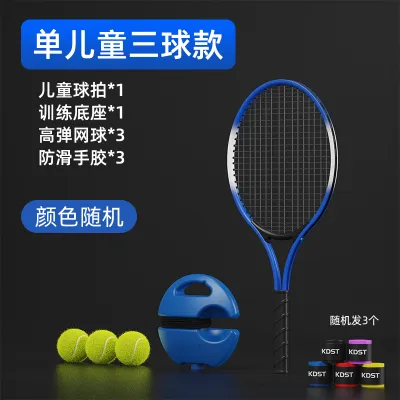
Prices are valid at publication and may change. Please refer to the product page for the latest price.
Intermediate players usually have established strokes but struggle with consistency, depth control, and court coverage. At this stage, your weaknesses often manifest during long rallies or when forced to hit on the run. Your training needs shift toward dynamic movement, rapid recovery steps, and directional accuracy. Tools that challenge your footwork while forcing you to hit targets are highly beneficial for transitioning from a defensive to an offensive playing style.
Advanced players require highly specialized equipment to fine-tune micro-movements and explosive power. If you are an advanced player, you likely want to increase your serve velocity, sharpen your reaction time for volleys, or perfect your slide and recovery on clay or hard courts. General training bundles may offer limited value to you, as you require heavy-duty, high-precision tools that can withstand high-impact use and provide exact feedback on spin and placement.
Your physical practice environment also dictates your equipment choices. In the Philippines, many players practice on outdoor concrete barangay courts, private driveways, or multi-purpose paved areas. Concrete is highly abrasive, meaning any equipment that contacts the ground must feature reinforced bases or wear-resistant materials. Furthermore, if you practice in areas with limited space, you must select compact tools that do not require a full-sized court to be effective.
Time commitment is another crucial factor. If you only have fifteen to thirty minutes for a quick daily session, you need tools that are easy to set up and pack away. A complicated net system that takes twenty minutes to assemble will likely sit unused in your storage room. Opt for rapid-deployment tools like weighted ball return bases or pop-up targets if your practice windows are short and frequent.
Match Training Tools to Specific Practice Goals
Different training aids target distinct aspects of your game, meaning a one-size-fits-all approach rarely yields optimal results. To build an effective training regimen, you must match the specific tool to the physical or technical skill you want to refine.

Footwork and Agility Equipment
Footwork is the foundation of every successful tennis stroke, as proper positioning determines your balance and hitting power. Agility ladders, speed cones, and reaction balls are the primary tools used to develop quick feet, lateral speed, and explosive first-step acceleration.
Agility ladders help you practice precise foot placement and the essential split-step timing required just as your opponent strikes the ball. Speed cones allow you to set up dynamic change-of-direction drills, such as the spider drill or figure-eight patterns, which mimic the recovery movements needed during intense baseline rallies. Reaction balls, which feature an irregular, multi-knobbed design, bounce unpredictably on hard surfaces, forcing you to stay low and react quickly with your hands and feet.
When selecting footwork equipment, check the material of the agility ladder rungs. Heavy-duty, flexible polypropylene is preferable to thin, brittle plastics that can crack under intense tropical sun exposure. Ensure the speed cones are made of pliable, low-profile vinyl so they bend rather than shatter if stepped on. For outdoor concrete courts, verify that the ladder straps lie completely flat to prevent tripping hazards during high-speed drills.
Stroke Consistency and Rally Aids
Developing a consistent stroke requires hundreds of repetitions, which can be difficult to achieve without a consistent hitting partner or a ball machine. Rebound nets, target zones, and ball return systems allow you to practice your groundstrokes and volleys independently.
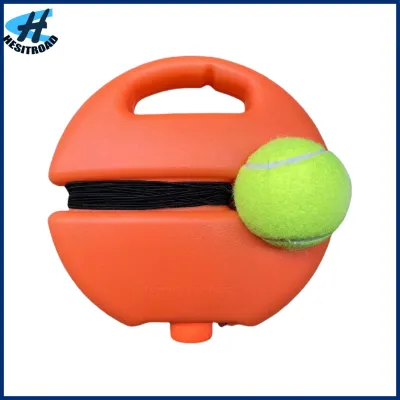
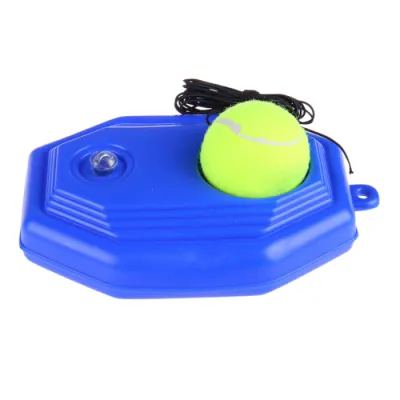
Ball return systems, which typically consist of a heavy plastic base anchored by water or sand and connected to a tennis ball via an elastic cord, are highly popular for solo practice. As you hit the ball away, the elastic cord stretches and pulls the ball back to you. This rapid return forces you to prepare your racket early, training your muscle memory for quick backswings. Rebound nets offer a more realistic ball trajectory, allowing you to practice both forehands and backhands with natural bounce heights.
When evaluating these aids, stability is your primary concern. For ball return systems, ensure the base has a non-slip rubber bottom and a secure, leak-proof cap to prevent water or sand from spilling onto the court. For rebound nets, check the tension adjustment mechanism; a high-tension net ensures the ball returns with sufficient speed to simulate a real rally. Target zones that clip onto standard tennis nets should be made of high-visibility, weather-resistant nylon so they remain clearly visible during late afternoon sessions or under court floodlights.
Serve Accuracy and Power Tools
The serve is the only shot in tennis that is entirely under your control, making it the easiest stroke to practice alone but also one of the hardest to master. Serve targets, toss trainers, and resistance bands are excellent tools for developing a reliable, powerful serve.
Serve targets are placed in specific areas of the service box—such as the T, the body, or the wide corner—to help you visualize and execute precise placements. Toss trainers help you maintain a consistent ball release height and path, which is critical for clean contact. Resistance bands are highly effective for strengthening the rotator cuff and shoulder muscles, which are heavily taxed during the acceleration and deceleration phases of the serve.
Safety is paramount when using resistance bands for shoulder conditioning. Always inspect the bands for micro-tears, discoloration, or fraying before every session, as a snapping band can cause severe eye or skin injuries. Ensure the anchoring mechanism is securely attached to a heavy, immovable post or fence, and never use a damaged anchor. Limit your resistance to a level that allows you to maintain perfect biomechanical form; over-stretching the band or using excessive resistance can lead to shoulder impingement or muscle strains.
Evaluate Set Components and Build Quality
When purchasing a pre-packaged tennis training tools set, the physical build quality determines how long the equipment will survive, especially in challenging tropical environments. High humidity, intense UV radiation, and frequent rain can quickly ruin low-quality gear.
Look for UV-resistant plastics on all molded components, including cones, targets, and base units. Standard plastics degrade rapidly when exposed to direct sunlight, becoming brittle, faded, and prone to cracking within a few weeks of outdoor use. If the product description does not explicitly mention UV stabilizers or weatherproofing, treat the item as indoor-only or plan to store it away from sunlight immediately after use.
Metal frames, such as those used for rebound nets or target stands, must feature rust-proof coatings. Powder-coated steel or anodized aluminum frames are highly recommended to resist the corrosive effects of high humidity and coastal salt air. Check the hardware, including screws, springs, and clips; stainless steel or brass fittings are far less likely to rust and seize up over time compared to cheap zinc-plated alternatives.
Portability and storage features are critical if you travel to local public courts. Your training set should include a durable, water-resistant carrying bag made of high-denier nylon (such as 600D) with reinforced stitching and heavy-duty zippers. Foldable designs with quick-release buttons or elastic shock cords inside the frame poles allow for rapid assembly and disassembly without requiring extra tools.
Finally, verify the completeness of the set before finalizing your purchase. A comprehensive set should include essential accessories that keep the equipment functional. Look for sets that include ground stakes to secure nets on grass or clay surfaces, replacement elastic cords for ball return systems, and high-visibility tennis balls designed for training. Having these spare parts included saves you the frustration of searching for compatible replacements when a cord snaps or a ball wears out.
Decide Between Pre-Packaged Sets and Custom Bundles
Choosing between a pre-packaged training set and building a custom bundle depends on your budget, your current skill level, and how specific your training goals are.
Pre-packaged sets are highly cost-effective and convenient, making them an excellent choice for beginners and casual players. These bundles typically include a variety of tools—such as an agility ladder, several speed cones, a ball return trainer, and a carrying bag—for a single, combined price. Purchasing these items together is generally much cheaper than buying them individually, often costing between ₱1,200 and ₱2,500. This approach gives you a broad introduction to different training modalities without a significant financial commitment.
However, pre-packaged sets often suffer from variable quality, and you may find yourself paying for items you do not need. For intermediate and advanced players, a custom bundle is usually the better investment. If your footwork is already excellent but your stroke consistency is lacking, your money is better spent on a single, high-quality rebound net costing ₱5,000 or more, rather than a cheap multi-tool bundle where the net is flimsy and the other tools go unused. Customizing allows you to select professional-grade components that target your exact technical flaws.
When shopping on online marketplaces or local sports ecommerce platforms, verifying the seller’s reputation is essential to avoid counterfeit or low-quality goods. Look for authorized brand stores or preferred sellers with high positive feedback ratings. Read user reviews carefully, paying close attention to comments regarding the durability of the materials, the actual weight of the bases, and how well the equipment performs in outdoor settings.
Be cautious of listings with generic descriptions and no clear brand identity. Check the platform’s return and warranty policies before checking out. A reliable seller should offer a clear return window if the product arrives with missing parts, manufacturing defects, or if the materials do not match the advertised specifications. Protecting your purchase ensures you receive durable gear that genuinely supports your athletic development.
Frequently Asked Questions (FAQ)
Can I use indoor tennis training tools on outdoor courts?
While some tools are versatile, indoor-specific equipment often lacks the weight and wind resistance required for outdoor environments. A light plastic target or cone can easily blow away in a moderate breeze, disrupting your practice. If you plan to use indoor tools outdoors, ensure you can weigh them down with sandbags or secure them to the ground using metal stakes.
Additionally, indoor-specific plastics and fabrics rarely feature UV stabilizers. Prolonged exposure to direct sunlight and high humidity will cause these materials to degrade, fade, and crack much faster than outdoor-rated gear. Always store indoor-labeled equipment in a cool, dry place immediately after your outdoor session to prolong its lifespan.
How often should I incorporate training tools into my weekly routine?
Training tools are highly effective for isolating and correcting specific mechanical flaws, but they should not completely replace live play. A balanced approach is to dedicate 20% to 30% of your weekly training time to isolated drills using these tools, with the remaining time spent on match play, hitting with a partner, or active court movement.
Over-training with isolated tools can lead to rigid muscle memory that does not adapt well to the dynamic, unpredictable nature of a real game. For example, while a ball return system is excellent for rhythm, it does not teach you how to read an opponent’s body language or adjust to varying spins. For a personalized training schedule that matches your physical fitness and skill progression, consulting a certified tennis coach is highly recommended.
Community discussion
Share your experience or ask a question. Comments are reviewed before publication.