
To determine which Yupard flashlight models are suitable for diving and snorkeling, you must carefully evaluate their structural sealing, depth ratings, and switch designs against your specific underwater activities. Not all flashlights bearing the Yupard brand are built for submersion; many are designed for general outdoor use, camping, or simple splash resistance. Taking a non-submersible light into the ocean will result in immediate flooding, battery failure, and potential safety hazards. For safe underwater exploration—whether you are snorkeling over shallow coral gardens in Moalboal or navigating deep shipwrecks in Coron—you must verify that your chosen model is explicitly rated for underwater use and features specialized pressure-resistant construction.
When selecting gear for water sports in tropical environments like the Philippines, high humidity, warm saltwater, and intense solar exposure must be factored into your decision. Saltwater is highly corrosive, and the warm marine environment accelerates chemical reactions that can degrade inferior plastics and metals. A reliable dive light is not just a convenience for spotting marine life in crevices; it is a critical safety tool, especially during night dives, deep recreational dives, or when exploring overhead environments. However, no piece of equipment can replace proper dive training, situational awareness, and strict adherence to safe diving protocols.
Before purchasing any flashlight for underwater use, you must understand that waterproof claims on online marketplaces can sometimes be misleading or exaggerated. A light labeled as “waterproof” might only be rated to withstand a heavy downpour or temporary shallow immersion. To protect your investment and ensure your safety, you must look past generic marketing terms and focus on verifiable technical specifications, physical sealing mechanisms, and robust maintenance practices.
Products mentioned in this guide
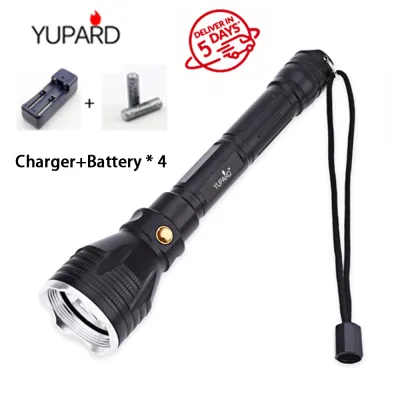
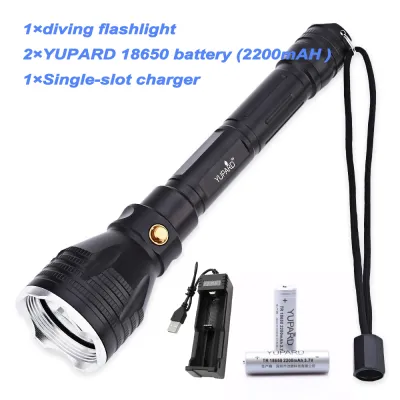
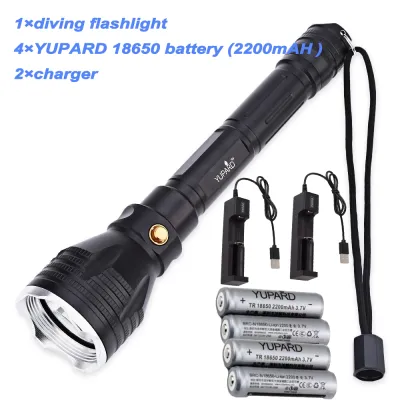
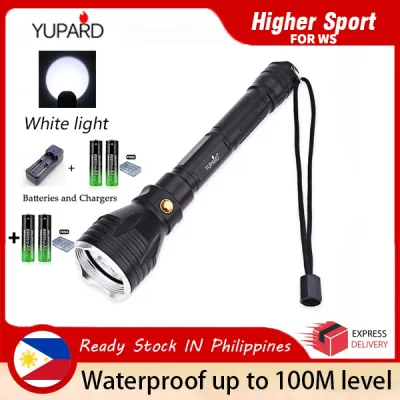
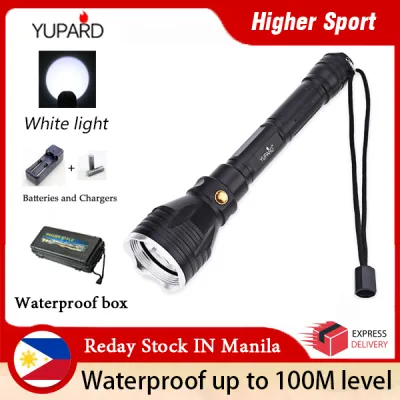
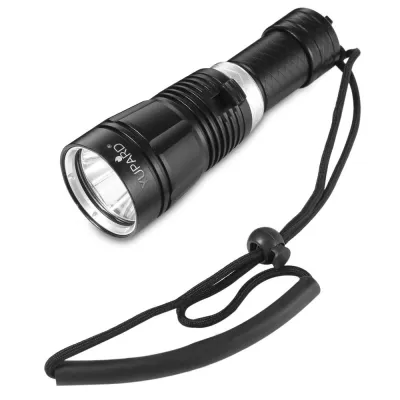
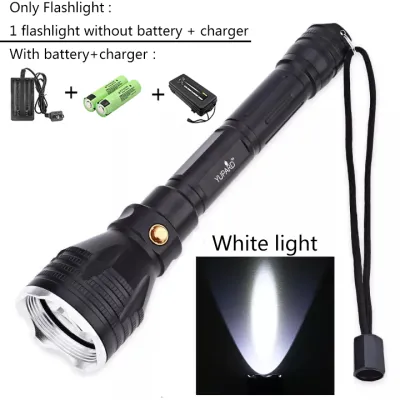
Prices are valid at publication and may change. Please refer to the product page for the latest price.
Essential Waterproof and Safety Specs for Underwater Use
Understanding the distinction between splash-proof and truly submersible ratings is the first step in selecting a safe underwater flashlight. Standard outdoor flashlights often carry an IPX6 or IPX7 rating, which means they can resist heavy rain or temporary immersion in shallow water for a limited time. For diving and snorkeling, however, you must look for an IPX8 rating or an explicit depth rating provided by the manufacturer. An IPX8 rating indicates that the device is designed for continuous submersion in water under conditions specified by the manufacturer, typically exceeding one meter.
Water pressure increases rapidly as you descend, with every 10 meters of depth adding approximately one atmosphere of pressure. A flashlight suitable for shallow snorkeling at a depth of one or two meters experiences very little pressure, whereas a light taken on a recreational scuba dive to 20 or 30 meters must withstand immense hydrostatic force. If a flashlight’s body, lens, and seals are not structurally engineered to resist this pressure, the housing will flex, the lens may crack, and water will be forced past the seals, causing immediate electronic failure. You must verify the maximum depth rating on the manufacturer’s label or specification sheet and ensure it exceeds your planned diving depth with a comfortable safety margin.
To prevent water from bypassing the threaded joints of the flashlight, submersible models rely on specialized rubber O-rings. While a single O-ring may suffice for shallow water or splash resistance, a true diving flashlight should feature double or even triple O-rings at every opening, such as the tail cap and the bezel. These O-rings sit in precision-engineered grooves and are compressed when the flashlight is tightened, creating a robust physical barrier against water entry. When evaluating Yupard models, look for those that explicitly showcase a double O-ring design on their connection threads.
Another critical structural feature of a diving flashlight is the switch mechanism. Standard clicky tail switches or side buttons rely on flexible rubber boots that can easily leak or fail under high hydrostatic pressure. At depth, the ambient water pressure can compress a standard rubber boot permanently, keeping the switch stuck in the “on” or “off” position, or forcing water past the seal. Submersible flashlights typically utilize magnetic rotary switches or sliding magnetic switches. These designs use internal sensors to detect the movement of an external magnet, eliminating the need for a physical hole through the flashlight body and significantly reducing the risk of flooding.
Beam, Switch, and Power Features for Diving Conditions
The optical characteristics of your flashlight must match the specific water conditions and visibility of your dive site. Underwater visibility is highly dependent on suspended particles, such as silt, plankton, and organic matter, which are common in tropical waters during the rainy season. A narrow spot beam, typically between 5 and 10 degrees, is highly effective at cutting through turbid water and reaching long distances, making it ideal for deep-water navigation, cave exploration, or pointing out specific marine life to your dive buddy. Conversely, a wide flood beam of 60 degrees or more is excellent for shallow snorkeling, underwater photography, and close-up reef observation, as it illuminates a broad area evenly without creating harsh, blinding hot spots.

Handling your equipment underwater requires simplicity and reliability, especially when wearing diving gear. Even in the warm waters of the Philippines, divers often wear thin neoprene gloves to protect their hands from sharp coral, stinging hydroids, or cold thermoclines at depth. A flashlight switch must be large, tactile, and easy to operate with gloved hands. A magnetic slider or a rotating bezel switch allows for effortless one-handed operation, enabling you to adjust brightness levels or turn the light on and off without fumbling or losing your grip on other essential gear.
Power management and battery safety are paramount when operating high-output flashlights in marine environments. Diving flashlights generate significant heat, which is easily dissipated when submerged in water but can cause rapid overheating if the light is operated on land. You must select models that utilize high-quality, protected lithium-ion batteries (such as 18650 or 26650 cells) that feature built-in overcharge, over-discharge, and short-circuit protection. Furthermore, you must ensure that any integrated charging ports are completely sealed behind a waterproof, threaded cap with its own O-ring. If saltwater contacts an exposed USB port, rapid galvanic corrosion will occur, destroying the electronics and creating a severe safety hazard during subsequent charging cycles.
When planning your dive, you must also consider the runtime of the flashlight relative to your dive profile. A light that loses power prematurely during a night dive can lead to disorientation and panic. Verify the estimated runtime on the manufacturer’s specification sheet at your preferred brightness setting, and always carry a backup light if you are conducting a night dive or exploring overhead environments. Never rely on a single light source as your sole means of navigation under high-risk conditions.
Pre-Purchase Verification Checklist for Yupard Models
Before finalizing your purchase of a Yupard flashlight from an online marketplace, you must perform a systematic verification process to ensure the model is genuine, suitable, and safe for your intended underwater activities. Do not rely solely on catchphrases in product titles; instead, follow this structured checklist to verify the product’s specifications and physical integrity.
First, cross-reference the specific model number with the manufacturer’s official specification sheet or user manual. Verify that the rated depth limit is explicitly stated in meters and matches your diving requirements. Check the realistic lumen output and runtime; high-quality dive lights typically offer a sustained output of 500 to 2,000 lumens, rather than the exaggerated claims of tens of thousands of lumens often seen on unverified listings. If the official documentation does not specify a depth rating or only refers to the light as “waterproof” without a metric depth limit, do not use it for diving.
Second, inspect the product listing to confirm which diving accessories are included in the package. A diving flashlight is of little use if it slips from your hand and sinks into a deep ocean trench. Ensure the light comes with a heavy-duty, adjustable wrist lanyard with a secure barrel lock, or a hands-free Goodman mount that secures the light to the back of your hand. Additionally, verify if the package includes spare O-rings and a small tube of silicone grease, which are essential for ongoing maintenance and preserving the waterproof seal over time.
Third, perform a thorough physical inspection of the flashlight immediately upon delivery, before it ever touches water. Unscrew the tail cap and bezel to inspect the threads and seals. The threads should be cleanly cut, anodized, and free of metal shavings or debris. Locate the O-rings and verify that they are intact, round, and free of cracks, flat spots, or dirt. Ensure there is a visible, thin layer of silicone grease on the O-rings and threads; if they appear dry, you must apply manufacturer-approved silicone grease before proceeding.
Finally, conduct a static pressure test in a controlled environment before taking the flashlight on an actual dive. Assemble the flashlight completely, ensuring all joints are tightened securely. Submerge the light in a bucket of clean, fresh water for at least 30 to 60 minutes, occasionally operating the switch underwater. After the test, remove the flashlight, dry the exterior completely with a clean towel, and carefully open the battery compartment. Inspect the interior for any signs of moisture, dampness, or condensation; if even a single drop of water has bypassed the seals, do not use the flashlight underwater and contact the seller for a replacement or refund.
Frequently Asked Questions (FAQ)
How should I maintain the O-rings after saltwater use?
Saltwater is highly corrosive and leaves behind microscopic salt crystals as it evaporates. These crystals act like sandpaper, tearing the delicate rubber of your O-rings and scratching the anodized aluminum threads of your flashlight, which will eventually compromise the waterproof seal. To prevent this, you must soak your entire flashlight in warm, fresh water for 15 to 30 minutes immediately after every saltwater dive. While the light is submerged in fresh water, operate the switch several times to flush out any trapped salt or sand from the moving parts.
Once the flashlight is completely dry, carefully remove the O-rings using a blunt tool, such as a plastic card or a wooden toothpick; never use a sharp metal knife or screwdriver, as this can scratch the aluminum groove or damage the rubber. Wipe the O-rings and the threaded grooves with a clean, lint-free microfiber cloth to remove old grease, dirt, and salt residue. Inspect the O-rings for any signs of wear, cracking, or flattening. Apply a thin, even coat of pure silicone grease to the O-rings before reinstalling them, ensuring they sit perfectly flat in their grooves. Never use petroleum-based lubricants like Vaseline, as they will degrade the rubber and cause the seals to fail.
Can a snorkeling flashlight be used for deep scuba diving?
No, a flashlight designed and rated only for shallow snorkeling must never be used for deep scuba diving. Snorkeling flashlights are typically engineered to withstand the low water pressure found near the surface, usually down to a maximum of 3 to 5 meters. At these shallow depths, the hydrostatic pressure is minimal, and the lightweight construction of a snorkeling light is sufficient to keep water out.
When you descend to typical scuba diving depths of 18 to 30 meters, the water pressure increases to 3 or 4 times the atmospheric pressure at the surface. If you attempt to use a shallow-rated snorkeling light at these depths, the immense pressure will compress the flashlight’s body, deform the seals, and likely crack or implode the lens. This structural failure will cause immediate flooding, short-circuiting the battery and permanently destroying the light. Always strictly adhere to the manufacturer’s labeled depth rating, and treat it as an absolute safety limit to avoid being left in complete darkness during a dive.
Community discussion
Share your experience or ask a question. Comments are reviewed before publication.