
Selecting the right forceps for fish deboning is a critical decision that directly impacts the quality of your culinary preparation and the efficiency of your tackle box. In the Philippines, where diverse marine and freshwater species are caught daily, a single tool rarely suffices for every task. The ideal forceps must match the physical structure of your target catch, providing the necessary reach, grip strength, and corrosion resistance to handle local conditions.
By understanding how tip profiles, shaft lengths, and handle designs interact with different fish anatomies, you can choose a tool that ensures clean bone extraction and reliable field performance. This guide will help you evaluate these key physical attributes to find the perfect match for your fishing and preparation needs.
Quick Guide to Matching Forceps to Your Catch
The anatomy of your catch dictates the physical requirements of your deboning tools. Fish with delicate skeletal structures require highly precise, tactile instruments, whereas larger predatory species demand robust tools capable of exerting significant leverage. If you attempt to use a delicate pair of forceps on a large, thick-boned fish, the jaws may bend or slip, damaging the flesh. Conversely, using heavy, blunt forceps on a delicate fillet will tear the meat and ruin the presentation of your dish.
Products mentioned in this guide
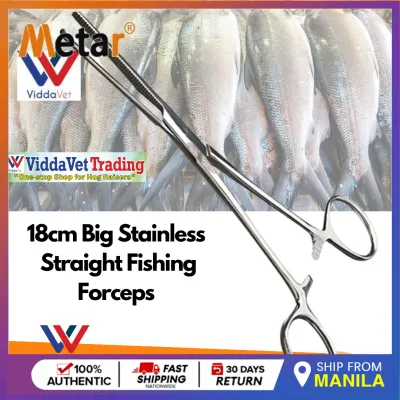
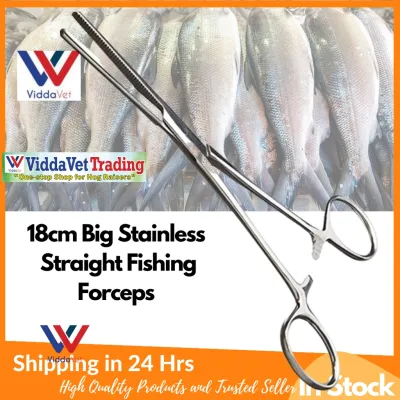

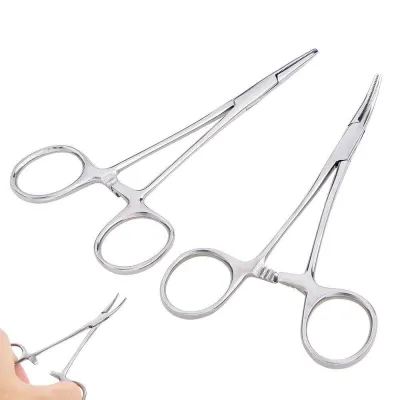
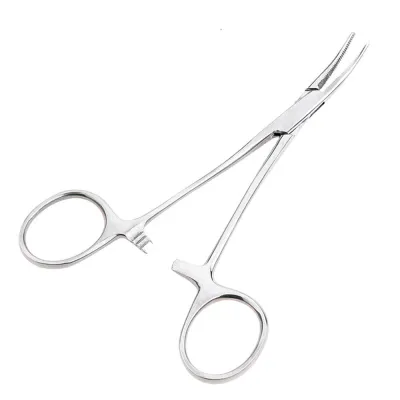
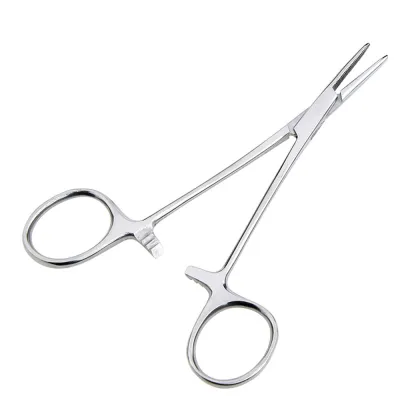
Prices are valid at publication and may change. Please refer to the product page for the latest price.
Anglers and home cooks often realize that a single pair of forceps cannot transition seamlessly from the prep table to the water. Preparing a delicate milkfish (bangus) requires a completely different level of precision than extracting a deep-set hook from a wild barramundi (apahap). Having specialized tools for these distinct tasks prevents cross-contamination, protects your gear, and ensures that each tool operates within its designed limits.
Before purchasing any forceps, you must evaluate three primary physical attributes: the tip profile, the jaw serration, and the overall shaft length. The tip profile determines how easily you can grab fine bones without tearing the surrounding meat. Jaw serration provides the friction necessary to hold onto slippery membranes, while the shaft length ensures you can reach deep into a fish’s mouth or work comfortably on a filleting board.
Matching Forceps Length and Tip Profile to Fish Species
Small to medium species, such as tilapia, local snappers (maya-maya), and milkfish (bangus), require forceps that prioritize precision over raw power. When deboning bangus, for example, you must navigate a complex network of fine, Y-shaped pin bones embedded deep within the muscle tissue. For these tasks, a shorter forceps length of 5 to 6 inches is highly recommended. This shorter length keeps your hand close to the working tip, maximizing your tactile feedback and allowing you to feel when the jaw has securely clamped onto a bone.

Larger predatory fish with deep mouths, such as groupers (lapu-lapu) or trevally (talakitok), present entirely different challenges. These species often have thick, rigid rib bones and tough mouth membranes that require substantial force to manipulate. A longer shaft, ranging from 8 to 10 inches, is essential when working with these larger fish. The extended length provides the necessary mechanical leverage to pull stubborn bones and keeps your hands safely away from sharp teeth, gill plates, and dorsal spines during hook removal.
The choice between straight and curved tips depends heavily on your working angle and the specific task at hand. Straight-tipped forceps are the standard choice for flat-surface work, such as pulling pin bones from a fillet resting flat on a cutting board. They allow you to point the tool directly at the bone and pull straight upward along the line of the bone’s natural orientation. Curved-tipped forceps, on the other hand, excel when your line of sight or access angle is obstructed. The curved tip allows you to reach around skeletal structures or slip into tight mouth cavities to retrieve hooks without blocking your view of the target area.
Tip thickness and jaw serration must also be matched to the bone structure of your catch. Fine, narrow tips are indispensable for delicate fish because they minimize the amount of flesh displaced during extraction. However, these fine tips can easily misalign if used on thick, heavy bones. For larger fish with robust rib cages, broader jaws with aggressive, deep serrations are necessary. These heavy-duty jaws grip the bone securely, preventing slippage and ensuring a clean pull even when the bone is coated in slippery oils and moisture.
Evaluating Grip, Locking Mechanisms, and Corrosion Resistance
The tropical climate of the Philippines introduces high humidity and constant exposure to moisture, making grip security a primary safety concern. When cleaning or deboning fish, your hands will inevitably become wet, oily, or covered in fish slime. Smooth, bare metal handles become incredibly slippery under these conditions, leading to hand fatigue and accidental slips. Look for forceps featuring textured rubber grips, non-slip polymer sleeves, or oversized finger loops that accommodate gloved hands to ensure a secure hold.
A reliable locking mechanism, typically a multi-position ratchet near the finger loops, is highly beneficial for both deboning and hook removal. This mechanism allows you to clamp the jaws onto a bone or hook shank and lock them in place, maintaining constant pressure without requiring continuous hand strength. This feature is particularly useful when pulling stubborn rib bones, as it allows you to focus your energy on the pulling motion rather than squeezing the handles together.
Corrosion resistance is non-negotiable, especially when fishing or preparing catch in coastal saltwater environments. Saltwater accelerates rust at an alarming rate, which can quickly seize the pivot joint of your forceps and render them useless. When selecting forceps, verify the manufacturer’s specifications for high-grade stainless steel, such as marine-grade 316 or 420 alloys. Some premium models feature protective coatings like titanium nitride or Teflon, which provide an extra layer of defense against the corrosive effects of salt and humidity.
You must also choose between spring-loaded and standard pivot designs based on your expected usage patterns. Spring-loaded forceps automatically open when you release hand pressure, which significantly reduces hand fatigue during repetitive tasks, such as deboning multiple fillets in a single session. Standard pivot designs lack this internal spring, relying instead on your fingers to push the handles apart. While standard designs require slightly more effort, they have fewer moving parts and no internal springs that can rust, break, or trap debris over time.
Building Your Shortlist: A Step-by-Step Selection Checklist
To find the perfect forceps for your needs, follow this step-by-step framework to narrow down your options:
- Step 1: Identify your target species. List the top three fish you catch and prepare most frequently. Note their average physical size, the depth of their mouths, and the thickness of their bone structures.
- Step 2: Determine your primary environment. Are you fishing in freshwater lakes like Laguna de Bay or local rivers, or coastal saltwater areas? This dictates whether you need standard rust resistance or high-end marine-grade materials.
- Step 3: Cross-reference species with tool dimensions. Match your species list to the recommended lengths and tip profiles. If your target species vary widely, select two distinct pairs of forceps: a short, fine-tipped pair for delicate kitchen prep and a longer, heavy-duty pair for field hook removal.
- Step 4: Verify product labels and specifications. Check the manufacturer's details for locking reliability, exact steel grades, and grip materials before making a purchase. Ensure these specifications match your intended use to guarantee long-term durability.
Safe Handling, Cleaning, and Maintenance
Proper maintenance is essential to preserve the hygiene, safety, and longevity of your fish deboning forceps. Immediately after each use, especially when exposed to saltwater, fish blood, or slime, rinse the tool thoroughly under clean, running fresh water. This simple step removes salt crystals and organic debris before they can dry and cause corrosion or bacterial growth in the pivot joint.
After rinsing, dry the forceps completely using a clean, dry cloth. Do not store them while they are still damp, and avoid leaving them in closed, humid tackle boxes where moisture can accumulate. Pay close attention to the recessed areas around the pivot pin and the locking ratchet teeth, as these are the most common sites for hidden rust to develop.
To keep the pivot joint operating smoothly, apply a drop of food-safe mineral oil or manufacturer-approved lubricant to the moving parts periodically. If the forceps are used primarily for food preparation, ensure that any lubricant used is strictly non-toxic and rated for food-contact surfaces. Work the joint back and forth several times to distribute the oil evenly, then wipe away any excess.
Before each use, perform a quick pre-use inspection of the tool. Check that the jaws align perfectly when closed, as even a slight misalignment will cause the forceps to slip off fine bones. Inspect the pivot joint for any play or looseness, and check the locking mechanism to ensure it engages securely without slipping under pressure.
Frequently Asked Questions (FAQ)
Can I use standard medical forceps for fish deboning?
While standard medical forceps look very similar to fishing forceps, they are generally not suitable for long-term fish preparation or field use. Medical forceps are typically designed for sterilization in controlled clinical environments rather than exposure to harsh outdoor elements like saltwater and fish slime. They often lack the robust corrosion resistance required for marine environments and may rust quickly. Furthermore, their jaw serrations are designed for gripping soft human tissue rather than hard, slippery fish bones, which can lead to frequent slippage and torn fish flesh.
How do I safely remove deep hooks without injuring the fish?
To safely remove a deep hook, first clamp the forceps securely onto the shank of the hook using the locking mechanism to prevent slippage. Ensure your forceps are long enough to keep your fingers completely clear of the fish’s teeth and gill plates. Gently push the hook downward and twist it in the opposite direction of its entry angle to disengage the barb from the tissue. Once the barb is free, carefully back the hook out along the path of entry; if the hook is lodged too deeply in a vital organ, it is safer for the fish’s survival to cut the line as close to the hook as possible rather than forcing extraction.
Community discussion
Share your experience or ask a question. Comments are reviewed before publication.