
Securing small tools, lights, and navigation aids is a critical aspect of gear management during mountain climbing. Selecting the right pocket clip depends heavily on the specific accessory weight, the intended attachment point, and the environmental conditions you expect to face. Rather than relying on a single universal solution, climbers must evaluate clip mechanisms based on durability, ease of use with gloves, and secure retention during dynamic movements.
Before attaching any accessory to your harness or pack, recognize that equipment cannot replace proper training, experience, and sound situational judgment. High-risk outdoor activities like mountain climbing expose gear to extreme forces, sudden impacts, and harsh weather. If a clip fails, the loss of a critical tool like a headlamp or a multi-tool can quickly escalate a manageable situation into a severe safety hazard. Therefore, understanding the limits of your gear, performing regular checks, and knowing when to stop and secure items in a zippered pocket are fundamental skills for any climber.
In tropical climbing environments, such as the humid peaks of the Philippines, gear management faces unique challenges. High humidity, sudden downpours, and sweat can quickly degrade low-quality materials, making robust gear selection even more vital. Whether you are scrambling up steep rock faces or trekking through dense jungle trails, every clip must perform reliably under pressure. This guide will walk you through the essential factors to consider when choosing and maintaining pocket clips for your climbing accessories.
Products mentioned in this guide
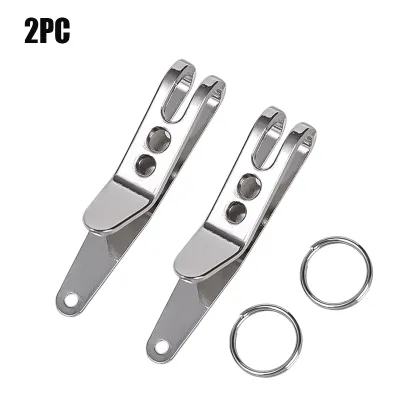
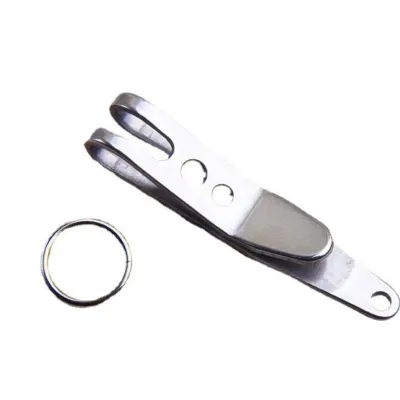
![[Bside Tool Store] Metal Waist Belt Buckles Holster Sheath Clasp Pocket Wallet Key Hook Holder Clip](https://img.lazcdn.com/g/p/8a95e7f21f73bae6fe6e4fd253428b08.jpg_400x400q80.jpg_.webp)
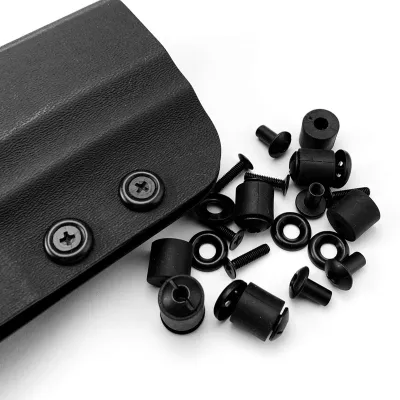
Prices are valid at publication and may change. Please refer to the product page for the latest price.
Understanding Clip Mechanisms for Climbing Gear
Spring-loaded clamps are a common choice for securing lightweight accessories. These clips rely on the constant tension of an internal coil or leaf spring to pinch fabric, webbing, or pockets. While they offer quick, one-handed attachment and removal, their tension retention can degrade over time under repeated use. As the spring material experiences fatigue, the clamping force decreases, making the clip more susceptible to sliding off during sudden movements. In humid tropical climates, moisture can easily penetrate the spring housing, leading to hidden rust that further compromises the spring’s structural integrity. Climbers should regularly test the tension of these clamps and avoid using them for heavy or critical items.
For a more secure, hard attachment point, snap hooks and carabiner-style micro-clips are highly effective. These designs feature a closed-loop system with a spring-loaded gate that must be manually depressed to open. This mechanical barrier ensures that once the clip is attached to a gear loop or daisy chain, it cannot slide off accidentally, even during dynamic climbing movements or when brushing against rock faces. However, it is crucial to remember that these micro-clips are strictly utility tools and are not rated for climbing safety or load-bearing fall protection. Always check the manufacturer’s markings to prevent any dangerous confusion with life-safety carabiners.
Magnetic attachments offer unmatched convenience for quick-access items, such as hydration tubes or lightweight sunglasses. They use powerful rare-earth magnets to snap two halves of a connection together. However, magnetic clips have inherent limitations in high-vibration or high-impact scenarios. A sudden jolt, a slip, or a firm brush against a rock wall can easily break the magnetic bond, causing your gear to fall. Because of this risk, magnetic attachments should never be used for critical climbing gear, and any magnetically secured item should always be backed up with a physical safety tether.
Webbing or MOLLE-compatible clips are designed to integrate seamlessly with the structured webbing found on tactical packs, hiking backpacks, and some climbing harnesses. These clips typically feature a locking bar or a folding gate that wraps completely around a 1-inch webbing strap, creating an incredibly stable and secure connection. The primary trade-off with these clips is accessibility; they are often difficult to remove quickly and usually require two hands to unlock. This makes them ideal for semi-permanent gear setups, such as securing a backup GPS unit, a small first-aid kit, or an emergency whistle that does not require instant, one-handed deployment.
Key Selection Criteria for Mountain Environments
When climbing in humid or coastal mountain ranges, such as those found across the Philippines, corrosion is a constant threat to metal gear. Sweat, rain, and mist can cause standard steel clips to rust within a matter of weeks. To prevent this, always check the manufacturer’s specifications for corrosion-resistant materials. Marine-grade stainless steel (such as 316 stainless), titanium, and anodized aluminum are excellent choices that withstand moisture without degrading. Additionally, look for protective coatings like physical vapor deposition (PVD) or powder coating, which provide an extra layer of defense against the elements. Avoid cheap, untreated metal clips that can rust, seize up, and potentially stain or weaken your synthetic climbing gear.

On steep terrain, your safety depends on keeping at least one hand securely on the rock, a ladder, or a fixed line. This means any accessory clip you use must be easily operable with a single hand. Furthermore, if you are climbing in cold conditions or handling rough rock, you will likely be wearing climbing gloves. A clip with a tiny, recessed release button or an overly stiff gate will be nearly impossible to operate with gloved fingers. Before setting out, practice releasing and attaching your clipped accessories using only your non-dominant hand while wearing your climbing gloves. If the action feels clumsy or requires excessive force, look for a clip with a larger, textured contact point.
Every gram of weight you carry up a mountain contributes to physical fatigue, making lightweight gear highly desirable. Titanium and advanced engineering polymers offer excellent weight-to-strength ratios, allowing you to secure your gear without adding unnecessary bulk. However, you must never sacrifice strength for weight savings when it comes to securing valuable or safety-critical accessories. Evaluate the clip’s strength based strictly on the manufacturer’s stated load limits rather than guessing. If a clip is designed only for lightweight keys, do not attempt to use it to secure a heavy multi-tool or a heavy-duty flashlight, as the physical forces of climbing can easily exceed its holding capacity.
Plastic and polymer clips are popular because they are lightweight and completely immune to rust. However, they are highly sensitive to environmental factors like temperature extremes and solar radiation. Intense tropical sunlight delivers high levels of ultraviolet (UV) radiation, which can degrade standard plastics over time, causing them to become brittle, discolor, and eventually snap under pressure. Similarly, high-altitude climbing can expose gear to freezing temperatures, which can make certain cheap plastics stiff and fragile. When choosing polymer clips, verify that the manufacturer specifies the use of UV-stabilized materials and provides a rated temperature range suitable for alpine or tropical outdoor use.
Matching Clip Designs to Specific Climbing Accessories
Heavy or critical items, such as multi-tools, primary headlamps, and compact cameras, require the highest level of security. A simple slide-on pocket clip is highly susceptible to being knocked loose when you scramble over boulders or squeeze through tight rock chimneys. For these high-value items, you should rely on locking or high-tension mechanical mechanisms. Look for clips that feature a threaded locking collar, a secondary locking switch, or a screw-down gate. These designs ensure that the clip cannot open accidentally, even if it is subjected to a direct impact or caught on a branch. While these locking mechanisms may take a few extra seconds to open, the peace of mind they provide is well worth the minor delay.
For lightweight, frequently accessed items like lip balm, a small compass, or a trail whistle, a quick-release design or a high-tension friction clip is often the most practical choice. Because these items exert very little downward force, they do not require heavy-duty locking gates. A simple, well-designed friction clip allows you to quickly slide the item off your pocket or harness loop with one hand, use it, and slide it back into place without interrupting your climbing rhythm. However, even lightweight items can snag on external obstacles. To minimize this risk, choose clips with a low-profile design that sits flush against your body or pack, reducing the chances of the accessory catching on rock edges or vegetation.
Before purchasing any pocket clip, carefully evaluate the attachment points on your climbing harness, chalk bag, or apparel. The jaw width and opening clearance of the clip must be sufficient to fit over the thickness of your gear loops or reinforced webbing straps. Forcing a narrow clip onto a thick, padded harness loop can permanently bend the clip, destroying its spring tension and rendering it useless. Conversely, a clip with a jaw that is too wide will slide around loosely, increasing the risk of snagging or accidental detachment. Ensure the clip fits snugly and securely over the intended attachment point, with the jaw closing completely to maintain maximum grip.
It is a fundamental rule of gear management that no single clip should be solely trusted to secure critical equipment. Mechanical parts can fail, gates can be forced open by rock contact, and user error can lead to incomplete attachment. For any item that is essential to your safety or navigation—such as a GPS unit, a primary light source, or a communication device—always use a secondary tether or lanyard as a backup. Connect the accessory to a secure anchor point on your harness or pack using a lightweight, high-strength cord or a coiled lanyard. The pocket clip serves to keep the item organized and prevent it from swinging, while the tether acts as a fail-safe to catch the item if the clip fails.
Installation, Maintenance, and Safety Checks
Before every climb, establish a strict routine to inspect all your accessory clips. Begin with a thorough visual inspection, looking for any signs of bending, warping, or misalignment. A metal clip that has been slightly bent out of shape will no longer exert the correct amount of tension, making it highly prone to slipping. Next, perform a physical check by opening and closing the clip several times. The gate or jaw should move smoothly without sticking, and it should snap back into the closed position with a sharp, positive click. If you notice any sluggishness, grinding noises, or a weak spring action, the clip must be serviced or replaced before you head onto the mountain.
Climbing environments are filled with abrasive particles, including fine rock dust, sand, and climbing chalk. These particles can easily migrate into the hinges, springs, and moving parts of your pocket clips, causing rapid wear and potentially jamming the mechanism. To maintain optimal performance, clean your clips regularly. Rinse them thoroughly under warm, fresh water to flush out any trapped debris. Use a soft-bristled brush, such as an old toothbrush, to gently scrub the hinge and spring areas. Avoid using harsh chemical solvents, WD-40, or heavy degreasers, as these can strip away factory lubricants, damage protective coatings, or degrade plastic components. Once clean, allow the clips to air dry completely before storing them.
Over time, exposure to the elements will inevitably cause materials to degrade. For polymer and plastic clips, inspect the surface closely under bright light for micro-cracks, discoloration, or a chalky texture, which are clear indicators of UV damage and material fatigue. For metal clips, look for pinpoint rust spots, pitting, or hairline fractures, especially around high-stress areas like the hinge pin and the spring coil. If you detect any of these signs, the material has been compromised and can fail suddenly under load.
Knowing when to retire a clip is essential for maintaining safety on the mountain. You must immediately retire any clip that shows visible cracks, permanent deformation, severe corrosion, or a significant loss of spring tension. Never attempt to bend a deformed metal clip back into shape; the process of bending weakens the metal structurally, making it highly likely to snap under sudden tension. If a high-quality clip fails prematurely or shows signs of manufacturing defects, consult the manufacturer’s warranty or replacement guidelines. Always prioritize safety over cost; replacing a cheap clip is far better than losing an expensive piece of climbing gear or compromising your safety on a climb.
Frequently Asked Questions (FAQ)
Can I use standard everyday carry (EDC) pocket clips for mountain climbing?
Standard everyday carry (EDC) pocket clips are typically designed for urban environments, where they experience minimal movement and low exposure to harsh elements. They often lack the corrosion resistance, heavy-duty spring tension, and secure locking mechanisms required for mountain climbing. Using a standard EDC clip increases the risk of accidental detachment during dynamic movements, scrambling, or when squeezing through tight rock chimneys. To ensure your gear remains secure, verify if the manufacturer explicitly rates the clip for outdoor, high-impact, or active-use scenarios before taking it onto the mountain.
How do I prevent pocket clips from damaging my climbing harness or apparel?
To protect expensive climbing gear and apparel from abrasion, always inspect the clip jaws for sharp edges, burrs, or rough metal before attachment. Choose clips with smooth, rolled edges or protective rubberized coatings. Avoid clipping accessories directly onto critical load-bearing webbing, structural stitching, or waterproof membranes, as the constant friction can wear down the fibers and compromise safety or weatherproofing. Instead, utilize dedicated gear loops, reinforced daisy chains, or heavy-duty attachment points designed specifically to handle the wear and tear of accessory clips.
Are magnetic pocket clips safe to use near climbing navigation tools?
Magnetic pocket clips pose a significant risk of interference when placed near sensitive climbing navigation tools. The magnetic fields generated by these clips can temporarily or permanently distort the readings of analog compasses, digital altimeters, and avalanche transceivers, potentially leading to dangerous navigation errors. To maintain safety, keep all magnetic clips at a distance recommended by your navigation equipment’s manufacturer—often at least 30 centimeters. For securing navigation and safety gear, rely instead on mechanical spring clips, snap hooks, or secure tethers that do not emit magnetic fields.
Community discussion
Share your experience or ask a question. Comments are reviewed before publication.