
When you are looking to introduce your daughter to the joy of roller skating, finding the right pair of skates can feel overwhelming. With so many bright designs, cartoon characters, and flashing lights on the market, it is easy to get distracted by aesthetics. However, the most critical factors for a beginner are safety, stability, and physical comfort. Choosing the right roller skates for kids, particularly for a young girl who is just starting out, requires focusing on functional engineering rather than visual appeal alone.
To ensure a safe and positive introduction to the sport, several non-negotiable features must drive your purchase. These include push-button adjustable sizing to accommodate rapid growth, high-top boots for essential lateral ankle support, softer polyurethane wheels for reliable grip, and a high-friction rubber braking system. While your daughter might be drawn to a specific color or style, prioritizing these safety-oriented features will give her the confidence she needs to learn and prevent painful injuries.
Sizing and Fit: Adjustable Skates vs. Fixed Sizes
How Adjustable Mechanisms Work
Most modern recreational roller skates designed for kids feature an adjustable sizing mechanism. This system typically utilizes a secure push-button or a rotating dial near the heel or midfoot. When pressed or turned, the mechanism releases the lock, allowing you to slide the toe box forward or backward to expand or contract the boot’s length. This design typically spans four full shoe sizes, meaning a single pair of skates can last a child through several growth spurts.
Products mentioned in this guide
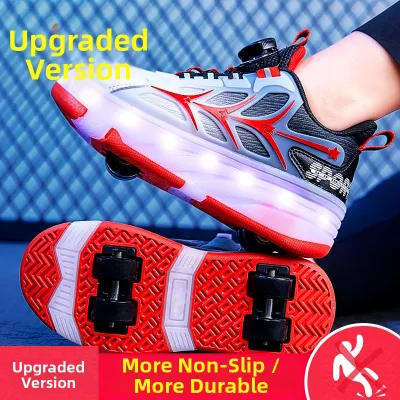
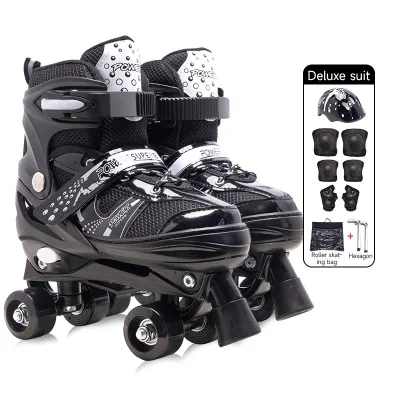
Prices are valid at publication and may change. Please refer to the product page for the latest price.
To get the most accurate fit, do not rely on standard shoe sizes, as skate sizing can vary significantly between brands. Instead, have your daughter stand on a blank sheet of paper with her heel against a wall. Trace the outline of her foot, and measure the distance from the heel to the tip of her longest toe in millimeters. Compare this measurement directly to the manufacturer’s specific size chart. When adjusting the skates, ensure they fit snugly at the smallest setting she currently needs, leaving no excess room that allows her foot to slide forward or backward inside the boot.
When to Consider Fixed-Size Skates
While adjustable skates are highly practical for growing children, fixed-size skates have a distinct place in roller sports. Fixed-size models are generally preferred for older children, advanced skaters, or those entering specific disciplines such as artistic roller skating, roller derby, or competitive inline racing. Because a fixed-size boot is constructed as a single, solid unit, it provides superior energy transfer from the leg to the wheels, allowing for more precise maneuvers and immediate responsiveness.
However, for a young beginner, buying a fixed-size skate often tempts parents to purchase a size or two larger than necessary to prolong the skate’s lifespan. This is a significant safety hazard. Skates that are too large allow the foot to slide inside the boot, causing friction that leads to painful blisters. More importantly, oversized skates compromise ankle stability, making it difficult for the child to maintain balance and increasing the risk of ankle rolls, falls, and joint strain.
Ankle Support and Boot Design: Keeping Young Feet Safe
High-Top vs. Low-Top Boots
For young beginners, high-top boots are the absolute standard. A high-top boot wraps securely around the ankle joint, extending several inches above the ankle bone to provide essential lateral support. This height prevents the ankle from rolling outward or inward while the child is learning to balance on wheels. Young children are still developing the core strength and lower leg muscle coordination required for skating, and a high-top cuff acts as a supportive brace that reduces muscle fatigue.

Low-top boots, which sit below the ankle joint, are designed for specialized skating styles like speed skating or jam skating. These disciplines require maximum ankle mobility to execute deep crossovers and rapid strides. However, low-top boots offer virtually no lateral ankle support. If a beginner wears low-top skates, their ankles will likely bow inward, leading to poor posture, rapid fatigue, and an elevated risk of severe sprains or falls. Avoid low-top models entirely until your daughter has mastered basic balance, stopping, and turning techniques.
Hard Shell vs. Soft Boot Construction
The choice between a hard-shell boot and a soft boot depends largely on where your daughter will be skating and her physical comfort preferences. Hard-shell skates are constructed from molded, impact-resistant plastic. They offer the highest level of physical protection against impacts and falls, and they provide unmatched ankle support because the plastic cuff does not bend under weight. This makes them highly durable and ideal for skating on rough, uneven outdoor surfaces like subdivision roads, concrete barangay courts, or public parks.
Soft-boot skates, on the other hand, are constructed from reinforced fabrics, mesh, and synthetic leather, resembling a thick athletic shoe. They are significantly lighter and more breathable than hard-shell skates, which is a major advantage in the hot, humid tropical climate of the Philippines. Soft boots provide immediate comfort out of the box and do not require a long break-in period. However, they offer less structural support. If you choose a soft boot, ensure it features reinforced plastic inserts around the ankle cuff to prevent the fabric from collapsing under your child’s weight.
Secure Closure Systems
A skate’s closure system is what keeps the foot locked into the correct position inside the boot. The most reliable children’s skates utilize a triple-closure system, which combines three distinct mechanisms to secure different parts of the foot. The first layer is traditional laces or a quick-pull lace system at the bottom, which allows you to customize the tightness across the forefoot. The second layer is a wide Velcro power strap crossing diagonally over the instep, which is crucial because it pulls the heel back into the heel pocket, preventing the foot from sliding forward.
The third and topmost layer is a micro-adjustable plastic buckle at the upper cuff. This buckle locks the ankle firmly in place and allows you to adjust the lateral stiffness of the boot. When putting on the skates, always tighten the systems from the bottom up. Ensure that the top buckle is snug enough to support the ankle but still allows for a slight forward bend at the knee. If any of these closure components feel flimsy or slip out of place under pressure, the skate will not provide the necessary stability.
Wheels and Bearings: Choosing the Right Setup for Beginners
Quad vs. Inline: Which is Better for Beginners?
Parents often debate whether to buy quad skates (the classic four-wheel setup with two wheels in front and two in back) or inline skates (where the wheels are aligned in a single row). Quad skates offer a wider, more stable platform when standing still, which can give young beginners an immediate boost of confidence. They are excellent for smooth indoor rinks, flat concrete patios, and artistic skating. However, because of their wide profile, quad skates can feel bulky, and they require a wider leg stance to push off effectively.
Inline skates, conversely, have a narrower profile that aligns with the natural forward motion of walking or running. This makes them highly intuitive for many children once they get moving. Inline skates are also significantly better at handling outdoor terrain. The single line of wheels can roll over small pebbles, cracks in the concrete, and twigs much more easily than quad wheels, which can catch on debris and cause sudden stops. Ultimately, both styles are suitable for beginners, so you should let your daughter’s personal preference and her intended skating environment guide your choice.
Wheel Hardness and Size for Stability
The performance of a skate’s wheels is determined by two main specifications: hardness (measured on the durometer scale) and diameter (measured in millimeters). For beginners skating outdoors on concrete courts, plazas, or paved roads, softer wheels are essential. Look for a durometer rating between 78A and 82A. Softer polyurethane wheels act like shock absorbers, dampening the vibrations from rough surfaces and providing a high level of grip. Harder wheels (85A and above) are slick and slide easily on indoor floors, which can cause a beginner’s feet to slip out from under them.
Wheel size also plays a critical role in stability. Smaller wheels (typically 58mm to 62mm for quads, and 64mm to 72mm for inline skates) keep the skater closer to the ground. This lower center of gravity makes it much easier for a young girl to maintain her balance and control her speed. Larger wheels roll faster and roll over obstacles more easily, but they raise the skater’s height, requiring more ankle strength to keep the skates upright. Stick to smaller, wider wheels for her first pair.
Bearing Ratings: Do They Matter for Kids?
Inside every skate wheel are two bearings that allow the wheel to spin on the axle. Bearings are rated using the ABEC system (Annular Bearing Engineering Committee), which uses odd numbers from 1 to 9 (ABEC-1, ABEC-3, ABEC-5, ABEC-7, ABEC-9). A higher ABEC rating indicates tighter tolerances and a more precise manufacturing process, resulting in a bearing that spins faster and longer with less effort. While high-speed bearings are desirable for competitive racers, they are actually counterproductive and potentially dangerous for young beginners.
For a child learning the basics, you want a controlled, predictable roll. Standard bearings rated at ABEC-3 or ABEC-5 are ideal. They provide enough smooth rotation for an enjoyable skate without allowing the wheels to spin out of control on slight inclines or during a sudden loss of balance. Avoid skates equipped with ultra-fast ABEC-9 bearings for a beginner, as the lack of rolling resistance can make the skates feel too slippery and slick, undermining her confidence as she tries to find her footing.
Braking Systems: Teaching Your Daughter How to Stop Safely
Learning how to stop is the most important skill any young skater must master before they can safely skate independently. The braking systems on quad and inline skates operate differently, and understanding these differences will help you teach your daughter how to use them effectively. Quad skates feature a toe stop located at the very front of the plate. To use a toe stop, the skater must drag one foot behind them and gently apply pressure to the toe pad, or tip their foot forward while moving at very slow speeds. This motion is highly intuitive for young children because it mimics the natural action of dragging a foot to stop.
Inline skates utilize a heel brake, which is a rubber block attached to the back of the frame on one of the skates (usually the right side). To engage a heel brake, the skater must adopt a ‘scissor’ stance, sliding the braking foot slightly forward, lifting the toe of that foot, and pressing the heel pad firmly into the ground while leaning their upper body slightly forward. This technique requires a bit more coordination and balance than using a toe stop, as the child must balance primarily on the non-braking foot while applying pressure.
When purchasing skates, always inspect the material of the brake pad or toe stop. High-quality skates use thick, durable rubber that provides high friction against the ground. Many cheap, toy-grade skates sold on online marketplaces use hard, shiny plastic for their brakes. Plastic brakes offer almost no grip on concrete or wood, sliding smoothly over the surface instead of bringing the skater to a stop. Ensure the brake is securely bolted to the frame and can be replaced once it wears down.
Beyond the Skates: Essential Protective Gear for Kids
No matter how high-quality or stable your daughter’s skates are, falls are an inevitable part of the learning process. Before she ever takes her first stride, she must be equipped with a complete set of protective gear. A certified helmet is the most critical piece of equipment. Look for a multi-impact helmet that is dual-certified for both skateboarding and bicycling. The helmet must fit snugly, sitting level on her head about two finger-widths above her eyebrows, and the chin strap must be adjusted so that only one or two fingers can fit between the strap and her chin.
The next essential components are wrist guards, knee pads, and elbow pads. Wrist guards are particularly vital because the natural human reflex during a fall is to reach out with open hands to break the impact. This reflex often results in wrist sprains or fractures. Wrist guards feature rigid plastic splints on the palm side that absorb the impact and allow the skater to slide forward safely on the ground. Knee and elbow pads should feature hard plastic outer shells (caps) rather than simple foam padding, as the hard shells allow the child to slide out of a fall on concrete, dispersing the force of the impact away from the joints.
To ensure maximum protection, always check the fit of the gear before she starts skating. The pads should fit snugly enough that they do not slide down or shift out of place when she moves, but they should not pinch her skin or restrict her blood flow. A good rule of thumb is to establish a strict ‘gear first, skates second’ rule. Putting on her helmet, wrist guards, and pads before she slips her feet into the skates ensures she is fully protected from the moment she stands up on her wheels.
Pre-Purchase Checklist: What to Verify Before You Buy
Before you finalize your purchase, whether you are shopping at a local sporting goods store or browsing an online marketplace, use this practical checklist to verify that the skates meet all safety and quality standards:
- Test the Adjustment Lock: Press the adjustment button and slide the boot through its sizes. Ensure the mechanism clicks loudly and locks firmly into place at each setting. It should not slip or wiggle when you apply downward pressure on the toe box.
- Inspect the Inner Liner: Feel inside the boot to check the thickness of the padding. Look for a well-padded, breathable inner liner that cushions the ankles and prevents pressure points. A removable liner is a major plus, as it can be taken out and washed to manage sweat and tropical humidity.
- Verify the Wheel Material: Check the product specifications to confirm the wheels are made of polyurethane (PU), not polyvinyl chloride (PVC) or hard plastic. Polyurethane wheels will feel slightly rubbery to the touch and will grip the floor, whereas plastic wheels will feel slick and make a loud, hollow clicking noise on hard surfaces.
- Check the Brake Pad Material: Press your fingernail into the brake pad or toe stop. It should have some give, indicating it is made of high-friction rubber. If it feels like solid, unyielding plastic, avoid it.
- Review the Return and Exchange Policy: Because proper fit is paramount, ensure the retailer offers a flexible return or exchange policy. You will need to have your daughter try the skates on at home, stand up, and roll slightly to ensure there are no painful pinch points or excessive heel slippage before committing to the purchase.
In terms of budget, high-quality, adjustable recreational skates for kids generally fall within a price band of ₱2,500 to ₱6,000 in the Philippines. While it can be tempting to buy cheap toy-grade skates priced under ₱1,000, these models often cut corners on safety, utilizing weak plastic frames, plastic wheels, and flimsy plastic buckles that can break under stress or fail to support your daughter’s ankles. Investing in a reputable brand ensures durable construction, reliable safety features, and a much more enjoyable learning experience for your child.
Frequently Asked Questions (FAQ)
At what age can a child start roller skating?
Most children develop the necessary gross motor skills, balance, and coordination to begin learning how to roller skate between the ages of 3 and 5. However, readiness is highly individual. Rather than relying strictly on age, assess your daughter’s physical confidence, her ability to run and jump without falling, and her capacity to listen to and follow basic safety instructions. If she is enthusiastic and can balance on one foot for a few seconds, she is likely ready to try skating with proper supervision and full protective gear.
Should I buy quad skates or inline skates for my daughter?
The choice depends on her personal preferences and where she plans to skate. Quad skates offer excellent side-to-side stability when standing still, making them highly popular for indoor rinks, dance skating, and young beginners who feel anxious about balancing. Inline skates provide a narrower profile that mimics natural walking strides, making them much easier to maneuver outdoors on paved trails, subdivision roads, and park paths because they roll over cracks and small pebbles more smoothly. Let her choose the style that excites her most, as her enthusiasm is key to her learning.
How do I know when it is time to replace my child's roller skates?
You should replace your daughter’s skates when they no longer provide a safe, supportive fit or when key components show critical wear. Check the fit regularly: if her toes are pressed firmly against the front of the inner liner even when the skates are adjusted to their maximum size setting, it is time for a larger pair. Additionally, inspect the skates for structural damage. If the plastic ankle cuff shows cracks, the adjustment mechanism slips, the closure buckles no longer lock securely, or the wheels have worn down unevenly to the point of losing traction, replace the skates immediately to prevent injuries.
Community discussion
Share your experience or ask a question. Comments are reviewed before publication.