
Finding the right home training tennis set for a compact space requires balancing your athletic goals with the physical realities of your property. In the Philippines, residential lots in urban areas often feature tight backyards, covered carports, or multi-purpose garages where a full-sized tennis court is out of the question. To practice your groundstrokes, volleys, or footwork effectively without damaging your home or disturbing your neighbors, you must select a configuration that matches your available clearance. The ideal setup is not a one-size-fits-all solution; rather, it is a system tailored to your specific swing radius, surface material, and storage capacity. By evaluating these spatial constraints first, you can transform a small outdoor area or garage into a highly functional training zone.
Assessing Your Available Space and Clearance Needs
Before purchasing any training equipment, you must accurately measure the physical boundaries of your intended practice area. Start by using a tape measure to record the length, width, and ceiling height of your garage or backyard. For indoor spaces like garages or covered carports, ceiling height is often the most critical limiting factor. You need to ensure that your overhead clearance accommodates not only your height but also the full extension of your racket during a serve or high volley.
To establish a safe swing radius, stand in the center of your practice space with your preferred racket. Slowly execute a full forehand, backhand, and overhead swing in slow motion, noting how close the racket tip comes to walls, shelves, or ceiling beams. As a general rule, you should add at least one meter of safety buffer beyond the tip of your extended racket in every direction. This buffer zone prevents accidental structural damage and protects your hands and racket from high-impact collisions with hard surfaces.
Products mentioned in this guide
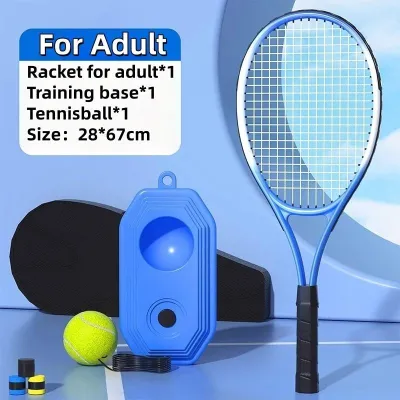
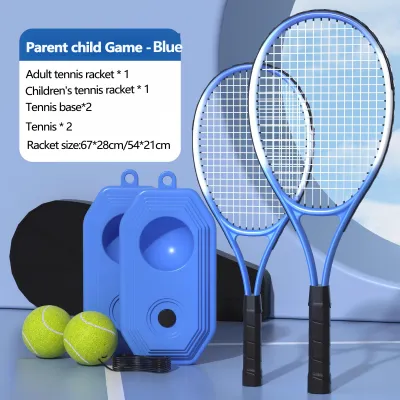
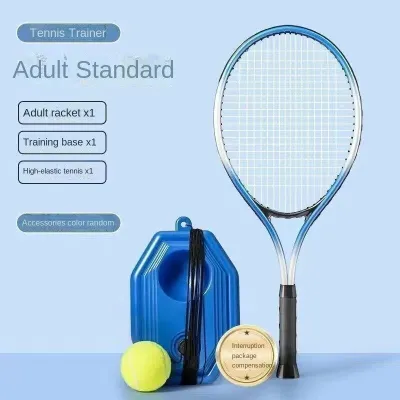
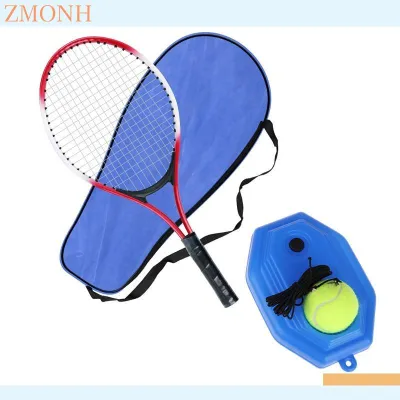
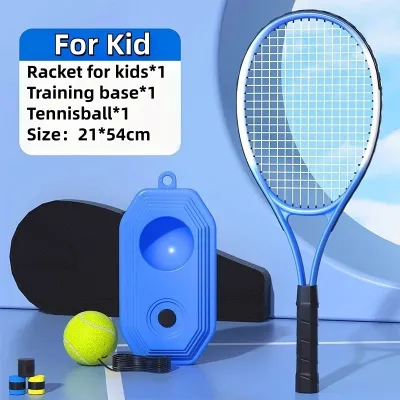
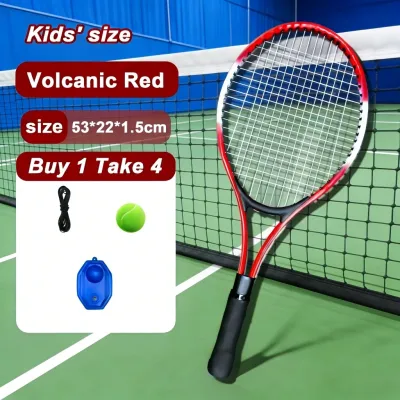
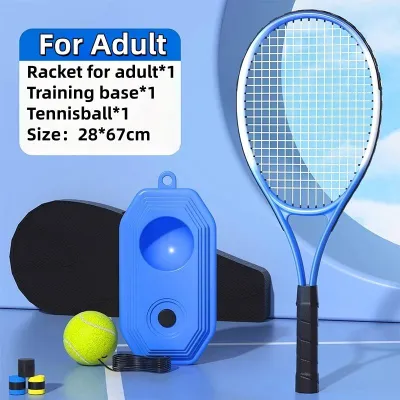
Prices are valid at publication and may change. Please refer to the product page for the latest price.
In addition to the swing radius, you must calculate the space required for ball rebound trajectories and player footwork. A tennis swing is rarely static; you will need room to split-step, slide, or adjust your positioning between strokes. If you are practicing in a narrow driveway or backyard, ensure there is a clear path behind you to back up without tripping over steps, potted plants, or drainage grates. The rebound path of the ball also requires a clear corridor free of fragile items like glass windows, light fixtures, or parked vehicles.
Matching Training Set Types to Your Space Constraints
Selecting the right home training tennis set involves mapping your measured dimensions to the operational requirements of different equipment categories. Each training tool has a specific footprint and a minimum distance required for safe, realistic play. For instance, a setup that works perfectly in an open garden may be completely unusable inside a single-car garage.

Before finalizing any purchase, always check the manufacturer’s specifications for the recommended clearance and ball bounce distance. These specifications indicate the minimum space the equipment needs to function as intended. Matching your spatial measurements to these product guidelines ensures that you do not end up with a high-velocity training tool that is too fast or too wide for your designated practice area.
Trainer Balls with Weighted Bases
For extremely tight spaces, such as a small balcony, a narrow driveway, or a single-car garage, a trainer ball with a weighted base is often the most practical configuration. This setup consists of a heavy plastic or metal base anchored to the ground, connected to a tennis ball by a highly elastic cord. Because the ball is tethered, you do not need a large court or a rebound net to keep the ball in play, making it excellent for practicing basic swing mechanics and rhythm.
When selecting a tethered trainer, verify the weight of the base and its filling requirements, as many models require you to add water or sand to prevent the base from sliding during hard hits. You should also check the elasticity of the cord and the compression level of the ball. A highly elastic cord is essential for a smooth return, while a lower-compression ball is generally easier to control in confined spaces, especially for players refining their stroke timing.
Foldable Rebounder Nets
If you have a moderate-sized backyard, a wide carport, or a double garage, a foldable rebounder net offers a more realistic hitting experience. These nets feature a tensioned fabric or mesh surface that catches the ball and flings it back to the player, simulating a continuous rally. Because the net absorbs much of the ball’s energy, you can practice full-power strokes without needing a massive clearance zone behind the target.
When evaluating rebounder nets, check the adjustable tension settings and the frame’s rebound angle. A net with adjustable angles allows you to customize the return trajectory, making the ball bounce higher or lower depending on your ceiling height. You must also calculate the minimum standing distance required to react to the returned ball safely. In enclosed spaces, a high-tension net can return the ball surprisingly fast, requiring quick reflexes and adequate distance to avoid being struck.
Portable Ball Machines
Portable ball machines are well-suited for larger home areas, such as long driveways, spacious backyards, or wide-open outdoor patios. These battery-powered or plug-in devices automatically feed balls at adjustable intervals, speeds, and spin rates, allowing you to practice repetitive strokes under realistic conditions. However, because the machine must sit at a distance to deliver a realistic trajectory, they require the largest operational footprint of any home training option.
To use a ball machine safely at home, verify the unit’s minimum feed distance and oscillation width. You must have enough space to position the machine at one end of the area while standing far enough away at the other end to react to the ball’s speed. Additionally, check the power source compatibility; if you plan to use it outdoors in tropical conditions, a battery-powered model is often more convenient than running long extension cords across a damp lawn or concrete patio.
Wall Targets and Backboards
Utilizing an existing concrete wall or installing a dedicated backboard is a classic and highly durable training method. This configuration is exceptionally robust and can withstand years of high-impact practice. It is particularly popular in residential areas where solid concrete firewall construction is common, providing a flat, predictable surface for consistent ball rebounds.
However, practicing against a wall requires careful verification of the wall’s structural integrity and local neighborhood noise regulations. The repetitive thud of a tennis ball against a concrete wall can carry significant distances, potentially disturbing neighbors in close-proximity housing. You must also ensure that the ground surface directly in front of the wall is smooth and level, allowing the ball to bounce cleanly back to your racket without unpredictable deflections.
Evaluating Surface, Setup, and Storage Requirements
The ground surface of your practice area plays a major role in both ball behavior and equipment stability. In the Philippines, home practice spaces are typically concrete driveways, tiled carports, or grass lawns. Concrete and asphalt provide a fast, high bounce that closely mimics hardcourt play, but they can be unforgiving on joints and quickly wear down standard tennis balls. Grass lawns offer a softer impact but can cause highly unpredictable bounces, especially if the ground is uneven or damp from tropical humidity.
Equipment stability is another critical factor, particularly for outdoor setups exposed to sudden wind gusts or heavy tropical downpours. When choosing portable nets, rebounders, or base trainers, verify the anchoring options provided by the manufacturer. Lightweight frames may require additional sandbags, water ballasts, or ground pegs to remain upright on windy days. For concrete surfaces where pegs cannot be used, look for equipment with wide, rubberized base feet that grip the ground without slipping.
Finally, consider how easily the training set can be packed away when your practice session ends. A garage or backyard often serves multiple purposes, from parking cars to hosting family gatherings. Prioritize training sets that feature foldable frames, integrated wheels, or quick-release pins. This allows you to rapidly collapse the equipment and store it flat against a wall or on a utility shelf, keeping your living spaces organized and free of clutter.
Common Space-Matching Mistakes to Avoid
One of the most common mistakes when setting up a home tennis training area is ignoring the full vertical and lateral arc of a natural racket swing. Players often measure the floor space but forget that a follow-through or an overhead smash extends far beyond their standing footprint. This oversight frequently results in cracked light fixtures, scratched walls, or damaged racket frames.
Another frequent error is underestimating the speed and bounce distance of balls returning from high-tension rebounders. In a short driveway or garage, a hard stroke can cause the ball to return much faster than your reaction time allows, leading to missed hits or physical impact. Always start with gentle strokes to test the rebound tension before committing to a full-power swing in a confined space.
Lastly, do not overlook environmental factors unique to residential areas, such as poor lighting and noise restrictions. Garages often have dim overhead lights that make tracking a fast-moving tennis ball difficult and unsafe. Installing temporary, high-visibility LED work lights can resolve this issue. Additionally, be mindful of the time of day you practice; repetitive hitting noises early in the morning or late at night can quickly strain relations with nearby neighbors.
Frequently Asked Questions (FAQ)
Can I use a standard tennis ball in a small garage?
Using a standard pressurized tennis ball in a small garage is generally not recommended due to the high bounce, rapid speed, and risk of property damage. Confined spaces amplify the velocity of standard balls, making them difficult to control and increasing the likelihood of breaking windows or denting walls. Instead, check product labels for low-compression transition balls, foam training balls, or felt-covered indoor practice balls. These alternatives travel at a slower pace and absorb more impact, allowing you to practice your swing mechanics safely within enclosed walls.
How do I protect my garage walls and windows during practice?
To safeguard your garage interior, you can install temporary protective barriers such as heavy-duty sports netting or impact-absorbing foam panels over fragile areas. Hanging a loose, weighted net a few inches in front of a window or drywall acts as an effective energy absorber, stopping stray balls before they make contact. Additionally, mark a clear physical boundary line on the floor using high-visibility tape. This line serves as a visual reminder to keep your body and racket swing at a safe, pre-measured distance from any structural hazards.
Community discussion
Share your experience or ask a question. Comments are reviewed before publication.