
Choosing the right 3×3 basketball depends heavily on where you play, as the abrasive concrete of local half-courts demands a completely different material than the polished wood or synthetic floors of indoor sports centers. In tropical climates where high humidity and sudden downpours are constant factors, your choice of ball affects not only your grip and control but also how long the ball survives. Selecting the wrong type can lead to a ball that slips out of sweaty hands or wears down to a smooth, useless sphere within a few weeks. By matching the ball’s material and construction to your primary playing surface, you ensure consistent bounce, reliable handling, and better value for your money.
Understanding Official 3×3 Basketball Specifications
The game of 3×3 basketball is fast-paced, physical, and played on a half-court, which requires a very specific type of ball to maintain its rapid tempo. Unlike standard full-court games that use different ball sizes depending on the division, official 3×3 play uses a unique hybrid specification. A standard 3×3 basketball features the circumference of a Size 6 ball (about 72.4 centimeters) but carries the weight of a standard Size 7 ball (about 620 grams).
This specific combination is designed to optimize handling and shooting under intense defensive pressure. The smaller Size 6 circumference allows players with various hand sizes to grip, pass, and control the ball more easily during quick drives and hand-offs. Meanwhile, the heavier Size 7 weight ensures the ball resists wind interference on outdoor courts and behaves predictably when bouncing or hitting the rim.
Products mentioned in this guide
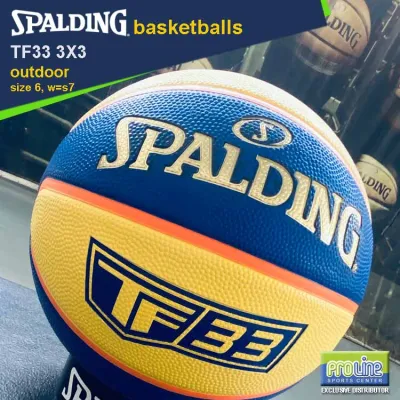
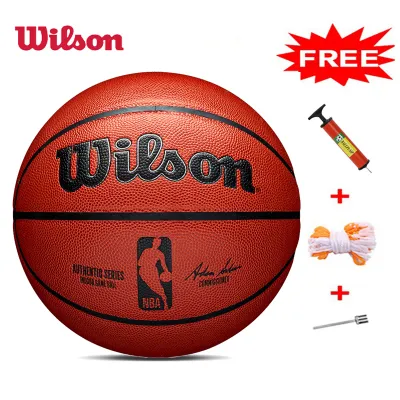
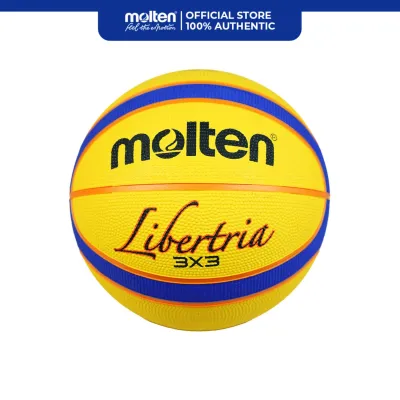
Prices are valid at publication and may change. Please refer to the product page for the latest price.
Using a standard 5v5 ball for 3×3 games alters the intended experience, as a lighter Size 6 ball might drift in windy outdoor conditions, while a larger Size 7 ball can slow down the rapid dribbling and quick-release shooting that define the sport. When shopping, always check the manufacturer’s labels and product descriptions to verify that the ball is explicitly marked as 3×3 compliant, ensuring it meets these exact size and weight standards.
Selecting a 3×3 Basketball for Indoor Courts
Indoor courts, typically made of polished hardwood or smooth synthetic materials, offer a controlled environment free from wind and rain, but they present their own challenges, particularly regarding dust and sweat. To perform well on these surfaces, a 3×3 basketball must offer exceptional grip and moisture management. Premium indoor courts allow players to utilize high-traction materials that would otherwise degrade quickly outdoors.

For indoor play, composite leather and full-grain leather are the primary material choices. Premium composite leather is highly favored because it mimics the soft feel of natural leather while incorporating advanced moisture-wicking technologies. In humid climates, players’ hands get sweaty quickly, and a high-quality composite cover helps absorb this moisture to prevent the ball from becoming slippery during intense play.
Full-grain leather offers the most traditional feel and excellent durability on indoor floors, but it requires a “break-in” period before it reaches its optimal softness and grip. Regardless of the leather type, these balls rely on clean, smooth surfaces to maintain their traction.
You should avoid using rough outdoor rubber balls on indoor courts. Rubber balls tend to collect fine dust from indoor floors very quickly, which creates a slick layer over the surface and severely reduces traction. Additionally, the hard bounce of a rubber ball on hardwood can feel overly springy and difficult to control compared to the damp, predictable bounce of a leather or composite ball.
Picking a Durable 3×3 Ball for Outdoor Concrete
Outdoor concrete courts, which are incredibly common across local neighborhoods, are highly abrasive and expose basketballs to harsh elements like intense sunlight, dust, and rough ground. A ball designed for indoor use will quickly lose its outer layer, wear down its grip, and suffer structural damage if subjected to these rough concrete surfaces.
For dedicated outdoor play, rubber and heavy-duty composite materials are the most practical choices. Rubber basketballs are highly affordable and exceptionally durable, making them resistant to scrapes, gravel, and rough concrete edges. While they lack the soft feel of leather, modern outdoor rubber balls often feature enhanced pebble textures to improve grip even when coated in outdoor dust.
Heavy-duty composite leather balls designed specifically for outdoor use offer a middle ground, providing a softer feel than rubber while incorporating tougher resins to withstand concrete abrasion. When evaluating an outdoor 3×3 ball, look for deep channel designs. Deep, wide grooves between the panels help channel away dust, dirt, and sweat, allowing your fingers to find purchase even on unpolished concrete.
Before purchasing, inspect the product packaging or specifications for indicators of material thickness and tread depth. A thicker outer cover and more pronounced pebble textures are reliable indicators that the ball can survive the friction of concrete play without smoothing out prematurely.
Evaluating Indoor and Outdoor Crossover Options
Many players find themselves switching between indoor sports complexes and outdoor neighborhood courts, making a specialized ball for each surface a significant investment. In response, manufacturers offer indoor/outdoor crossover or hybrid 3×3 basketballs. These balls are typically constructed from a specialized composite leather designed to balance durability with a soft feel.
While crossover balls offer excellent versatility, they represent a compromise. On indoor courts, a hybrid ball will not feel quite as soft or absorb moisture as effectively as a dedicated premium indoor composite ball. On outdoor concrete, the hybrid ball will wear down faster than a rugged, pure rubber ball, meaning its lifespan will be shortened if used primarily on rough surfaces.
To decide whether a crossover ball is right for you, consider your playing habits. If you play roughly 70% of your games indoors and occasionally join outdoor weekend tournaments, a hybrid composite ball is an excellent choice that protects your investment while maintaining decent performance. However, if you play mostly on concrete and only occasionally step onto a polished indoor court, a durable outdoor-specific ball is a more cost-effective and practical option.
Pre-Purchase Inspection and Care Guidelines
Before finalizing your purchase, whether at a local sporting goods store or through an online marketplace, performing a few quick physical checks can save you from defective products. Inspect the seams of the basketball to ensure the panels are glued down tightly with no visible gaps, lifting edges, or excess adhesive. Run your hands over the surface to check for uniform roundness and consistent pebble texture across all panels.
If purchasing in person, check the inflation valve. A faulty valve is a common source of slow air leaks; you can test this by applying a tiny drop of water to the valve opening to see if air bubbles form. Ensure the ball has a consistent bounce by dropping it from chest height; it should rebound predictably without veering to one side, which indicates a balanced bladder inside.
Proper maintenance is key to extending the life of your 3×3 basketball, especially in humid climates. For composite and leather balls, clean the surface after play using a slightly damp microfiber cloth to wipe away sweat and dirt, then dry it immediately with a clean towel. For rubber balls, a mild soap and water solution can be used to scrub away stubborn outdoor grime, but avoid submerging the ball entirely.
Store your basketball in a cool, dry place away from direct sunlight, as extreme heat can warp the bladder and dry out the outer cover, causing it to crack. Never leave your ball in the trunk of a car or exposed on an outdoor balcony. Additionally, maintain the correct air pressure as recommended on the inflation valve label, using a reliable pressure gauge and a lubricated pump needle to avoid damaging the valve.
Frequently Asked Questions (FAQ)
Can I use a standard Size 7 basketball for casual 3×3 games?
While you can use a standard Size 7 basketball for casual recreational play, it will significantly alter the dynamics of a true 3×3 game. Official 3×3 basketballs are smaller (Size 6) but carry the weight of a Size 7 ball, which allows for faster dribbling, quicker passes, and better control in tight spaces while maintaining wind resistance. Practicing with a standard Size 7 ball can hinder the development of the specific muscle memory and quick-release shooting mechanics required for competitive 3×3 play.
How do I know when my outdoor 3×3 basketball needs replacing?
Your outdoor 3×3 basketball needs replacement when its physical characteristics begin to compromise gameplay. Key indicators include smoothed-out pebble textures that make the ball slippery, shallow channels that no longer provide a secure grip, and uneven wear patterns or bulges on the surface. If the ball loses air pressure rapidly between games or exhibits an inconsistent, dead bounce even when fully inflated, it is time to invest in a new ball to maintain safety and performance on the court.
Community discussion
Share your experience or ask a question. Comments are reviewed before publication.