
Selecting the ideal AquaFlask bag depends on your daily routine, how you prefer to carry your hydration, and the specific environments your bottle will encounter. While a neoprene sleeve offers a streamlined, form-fitting layer that guards against minor scratches, a canvas carrier provides a dedicated, hands-free shoulder strap with extra storage pockets. Meanwhile, a backpack bottle holder integrates your flask directly into your existing gear setup, keeping your hands completely free for commuting or hiking. Evaluating these options requires looking closely at how you travel, the level of physical impact your bottle faces, and how quickly you need to access your water throughout the day.
Understanding the Three AquaFlask Bag Styles
To choose the right accessory, it helps to understand the distinct design philosophies behind each style. A neoprene sleeve is a lightweight, elastic cover that slips directly over the body of your bottle. It acts like a second skin, adding virtually no bulk while providing a soft, grippy texture. This style is highly favored by those who prefer to carry their bottle by its built-in lid handle or place it inside an existing bag without worrying about keys or coins scratching the powder-coated finish.
A canvas carrier, by contrast, is a standalone utility bag designed specifically for your bottle. Made from woven cotton or synthetic canvas, these carriers feature structured walls, a dedicated bottom panel, and an adjustable shoulder or crossbody strap. Many designs also incorporate external zippered compartments or mesh pockets, transforming your water bottle holder into a mini-utility pouch that can carry your phone, cash, or gym pass.
Products mentioned in this guide
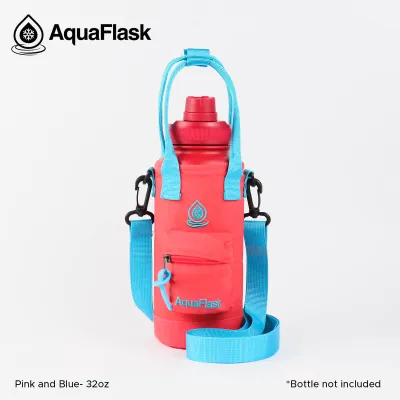
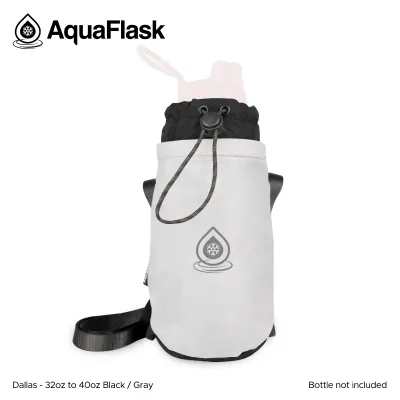
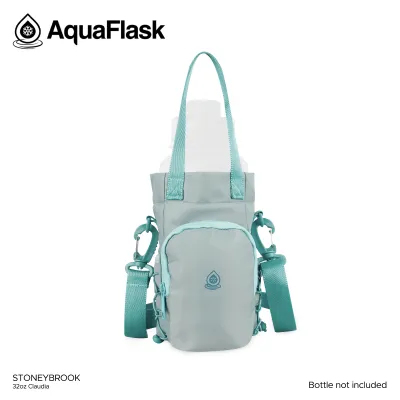
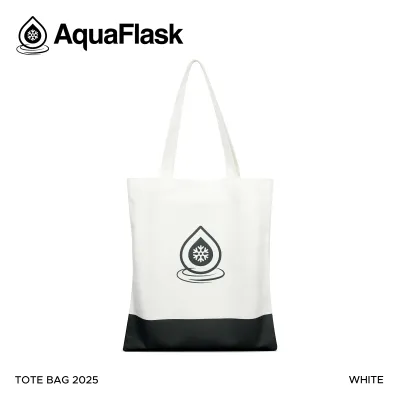
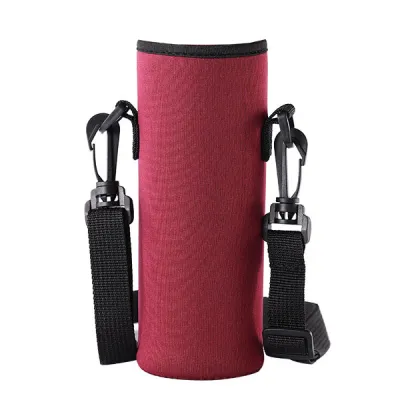
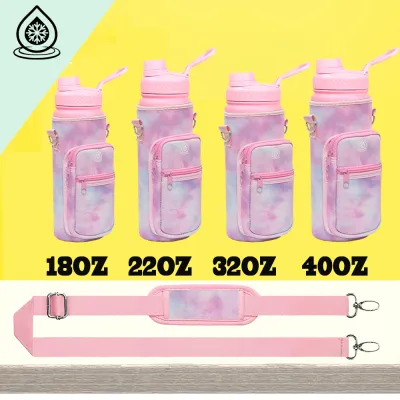
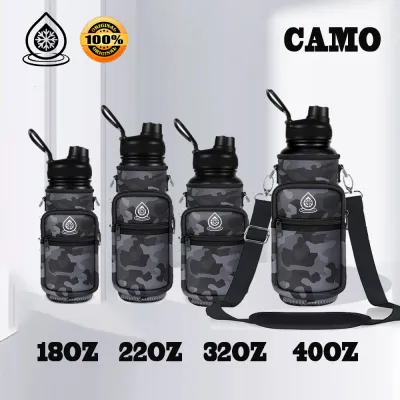
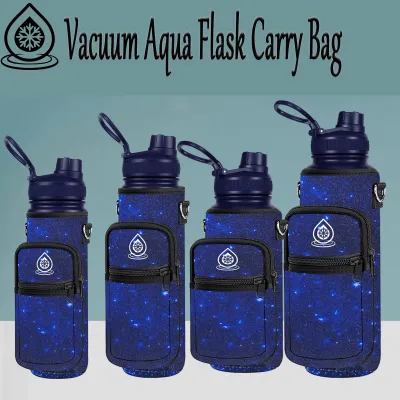
Prices are valid at publication and may change. Please refer to the product page for the latest price.
A backpack bottle holder refers to the dedicated external pockets, modular attachments, or internal sleeves found on standard daypacks and outdoor gear. These holders rely on the structural integrity of the backpack itself. They typically feature elasticized mesh, drawcords, or heavy-duty fabric panels on the side of the pack, keeping the bottle upright and easily accessible without requiring you to open the main compartment of your bag.
Evaluating Protection: Impact Resistance and Element Shielding
Protecting your vacuum-insulated bottle from dents is crucial, as severe drops can compromise the vacuum seal and affect its temperature retention. Neoprene sleeves offer excellent localized shock absorption against minor bumps and low-altitude drops. The rubberized, cellular structure of neoprene cushions the metal body, absorbing the energy of daily impacts when you set the bottle down on hard surfaces like concrete sidewalks or tiled office floors. However, because these sleeves are thin, they may not prevent deep dents from high-impact drops on sharp rocks or rough pavement.

Canvas carriers provide a different style of protection. The heavy-weave fabric is highly resistant to abrasions, tears, and scuffs. Many canvas carriers feature a reinforced or padded base, which is essential for preventing the bottom of your bottle from bowing or denting over time. While canvas itself does not have the same elastic bounce-back property as neoprene, a well-padded canvas bag offers a substantial physical barrier against rough handling during daily commutes on public transport.
Backpack bottle holders offer variable protection depending on their placement and material. Side mesh pockets keep the bottle separated from other gear, preventing internal scratches, but they leave the top half of the bottle exposed to the elements. If you scrape against a wall or squeeze through a tight space, an exposed bottle in a side pocket can still sustain scratches. For outdoor activities in dusty or wet environments, you must verify how well the holder secures the bottle; a loose pocket can allow the bottle to slip out entirely when you bend over or navigate steep terrain.
In tropical climates where sudden downpours and high humidity are common, material care becomes a key factor in protection. Neoprene is naturally water-resistant and dries relatively quickly, but it can trap moisture against the metal body if left wet, potentially leading to musty odors. Canvas absorbs water easily and requires thorough air-drying to prevent mold and mildew growth. When using a backpack holder, ensure the pocket has a drainage grommet or is made of quick-drying mesh to prevent water from pooling around the base of your flask.
Assessing Convenience, Carry Options, and Accessibility
Portability and ease of access can make or break your hydration habits. A canvas carrier excels in hands-free convenience, making it a popular choice for active commuters, students, and office workers. By slinging the strap over your shoulder or across your chest, you keep your hands completely free to hold handrails, carry groceries, or navigate busy streets. The addition of small utility pockets means you can leave your wallet behind during quick trips to the gym or local convenience store, carrying only your bottle, keys, and essential cards in one compact bundle.
Neoprene sleeves, while lacking shoulder straps in their most minimalist forms, offer unmatched grab-and-go convenience. They do not add bulk, allowing you to slide the bottle easily into car cup holders, bicycle cages, or tight bag compartments where a bulky canvas carrier would never fit. If your routine involves moving from desk to meeting room, or car to gym floor, the simple grip enhancement of a neoprene sleeve is often more practical than managing a long, dangling shoulder strap.
Backpack bottle holders provide the ultimate integration for multi-gear activities like hiking, traveling, or riding a motorcycle. By securing the bottle to your pack, you distribute the weight of the water—which can be substantial when the flask is fully filled—across your shoulders and hips rather than straining your neck or hands. The primary trade-off is accessibility. Reaching a bottle tucked into a side mesh pocket while wearing the backpack requires a certain level of shoulder flexibility, and some users may find they have to stop and remove the pack entirely to take a sip.
Decision Framework: Which AquaFlask Bag Fits Your Routine?
To determine which style is right for you, map your daily activities against the strengths and limitations of each bag type.
Choose the neoprene sleeve if your primary goal is lightweight scratch protection and you already carry a primary bag. This option is ideal for students and office professionals who transport their bottle inside a backpack or tote bag and simply want to prevent the powder coating from scratching against laptop chargers or keys. It is also the best fit for those who prefer the natural silhouette of the bottle and want to use standard vehicle cup holders without removing the cover.
Choose the canvas carrier if you want a standalone, hands-free solution for short trips, daily commutes, or light outdoor walks. If you frequently find yourself carrying your bottle by hand because your main bag is full, the canvas sling solves this inconvenience directly. It is highly suitable for gym-goers who want to keep their phone, locker key, and water bottle together in one place as they move between exercise machines.
Choose the backpack bottle holder if you are engaging in active outdoor sports, hiking, traveling, or commuting long distances with heavy gear. This setup ensures your center of gravity remains balanced and keeps your hands completely free for trekking poles, handrails, or luggage. It is the most secure option for high-movement activities, provided the backpack pocket features an adjustable compression strap or drawcord to lock the bottle in place.
Before making a final decision, always verify the physical compatibility of your specific bottle size. A standard 22-ounce bottle has a vastly different diameter and height compared to a 32-ounce or 40-ounce model. Ensure the carrier or sleeve you select is explicitly patterned for your bottle’s volume, and check that the opening does not obstruct your preferred lid style, whether you use a standard screw cap, a straw lid, or a wide-mouth sport cap.
Essential Fit and Feature Checks Before Purchasing
When shopping for an AquaFlask bag on any online marketplace or local sports shop, careful verification of specifications is essential to avoid a poor fit. Begin by measuring your bottle’s outer diameter and total height, then compare these measurements against the internal dimensions listed by the bag manufacturer. Do not rely solely on volume labels, as different bottle brands with the same fluid capacity can have slightly different physical dimensions. A sleeve that is too tight will be incredibly difficult to slide on and off, while one that is too loose will allow the bottle to slip out unexpectedly.
Next, inspect the quality of the load-bearing components. A full 32-ounce bottle weighs approximately one kilogram; this constant weight puts significant stress on straps, plastic D-rings, and stitching. Look for carriers that feature reinforced cross-stitching at the strap attachment points, metal or heavy-duty polymer hardware, and wide, adjustable shoulder straps that distribute weight comfortably across your shoulder without digging in. If the bag uses a drawstring closure, verify that the toggle locks securely and does not slip under tension.
Finally, consider the long-term maintenance of the materials. Because these bags are exposed to sweat, outdoor dirt, and accidental beverage spills, they require regular cleaning to remain hygienic. Check the manufacturer’s care labels before washing. Neoprene typically responds best to hand washing in cool water with a mild detergent, followed by air drying away from direct sunlight to preserve its elasticity. Canvas carriers can often handle gentle machine washing, but they must be dried completely in a well-ventilated area to prevent musty odors from developing in humid conditions.
Frequently Asked Questions (FAQ)
Can I use a third-party carrier for my AquaFlask?
Yes, you can use third-party carriers, provided you carefully verify the physical dimensions of both the bottle and the bag. Measure your bottle’s base diameter and height up to the neck, and compare these to the carrier’s internal specifications. Pay close attention to the lid area; some third-party carriers feature high collars or tight drawstrings that can interfere with the operation of wide-mouth lids, straw attachments, or carry handles.
Does a neoprene sleeve keep the water cold longer?
While neoprene does possess mild insulating properties, its contribution to keeping your water cold is minimal compared to the bottle’s built-in double-wall vacuum insulation. The primary insulation occurs within the sealed vacuum space of the stainless steel flask itself. The neoprene sleeve acts primarily as a protective barrier against physical damage and external ambient temperatures, rather than serving as the main cooling mechanism.
How do I clean a canvas AquaFlask carrier?
To clean a canvas carrier, first check the manufacturer’s care label for specific instructions. For minor dirt and stains, spot cleaning with a damp cloth and mild soapy water is usually recommended. If a deep clean is necessary, hand wash the carrier in lukewarm water or place it in a gentle machine wash cycle inside a mesh laundry bag. Always allow the canvas to air dry completely in a well-ventilated space to prevent mold, mildew, and unpleasant odors.
Community discussion
Share your experience or ask a question. Comments are reviewed before publication.