
Finding relief from back discomfort starts with understanding that not all back pain is the same, and neither are the tools designed to address it. Choosing the right back stretcher requires matching the device’s physical design—such as its arch height, adjustability, and material density—to your specific physical needs, flexibility level, and the nature of your discomfort. Whether your stiffness stems from long hours at an office desk, intense athletic training, or chronic muscle tension, selecting a compatible device is essential for both safety and effectiveness. By evaluating key structural features and understanding your body’s limits, you can find a supportive tool that aids your daily wellness routine without risking further strain.
Identifying Your Back Pain and Equipment Types
Before selecting a back stretcher, it is crucial to understand the different categories of stretching equipment available on the market. Passive lumbar arch stretchers are the most common variety, featuring a curved, static platform designed to support the natural curvature of the lower spine when lying down. Mechanical traction devices, by contrast, use manual pumps, cranks, or decompression mechanisms to actively pull the spine apart, creating space between the vertebrae. Active stretching boards, such as slant boards or back-bending benches, require the user to engage their core or leg muscles to control the intensity of the stretch, making them more suited for active recovery rather than passive relaxation.
It is equally important to distinguish dedicated passive back stretchers from active Pilates and yoga equipment to prevent misuse. A Pilates Reformer, for example, relies on a complex system of springs, pulleys, and a sliding carriage to provide dynamic resistance and support during full-body movement. Similarly, Pilates rings are flexible, high-tension circles designed for manual compression exercises to engage the inner thighs, arms, or core. Attempting to use a passive back stretcher as a dynamic resistance tool, or trying to perform high-load Pilates exercises on a simple plastic arch, can lead to equipment failure and severe physical injury.
Products mentioned in this guide
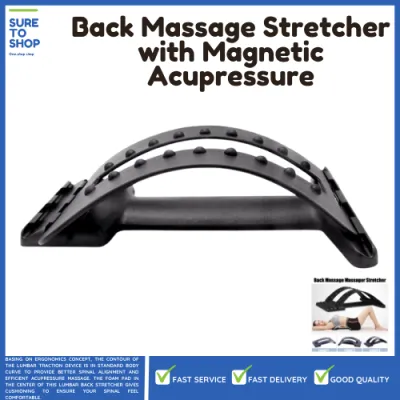
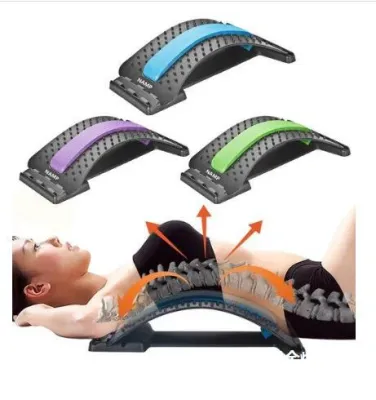
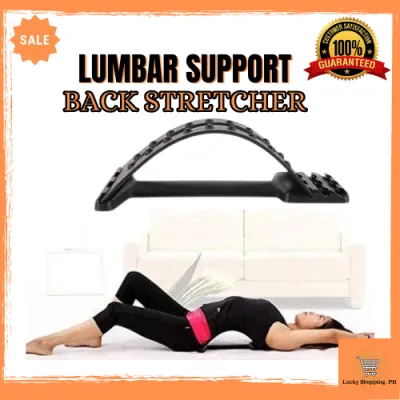
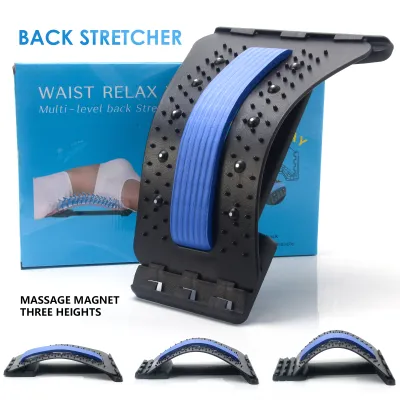
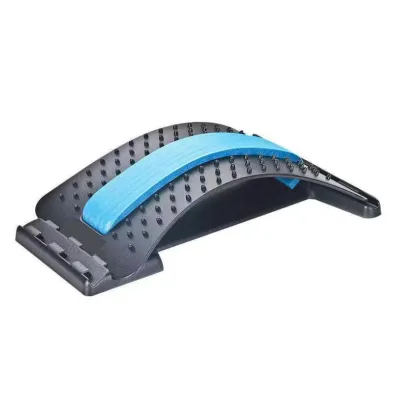
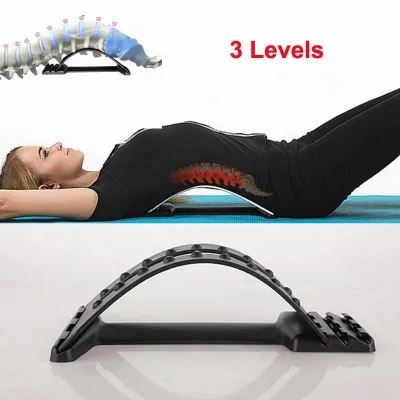
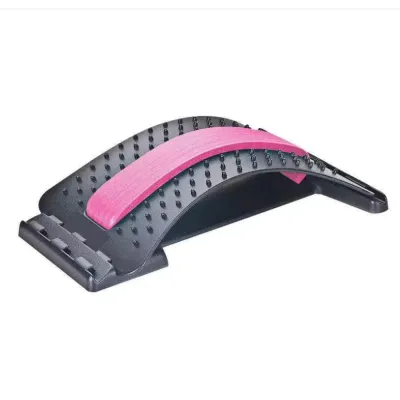
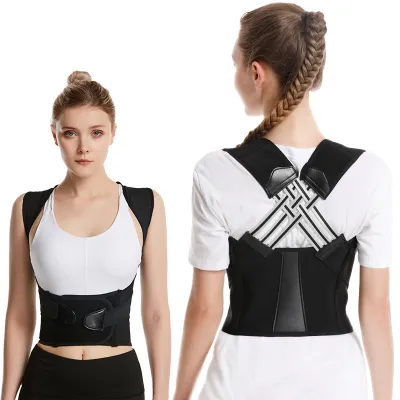
Prices are valid at publication and may change. Please refer to the product page for the latest price.
While back stretchers can be highly effective for general muscle tightness and postural maintenance, they are not universal remedies for all spinal conditions. Certain red-flag symptoms indicate that a stretching device should not be used without immediate medical evaluation. If you experience numbness, tingling, or radiating nerve pain that travels down your buttocks or legs, this may indicate nerve compression that a rigid arch could worsen. Sudden, sharp pain, localized swelling, or a history of spinal fractures are also strict contraindications that require a professional diagnosis from a physician or physical therapist.
Essential Specifications and Selection Criteria
When shopping for a back stretcher, adjustability should be your primary structural consideration. High-quality models typically feature a multi-tier slot system, allowing you to change the arch height across three or four distinct levels. This adjustability is vital because it allows the device to grow with your flexibility over time, ensuring you do not overstretch your lumbar spine on your first session. Beginners should always start on the lowest, flattest setting to allow the surrounding ligaments and muscles to adapt gradually to the passive extension.

Surface materials and padding density play a significant role in both comfort and safety, especially in tropical climates. In the warm and humid conditions of the Philippines, smooth plastic stretchers can quickly become slippery due to sweat, which compromises your stability during a stretch. Look for devices equipped with a textured, non-slip base and a central spine alignment strip made of high-density ethylene-vinyl acetate (EVA) foam or silicone. This central padding cushions the spinous processes—the bony bumps along your spine—preventing painful pressure points while keeping your body securely centered on the arch.
Finally, you must verify the weight capacity and structural integrity of the device before purchase. Most standard plastic back stretchers are rated for weight limits ranging from 100 kg to 150 kg, but these limits must be explicitly verified on the product label or manufacturer’s specification sheet. Inspect the thickness of the plastic and the depth of the adjustment slots to ensure they can support your full body weight without bending, cracking, or slipping out of place. If you plan to use the device on various surfaces, ensure the bottom edge features rubberized grips to prevent the stretcher from sliding out from under you during use.
Matching Stretcher Designs to Common Pain Profiles
For individuals dealing with prolonged sitting and postural fatigue, the primary goal is to restore the natural lumbar curve. Office workers who spend eight or more hours a day hunched over a computer often suffer from flattened lumbar lordosis, leading to dull, aching lower back pain. An adjustable plastic arch stretcher is highly effective for this profile, as it can be used in two ways. You can place it vertically against the back of your office chair to act as a supportive lumbar roll during the workday, and then transition it to the floor in the evening for a deeper, passive supine stretch that coaxes the spine back into its natural alignment.
If your primary complaint is post-workout stiffness, your selection should focus on full-back surface area and muscle relaxation. Athletes and fitness enthusiasts often experience tight erector spinae muscles and thoracic stiffness after heavy lifting, running, or high-impact sports. For this scenario, a wider, gently inclined foam arch or a multi-functional stretching board is ideal. These designs distribute your body weight more evenly across the entire back, allowing the superficial muscle layers to release tension slowly without placing intense, localized pressure on any single vertebral segment.
For those managing chronic lower back tension, a stretcher featuring customizable incline levels and strategic acupressure nodes can provide targeted relief. Chronic tension often involves deep myofascial trigger points that require localized pressure to release. Many modern back stretchers feature raised plastic nodes designed to mimic the effects of acupressure or trigger-point therapy along the meridian lines of the back. When using these models, it is important to choose a device with a removable foam center strip, allowing you to cover the nodes if the pressure feels too intense, and to adjust the incline gradually to manage the depth of the myofascial release.
Safe Setup, Usage Boundaries, and Maintenance
To ensure a safe stretching session, always set up your back stretcher on a flat, level, and non-slip surface. Placing the device on a plush mattress or a soft couch can cause the arch to tilt or collapse, leading to uneven spinal alignment and potential muscle strain. Instead, position the stretcher on a high-grip yoga mat laid over a firm floor. In humid environments, tiled floors can collect condensation and become incredibly slick; verifying that both the floor and the bottom of your yoga mat are completely dry is a necessary pre-use safety check.
Understanding the difference between productive stretching tension and harmful pain is critical for preventing injury. When you lie back onto the stretcher, you should feel a mild, satisfying pull across your abdomen and front torso, along with a gentle pressure in your lower or mid-back. This sensation should allow you to breathe deeply and relax your shoulders. If you experience any sharp, stabbing, or radiating pain, or if you feel your muscles tensing up defensively, roll slowly off the device to one side immediately. Never attempt to push through sharp pain, and do not try to sit straight up off the arch, as this sudden abdominal contraction can strain your lower back.
Maintaining your back stretcher is straightforward but essential for long-term structural safety. Before every session, perform a quick visual inspection of the device. Look for stress fractures, hairline cracks, or whitening of the plastic around the bending joints and adjustment slots, which indicate material fatigue. Wipe down the sweat-resistant foam padding and plastic frame with a damp cloth and mild, diluted soap after each use to prevent the buildup of oils, sweat, and bacteria. Store the device in a cool, dry place away from direct sunlight, as prolonged exposure to UV rays and extreme tropical heat can degrade the plastic, making it brittle and prone to sudden snapping under load.
Frequently Asked Questions (FAQ)
How long should I use a back stretcher in a single session?
You should always consult your specific product manual for the manufacturer’s recommended time limits, as designs and material densities vary. As a general guideline, beginners should start with short sessions of two to three minutes once or twice a day to monitor how their body responds. If you do not experience any discomfort or residual soreness, you can gradually increase the duration to five or ten minutes per session. Avoid using the device for extended periods or falling asleep on it, as prolonged passive extension can overstretch spinal ligaments and lead to muscle guarding or joint instability.
Can I use a back stretcher if I have a herniated disc?
If you have been diagnosed with a herniated disc, sciatica, spinal stenosis, or any other chronic spinal condition, you must consult your doctor or physical therapist before using a back stretcher. Rigid arch devices and passive traction tools can alter the load path of your spine and may exacerbate disc herniation if used at an incorrect angle or height. A medical professional can evaluate your specific disc alignment and determine whether passive extension is safe for your condition, or if active stabilization exercises would be a more appropriate therapy.
What is the difference between a back stretcher and a foam roller?
A back stretcher is a static, passive support tool designed to hold your spine in a fixed state of extension, targeting spinal alignment and the deep postural muscles over a sustained period. A foam roller, on the other hand, is a dynamic tool used for active myofascial release, requiring you to roll your body weight back and forth over the cylinder. While a back stretcher focuses on stretching the front of the torso and extending the spine, a foam roller uses rolling pressure to break up tension in the superficial muscle tissue and fascia, making them complementary tools with distinct mechanical functions.
Community discussion
Share your experience or ask a question. Comments are reviewed before publication.