
Selecting a carabiner multi tool for outdoor adventures in the Philippines requires balancing convenience with absolute safety. Our tropical landscape offers everything from the humid, muddy trails of Mt. Pulag and Mt. Apo to the sharp limestone crags of Cantabaco in Cebu. Because these environments demand different levels of physical reliance on your gear, the tool you choose must match the specific risks of your activity.
The most critical decision when looking at a carabiner multi tool is determining whether your gear will support human weight. While a multi-functional tool clipped to your pack is highly convenient for camp chores, confusing a utility accessory with life-safety climbing hardware can have catastrophic consequences. By understanding the structural limits of these tools and how they perform under tropical conditions, you can make an informed decision that keeps you safe and prepared on your next adventure.
The Critical Safety Divide: Load-Bearing Carabiners vs. EDC Carabiner Multi Tools
To understand why gear selection is so critical, you must first recognize the divide between certified climbing carabiners and everyday carry (EDC) carabiner multi tools. Certified climbing carabiners are highly engineered life-safety devices. They must meet rigorous international standards established by the UIAA (International Climbing and Mountaineering Federation) or European Conformity (CE). These certifications guarantee that the carabiner can withstand forces of at least 20 kilonewtons (kN) along its major axis with the gate closed—strength necessary to arrest a climber’s fall.
Products mentioned in this guide
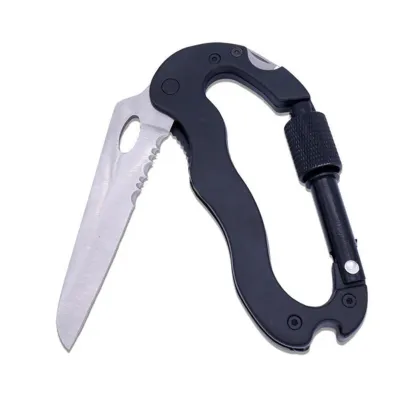
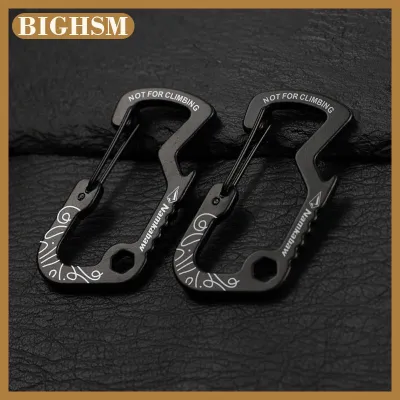
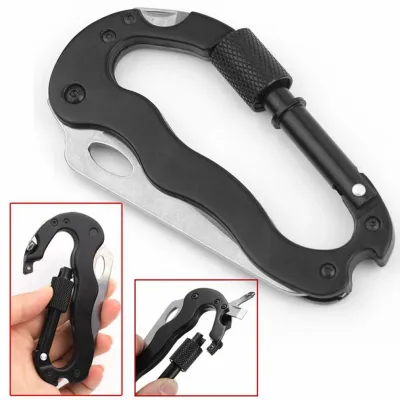
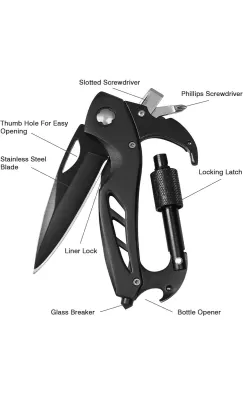
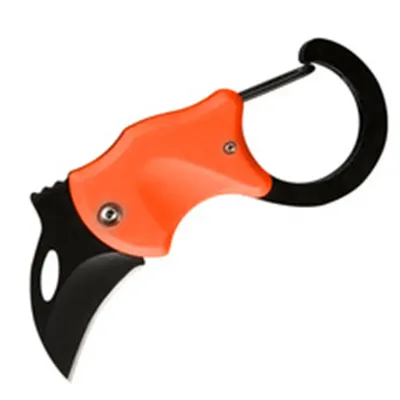
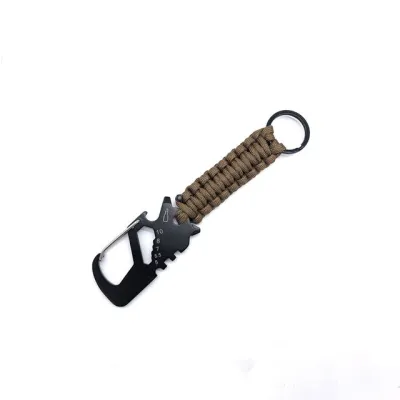
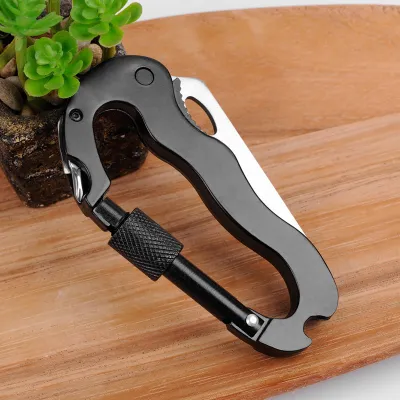
Prices are valid at publication and may change. Please refer to the product page for the latest price.
In contrast, commercial EDC carabiner multi tools are designed for utility, not safety. To pack screwdrivers, bottle openers, and blades into a compact frame, manufacturers must make structural trade-offs. These tools feature hollowed-out spines, cutouts, and pivot pins that severely compromise the structural integrity of the metal. Under a fraction of the force generated during a short fall, these utility frames will bend, snap, or shear. Almost all reputable EDC carabiner tools are stamped with an explicit warning: “Not for climbing” or “Not for human weight.”
For high-risk outdoor activities, gear integrity is entirely non-negotiable. A utility multi-tool must never be used as an anchor point, a belay device, a rappel connector, or a personal safety attachment. Even if a tool looks robust or claims to use high-strength aluminum, its lack of certified gate-locking mechanisms and load-bearing testing makes it a hazard in any safety chain.
Ultimately, no piece of equipment can replace professional training, experience, and sound judgment. Understanding the precise limits of your gear is the first and most important step in safe climbing and mountaineering. Before you pack any tool, verify its intended use and ensure you are not relying on a utility accessory to perform a life-safety function.
Tool Requirements for Trail Hiking and Mountaineering
When tackling long, humid treks through the Philippine jungle or ascending high-altitude peaks, your gear requirements shift toward weight management, convenience, and minor maintenance. On these trails, a carabiner multi tool serves as a highly practical utility accessory rather than safety hardware.

The primary use cases for a utility tool on the trail include:
- Gear Adjustments: Tightening loose screws on trekking poles, adjusting stove valves, or securing camera tripod plates.
- Camp Utility: Opening food packaging, cutting utility cord, or popping bottle caps at the campsite.
- Quick Attachment: Clipping lightweight items like a cup, solar charger, or sandals to the outside of your backpack.
Weight and bulk are major factors when hiking in hot, humid conditions where every gram feels heavier over time. Hikers should prioritize compact tools made from lightweight, highly corrosion-resistant materials. Titanium is an excellent premium choice due to its high strength-to-weight ratio and natural resistance to rust. Alternatively, high-quality treated stainless steel (such as 420HC or 3CR13) offers great durability and edge retention at a lower price point.
Even though these tools are highly useful for trail maintenance, they must remain strictly separated from any safety systems. Do not use them to secure heavy packs during a haul or as a connector for a makeshift emergency harness.
When evaluating an EDC carabiner tool for trail use, use the following checklist to ensure reliable performance:
- Edge Retention: Ensure the integrated blade steel is hard enough to cut through tough utility cords without dulling instantly.
- Pivot Smoothness: Check that the folding components open and close smoothly without binding, especially when exposed to trail dust and mud.
- Secure Locking: Look for tools with reliable locking mechanisms for blades and screwdrivers to prevent them from folding back onto your fingers during use.
- Gate Security: The carabiner gate should have a strong spring tension to prevent the tool from accidentally slipping off your pack strap.
Specialized Multi-Tools for Rock Climbing and Cragging
Technical rock climbing at Philippine crags demands a completely different approach to tool selection. When you are on a vertical limestone wall, standard EDC carabiner multi tools are not only useless but can also be dangerous. Instead, climbers rely on specialized, single-purpose tools designed to integrate seamlessly with a climbing harness.
For traditional (trad) climbing and sport cragging, the most common specialized tools include:
- Nut Tools: These are slim, rigid metal hooks used to clean and retrieve wedged nuts or active camming devices from narrow rock cracks. They often feature built-in wrenches to tighten loose bolt hangers on sport routes.
- Rope Knives: A compact, folding knife carried specifically for emergencies, such as cutting away damaged rope or clearing tangled webbing from an anchor.
- Wrenches: Small, flat wrenches used to maintain and tighten loose hanger nuts on sport routes to ensure the safety of the local climbing community.
In a professional climbing context, these tools are never built into a structural carabiner. Instead, they are standalone items clipped to your harness gear loops using a separate, certified accessory carabiner or a dedicated tool leash. This setup ensures that your primary climbing carabiners remain free of modifications that could compromise their strength.
A proper climbing rope knife must meet specific safety criteria to prevent accidents on the wall. It should feature a secure locking mechanism that prevents the blade from opening during a fall or dynamic movement. Many climbing knives are designed with a blunt safety tip to avoid puncturing your skin or damaging your rope if you have to cut webbing in a tight, awkward position. Additionally, the blade should feature a serrated edge for fast cutting through thick nylon webbing and be easy to operate with one hand.
Standard EDC multi-tools with sharp, unguarded edges, weak slip-joint pivots, or heavy pliers have no place on a climber’s harness. Carrying unsecured, non-climbing tools increases the risk of dropping gear on your belayer or suffering severe puncture wounds during a fall. Keep your harness organized, and rely only on dedicated climbing tools designed for the vertical environment.
Cross-Scenario Compatibility: Can One Tool Do It All?
It is tempting to look for a single carabiner multi tool that can handle both a weekend hike up Mt. Makiling and a technical sport climbing session. However, attempting to use a “do-it-all” tool across these very different activities reveals significant trade-offs.
A heavy-duty EDC tool equipped with pliers, multiple blades, and bits is highly useful at a campsite but becomes a heavy, clunky hazard when hanging from a climbing harness. It adds unnecessary weight, clatters against your quickdraws, and can easily snag on the rock or your rope. Conversely, a dedicated climbing nut tool—while essential for traditional climbing—is virtually useless for general trail chores like slicing food or adjusting camp stoves.
The safest and most practical approach is to maintain a strict separation between your camp utility tools and your technical climbing hardware. This division ensures that you always have the right tool for the job without compromising your safety on the wall.
To help organize your gear, use this simple decision-making framework based on your primary activity:
- Mainly Hiking and Scrambling: If your trip consists of 90% trail hiking with occasional non-technical scrambles, carry a lightweight EDC carabiner tool. Keep it clipped to your backpack or stored in your pocket for camp chores, and never use it for rope work.
- Technical Rock Climbing and Mountaineering: If your activity involves ropes, harnesses, and vertical rock faces, leave the EDC multi-tool in your camp duffel. Carry only certified climbing hardware, a dedicated rope knife, and a nut tool on your harness.
Under no circumstances should you attempt to modify, drill, or grind down a certified climbing carabiner to add tool features like bottle openers or screwdriver tips. Altering the metal structure of a rated carabiner instantly voids its safety certifications, introduces micro-fractures, and severely reduces its load-bearing capacity, making it highly dangerous to use.
Maintenance and Rust Prevention in Tropical Conditions
The tropical climate of the Philippines presents a constant challenge for outdoor gear. High relative humidity, heavy seasonal rains, muddy approach trails, and salty coastal air from seaside crags can quickly cause rust, corrosion, and mechanical failure if your tools are neglected.
To keep your carabiners and multi-tools functioning smoothly and safely, follow this routine maintenance protocol:
- Rinse and Clean: After every trip, rinse your gear thoroughly in clean, warm fresh water to remove salt residue, sweat, mud, and grit. Use a soft-bristled brush, such as an old toothbrush, to clean out the tight spaces around gate hinges, spring pivots, and folding tool joints.
- Dry Thoroughly: Never store damp gear in a closed container or backpack. Dry your tools immediately with a clean towel, then lay them out in a well-ventilated indoor space to air-dry completely before packing them away.
- Lubricate Moving Parts: Apply a small drop of a dry, non-sticky lubricant (like dry PTFE or a specialized outdoor gear lubricant) to the pivot points, gate hinges, and spring mechanisms. Avoid heavy oils or WD-40, which can attract dirt, sand, and grit, eventually grinding down the moving parts. Wipe away any excess lubricant.
- Inspect Regularly: Perform a visual and tactile check of your gear before and after every outing. Test the gate spring tension to ensure it snaps shut instantly and completely. Check the blades for sharpness and inspect all metal surfaces for signs of rust or wear.
Knowing when to retire your gear is a critical aspect of climbing safety. If a load-bearing climbing carabiner shows deep pitting, structural corrosion, cracks, or a sluggish gate that fails to close completely, it must be retired immediately. To prevent anyone else from accidentally using compromised gear, destroy the retired carabiner by cutting it in half or bending it before discarding it.
Frequently Asked Questions (FAQ)
Can I use a heavy-duty EDC carabiner tool to clip my chalk bag?
While an EDC carabiner tool can easily support the light weight of a chalk bag or a water bottle, carrying it on your climbing harness is highly discouraged. Mixing non-certified utility tools with rated climbing gear on your harness can lead to dangerous habits. In a high-stress situation, during low-light conditions, or in an emergency, you or your climbing partner might mistake the EDC tool for a load-bearing carabiner and accidentally clip a safety line into it. To maintain strict safety discipline, use inexpensive, properly rated accessory carabiners or dedicated gear biners that are clearly distinguished from your climbing hardware.
What is the best way to carry a rope knife while climbing?
A climbing rope knife should be secured to a rear gear loop on your harness using a dedicated, locking accessory carabiner or a specialized tool leash. Before clipping it, ensure the knife blade is fully folded and the safety lock is engaged. Position the knife where you can easily reach and operate it with one hand in an emergency, but far enough back that it will not snag on the rock face, brush, or your climbing rope during dynamic movements or a fall.
Community discussion
Share your experience or ask a question. Comments are reviewed before publication.