
Choosing between an Elves road bike and an Elves gravel bike hinges on where you plan to ride and how you want to feel while doing it. If your goal is pure speed on smooth asphalt, a dedicated road frame is the logical choice. If you want to explore rugged provincial backroads, fire roads, and muddy trails, a gravel frame is essential. Understanding how geometry, tire clearance, and component compatibility differ between these two categories will help you make the right investment for your cycling journey.
Defining Your Riding Terrain and Performance Goals
To make an informed decision, you must first analyze the surfaces you encounter on your typical weekly routes. If your rides consist almost entirely of smooth, well-paved national highways or dedicated bypass roads, a dedicated road bike is designed to maximize your efficiency. However, if your routes involve broken concrete, sudden transitions to unpaved dirt, or gravel fire roads, a gravel bike provides the necessary stability and traction.
In the Philippines, road conditions can change rapidly. A route that starts on a smooth concrete highway can quickly transition into a rough, pothole-ridden provincial road or a muddy track during the rainy season. If you frequently encounter these unpredictable surfaces during your weekend rides or daily commutes, a versatile all-road or gravel setup becomes a practical necessity rather than a luxury.
Products mentioned in this guide
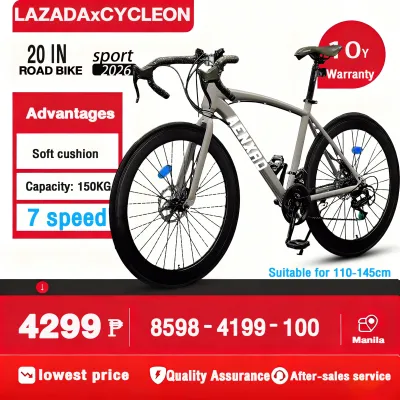
Prices are valid at publication and may change. Please refer to the product page for the latest price.
Your personal performance goals also dictate the ideal frame style. If your primary objective is to maintain high average speeds, participate in fast-paced group rides, or tackle long-distance paved climbs, a road bike’s aerodynamic profile and lightweight construction are highly advantageous. These frames are engineered to minimize wind resistance and maximize power transfer, allowing you to sustain higher speeds with less effort.
Conversely, if your goals lean toward exploration, multi-day bikepacking adventures, or escaping heavy highway traffic by taking rural dirt paths, a gravel bike is far better suited. Gravel frames feature dedicated mounting points for frame bags, racks, and fenders, allowing you to carry essential gear, tools, and extra hydration. This makes them the ideal companion for self-sustained journeys through remote areas where convenience stores are scarce.
Key Design Differences Between Elves Road and Gravel Bikes
Understanding the structural and geometric differences between Elves road and gravel frames is crucial for selecting a model that matches your physical comfort and riding style. Frame geometry directly influences how a bike handles and how your body feels after several hours in the saddle.

Frame Geometry and Riding Position
Road frames are typically designed with an aggressive, aerodynamic geometry. This is characterized by a lower stack height and a longer reach, which forces your torso into a lower, flatter position to reduce aerodynamic drag. The head tube angle is steeper, often around 73 degrees, which results in quick, responsive steering that allows you to navigate tight corners and pack riding situations with precision.
Gravel frames, on the other hand, utilize a more relaxed, endurance-oriented geometry. The stack height is higher and the reach is shorter, placing you in a more upright riding position. This posture reduces strain on your lower back, neck, and shoulders, which is vital when navigating bumpy, uneven terrain for extended periods. Additionally, gravel frames feature a slacker head tube angle and a longer wheelbase, providing self-correcting stability on loose gravel, sand, or mud.
Tire Clearance and Wheel Compatibility
Tire clearance is perhaps the most significant physical difference between these two categories. Road frames are built with tight tolerances to keep the frame compact and aerodynamic, typically limiting maximum tire width to 28mm or 32mm. These narrower tires are inflated to higher pressures to minimize rolling resistance on smooth asphalt, but they offer very little shock absorption or traction on loose surfaces.
Gravel frames are engineered with wide fork blades and seat stays to accommodate high-volume tires, often ranging from 38mm up to 45mm or wider on standard 700c wheels. Many gravel models are also compatible with smaller 650b wheels, which allow you to run even wider, plush tires at lower air pressures. This extra volume acts as a natural suspension system, absorbing high-frequency vibrations from rough roads and providing a larger contact patch for superior grip on dirt and mud.
Drivetrain Configurations and Gearing
The gearing systems on these bikes are optimized for their respective environments. Road bikes almost universally employ a double-chainring (2x) drivetrain. This setup provides a wide gear range with small, incremental steps between gears, allowing you to maintain an optimal pedaling cadence regardless of minor changes in wind or road gradient. The chainring sizes are larger, typically 50/34t or 52/36t, paired with a tightly spaced cassette to support high-speed cruising.
Gravel bikes frequently utilize a single-chainring (1x) drivetrain, which eliminates the front derailleur entirely. This design simplifies shifting, reduces mechanical complexity, and minimizes the risk of chain drops when riding over rough, bumpy terrain. To compensate for having only one chainring, gravel bikes use wide-range cassettes, such as an 11-42t or even larger, providing ultra-low gear ratios that allow you to crawl up steep, loose, unpaved climbs without losing traction.
Evaluating Frame Materials and Component Specifications
Once you have decided on the frame category, you must evaluate the specific materials and components to ensure the build meets your performance expectations and durability requirements.
Carbon Fiber Layups and Frame Construction
Elves frames are primarily constructed from carbon fiber, utilizing various grades of high-modulus carbon such as Toray T800 and T1000. When evaluating a specific model, verify the manufacturer’s layup specifications. Frames that incorporate higher proportions of T1000 carbon are generally lighter and stiffer, which enhances power transfer during hard accelerations or steep climbs. However, a highly stiff frame can transmit more road buzz to your hands and saddle.
To counteract this, gravel frames often feature specific carbon layups and tube shapes designed to flex slightly under load, providing built-in vibration damping. When choosing a frame, consider whether you prioritize absolute stiffness and weight savings for racing, or compliance and comfort for long-distance endurance riding on mixed surfaces.
Groupset Selection and Braking Systems
The choice of groupset and braking system is critical, especially when riding in tropical environments characterized by high humidity, intense heat, and sudden downpours. For both road and gravel riding, hydraulic disc brakes are highly recommended over mechanical disc or rim brakes. Hydraulic systems offer superior modulation, requiring less hand effort to achieve maximum stopping power, which reduces hand fatigue on long, technical descents.
Furthermore, hydraulic disc brakes maintain consistent performance in wet and muddy conditions. In contrast, rim brakes lose significant stopping power when the rims become wet or dirty, and mechanical disc cables can suffer from friction and corrosion over time due to humidity. When selecting a groupset, verify that the components are rated for the specific demands of your chosen discipline, with gravel-specific groupsets offering clutched rear derailleurs to keep the chain taut on rough trails.
Wheelset and Tire Integration
If you purchase an Elves frameset rather than a complete build, you must carefully select compatible wheelsets and tires. For a road setup, aerodynamic carbon wheels with a deeper rim profile can help you sustain high speeds on flat roads. For a gravel setup, prioritize wheel durability and internal rim width. A wider internal rim width (at least 21mm to 25mm) is necessary to support wide gravel tires properly, preventing the tire sidewalls from folding or squirming when cornering at lower pressures.
Sizing, Purchasing Channels, and Pre-Ride Checks
Acquiring your bike and preparing it for the road or trail requires careful planning to ensure safety, comfort, and long-term reliability.
Navigating Purchasing Channels
To ensure you receive a genuine product backed by a valid manufacturer warranty, always purchase your frame or complete bike through official brand websites or authorized local distributors. Purchasing from unauthorized online marketplaces or unverified third-party sellers carries a high risk of acquiring counterfeit frames, which may lack structural integrity and pose severe safety hazards. Authorized dealers can also assist with warranty claims, crash replacements, and sourcing proprietary replacement parts like derailleur hangers.
Accurate Frame Sizing
Proper bike fit is essential to prevent chronic injuries and maximize riding comfort. Do not rely solely on your overall height when choosing a frame size, as body proportions vary significantly. Measure your exact inseam, torso length, and arm span. Compare these measurements to the manufacturer’s detailed geometry charts, focusing on the stack and reach values rather than generic size labels like “Medium” or “Large.” If you fall between sizes, a professional bike fit consultation before purchasing is highly recommended to determine which frame geometry best accommodates your flexibility and riding style.
Critical Pre-Ride Safety Checks
Before taking your newly assembled bike out for its first ride, perform a thorough safety inspection. Carbon fiber components are highly sensitive to over-tightening, which can cause invisible structural damage that leads to sudden failure under load. Always use a calibrated torque wrench to tighten all bolts—including the seatpost clamp, stem bolts, and handlebar faceplate—to the exact Newton-meter (Nm) specifications printed on the components.
Additionally, verify that the hydraulic brake calipers are properly aligned and that the rotors do not rub against the brake pads. Check that the thru-axles are securely tightened to the manufacturer’s specified torque. Finally, inspect the shifting performance across the entire cassette to ensure the derailleur hanger is straight and the gears transition smoothly, preventing potential chain jams or wheel damage during your ride.
Frequently Asked Questions (FAQ)
Can You Ride an Elves Road Bike on Light Gravel?
Yes, you can ride a road bike on light, hard-packed gravel, but you must verify the frame’s maximum tire clearance first. Most modern road frames can accommodate tires up to 28mm or 30mm, which can handle smooth dirt paths if ridden with caution. However, riding narrow road tires on loose gravel increases the risk of pinch flats, rim damage, and loss of traction. The stiff frame and aggressive geometry of a road bike will also transmit significant vibration, leading to rapid fatigue and compromised handling on unpaved surfaces.
Are Elves Bikes Sold as Complete Builds or Framesets?
Elves bikes are primarily marketed and sold as framesets, which include the frame, fork, seatpost, and sometimes an integrated handlebar. This allows riders to fully customize their build by selecting their preferred groupset, wheelset, saddle, and tires. However, some authorized local distributors and retailers offer complete builds pre-configured with specific component packages. If you choose to purchase a frameset, you must budget for and source all additional components, ensuring compatibility with the frame’s bottom bracket, headset, and brake mounting standards.
Community discussion
Share your experience or ask a question. Comments are reviewed before publication.