
Selecting the correct fishing cage trap depends entirely on your target species and the specific water conditions you will face. Crabs require rigid frames and secure entry funnels to prevent claw escapes, while fish traps rely on smooth slopes and appropriate mesh to guide and hold the catch. Furthermore, river environments demand traps that resist strong currents, whereas coastal areas require materials that withstand saltwater corrosion. This guide breaks down the design, material, and structural criteria you need to evaluate to choose the right trap for your local fishing environment.
In the diverse aquatic landscapes of the Philippines, from brackish mangrove swamps to fast-flowing river bends, choosing the right gear is the difference between a successful harvest and lost equipment. Local anglers must navigate not only the behavior of different marine life but also the harsh tropical elements. High humidity, intense sunlight, and varying salinity levels will rapidly degrade poorly chosen materials. By understanding the mechanical and structural differences between various trap designs, you can make an informed purchase that performs reliably and lasts for seasons to come.
Match the Trap Design to Your Target Catch
When targeting crabs, such as the mud crab (alimango) or the blue swimming crab (alimasag), the trap’s primary job is to withstand powerful, destructive claws. Crabs do not simply swim into a trap; they crawl along the bottom, using their claws to feel for weaknesses in the structure. A dedicated crab trap must feature a rigid frame that does not collapse under pressure, paired with entry funnels that slope gently upward from the seabed and terminate in a restricted, downward-pointing opening. This design exploits the crab’s natural crawling behavior while making it incredibly difficult for them to reach up and find the exit once inside.
Products mentioned in this guide
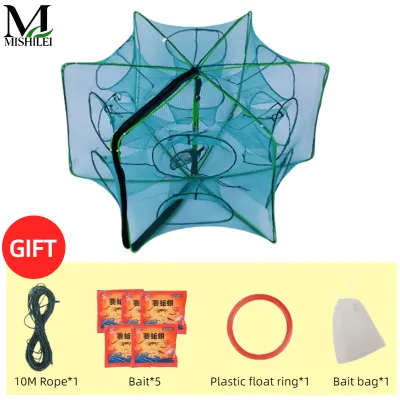
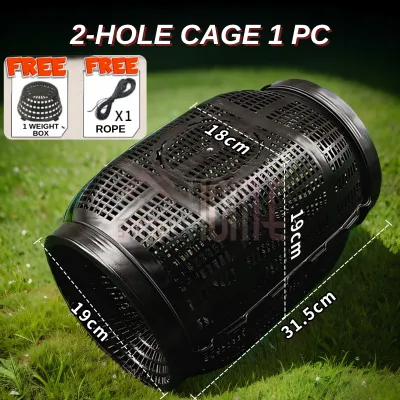
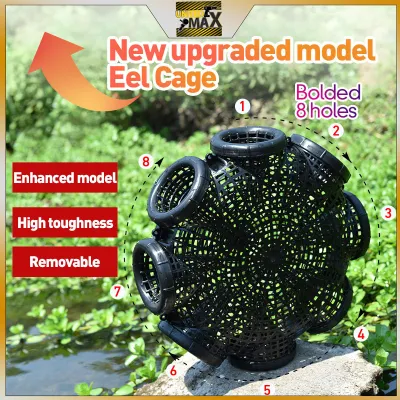
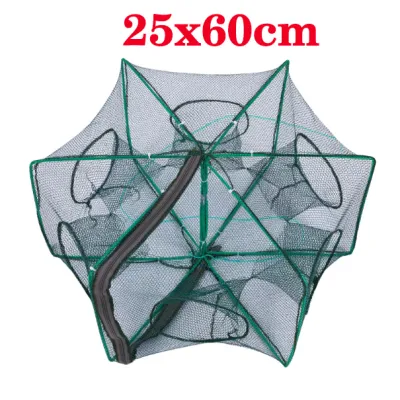
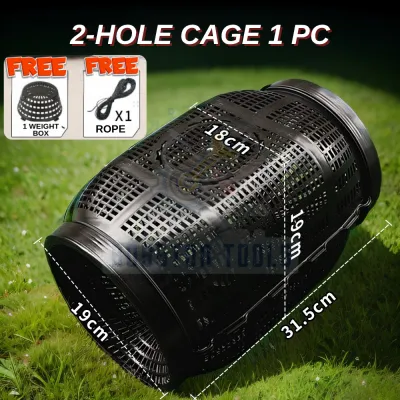
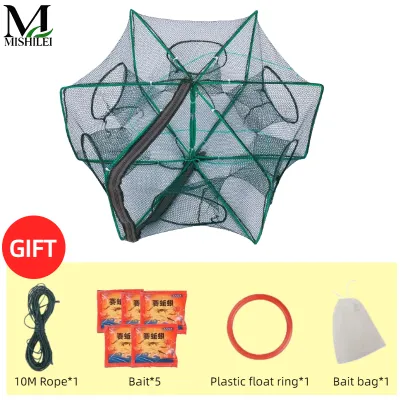
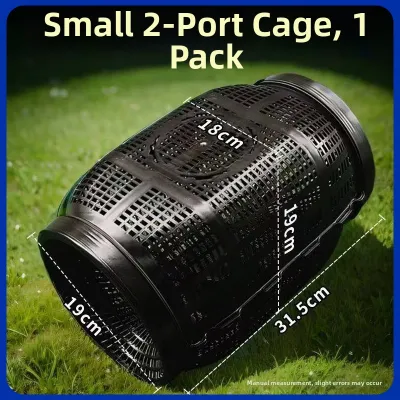
Prices are valid at publication and may change. Please refer to the product page for the latest price.
Security is paramount when dealing with crabs because they are highly active and persistent in their escape attempts. Look for traps with heavy-duty latches, reinforced seams, and one-way wire gates at the funnel exits. If the entry funnels are too wide or lack a downward angle, crabs will eventually find their way out, especially as the trap becomes crowded. The doors used for retrieving the catch must also secure tightly with robust rubber bands, spring hooks, or thick wire wraps that cannot be nudged open by a crab’s strong pincers.
Fish traps operate on a completely different behavioral principle. Fish are constant swimmers that rely on visual cues and scent trails carried by the current to locate food. A successful fish trap features long, gradually tapering entry funnels with smooth, unobstructed interior walls. These smooth slopes guide the fish gently toward the center of the cage without causing panic or physical injury. Sharp wire ends or abrupt angles inside the funnel can deter fish from entering or cause scale damage, which reduces the quality of your catch.
Internal bait placement is another critical factor for fish traps. While a crab might crawl directly over a bait box, fish need to be lured deep into the center of the chamber. A dedicated fish trap should include a suspended bait holder, such as a fine mesh bag or a central wire cylinder, positioned well away from the entry funnels. This forces the fish to swim completely into the main holding area to reach the food, ensuring they cannot simply nibble at the bait from the outside and swim away.
Dual-purpose traps attempt to bridge the gap between these two distinct designs, but they often come with significant trade-offs. A trap with wide, smooth entryways meant for fish may fail to retain crabs, as the crabs can easily crawl back out of the large openings. Conversely, a tight, rigid crab entry might prevent larger fish from entering the trap entirely. If you decide to purchase a dual-purpose model, look for designs that feature adjustable entry funnels or removable wire restrictors, allowing you to customize the trap’s configuration based on your primary target for the day.
Select the Right Mesh Size and Material
The size of the mesh on your fishing cage trap directly influences both its catching efficiency and its stability in moving water. In fast-flowing rivers, a trap with very fine mesh acts like a solid sail, catching the current and dragging your gear downstream or tumbling it along the riverbed. Conversely, a mesh that is too large will allow smaller target fish, river shrimp, or juvenile crabs to escape. You must strike a careful balance: select a mesh size that is small enough to retain your target catch but large enough to let water flow through freely and allow undersized marine life to escape.

For general crabbing in coastal areas, a mesh size of 1 to 2 inches is standard, as it easily retains mature crabs while allowing smaller, non-target species to swim free. If you are targeting smaller river fish, baitfish, or freshwater shrimp, you will need a much finer mesh, often ranging from a quarter-inch to a half-inch. When using fine mesh, it is essential to add extra weight to the trap to counteract the increased water resistance and prevent the current from sweeping your gear away.
Material selection is your primary defense against the highly corrosive tropical environment. Coastal waters and brackish estuaries are incredibly harsh on metals. If you plan to fish in these saltwater environments, look for wire traps coated in a thick, durable layer of PVC (polyvinyl chloride). This plastic coating forms an airtight, watertight barrier around the steel wire, preventing rust and extending the trap’s lifespan. Ensure the coating is uniform and free of chips or bubbles, as even a tiny scratch can allow saltwater to penetrate and rust the wire from the inside out.
For freshwater rivers and inland streams where salinity is not a concern, galvanized steel wire traps offer a highly durable and budget-friendly alternative. Galvanized wire is coated in a layer of zinc to protect against rust. However, not all galvanization is equal. Look for traps made from hot-dipped galvanized wire, which features a much thicker and more durable protective layer than electro-galvanized alternatives. While galvanized traps are excellent for freshwater, they will rust rapidly if exposed to coastal saltwater, making them less versatile than PVC-coated options.
Nylon mesh traps present a lightweight, highly portable alternative to heavy wire frames. These traps typically feature a collapsible spring-steel frame covered in durable nylon netting. They are incredibly easy to transport, making them ideal for anglers who hike to remote river spots or travel by motorcycle. However, nylon has a major drawback when targeting crabs: powerful mud crabs can easily slice through the netting with their claws, leading to escapes and ruined gear. Nylon is best reserved for fish-specific traps or smaller, less aggressive crab species.
Evaluate Trap Shapes and Structural Stability
The physical shape of your fishing cage trap determines how it interacts with the underwater terrain and the movement of the water. Rectangular and square box traps are the traditional choice for flat, stable environments such as sandy riverbeds, muddy estuary floors, and calm coastal bays. Their flat bottom provides a wide, stable footprint that prevents the trap from tipping over, even when heavy crabs climb onto the outer frame. Furthermore, if you are deploying multiple traps from a small boat, kayak, or banca, rectangular traps stack neatly on top of one another, saving valuable deck space.
In contrast, round, dome-shaped, or cylindrical traps are designed to handle high-energy water environments. If you are fishing in areas with strong tidal currents, heavy surf, or rapid river flows, a flat-sided rectangular trap will catch the force of the water and be dragged away. Round traps are highly hydrodynamic, allowing water to flow smoothly around their curved surfaces with minimal resistance. This shape keeps the trap anchored in place where flat-sided designs would fail.
However, cylindrical traps have a natural tendency to roll if they are deployed on a sloping riverbed or an uneven seabed. To prevent this, look for round traps that feature a weighted, flat bottom or integrated anchor points where you can secure extra sinkers. A rolling trap not only scares away fish and crabs but can also tangle your retrieval ropes, making it incredibly difficult to recover your gear.
The choice between collapsible and rigid traps is a classic trade-off between portability and long-term durability. Collapsible traps use tension springs, folding hinges, or flexible frames to pack completely flat. This makes them incredibly convenient for shore-based anglers who need to carry multiple traps over long distances. However, the moving parts, hinges, and locking clips on collapsible traps are highly susceptible to jamming or breaking when exposed to fine river sand, mud, and salt crust.
Rigid traps, while bulky and difficult to transport without a vehicle or boat, offer unmatched structural integrity. Because they have no moving joints or folding mechanisms, there are fewer points of failure. A rigid wire trap can withstand years of being tossed onto rocky riverbanks, dragged across gravel beds, and pulled through heavy surf. If you have a reliable way to transport your gear and fish in harsh, demanding conditions, a rigid trap is a much more durable long-term investment.
Sizing, Capacity, and Local Compliance
Selecting the right trap size is not just about catching more fish; it is about matching the internal volume to the behavior of your target species. Schooling river fish require a spacious internal chamber where multiple individuals can swim comfortably without panicking. If the trap is too small, the first few fish to enter may block the entry funnel or create a chaotic environment that deters other fish from swimming inside.
For territorial species like mud crabs, trap capacity plays a different role. Mud crabs are highly aggressive and will fight each other if confined in a tight space, often resulting in broken claws and damaged catch. If you are targeting large crabs, look for traps with multiple chambers—often called “parlors”—which allow the crabs to move away from the entry area and separate themselves, reducing aggression and ensuring your catch remains in pristine condition.
The weight of your trap is critical to its success. A trap that drifts or bounces along the bottom will not catch anything, as fish and crabs will avoid a moving object. In fast-flowing rivers or coastal areas with strong tides, you must ensure your trap is heavy enough to stay firmly anchored to the seabed. Many high-quality traps feature weighted steel bases, but you can also customize lighter traps by securing heavy stones, lead sinkers, or iron bars to the bottom frame using heavy-duty zip ties or wire.
Before purchasing any fishing cage trap, you must familiarize yourself with the local fisheries regulations in your specific municipality or province in the Philippines. The Bureau of Fisheries and Aquatic Resources (BFAR) and local government units (LGUs) often enforce strict rules to protect marine resources from overfishing. These regulations may dictate the maximum allowable dimensions of your trap, the minimum mesh size you can use, and the mandatory inclusion of escape gaps.
Escape gaps are small, rigid openings built into the side of the trap that allow juvenile crabs or small, non-target fish to escape while retaining mature specimens. Using traps without these safety features can lead to heavy fines and the confiscation of your gear. Always inspect a trap to ensure it complies with local conservation laws, or be prepared to modify the trap yourself by cutting and framing compliant escape openings.
Essential Features and Pre-Purchase Checks
Before finalizing your purchase, there are several practical, hands-on checks you should perform to ensure the trap is functional and user-friendly. First, inspect the access doors. You will need to reach into the trap repeatedly to retrieve your catch and replenish the bait. The door must be large enough for your hand—ideally wearing a thick protective glove—to enter and exit comfortably. The latching mechanism should be simple and robust; avoid overly complex clips that can easily rust shut or become clogged with mud and sand.
Next, examine the bait compartment. A loose bait bag hanging inside the trap is easily torn apart by crabs or stripped clean by small bait-stealing fish from the outside. The best traps feature a dedicated, rigid bait box or a heavy-duty mesh pocket positioned securely in the center of the cage. This compartment should keep the bait protected from direct consumption while allowing the scent to flow freely through the water, drawing targets into the entry funnels.
Finally, inspect the rigging and attachment points. These are the loops, rings, or reinforced corners where you will tie your retrieval rope. Because you will be pulling a heavy, water-logged trap—often filled with mud and catch—against the pull of the current, these attachment points experience immense stress. Look for traps with double-wrapped wire loops or welded metal rings at the corners. Avoid tying your rope directly to thin mesh wire, as the constant friction will quickly wear through the mesh, resulting in a lost trap and a wasted investment.
Frequently Asked Questions (FAQ)
How do I clean and store a wire fishing cage trap after saltwater use?
To extend the lifespan of your wire trap, always rinse it thoroughly with clean fresh water immediately after every saltwater trip. This removes corrosive salt crystals, mud, and organic debris that can accelerate rust. Pay special attention to the joints, hinges, and latches where salt tends to accumulate. After rinsing, allow the trap to dry completely in a shaded, well-ventilated area. Avoid leaving coated wire traps in direct, intense tropical sunlight for extended periods when not in use, as prolonged UV exposure can degrade the protective PVC coating, causing it to crack and peel.
Can I use the same trap for both river fish and coastal crabs?
While you can physically place any trap in either environment, doing so requires careful consideration of material limits and design trade-offs. A trap designed for river fish typically features fine mesh and a wide, smooth entry funnel, which is highly susceptible to being torn by the powerful claws of coastal mud crabs. Furthermore, a galvanized freshwater trap will rust rapidly if deployed in highly corrosive coastal saltwater. If you must use one trap for both, choose a heavy-duty, PVC-coated wire model with a medium mesh size, and accept that its entry design may not be perfectly optimized for both swimming fish and crawling crabs.
Community discussion
Share your experience or ask a question. Comments are reviewed before publication.