
Selecting a heavy-duty rescue boat requires matching the hull design to the specific water conditions, weather patterns, and debris levels of your operational area. In the Philippines, where rescue teams face diverse challenges ranging from sudden tropical typhoons and urban flooding to rough coastal swells, choosing the wrong vessel can compromise mission safety. There is no single boat that excels in every environment; instead, teams must evaluate rigid hulls, fully inflatable boats, and rigid inflatable boats (RIBs) against their primary deployment scenarios. By analyzing structural durability, draft requirements, and transport limits, you can select a vessel that ensures reliable performance when lives are on the line.
Core Designs of Heavy-Duty Rescue Boats
To make an informed decision, you must first understand the structural characteristics of the three primary heavy-duty rescue boat designs. Each configuration offers distinct trade-offs in weight, impact resistance, and stability.
Rigid hull rescue boats, typically constructed from marine-grade aluminum or heavy-duty fiberglass, are built for maximum structural durability. These vessels excel at absorbing high-energy impacts from floating logs, rocks, or concrete structures without compromising their integrity. Their solid construction allows for excellent weight distribution and the installation of powerful inboard or outboard engines, but they are significantly heavier and require dedicated launching infrastructure.
Products mentioned in this guide
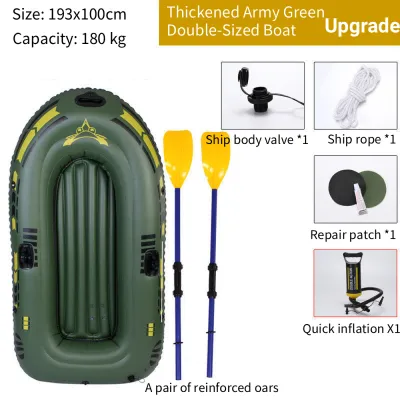
Prices are valid at publication and may change. Please refer to the product page for the latest price.
Inflatable rescue boats rely entirely on multi-chambered, reinforced fabric tubes to provide buoyancy and structure. These boats feature an exceptionally shallow draft, allowing them to glide over submerged obstacles and operate in water only inches deep. Their lightweight design makes them highly portable, enabling rescue teams to carry them manually to remote launch sites, though they require careful pressure management and are more vulnerable to sharp debris.
Rigid Inflatable Boats (RIBs) combine the best of both worlds by pairing a solid, V-shaped hull with inflatable collar tubes. This hybrid design delivers the high-speed tracking and wave-cutting performance of a rigid boat alongside the exceptional stability and shock absorption of an inflatable. RIBs are highly versatile, but they represent a larger financial investment and require specialized maintenance for both the solid hull and the inflatable collars.
Matching Boat Types to Your Rescue Scenarios
Selecting the right vessel requires a systematic evaluation of your local geography, typical weather patterns, and response times. A structured decision matrix helps align these environmental constraints with the physical capabilities of each boat type. Before acquiring a vessel, teams must analyze water depth, wave heights, tidal currents, and the presence of natural or man-made debris in their primary response zones.

Coastal Patrol and Nearshore Response
Nearshore operations and coastal patrols demand a boat that can handle unpredictable surf zones, shallow sandbars, and tidal fluctuations. In these environments, rescue teams frequently encounter breaking waves and shallow reefs that require rapid maneuverability and high stability.
For beach launches and surf zone crossings, RIBs are often the preferred choice due to their deep-V hulls and stabilizing inflatable collars. The collar tubes provide extra buoyancy when taking on water in heavy surf, preventing the boat from swamping or capsizing.
When operating near rocky coastlines or coral reefs, hull impact resistance is a critical safety factor. Rigid aluminum hulls offer superior protection against scraping and grounding on sharp reefs, whereas inflatable tubes require protective wear patches to prevent punctures. Teams must also consider launch and recovery methods; while rigid boats require a functional boat ramp and trailer, lightweight inflatables can be launched directly from sandy beaches by a small crew.
Open Sea and Offshore Rescue
Offshore search and rescue operations present the most extreme challenges, including massive swells, high winds, and long transit distances. In these open-water scenarios, vessel stability, structural integrity, and crew safety are paramount.
Heavy-duty RIBs are highly suited for offshore missions because their solid hulls cut through rough waves while the inflatable collars absorb heavy impacts. This combination reduces crew fatigue during long transits and provides a stable platform for recovering victims from the water. Many professional offshore RIBs are designed with self-righting systems, such as inflatable bags mounted on an aft A-frame, which allow the vessel to recover automatically in the event of a capsize.
Extended offshore operations also require significant fuel capacity and space for advanced navigation, radar, and communication equipment. Rigid hulls and larger RIBs provide the necessary structural mounting points and dry storage compartments for these sensitive electronics. Before deploying into open seas, operators must verify the manufacturer’s rated maximum sea states and wind limits to ensure the vessel can safely withstand the anticipated conditions.
Inland Flood and Swiftwater Response
Inland flood response, particularly during the intense monsoon and typhoon seasons, requires navigating shallow, debris-choked waters and flooded urban areas. Rescue teams in these scenarios must contend with submerged cars, fences, power lines, and fast-moving currents.
Fully inflatable rescue boats are highly effective for inland flood response due to their extremely shallow draft and lightweight construction. These boats can float in water that is too shallow for rigid hulls, allowing rescuers to reach stranded residents in flooded streets and residential areas. Their soft, flexible hulls also minimize damage when bumping into submerged structures or floating debris.
Transportability is another crucial factor, as floodwaters often cut off traditional boat ramps and roads. Lightweight inflatable boats can be deflated, packed into response vehicles, and carried manually by rescue personnel to remote launch points such as highway overpasses or muddy riverbanks. To protect the propulsion system in these environments, outboard motors should be equipped with propeller guards or jet drives to prevent damage from submerged objects.
Essential Specifications and Safety Checks Before Deployment
Before purchasing or deploying any heavy-duty rescue boat, teams must conduct rigorous verification of the manufacturer’s specifications and safety boundaries. Equipment alone cannot replace proper training, and operating a vessel beyond its certified limits poses severe risks to both rescuers and victims.
First, verify the maximum payload capacity and passenger limits, keeping in mind that rescue gear, medical equipment, and wet passengers add significant weight. A boat’s handling characteristics change dramatically when fully loaded, so teams must calculate operational weight limits conservatively.
For inflatable boats and RIBs, check the buoyancy chamber redundancy and the presence of pressure relief valves. High-quality rescue boats feature multiple independent air chambers, ensuring that if one chamber is punctured, the remaining chambers provide sufficient buoyancy to keep the vessel afloat. Pressure relief valves are essential in tropical climates, as intense sun exposure can cause the air inside the tubes to expand rapidly, risking over-pressurization and seam failure.
Finally, ensure the vessel complies with local maritime authority regulations and safety certifications. In the Philippines, rescue boats should meet the standards set by relevant maritime safety bodies, and operators must hold the appropriate licenses and certifications for the specific vessel class.
Maintenance and Storage Requirements by Boat Type
The operational lifespan and reliability of a rescue boat depend heavily on consistent maintenance and proper storage. Neglecting these routines can lead to sudden equipment failure during critical missions.
Inflatable components require regular pressure monitoring, especially when transitioning between cool morning air and intense midday heat. Teams must establish a routine for checking inflation levels and inspecting valves for slow leaks.
For rigid hulls and the solid portions of RIBs, regular inspections for structural cracks, fiberglass osmosis, or aluminum corrosion are vital. Any signs of structural wear must be repaired immediately by a qualified professional to prevent hull failure under heavy loads.
In tropical environments with high humidity and intense UV exposure, protecting the boat’s materials is a constant challenge. Apply UV-protectant coatings to inflatable fabrics, perform thorough freshwater flushes after every saltwater deployment, and store the vessel in a shaded, well-ventilated facility to prevent mold, mildew, and material degradation.
Frequently Asked Questions (FAQ)
Can one heavy-duty rescue boat handle both inland floods and open sea rescues?
No single rescue boat can safely or efficiently cover both extremes without severe compromises. An open-sea rescue boat requires a deep-V hull, heavy weight, and high horsepower to cut through large swells, which makes it far too heavy and deep-drafted for shallow, debris-filled inland floods. Conversely, a lightweight, shallow-draft inflatable designed for floods lacks the structural rigidity, wave-handling capability, and power needed to survive rough offshore conditions. While a medium-sized RIB can sometimes serve as a versatile middle ground for nearshore and moderate river rescues, specialized fleets are ultimately necessary for teams responding to both open-ocean and urban flood disasters.
What is the typical lifespan of a heavy-duty inflatable rescue boat?
The operational lifespan of a heavy-duty inflatable rescue boat typically ranges from 5 to 15 years, depending heavily on material quality, maintenance, and environmental exposure. Boats constructed from high-grade polyurethane or Hypalon generally last longer than those made from standard PVC, especially when subjected to intense tropical UV rays and chemical exposure from polluted floodwaters. To maximize lifespan, teams must conduct regular visual inspections of seam integrity, fabric wear, and valve functionality. If seams begin to delaminate or the fabric shows signs of advanced UV degradation, the vessel should be sent for professional recertification or safely decommissioned according to manufacturer guidelines.
Community discussion
Share your experience or ask a question. Comments are reviewed before publication.